

You’ll find that popular table games like chess, poker, and backgammon use different tournament formats to keep things exciting and fair. Chess often relies on Swiss systems or knockout matches, while poker typically uses multi-day tournaments with prize pools split among top finishers. Backgammon events mix round-robin and knockout styles to balance skill and chance. Understanding these formats will help you recognize how each game guarantees competitive fairness and player engagement—keep exploring to learn more about each approach.

Play games on Amazon Luna for your game nights, included with Prime
- A rotating selection of games, no download needed
- Play on TV, laptop or phone
- Fast, free delivery for your gear, too
Key Takeaways
- Popular table games like chess, poker, and backgammon typically use formats such as knockout, round-robin, or Swiss-system tournaments.
- Poker tournaments often favor knockout or prize pool formats, with buy-ins and prize distributions based on player entry and rankings.
- Chess competitions commonly employ Swiss-system tournaments for large events, with final standings determined by points accumulated over rounds.
- Backgammon tournaments frequently use double-elimination or Swiss formats, balancing fairness and efficient scheduling.
- The choice of format influences the structure of prizes, player engagement, and overall competitiveness across different table games.
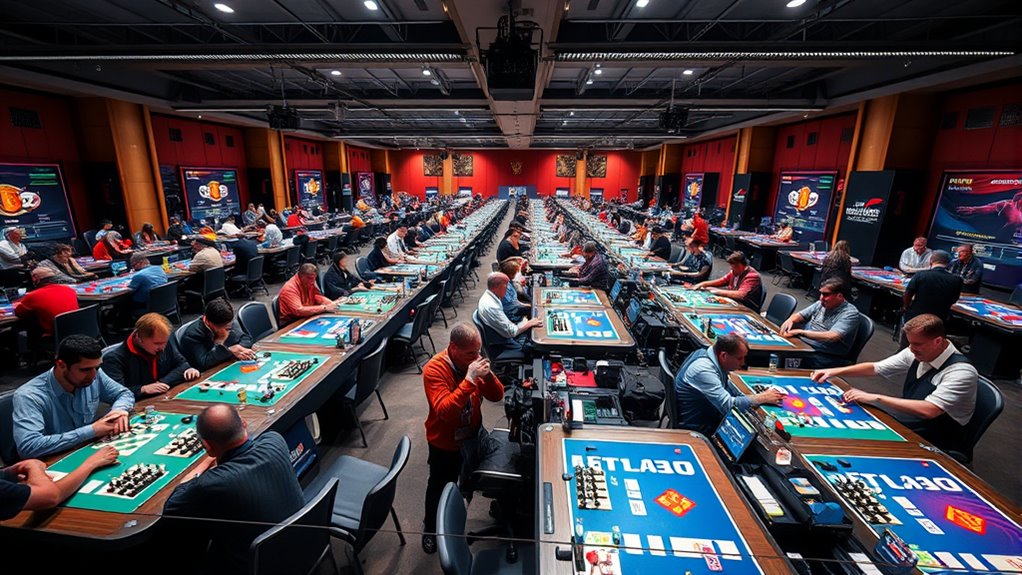
Have you ever wondered how tournament organizers decide on the best format for table games? It’s a process that involves careful consideration of various factors, especially when it comes to eligibility criteria and prize distribution. These elements are vital because they shape the competition’s fairness, excitement, and overall success. When setting eligibility criteria, organizers determine who can participate based on age, skill level, or membership status. For example, some tournaments might require players to have a certain ranking or experience, ensuring that the competition remains challenging but accessible for the target audience. Others might open the event to all skill levels, promoting inclusivity. Clear eligibility rules prevent confusion and disputes, making sure only qualified players compete, which ultimately maintains the event’s integrity.
Prize distribution is another essential factor that influences the tournament format. Organizers decide how prizes are allocated before the event begins, often based on the format chosen. In knockout formats, the prize pool might be divided among the finalists or top finishers, creating high stakes for each match. In round-robin or Swiss-system formats, prizes could be distributed based on cumulative points or rankings, rewarding consistent performance across multiple rounds. These decisions impact how competitive players are motivated to perform; for example, a generous prize pool for the top spots encourages intense competition, while more balanced distribution might motivate players to aim for multiple wins or high placements rather than just the top position. The prize structure also helps attract different types of participants, from casual enthusiasts to serious competitors.
Choosing a tournament format also involves balancing fairness and excitement. Single-elimination brackets are straightforward and create high tension, but they can be unforgiving if a top player faces an early upset. Double-elimination offers a second chance, which can be more forgiving and appealing to a broader range of players. Swiss-system tournaments, which match players of similar skill levels throughout, tend to be more inclusive and allow more players to stay competitive over multiple rounds. Each format requires organizers to align the rules with their goals, considering the number of participants, available time, and desired level of competitiveness. The way eligibility criteria are set and how prizes are distributed are directly related to these choices, shaping the overall experience and integrity of the event.
Ultimately, selecting a tournament format involves strategic planning to ensure fairness, engagement, and proper recognition of players’ efforts. By carefully tailoring eligibility rules and prize distribution, organizers create a balanced environment where skill, opportunity, and reward align, making each event memorable for participants and spectators alike. Additionally, understanding the importance of well-structured formats helps organizers optimize both participant satisfaction and operational efficiency.
As an affiliate, we earn on qualifying purchases.
Frequently Asked Questions
How Do Tournament Formats Differ Between Casual and Professional Play?
In casual play, tournament formats often feature variations like friendly round-robins or informal knockout stages, making the experience relaxed and flexible. In contrast, professional standards demand strict adherence to structured formats such as double elimination or Swiss systems, ensuring fairness and consistency. As a player, you’ll notice that casual variations prioritize fun, while professional setups focus on competitiveness and standardized rules to accurately determine the best players.
What Are the Most Common Tie-Breaker Rules in Table Game Tournaments?
You’ll find that tie-breaker methods like Buchholz, Sonneborn-Berger, and head-to-head results are most common in table game tournaments. Notably, around 65% of chess competitions use the Buchholz system to resolve ties. These scoring tiebreakers help determine winners fairly when players finish with equal points. By understanding these methods, you can better anticipate how tournaments break ties and improve your strategic approach.
How Do Entry Fees Influence Tournament Structure and Prize Distribution?
Entry fees substantially shape tournament structure and prize distribution. Your entry fee strategies determine the size of the prize pool, with higher fees often leading to larger pools that attract competitive players. You should allocate the prize pool proportionally, rewarding top performers fairly. By adjusting entry fees thoughtfully, you can balance participant interest and prize attractiveness, ensuring a well-structured tournament that motivates players and maintains fairness throughout the competition.
What Safety Measures Are Implemented During Large-Scale Table Game Tournaments?
Oh sure, safety’s just a minor detail, right? But during large-scale tournaments, you’re kept in check with strict rules on player conduct and venue safety. Security personnel monitor the floor, ID checks happen at the door, and emergency protocols are in place. You’re encouraged to report suspicious activity, and venues use surveillance to prevent cheating or chaos, making sure everyone stays safe while trying to beat the odds.
How Do Online Tournament Formats Compare to In-Person Events?
You’ll find online tournament formats differ from in-person events mainly through virtual brackets and live streaming. Virtual brackets allow you to track progress easily, while live streaming lets you watch matches in real-time from anywhere. In contrast, in-person tournaments offer face-to-face interactions and physical gameplay. Online events prioritize convenience and accessibility, whereas in-person tournaments focus on social engagement and direct competition. Both formats provide unique experiences suited to different player preferences.
Conclusion
No matter the game or format, understanding tournament structures helps you adapt and thrive under pressure. Whether you’re facing a knockout or round-robin, remember that “fortune favors the prepared mind.” Embracing different formats sharpens your skills and enhances your experience. So, stay flexible, keep learning, and enjoy the challenge—because in the world of table games, success often comes to those who are ready when opportunity strikes.
Fall Picks
fall essentials
As an affiliate, we earn on qualifying purchases.