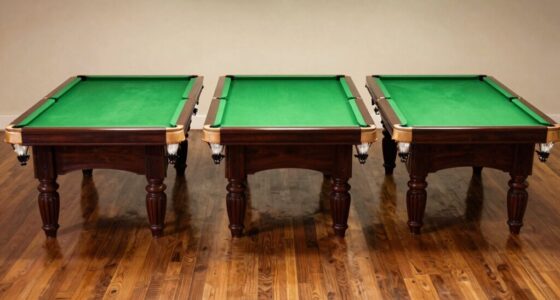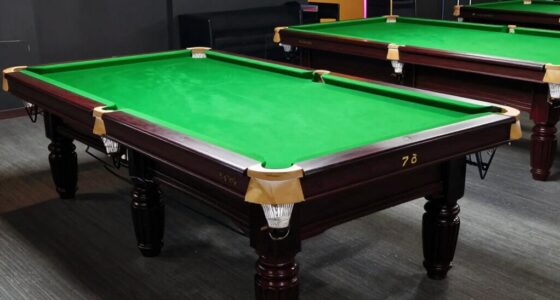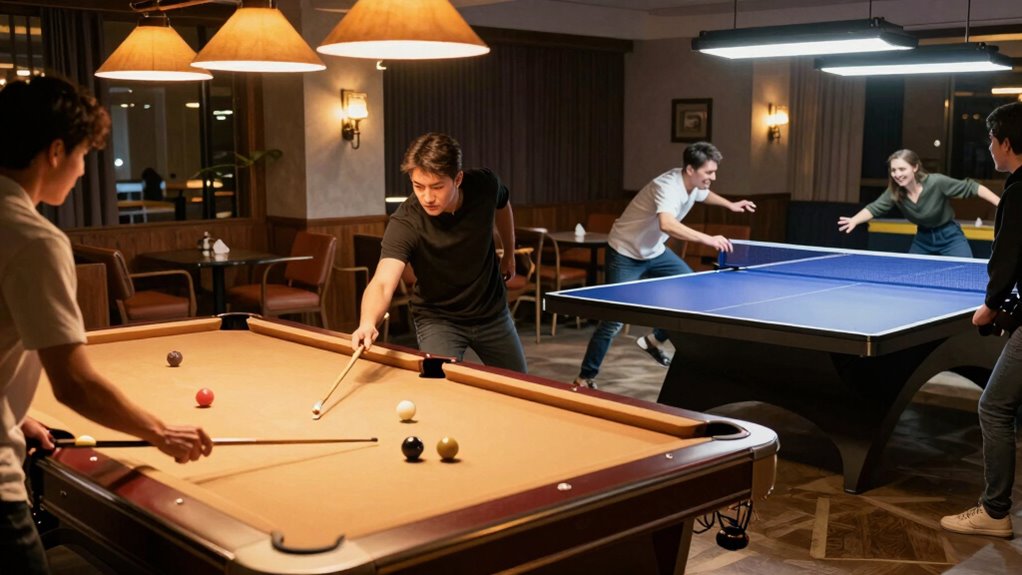

When you play pool, you create a relaxed, laid-back atmosphere that encourages longer conversations and friendly camaraderie, helping you unwind and connect more deeply. In contrast, ping pong energizes your social space with a lively, fast-paced vibe that keeps everyone engaged and upbeat. Each game fosters different moods—chill versus energetic—that influence how you bond and have fun. Keep exploring to discover how these activities can boost your social experiences even further.

Play games on Amazon Luna for your game nights, included with Prime
- A rotating selection of games, no download needed
- Play on TV, laptop or phone
- Fast, free delivery for your gear, too
Key Takeaways
- Pool promotes relaxed, slower-paced conversations and camaraderie, creating a laid-back social atmosphere.
- Ping pong’s fast-paced rallies generate energetic, lively interactions, fostering a more upbeat environment.
- Pool encourages longer, casual chats, supporting deeper social bonding and community building.
- Ping pong’s quick exchanges boost excitement and spontaneous fun, enhancing lively social engagement.
- The differing tempos of each game influence the overall mood, with pool favoring calmness and ping pong promoting vibrancy.
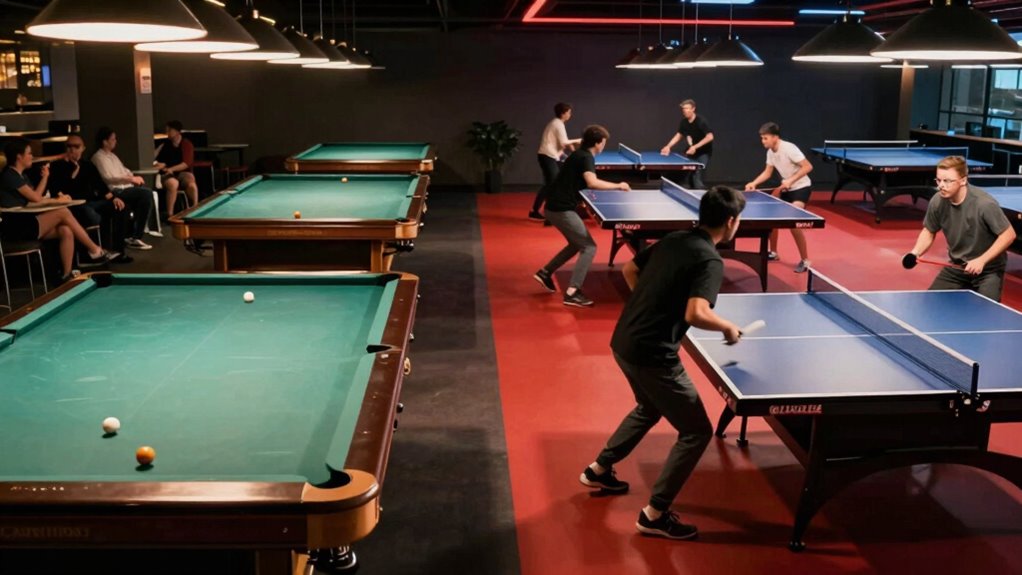
Have you ever noticed how a game of pool or ping pong can instantly lift your mood? It’s like stepping into a space where the outside world melts away, replaced by focused fun and shared energy. These games create a perfect backdrop for casual competition and friendly rivalry, making social interactions more engaging without the pressure of serious stakes. When you’re playing pool, for example, you might find yourself joking with friends, teasing each other over missed shots, or celebrating a well-placed ball. The atmosphere invites lighthearted banter, encouraging everyone to relax and enjoy the moment.
Ping pong, on the other hand, tends to generate a slightly faster-paced energy. Its quick rallies and rapid exchanges fuel a lively, almost contagious excitement. Even if you’re just playing for fun, that friendly rivalry pushes everyone to stay alert and engaged. It’s the kind of competition where you’re not really out to win at all costs — instead, you’re there to have a good time, challenge yourself, and share laughs. This balance of casual competition and mutual respect often helps break down social barriers, making it easier for people to connect and bond over a shared activity.
Both games foster different social moods, but they share the common trait of promoting interaction that’s light, playful, and inviting. Pool lends itself to longer, more relaxed conversations between shots, giving people time to chat and get to know each other better. The slower pace allows for moments of camaraderie, where friendly rivalry fuels the desire to improve and have fun simultaneously. Additionally, understanding the social dynamics involved in these games can help enhance your overall experience and connections. Engaging in such casual interactions can also boost social confidence and foster a sense of community among players. Playing these games also underscores the importance of sportsmanship in creating a positive and respectful environment.
In essence, these games aren’t just about the sport—they’re about creating moods. Pool’s calm, deliberate rhythm encourages a more laid-back, social vibe, while ping pong’s quick exchanges boost a lively, upbeat environment. Both foster a sense of shared experience that’s rooted in casual competition and friendly rivalry. Whether you’re unwinding after a long day, hanging out with friends, or meeting new people, these games serve as social catalysts, turning simple moments into memorable, mood-lifting experiences. They remind you that sometimes, all you need is a friendly game to feel connected and uplifted. Additionally, laboratory safety practices ensure that these recreational activities remain safe and enjoyable for everyone involved.
pool table for home with accessories
As an affiliate, we earn on qualifying purchases.
As an affiliate, we earn on qualifying purchases.
Frequently Asked Questions
How Do Players Typically Dress for Pool Versus Ping Pong?
You usually dress more casually for pool, opting for comfortable casual attire like jeans and t-shirts that let you move easily. For ping pong, sportswear choices are common, including athletic shirts and shorts or sweats, since the game involves quick movements. Both activities favor relaxed clothing, but ping pong players tend to lean toward sport-specific outfits, while pool players stick to casual, everyday wear.
What Are Common Music Choices in Pool Halls Compared to Ping Pong Areas?
You’ll notice that music ambiance differs between pool halls and ping pong areas, reflecting player preferences. In pool halls, you often find smooth jazz or classic rock, creating a relaxed vibe. Conversely, ping pong spots tend to have lively tunes, like upbeat pop or energetic electronic music, fueling quick reflexes and friendly competition. These choices help shape the mood, making each setting uniquely inviting and tailored to the game’s pace.
How Do Game Durations Differ Between Pool and Ping Pong Sessions?
During a game, your pool session tends to have a slower game pace, often lasting longer as players carefully line up shots and plan strategies. In contrast, ping pong sessions usually feature a faster game pace with quick rallies, making each session shorter and more energetic. So, if you’re looking for a relaxed vibe, pool might suit you better, while ping pong offers rapid, lively gameplay for shorter periods.
What Safety Considerations Are Unique to Each Game Environment?
Think of each game as a different voyage—pool requires careful navigation with safety equipment like gloves and cue tip guards to prevent injuries. Ping pong, on the other hand, needs ambient lighting to reduce eye strain and prevent accidents from sudden moves. Always make certain your environment is well-lit and that safety gear is in place. Staying alert and prepared keeps your game safe and enjoyable, no matter the setting.
How Do Age Groups Typically Prefer Pool Versus Ping Pong?
You’ll find that older age groups often prefer pool, drawn by generational nostalgia and a relaxed social bonding style, making it ideal for laid-back conversations. Younger players tend to favor ping pong, appreciating its fast pace and energetic social vibe. As a result, each game appeals to different social moods, with pool fostering calm camaraderie and ping pong encouraging lively, active interactions.
Conclusion
So, next time you pick up a cue or paddle, remember it’s more than just a game. Pool’s slow, contemplative mood might seem like a chance to reflect, but it’s often hiding quiet tension. Ping pong’s lively, energetic pace, on the other hand, might look like pure fun, yet it can mask underlying competitiveness. Isn’t it amusing how these games reveal not just your skills, but your hidden social moods? The irony’s in how they both tell a different story about you.
Fall Picks
fall essentials
As an affiliate, we earn on qualifying purchases.