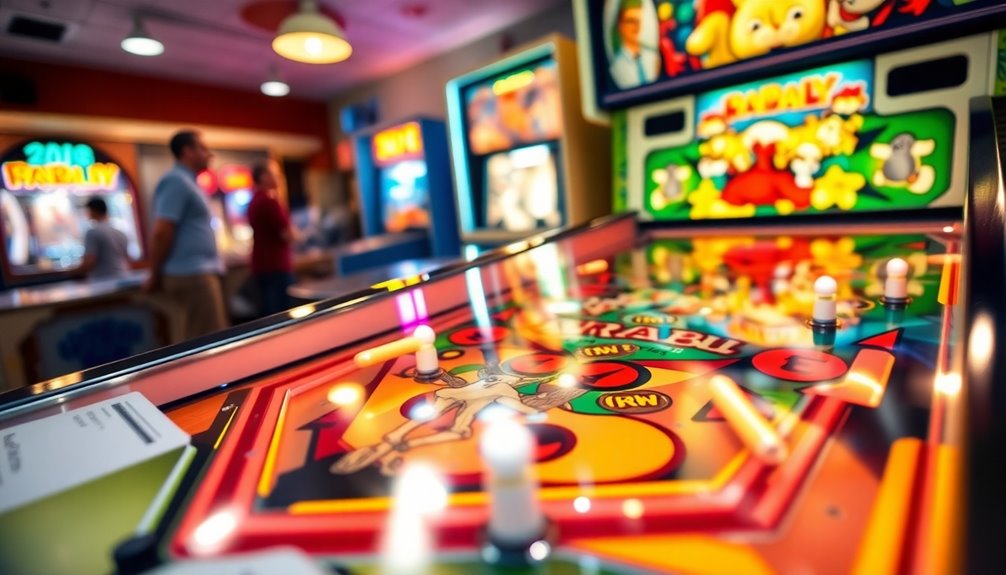
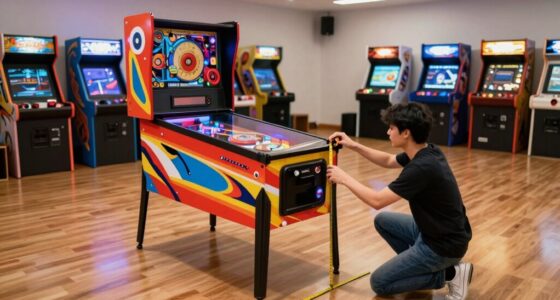
In modern pinball, coding serves as the core that drives gameplay, making your experience more immersive and engaging. It connects physical components like bumpers and lights with digital rules, triggering responses that keep the game dynamic. Coding also tracks your progress, adapts challenges, and creates intricate sequences, transforming mechanical play into exciting interactive entertainment. If you stick around, you’ll discover how these digital rules truly shape the thrill of contemporary pinball.
Listen free for 30 days with Audible
Thousands of audiobooks and originals — cancel anytime.
As an affiliate, we earn on qualifying purchases.
Key Takeaways
- Coding defines game logic, controlling feature activation, scoring, and special modes for dynamic gameplay experiences.
- It integrates sensors and hardware signals to ensure real-time responses and seamless interaction.
- Coding enables advanced features like animated displays, interactive sequences, and story-driven modes.
- It adapts rules based on player actions, increasing challenge and replayability through complex rule systems.
- Coding links physical components with digital rules, creating immersive, responsive, and cohesive pinball environments.

Modern pinball rulesets rely heavily on sophisticated coding to create engaging and dynamic gameplay experiences. This coding forms the backbone of how the game responds to player actions, how features activate, and how the overall flow unfolds. As a player, you might not realize it, but every time you hit a target or tilt the machine, complex code is immediately at work, managing hardware integration to guarantee the game reacts smoothly. Hardware integration is essential because it connects physical components—like bumpers, flippers, lights, and sound systems—with the digital ruleset. When you hit a target, sensors send signals that trigger code to activate lights or sounds, making the game feel responsive and alive. Without this tight integration, the gameplay would feel disconnected and less immersive.
Your engagement is at the heart of modern pinball design. Developers craft rulesets that adapt based on your actions, creating scenarios that keep you interested and challenged. Coding allows for intricate rule sequences where certain combinations or sequences of shots unlock bonuses or start multi-ball modes, heightening the thrill. These rules can be dynamically adjusted through software to introduce new challenges or themes, making each game feel fresh. Because the code can track your progress and tailor responses accordingly, it sustains your interest longer. You’re encouraged to improve your skills, as the game reacts intelligently to your strategies, which enhances your overall engagement.
Moreover, advanced coding techniques enable features like real-time scoring, animated displays, and interactive modes that weren’t possible before. These elements rely on precise programming to synchronize physical and visual components seamlessly. For example, when you hit a specific target, the code may trigger a sequence of lights, sounds, and animations that tell a story or build suspense. This integration between hardware and software creates a more immersive environment, making you feel like you’re part of a dynamic adventure rather than just hitting simple targets. The rulesets also adapt to different difficulty levels or game modes, thanks to flexible coding, guaranteeing the experience remains challenging yet accessible.
In essence, coding in modern pinball is what transforms a mechanical game into an interactive digital experience. It’s the unseen force that binds hardware integration with gameplay, elevating player engagement to new levels. Through clever programming, developers craft experiences that are responsive, immersive, and endlessly replayable. Your interaction with the game is shaped by this intricate web of code, making each play session uniquely exciting. Whether you’re aiming for high scores or simply enjoying the spectacle, it’s the sophisticated coding behind the scenes that makes modern pinball truly captivating.
pinball machine LED lighting kit
As an affiliate, we earn on qualifying purchases.
As an affiliate, we earn on qualifying purchases.
Frequently Asked Questions
How Does Coding Influence Pinball Game Difficulty?
Coding directly influences pinball game difficulty by enabling difficulty calibration and challenge balancing. You can adjust rules, scoring, and ball behaviors through programming, making the game easier or harder. Developers use coding to fine-tune the difficulty, ensuring players stay engaged without becoming frustrated. This dynamic control allows for a tailored experience, where challenge levels evolve with your skill, keeping gameplay exciting and balanced.
Can Coding Help Personalize Pinball Gameplay Experiences?
Yes, coding can help personalize your pinball gameplay experiences by enabling custom game modes and player customization. Developers program options that let you tweak rules, themes, and difficulty levels, creating a unique experience tailored to your preferences. With coding, you can enjoy a more engaging game that adapts to your style, making each session more exciting and personalized.
What Programming Languages Are Used in Modern Pinball Coding?
Think of modern pinball coding as a symphony, where languages like C++, Python, and Lua are the instruments. You’ll see these languages powering hardware integration, ensuring sensors and displays work in harmony. They also shape the user interface, making gameplay intuitive and engaging. By mastering these languages, you can craft seamless interactions, transforming raw code into an immersive experience that keeps players hooked.
How Do Updates or Patches Get Implemented Through Coding?
When updates or patches are needed, you usually connect your pinball machine to a computer or network for hardware integration. Developers then upload new code, which updates the game’s rules or features. Throughout this process, they guarantee the user interface stays intuitive and responsive. You might see new modes or fixes after these updates, enhancing your gameplay experience without needing to replace hardware, just software.
Is Coding Responsible for Creating New Pinball Features?
Coding creates new pinball features just like a painter adds vibrant strokes to a canvas. You can customize hardware and add stunning visual effects that captivate players. When developers write code, they uncover innovative gameplay elements, enhance visuals, and introduce fresh mechanics. So, yes, coding is responsible for crafting exciting features that push the boundaries of what your pinball machine can do, making each game more immersive and dynamic.
Conclusion
In modern pinball rulesets, coding shapes gameplay, enhances player engagement, and fuels innovation. It drives complexity, creates surprises, and enables customization. Coding transforms simple machines into dynamic experiences, pushes boundaries, and redefines possibilities. Embrace coding’s power, harness its potential, and recognize its role in shaping the future of pinball. With coding at the core, you unleash excitement, foster creativity, and elevate every game to new heights.
Fall Picks
fall essentials
As an affiliate, we earn on qualifying purchases.