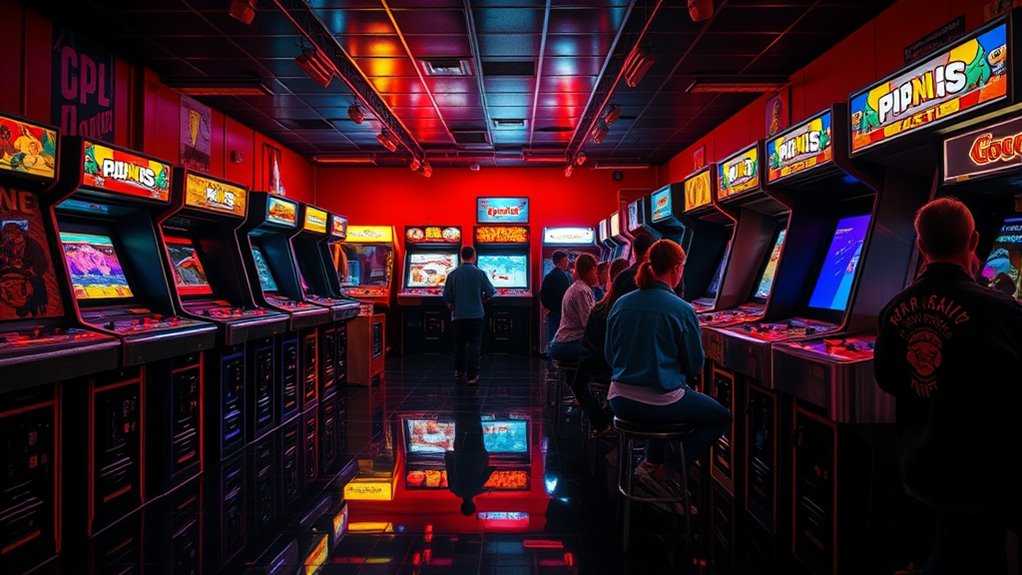

During 1978–1984, arcades become vibrant centers of entertainment, combining cutting-edge technology and lively social scenes. You experience exciting innovations like high-quality graphics, responsive controls, and new game genres like maze chases and shooters. Players gather to compete for high scores and enjoy the communal atmosphere. If you want to discover how this era shaped modern gaming and left a lasting legacy, keep exploring these thrilling arcade moments.
Key Takeaways
- The period marked rapid technological innovation, introducing iconic games like Pac-Man and Donkey Kong that defined arcade culture.
- Bright, eye-catching cabinet designs and vibrant graphics attracted players and enhanced the arcade atmosphere.
- High-score competitions fostered community, skill development, and social interaction among arcade enthusiasts.
- Advancements in display and control technology created immersive, responsive gaming experiences.
- This era established the foundation for modern gaming, shaping entertainment and community engagement.

During the 1980s and early 1990s, arcades became the vibrant centers of entertainment, drawing millions of players enthusiastic to experience the latest in video game technology. This era, often called the golden age of arcades, was driven by a dynamic coin op culture that revolutionized how people engaged with games. You could walk into a bustling arcade, coins in hand, eager to test your skills on the newest machines. The coin op culture fostered a sense of community, competition, and excitement, as players gathered around cabinets, eager to beat high scores or outdo each other. It wasn’t just about playing; it was about being part of a shared experience that brought people together over shared passions.
Arcade innovations during this period played a vital role in shaping the landscape of gaming. Developers pushed technological boundaries, introducing vibrant graphics, responsive controls, and more complex gameplay. Games like Pac-Man, Donkey Kong, and Space Invaders became household names, captivating audiences with their innovative designs. These innovations weren’t just about better visuals; they introduced new genres, such as maze chases, platformers, and shooters, broadening the appeal to diverse players. The arcade cabinets themselves also evolved, becoming more elaborate and eye-catching to attract attention in crowded arcades. Bright colors, animated side art, and thematic designs made each machine a piece of entertainment art, drawing players in from across the room.
You could feel the energy shift as these arcade innovations elevated the gaming experience. The introduction of high-score tables fueled competitive spirits, pushing players to improve their skills and strive for new records. Multiplayer gaming started to take off, with many machines allowing for direct competition, heightening the social aspect of arcade gaming. This era also saw the rise of arcade-specific hardware improvements—more precise joysticks, faster processors, and better sound effects—all working together to create immersive worlds. These technological advancements made the arcade a place where players could escape into new realities, even if only temporarily. Additionally, the development of high-refresh-rate projectors and other display enhancements contributed to more visually engaging game environments, further enriching the arcade experience.
The coin op culture of the time wasn’t just about the games; it was about the atmosphere, the camaraderie, and the thrill of discovery. It fostered a community that shared a passion for gaming innovations that kept the arcade scene fresh and exciting. As a player, you weren’t just a consumer—you were part of a movement that redefined entertainment and laid the groundwork for modern gaming. This period was truly a golden age, where technological progress and cultural enthusiasm combined, creating a legacy that still influences gaming today.
![Quarter Arcades Lunar Lander Mini 1/4 Scale Atari Replica Cabinet with Original ROM – Retro Arcade Machine with Thrust Lever, CRT Lens, Rechargeable Battery – Mini Game for Home [Video Game]](https://m.media-amazon.com/images/I/41mXdSCB0JL._SL500_.jpg)
Quarter Arcades Lunar Lander Mini 1/4 Scale Atari Replica Cabinet with Original ROM – Retro Arcade Machine with Thrust Lever, CRT Lens, Rechargeable Battery – Mini Game for Home [Video Game]
Official 1/4 scale Atari arcade cabinet replicates the iconic 1979 Lunar Lander machine with incredible detail for retro…
As an affiliate, we earn on qualifying purchases.
As an affiliate, we earn on qualifying purchases.
Frequently Asked Questions
What Technological Innovations Defined Arcade Gaming During This Period?
During this period, technological innovations like hardware evolution and graphic advancements revolutionized arcade gaming. You’d notice that game hardware became more powerful, allowing for smoother gameplay and more complex designs. Graphic capabilities improved markedly, making visuals more vibrant and detailed. These innovations enabled developers to create engaging, visually stunning games that captivated players and set new standards for the arcade experience, marking a true golden age of technological progress.
How Did Arcade Culture Influence Mainstream Entertainment Trends?
You see how arcade culture shaped mainstream entertainment by fueling vibrant arcade aesthetics that drew crowds. Brands adopted strategies like iconic game characters and neon visuals, which influenced movies, TV, and merchandise. By creating immersive, visually striking environments, arcades made gaming popular beyond dedicated players, inspiring broader entertainment trends. This cultural momentum helped integrate gaming into everyday life, with branding and aesthetics playing key roles.
What Were the Most Popular Arcade Games of 1978–1984?
You step into the arcade, surrounded by coin-op classics and arcade legends that defined an era. Pac-Man, Space Invaders, and Donkey Kong top the charts, enthralling players with their simple yet addictive gameplay. These titles revolutionized entertainment, inspiring countless imitators and shaping gaming culture. As you play, you experience firsthand how these iconic games cemented their place in history, influencing future generations of gamers worldwide.
How Did Arcades Impact Social Interactions Among Youth?
You found arcades boosted social bonding among youth by creating a lively space for peer competition and teamwork. As you played games, you interacted with friends, shared strategies, and cheered each other on, strengthening your social ties. The arcade environment encouraged casual conversations and friendly rivalry, making it more than just gaming—it became a hub where friendships grew and social skills developed through shared experiences.
What Factors Led to the Decline of Arcade Popularity After 1984?
Imagine walking past flickering arcade machines as neon lights dim, signaling the decline. You notice that home console dominance grew, making gaming more personal and accessible at home. Meanwhile, an economic downturn squeezed entertainment budgets, causing fewer visits. This shift, combined with the rise of portable gaming and changing youth interests, led to arcade popularity fading after 1984, transforming the way people engaged with video games forever.

Arcade1Up PAC-Man Deluxe Arcade Machine for Home – 5 Feet Tall – 14 Classic Games
Join the legacy: Library of 14 iconic games, including Dig Dug, Galaga, Galaxian, Rompers, PAC-Mania, Mappy, and more!
As an affiliate, we earn on qualifying purchases.
As an affiliate, we earn on qualifying purchases.
Conclusion
As you look back at this golden era, you’ll see arcade gaming became a cultural phenomenon, with over 10,000 arcades nationwide by 1982. Imagine walking into those vibrant spaces filled with flashing screens and beeping machines, where millions of players gathered daily. This surge in popularity transformed entertainment, creating a lasting legacy in gaming history. The passion and innovation of 1978–1984 truly marked a defining moment in your gaming journey.

UNICO 19’’ Arcade Replacement Screen, 1280 * 1024 Pixels LCD Gaming Monitor for CGA, EGA Game Arcade, Easy Install Monitor Arcade Accessories – 19inch
[19'' Arcade Monitor for 99% 19'' Arcade] The UNICO 19'' Arcade Gaming Monitor could suit for 99% 19''…
As an affiliate, we earn on qualifying purchases.
As an affiliate, we earn on qualifying purchases.

MAYFLASH F300 Arcade Fight Stick Joystick for Switch/Switch 2, PS4, PS3, Xbox Series S/X, Xbox One, Xbox 360, macOS, Windows, Steam Deck and more
Compatible with Switch/Switch 2, PS4, PS3, Xbox Series S/X, Xbox One, Xbox 360, PC Windows, macOS, Steam Deck,…
As an affiliate, we earn on qualifying purchases.
As an affiliate, we earn on qualifying purchases.