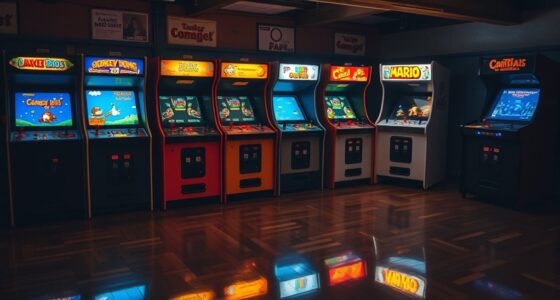
Dance Dance Revolution sparked a global dance craze by combining energetic gameplay, nostalgic arcade visuals, and social fun. You step on a dance pad and follow on-screen arrows to the beat, creating a workout and social experience. It appeals to all skill levels, offering diverse music and challenges. This game’s mix of physical activity and community spirit made it a cultural phenomenon that continues to influence entertainment and sports. Stay tuned to discover more about its lasting impact.
Key Takeaways
- DDR originated from arcade gaming culture, combining nostalgia with innovative dance gameplay.
- It features precise footwork on a dance pad, synchronized with music and on-screen arrows.
- The game’s diverse soundtrack and difficulty levels promote mastery and social engagement.
- DDR sparked a global dance craze, inspiring tournaments, home versions, and dance clubs.
- Its blend of physical activity, mental challenge, and cultural nostalgia maintains lasting popularity.

Have you ever wondered how a simple game can turn into a full-blown dance phenomenon? It all started with the rise of Dance Dance Revolution, a game that captured the hearts of arcade enthusiasts and casual gamers alike. If you’ve ever stepped into an arcade, you’ve probably seen those brightly lit cabinets with flashing screens and a dance pad at the base. That’s where arcade nostalgia plays a big role—people of all ages reminiscing about the golden age of arcade gaming while experiencing DDR’s innovative gameplay. The game’s appeal lies in its straightforward yet addictive mechanics: players follow on-screen prompts to step on arrows in sync with the music, creating a rhythm-based challenge that’s both physically engaging and mentally stimulating.
The gameplay mechanics are what set DDR apart from other arcade games. Unlike traditional video games that rely on controllers, DDR requires you to stand on a dance pad and perform precise footwork. As the music plays, arrows scroll up the screen, telling you when and where to step. Timing is everything; hit the arrows accurately, and you’re rewarded with higher scores, increased difficulty levels, and a sense of accomplishment. This active participation makes it more than just a game—it’s a workout, a dance lesson, and a social experience rolled into one. The mechanics encourage players to improve their rhythm, coordination, and stamina, turning every session into a fun fitness routine. Plus, with multiple difficulty settings, both beginners and seasoned dancers can find a challenge that suits their skill level.
What made DDR explode into a cultural phenomenon was its ability to combine gameplay mechanics with a pulsating soundtrack that kept players hooked. The game’s music selection spans genres—from pop to techno—ensuring there’s a beat for everyone. As players become more skilled, they often aim for perfect timing, pushing themselves to master complex routines and access new songs. This sense of progression, paired with the vibrant arcade environment, creates a communal atmosphere where players cheer each other on, share tips, and compete for high scores. The combination of arcade nostalgia and innovative gameplay mechanics transformed DDR from a niche arcade game into a worldwide dance craze. Its influence extended beyond arcades, inspiring home versions, dance clubs, and even competitive tournaments. Incorporating leadership skills like teamwork and motivation, players often unite in dance battles and tournaments, further fueling its popularity. Whether you’re revisiting an old arcade or discovering DDR for the first time, the game’s appeal remains rooted in its perfect blend of rhythmic challenge and nostalgic charm.
Frequently Asked Questions
How Did DDR Influence Modern Rhythm Games?
You see, DDR shaped modern rhythm games by popularizing arcade influence and innovative gameplay mechanics. Its use of physical movement, like stepping on arrows, inspired developers to create interactive, motion-based experiences. You’ll notice many contemporary games incorporate similar mechanics, blending music with physical activity. DDR’s success proved that engaging gameplay mechanics combined with arcade-style design can captivate players, setting the foundation for the evolution of rhythm gaming today.
What Are the Most Popular DDR Song Genres?
You’ll find that the most popular DDR song genres are pop music and electronic dance. These genres energize players with catchy melodies and pulsating beats, making the gameplay more exciting. Pop music tracks keep the rhythm accessible, while electronic dance songs add a high-energy vibe that challenges your timing. Together, they drive the game’s popularity and influence modern rhythm games by blending mainstream appeal with electronic soundscapes.
How Has DDR Evolved Technologically Over the Years?
You’ve seen DDR evolve through arcade hardware upgrades and controller innovations. Early machines used simple step sensors, but now advanced sensors and pressure-sensitive pads improve accuracy. Home versions feature wireless controllers and customizable pads, making gameplay more immersive. Developers also introduce new features like multiplayer modes and HD visuals, enhancing user experience. This technological progress keeps DDR engaging, accessible, and exciting for both newcomers and seasoned players.
Are There Competitive DDR Tournaments Worldwide?
Yes, you can find competitive DDR tournaments worldwide, much like a modern-day Olympic scene for rhythm gamers. The tournament scene spans from local gatherings to global competitions, drawing players from different countries. These events showcase impressive skills and intense rivalries, reminiscent of historic dance battles. If you’re passionate about DDR, you’ll love the thrill of participating or spectating in these worldwide competitions, where every step counts in the quest for rhythm mastery.
What Are the Health Benefits of Playing DDR Regularly?
Playing DDR regularly boosts your cardiovascular fitness and muscular endurance. As you dance to the beat, you get your heart pumping, improving your overall heart health. The constant movement also strengthens your leg and core muscles, helping build muscular endurance. Plus, it’s a fun way to stay active, burn calories, and enhance coordination. So, keep playing DDR and enjoy these health benefits while having a great time.
Conclusion
As the beat continues to pulse through our veins, Dance Dance Revolution stands as a vibrant tapestry woven with rhythm and passion. It’s more than just a game; it’s a dance floor where you’re the star, your movements painting a symphony of energy. With each step, you’re caught in a whirlwind of sound and motion, a living affirmation to how the rhythm game boom has transformed us into performers in our own personal concerts.