
Street Fighter II transformed fighting games and sparked the growth of competitive communities worldwide. It created a social scene at arcades where players tested skills and competed, establishing a culture of mastery and strategy. Its balanced character design and emphasis on timing and tactics made gameplay deep and unpredictable. This legacy continues through tournaments and community events, inspiring new generations. Stay with us to discover how this iconic game shaped the esports landscape and gaming culture today.
Key Takeaways
- Laid the foundation for modern competitive fighting game communities and tournaments worldwide.
- Fostered social gatherings and camaraderie centered around skillful gameplay at arcades.
- Encouraged strategic diversity through balanced character design and mastery of intricate game mechanics.
- Inspired generations of players, establishing principles of skill, timing, and strategic thinking.
- Its legacy continues to influence esports and fighting game culture today.

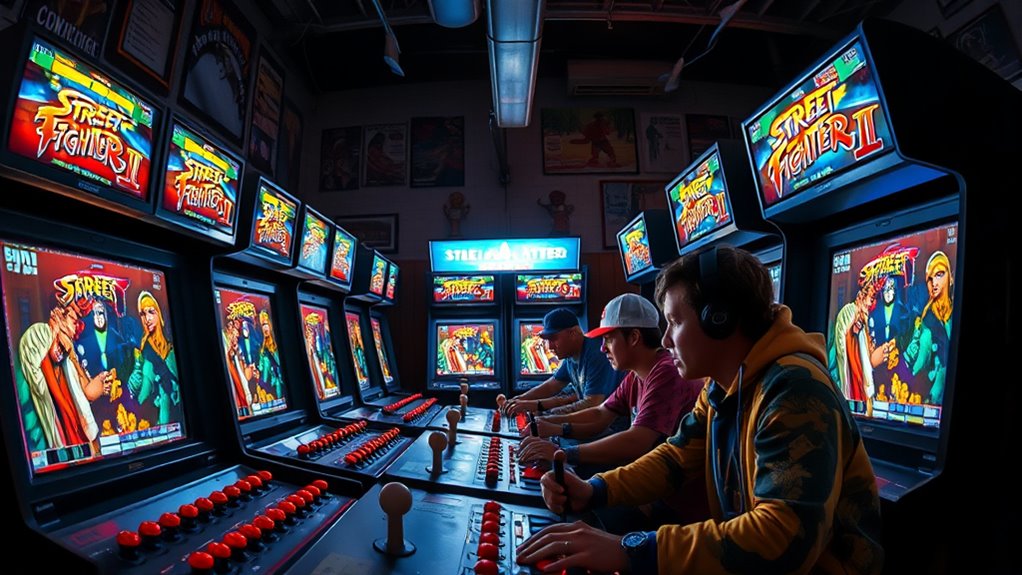
Street Fighter II Legacy explores how this iconic arcade game revolutionized fighting games and continues to influence the genre today. When you immerse yourself in the history of Street Fighter II, you quickly realize its pivotal role in shaping arcade culture. It wasn’t just a game; it became a social phenomenon, fueling countless gatherings at arcades where players tested their skills and competed fiercely. The game’s competitive scene grew rapidly, forming communities bound by a shared love for high-stakes battles. These gatherings weren’t just about winning; they were about mastering the intricacies of the game, understanding every move, and reading your opponent’s tactics. Street Fighter II’s impact on arcade culture is still evident, as it laid the foundation for the competitive spirit that persists in gaming communities worldwide. A key factor that contributed to its success was character balance. When you played Street Fighter II, you could see how Capcom carefully designed each fighter to be unique yet equally viable. No single character dominated the scene, which meant players had to adapt and refine their strategies based on who they faced. This balance kept the gameplay fresh and unpredictable, encouraging players to explore different characters and techniques. It also fostered a more inclusive environment where skill and strategy mattered more than just picking the “best” fighter. If you wanted to excel, you had to understand each character’s strengths and weaknesses, turning the game into a deep tactical experience. That focus on character balance set a standard for future fighting games, emphasizing fairness and variety that still influences competitive design today. Additionally, the game’s emphasis on precise timing and strategic thinking helped establish core principles that continue to define the genre. As you participate or observe in fighting communities, you’ll notice that Street Fighter II’s legacy endures through the principles it established. Its emphasis on precise timing, strategic thinking, and fair competition continues to resonate. The community’s dedication to mastering character matchups and refining techniques echoes the core gameplay principles that made the game legendary. Even decades after its debut, players still gather at tournaments, reliving the excitement of those arcade days, sharing strategies, and pushing each other to improve. Street Fighter II didn’t just introduce a new genre; it created a blueprint for competitive fighting communities built on skill, balance, and camaraderie. Its influence is woven into the very fabric of fighting game culture, inspiring new generations to pick up the controller and aim for mastery.

Nacon Daija Arcade Fight Stick Officially Licensed for PlayStation
- Officially Licensed for PlayStation: Compatible with PS4, PS5, and PC
- Designed with Pro Gamers: Developed with professional gaming collaboration
- Premium Sanwa Components: Includes Sanwa joystick and action buttons
As an affiliate, we earn on qualifying purchases.
As an affiliate, we earn on qualifying purchases.
Frequently Asked Questions
How Did Street Fighter II Influence Modern Esports?
Street Fighter II revolutionized modern esports by shaping arcade culture and establishing core game mechanics like combos and special moves that players now master. You see its influence in the competitive scene, where precision and strategy are key. Its popularity helped popularize online tournaments and streaming, making esports accessible worldwide. You can trace many fighting game features and community-driven competition back to Street Fighter II’s groundbreaking design and cultural impact.
What Are the Most Iconic Characters in Street Fighter II History?
Imagine facing Ryu, the quintessential martial artist, embodying the archetype of disciplined fighters with his balanced fighting style. He’s arguably the most iconic character in Street Fighter II history, representing the classic hero archetype. Ryu’s Hadouken move and balanced fighting style make him a favorite among players. His presence has shaped character archetypes and fighting styles across the franchise, cementing his status as a legendary figure in fighting game history.
How Did Community Tournaments Evolve Over the Decades?
Community tournaments have evolved considerably over the decades, shifting from small local gatherings to large, organized events worldwide. You see, tournament formats now include online qualifiers, double-elimination brackets, and invitational competitions, which boost community building. This evolution allows players of all skill levels to connect, compete, and grow together. As a result, fighting game communities become more vibrant, inclusive, and competitive, fostering a shared passion that drives the genre forward.
What Are Rare Collector’s Items Related to Street Fighter II?
Imagine finding a rare, time-warped piece of gaming history—Street Fighter II collector’s memorabilia like limited-edition arcade cabinets and promotional items. These rare arcade releases and vintage posters are highly sought after by collectors. You might stumble upon a sealed, original cartridge or a signed poster from the game’s early days. Such items are priceless relics that capture the game’s legendary status, making them invaluable for passionate fans and collectors alike.
How Has Street Fighter II Impacted Fighting Game Design Today?
Street Fighter II has greatly influenced fighting game design today by shaping game mechanics and emphasizing character balance. You notice how modern fighters incorporate strategic move sets and combo systems inspired by its mechanics. Developers prioritize character balance to guarantee fair play, a standard set by Street Fighter II’s competitive scene. This legacy encourages players to master nuanced tactics, making contemporary fighting games more engaging and skill-based.
Conclusion
You see, Street Fighter II isn’t just a game; it’s a revolution that sparked a global fighting community. Did you know that at its peak, tournaments attracted over 10,000 players worldwide? That’s like filling an entire stadium with passionate fans. Its legacy lives on in every arcade, console, and tournament today, reminding you that your skills could be part of something legendary. So, next time you pick up a controller, remember—you’re part of this epic story.