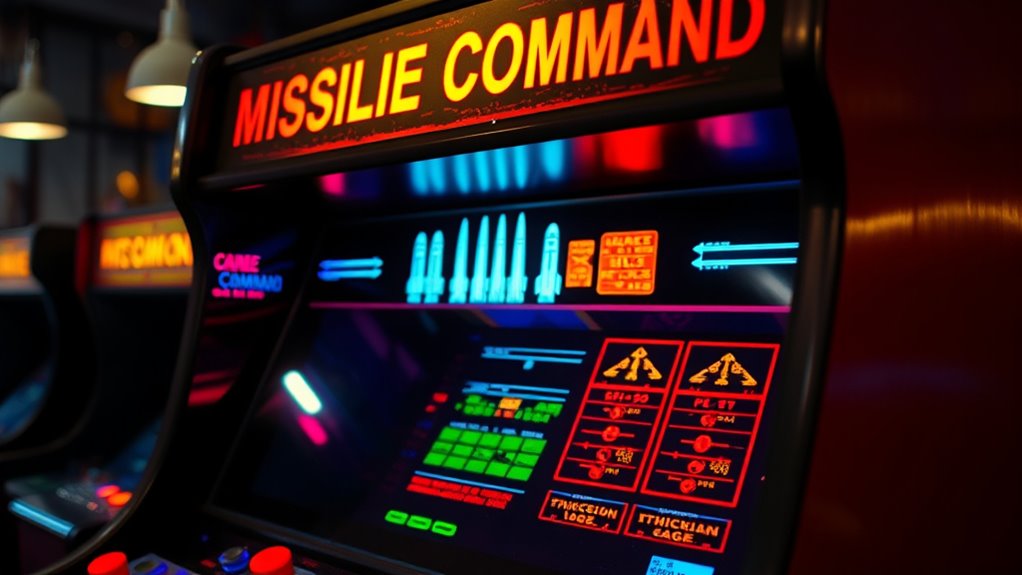

Missile Command reflects Cold War anxieties by putting you in the role of defending cities from incoming nuclear missiles, mirroring fears of nuclear escalation and mutual destruction. The game demands quick reflexes and strategic resource management, symbolizing the delicate balance of deterrence during tense geopolitical times. It captures the constant threat of nuclear attack and the importance of strategic defense. If you keep exploring, you’ll discover how this classic game encapsulates much more than just arcade action.
Key Takeaways
- Missile Command symbolized Cold War fears of nuclear escalation through its gameplay of defending cities from missile attacks.
- The game reflects Cold War anxieties by emphasizing strategic resource management and quick reflexes amid constant threats.
- Its theme acts as a metaphor for nuclear deterrence and the fragile balance maintained during tense geopolitical times.
- The arcade game encapsulates Cold War tensions, illustrating the importance of strategic defense in preventing nuclear conflict.
- Missile Command offers a simplified but powerful representation of nuclear deterrence and Cold War-era defense strategies.
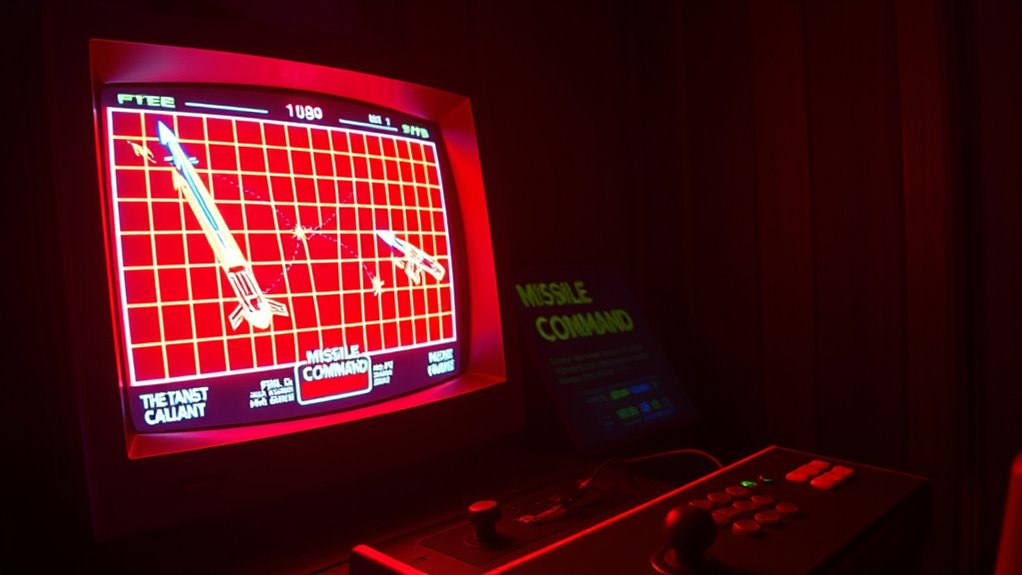
Missile Command is a classic arcade game that challenged players to defend cities from incoming nuclear missile attacks. As you take control, you quickly realize that your primary goal is to prevent the destruction of populated areas by intercepting incoming threats. This game reflects the Cold War-era fears of nuclear conflict and captures the tension surrounding strategic defense strategies. During the game, you act as a frontline defender, aiming your missiles at incoming enemy projectiles to protect your cities from annihilation. The gameplay emphasizes quick reflexes and strategic decision-making, mirroring the real-world importance of nuclear deterrence during tense geopolitical times.
A classic game of defending cities from nuclear missiles, reflecting Cold War fears and strategic deterrence.
In the context of Cold War anxieties, Missile Command’s focus on nuclear deterrence becomes especially evident. The game subtly echoes the idea that the threat of mutual destruction would lead nations to avoid direct conflict, relying instead on strategic defense measures. Your efforts to shoot down missiles serve as a metaphor for the delicate balance maintained by nuclear powers—each side trying to prevent the other from launching a devastating attack. The game’s relentless waves of incoming missiles symbolize the constant threat of nuclear escalation, reminding players of the fragile peace maintained through deterrence policies. It’s a vivid illustration of how strategic defense systems, like missile silos and early warning networks, were intended to prevent nuclear war by making it too risky for any side to attack.
As you play, you’re faced with a constant barrage of incoming threats, forcing you to prioritize targets and manage limited resources. This mirrors the real-world challenge of allocating defensive assets effectively to safeguard national security. Missile Command’s design emphasizes the importance of strategic positioning and timing, which are vital elements in any nuclear deterrence framework. The game doesn’t just test your reflexes; it also prompts you to think about the broader implications of missile defense systems and their role in preventing catastrophic conflict. It’s a simplified but powerful reminder of how strategic defense measures are meant to act as a shield, deterring enemies from initiating an attack out of fear of retaliation.
Ultimately, Missile Command encapsulates the Cold War’s complex dance of threat and response. It puts you in the middle of a tense standoff where careful planning and quick reactions can mean the difference between survival and destruction. By engaging with this game, you’re not just playing; you’re experiencing a small piece of the era’s intense focus on nuclear deterrence and strategic defense. It’s a compelling way to understand how these policies shaped global stability and why they continue to influence military strategies even today.

Arcade Classics – Atari Centipede Ultra Series Game Machine, 40 Games, 17" Liquid Crystal Screen – Indoor Cabinet, Retro, Gaming Console, Basement Decoration, Man Cave
- Classic Atari Arcade Experience: Includes favorites like Liberator and Super Breakout
- Extensive Game Selection: 40 games including 6 legends and 34 bonus titles
- Authentic Retro Gameplay: Original graphics, sound, and gameplay for nostalgia
As an affiliate, we earn on qualifying purchases.
As an affiliate, we earn on qualifying purchases.
Frequently Asked Questions
How Did Missile Command Influence Later Video Game Designs?
Missile Command influenced later video game designs by popularizing vector graphics, which gave games a sleek, precise look that remains iconic. You see its impact in the high score culture, encouraging players to compete for the top spot. Its gameplay mechanics inspired numerous shooters and defense games, establishing a foundation for fast-paced, skill-based gaming experiences. This legacy continues to shape how developers approach game visuals and competitive dynamics today.
Were There Any Cultural Impacts From Missile Command’s Release?
Your mind might explode imagining the cultural impact of Missile Command’s release; it shaped public perception by turning wartime symbolism into an interactive experience. This game made Cold War fears feel tangible, influencing how people viewed nuclear threats. It reflected societal anxieties, sparking conversations about war and peace. Through this, Missile Command didn’t just entertain—it became a mirror of Cold War tensions, leaving an indelible mark on culture and gaming history.
Did Missile Command Face Any Censorship or Controversy?
You’ll find that Missile Command did face some censorship and controversy, mainly due to its military censorship concerns and political controversy. Some critics argued it glamorized nuclear war, leading to debates about its appropriateness. Despite this, the game remained popular, but the controversy highlighted Cold War tensions. Developers had to navigate these sensitivities carefully, knowing that their game could stir political or military censorship issues.
What Were the Technical Challenges in Creating Missile Command?
Creating Missile Command was like building a house on shifting sands. You faced graphical limitations that kept animations simple, and input mechanisms like a trackball required precise calibration for quick reactions. You had to optimize graphics to run smoothly on arcade hardware, while designing controls that let you react fast under pressure. Overcoming these challenges meant balancing visual clarity with responsiveness, ensuring players could defend their cities in real-time.
How Did Missile Command Reflect Cold War Political Tensions?
You see Missile Command reflecting Cold War political tensions through its focus on nuclear paranoia and military symbolism. The game’s gameplay simulates defending cities from nuclear missile attacks, echoing fears of atomic warfare. It encapsulates the anxiety of nuclear arms race, emphasizing the destructive power and urgency of military defense. By engaging players in this simulated conflict, it mirrors societal fears and the intense military tensions of the Cold War era.
Conclusion
As you navigate Missile Command’s munitions and memories, you witness how war’s weight worsens while wariness wanes. The game’s grim glamour grips your gaze, guiding your gestures and guarding your psyche. Through this thrilling, tense terrain, you confront fears and fantasies alike—facing the fragile fearfulness of fallout and the fierce fervor for victory. Ultimately, Missile Command masters your mind, melding memory with menace, making your moment of madness a mirror of mankind’s mutable, merciless motives.