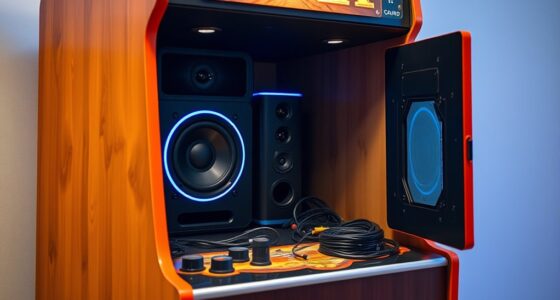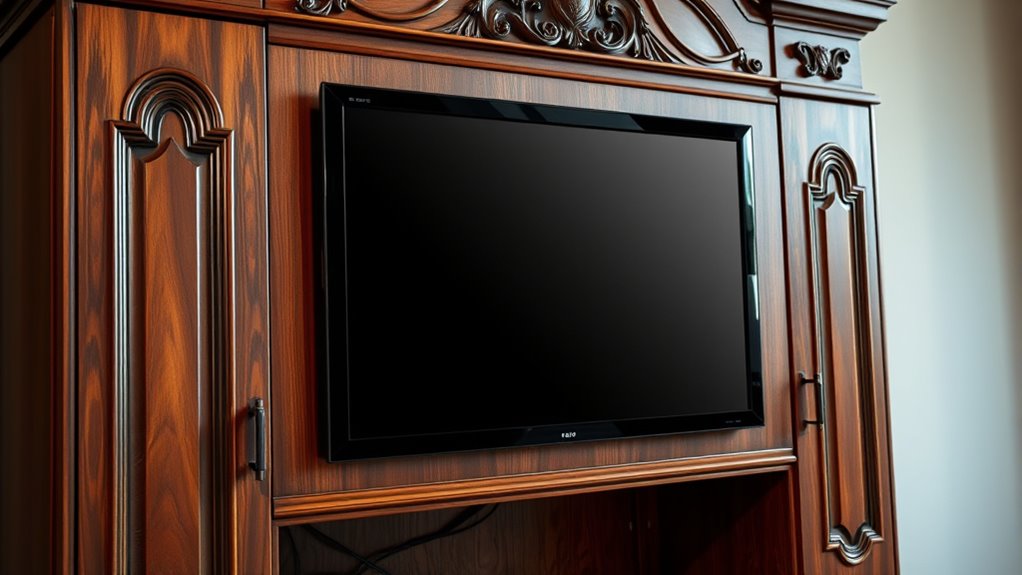

To install a modern LCD monitor in a classic cabinet, start by measuring the space carefully and choosing a slim-bezel monitor that matches your cabinet’s style. Use VESA mounts or custom brackets to secure the monitor firmly, hiding hardware with trim kits for a seamless look. Make certain proper cable management and adjust positioning for comfort. With the right approach, you can seamlessly blend modern technology into your vintage setup—keep going to learn more about perfecting this upgrade.

Play games on Amazon Luna for your game nights, included with Prime
- A rotating selection of games, no download needed
- Play on TV, laptop or phone
- Fast, free delivery for your gear, too
Key Takeaways
- Choose slim-bezel LCD monitors with compatible dimensions to seamlessly fit the cabinet opening.
- Use VESA-compatible mounts or custom brackets to securely attach the monitor within the classic cabinet.
- Measure carefully to ensure proper placement at a comfortable viewing height and avoid gaps or protrusions.
- Hide mounting hardware with custom faceplates, trim kits, or paint for a clean, integrated look.
- Manage cables neatly using cable management solutions to maintain a polished, professional appearance.
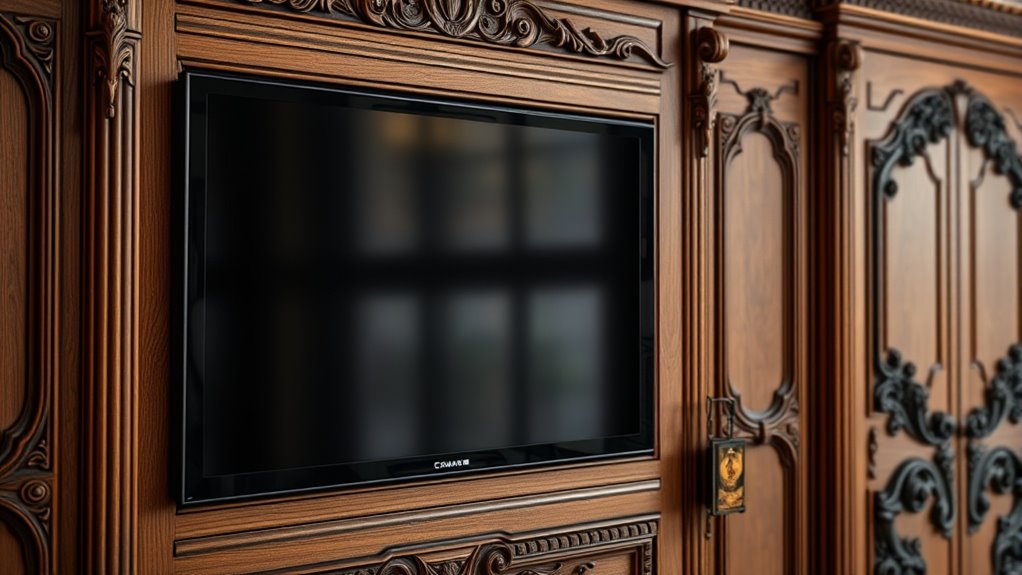
Replacing the bulky CRT with a modern LCD monitor can refresh the look and functionality of your classic cabinet. This upgrade not only enhances visual quality but also streamlines the overall appearance, making your setup feel more current. To achieve a seamless fit, you’ll need to consider appropriate mounting techniques that ensure stability and safety. The key is to select methods that securely hold the monitor while maintaining the cabinet’s aesthetic appeal. You might opt for custom brackets, VESA mounts, or a DIY frame that blends into the cabinet’s design. Each approach offers different advantages: VESA mounts are versatile and straightforward if your monitor supports them, while custom brackets can be tailored precisely to your cabinet’s dimensions. Whichever method you choose, ensure it’s sturdy enough to support the weight of the LCD and allows for easy access and maintenance.
Aesthetic integration is just as important as functionality. You want the new monitor to complement the cabinet’s original style, not clash with it. To do this, think about how the monitor’s frame, bezels, and placement will blend with the existing design. You might opt for a monitor with slim bezels or a neutral color that matches the cabinet’s finish. Additionally, think about how to hide the mounting hardware or framing to create a clean, polished look. Custom faceplates or trim kits can help conceal any unsightly mounting brackets, giving your upgrade a professional appearance. When planning the installation, take measurements carefully to ensure the monitor fits snugly within the cabinet opening, avoiding gaps or protrusions that could detract from the aesthetic. Ensuring proper color accuracy in the display can make a significant difference in visual quality and user satisfaction.
Properly integrating the LCD monitor into your classic cabinet requires attention to detail and patience. Start by removing the old CRT carefully, then measure the space to determine the best mounting position. You’ll want to ensure the monitor is mounted at a comfortable viewing height and angle. Secure the monitor using your chosen mounting technique, double-checking stability and alignment. Once mounted, tidy up any cables with cable management solutions to keep everything looking neat. If needed, add finishing touches such as custom trim or paint to seamlessly blend the new monitor with the cabinet’s original design. With thoughtful planning and execution, your classic cabinet will not only look amazing but also function efficiently with its modern upgrade.
slim bezel LCD monitor for vintage cabinet
As an affiliate, we earn on qualifying purchases.
As an affiliate, we earn on qualifying purchases.
Frequently Asked Questions
Can I Retrofit Any Classic Cabinet With an LCD Monitor?
Yes, you can retrofit many classic cabinets with an LCD monitor, but you need to take into account monitor mounting options and cabinet compatibility. Measure your space carefully to make sure the monitor fits securely. Use appropriate mounting brackets designed for your monitor and cabinet. Keep in mind that some cabinets may require modifications for proper fit and ventilation. Always verify the compatibility to avoid damage and ensure a seamless upgrade.
What Safety Precautions Are Necessary During Installation?
First things first, safety is your best friend here. Always unplug the power before working on electrical safety, and double-check that wiring is secure to prevent shocks. When it comes to mounting safety, make certain the monitor is firmly attached to prevent accidents or damage. Wear insulated gloves and use proper tools to avoid mishaps. Think of it as covering all your bases—you’ll stay safe and keep your project on track.
How Do I Hide Cables for a Clean Look?
To hide cables for a clean look, focus on cable management by using cable clips, sleeves, or raceways to route wires neatly along the cabinet’s interior or edges. Conceal excess lengths behind panels or inside the cabinet to keep everything tidy. You can also route cables through drilled holes or channels designed for aesthetic concealment. This not only improves the appearance but also reduces clutter and potential damage.
Will the LCD Monitor Damage the Cabinet?
Installing an LCD monitor in a cabinet won’t damage it if you consider monitor heat and cabinet stability. The monitor’s heat output is minimal, especially with proper ventilation, preventing damage to the wood. confirm the cabinet remains stable by securely mounting the monitor and avoiding excessive weight that could cause warping or tipping. Proper installation and ventilation help preserve your cabinet’s integrity and keep your monitor functioning safely and efficiently.
What Are the Best Mounting Options for Different Cabinet Types?
You’ll want the best mounting brackets for each cabinet type to guarantee a perfect fit. For wood cabinets, heavy-duty brackets with secure screws work wonders, while slim, adjustable mounts suit metal or glass cases perfectly. Always check cabinet compatibility before choosing your mounting options—using incompatible mounts can turn your sleek setup into a disaster. Trust me, the right brackets make installation smooth, safe, and look incredible.
Conclusion
Bringing modern LCD technology into a classic cabinet is like blending history with innovation—creating a masterpiece that respects the past while embracing the future. With a keen eye for detail and careful planning, you can transform your space into a seamless fusion of vintage charm and contemporary clarity. Don’t just preserve history; breathe new life into it. After all, isn’t it exciting to turn tradition into tomorrow’s treasure?
Fall Picks
fall essentials
As an affiliate, we earn on qualifying purchases.