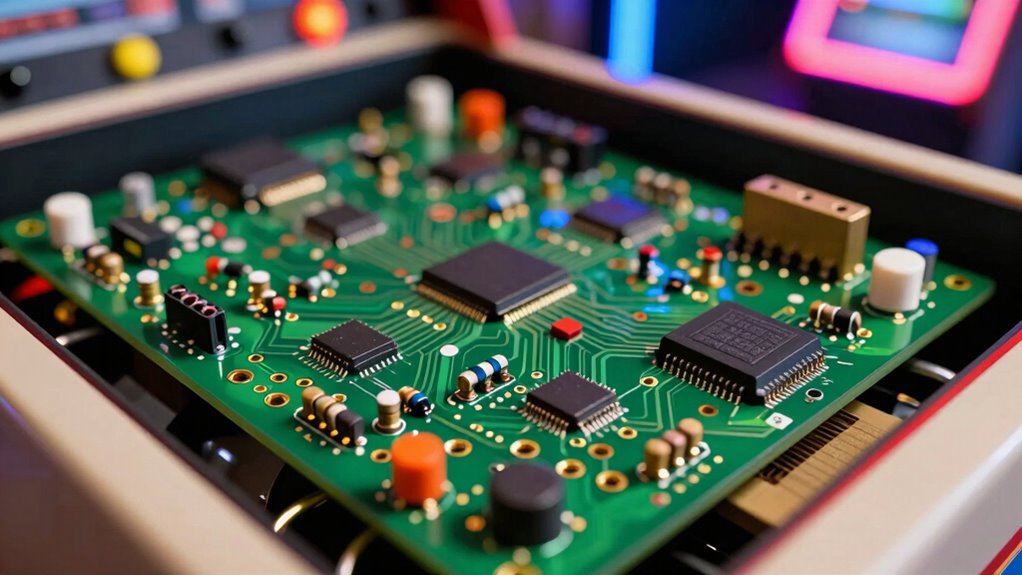

Printed circuit boards are essential to arcade history, transforming the way games are built and operated. They evolved from hand-wired prototypes to advanced multi-layer designs, which made arcade machines smaller, more reliable, and capable of complex functions. This progress allowed for richer graphics, sound, and interactive features. As you continue exploring, you’ll discover how these innovations shaped the modern arcade industry and its enduring legacy.

Play games on Amazon Luna for your game nights, included with Prime
- A rotating selection of games, no download needed
- Play on TV, laptop or phone
- Fast, free delivery for your gear, too
Key Takeaways
- Early arcade PCBs relied on manual hand-wiring and point-to-point construction, vital for initial hardware development.
- Transition to modern multi-layer PCBs enabled more compact, complex, and reliable arcade systems.
- Multi-layer PCBs facilitated integration of advanced graphics, sound, and input components, enriching gameplay.
- Manufacturing advancements improved quality, durability, and production speed, supporting industry growth.
- PCB innovations drove technological progress, shaping the evolution of immersive and sophisticated arcade gaming experiences.

Printed circuit boards (PCBs) have played a vital role in the evolution of arcade games, serving as the backbone that connects and powers the electronic components. In the early days of arcade gaming, vintage manufacturing techniques shaped how these boards were designed and built. During this period, manufacturers relied on hand-wiring and point-to-point construction methods, which were labor-intensive but crucial for the initial development of arcade hardware. As technology advanced, so did the manufacturing processes, leading to more compact, reliable, and mass-producible PCBs. This shift marked a significant point in technological evolution, enabling arcade machines to become more complex and efficient, supporting richer graphics, sound, and game logic.
Your journey through arcade history is closely tied to how PCBs transformed from simple, experimental circuits into intricate, multi-layered boards. Vintage manufacturing methods limited the scale and scope of early arcade hardware, but they also fostered innovation. Engineers and hobbyists alike tinkered with early prototypes, pushing the boundaries of what PCBs could achieve within the constraints of the technology at the time. As manufacturing techniques improved, PCBs became more standardized, allowing for faster production and higher quality. This not only helped arcade game developers introduce new features but also made maintenance and repairs more manageable, extending the lifespan of arcade cabinets. Additionally, multi-layer PCBs enabled more compact and powerful designs, which was essential for the development of increasingly sophisticated arcade systems.
The technological evolution of PCBs also influenced the design of arcade games by enabling more integrated and sophisticated circuitry. Multi-layer PCBs, for example, allowed multiple circuits to coexist on a single board, reducing size while increasing complexity. This innovation was essential as arcade games grew more elaborate, incorporating advanced graphics chips, sound processors, and input systems. You can see how these developments kept arcade gaming fresh and exciting, drawing in larger audiences and maintaining industry momentum. The shift from vintage manufacturing to modern PCB production underscored the importance of technological evolution in arcade history. It reflects how continuous improvements in PCB design, materials, and assembly techniques directly impacted the capabilities of arcade machines, paving the way for the sophisticated gaming experiences we enjoy today.
Furthermore, the advancements in manufacturing techniques allowed for better quality control and higher production speeds, which were crucial for meeting the growing demand for arcade machines worldwide. These improvements also supported the development of more complex circuitry, enabling arcade games to feature richer multimedia and interactive elements. The integration of new materials and assembly methods also contributed to improved durability and reliability of arcade hardware, ensuring longer operational lifespans in busy arcade environments. The ongoing innovation in PCB technology continues to influence how arcade hardware is developed and maintained, ensuring that the industry adapts to new technological challenges.
In essence, PCBs are more than just circuit carriers—they’re a reflection of technological progress and innovation. From vintage manufacturing roots to cutting-edge designs, they’ve propelled arcade gaming into new eras, making possible the complex, immersive experiences that continue to captivate players worldwide.
As an affiliate, we earn on qualifying purchases.
Frequently Asked Questions
How Did PCB Manufacturing Evolve Alongside Arcade Game Development?
You see, PCB manufacturing evolved with arcade game development through circuit miniaturization, allowing more complex games in smaller cabinets. As technology advanced, manufacturing automation streamlined production, reducing costs and increasing precision. This progress enabled arcade manufacturers to produce reliable, compact, and sophisticated circuit boards quickly, fueling the rapid growth of arcade games. Your understanding of these innovations highlights how PCB development was vital in shaping the vibrant arcade industry we remember today.
What Materials Were Initially Used in Early Arcade PCBS?
You should know that early arcade PCBs primarily used early copper, which provided a conductive base for circuits. During this time, soldering techniques were relatively simple but vital, as they connected components to the copper traces. These materials and methods laid the foundation for more advanced PCB manufacturing, enabling the complex arcade games we enjoy today. Your understanding of these basics highlights how essential early materials and techniques were in arcade history.
Were There Any Notable PCB Design Innovations Specific to Arcade Machines?
Imagine a symphony of innovation—arcade-specific circuitry revolutionized game design. You’ll notice that designers introduced an innovative layout to optimize space and performance, making arcade machines more reliable and easier to maintain. These PCB design innovations often featured custom connectors and modular components, streamlining repairs and upgrades. This creative engineering not only enhanced gameplay experience but also set the stage for future advancements in electronic entertainment, making arcade machines true technological marvels.
How Did PCB Failures Impact Arcade Game Longevity and Maintenance?
You’ll find that PCB failures, like faulty solder joints and component degradation, markedly impacted arcade game longevity and maintenance. These issues cause game malfunctions, leading to frequent breakdowns and costly repairs. As a result, arcade operators had to regularly troubleshoot, re-solder joints, or replace components to keep machines running. This maintenance challenge affected game availability and revenue, emphasizing the importance of durable PCB design in extending arcade machine lifespan.
Did PCB Technology Influence the Design of Modern Gaming Consoles?
Imagine the thrill of retro gaming, where circuit miniaturization revolutionized your experience. PCB technology deeply influenced modern gaming consoles, making them sleeker and more powerful. This miniaturization allowed for complex graphics and faster processing, transforming your gameplay. Without PCB advancements, today’s consoles wouldn’t be as compact or efficient. So, as you enjoy modern gaming, remember that PCB technology’s evolution has been the silent force behind the immersive worlds you love.
Conclusion
As you reflect on arcade history, remember that printed circuit boards are the silent architects of your gaming adventures. Like the heartbeat beneath the neon glow, they symbolize innovation and connection, bridging imagination with reality. Without them, the vibrant worlds and unforgettable moments would remain just dreams. So, next time you step into an arcade, honor the unseen threads woven within each machine—reminding us that beneath every game lies a web of silent, enduring artistry.
Fall Picks
fall essentials
As an affiliate, we earn on qualifying purchases.