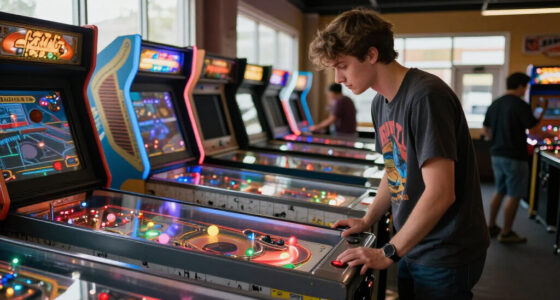
Museums and restoration societies play a crucial role in preserving pinball history by safeguarding vintage machines, documenting technological advances, and fostering community involvement. They restore, display, and maintain these games, ensuring the cultural heritage remains accessible for future generations. By supporting these efforts, you help protect the creativity and innovation behind pinball’s evolution. If you want to discover how these organizations keep pinball alive and thriving, there’s more to explore ahead.

Play games on Amazon Luna for your game nights, included with Prime
- A rotating selection of games, no download needed
- Play on TV, laptop or phone
- Fast, free delivery for your gear, too
Key Takeaways
- Museums and restoration societies curate and display vintage pinball machines, showcasing technological and design evolution to the public.
- They collaborate on digital archiving efforts, preserving images, schematics, and game code for future research.
- These organizations organize restoration projects, helping maintain original craftsmanship and functionality of classic machines.
- They foster community engagement through events, exhibitions, and knowledge-sharing to promote pinball heritage.
- Their combined efforts protect pinball history from deterioration, theft, and loss, ensuring cultural legacy endures for future generations.

Have you ever wondered why safeguarding pinball history matters? It’s more than just keeping old machines around; it’s about protecting a cultural phenomenon that’s shaped entertainment for generations. One of the key ways enthusiasts and preservationists do this is through digital archiving. By digitizing high-resolution images, videos, schematics, and game code, they create a permanent record accessible to anyone interested. Digital archiving allows you to explore the evolution of pinball technology, discover rare machines, and learn about design changes over decades. It also helps shield this history from physical deterioration, theft, or loss, guaranteeing future generations can appreciate its significance. As part of this effort, collector communities play an essential role. These groups bring together enthusiasts who share a passion for preserving and restoring pinball machines. They often collaborate on digital projects, pooling resources and knowledge to build thorough archives that document the hobby’s rich history. In collector communities, you find experienced restorers sharing techniques and advice, helping newcomers learn how to repair and maintain vintage machines. This communal approach fosters a sense of shared responsibility and passion, making preservation sustainable and thriving. These groups often organize events, swap meets, and exhibitions, which serve as physical manifestations of their collective effort to keep pinball alive. They also work closely with museums and restoration societies, helping to curate exhibits that highlight important milestones and innovations in pinball history. For you, being part of these communities means gaining access to invaluable knowledge, rare parts, and mentorship that can enhance your own collection or restoration projects. The combined efforts of digital archiving and collector communities ensure that pinball’s cultural legacy doesn’t fade away. Instead, it continues to grow through shared stories, restored machines, and accessible digital resources. Preservation isn’t just about saving old machines; it’s about maintaining a living history that reflects social trends, technological advances, and creative expression within the hobby. The use of digital archiving technology is crucial in safeguarding this history for future generations. Whether you’re a casual collector or a dedicated restorer, participating in these efforts helps keep the spirit of pinball alive. By supporting digital archiving initiatives and engaging with collector communities, you contribute directly to a movement that values history, craftsmanship, and community. Ultimately, safeguarding pinball history is about ensuring that the joy, innovation, and cultural impact of pinball remain accessible and inspiring for generations to come. Your involvement helps bridge the past and the future, securing a legacy that celebrates the timeless appeal of the game.
vintage pinball machine restoration kit
As an affiliate, we earn on qualifying purchases.
As an affiliate, we earn on qualifying purchases.
Frequently Asked Questions
How Can I Donate a Pinball Machine to a Museum?
You can donate a pinball machine to a museum by contacting their donation or acquisitions department directly. Make certain you provide detailed information about the machine’s condition, age, and history to support museum donations and preservation efforts. Many museums appreciate high-quality, well-maintained machines. Arrange for proper transportation and documentation, then complete any required forms. Your donation helps preserve pinball history and supports the museum’s ongoing preservation efforts.
What Are the Costs Involved in Restoring Old Pinball Machines?
Restoring an old pinball machine typically costs between $500 and $2,500, depending on its condition. The biggest expenses are parts, labor, and cleaning. Curiously, restoration costs can vary widely based on the machine’s rarity. You can fund these projects through donations, grants, or fundraising events. Be prepared to invest time and money, but the reward is reviving a piece of gaming history that enthusiasts cherish.
Are There Volunteer Opportunities at Pinball Museums?
Yes, you can find volunteer opportunities at pinball museums. As a pinball collector or museum volunteer, you’ll help restore machines, educate visitors, and promote pinball history. Many museums welcome enthusiasts who are passionate about preserving this nostalgic game. Volunteering allows you to share your knowledge, learn new skills, and contribute to the community. Check with local museums or restoration societies to discover how you can get involved and support pinball’s legacy.
How Do I Start a Local Pinball Restoration Society?
To start a local pinball restoration society, you should first gather enthusiasts in your community and host an initial meeting. Focus on community outreach to attract members and raise awareness. Develop fundraising strategies like events or crowdfunding to support your efforts. Collaborate with local businesses or museums to gain resources. By actively engaging members and seeking community support, you’ll create a thriving society dedicated to preserving pinball history.
What Resources Are Available for Learning Pinball Repair Techniques?
You’re in luck—learning pinball repair techniques is easier than ever. Jump into online tutorials and repair manuals, which are treasure troves of step-by-step guides. You can find video tutorials on platforms like YouTube, and detailed manuals from pinball parts suppliers or dedicated websites. These resources help you troubleshoot issues and master repairs, turning you into a skilled pinball tech in no time. It’s a hands-on hobby that’s worth every penny!
Conclusion
As you explore the world of pinball preservation, you realize it’s more than just keeping old machines running—it’s about safeguarding a vibrant part of gaming history. Every restored game holds stories of past players, innovations, and culture. But as technology advances and fewer enthusiasts step in, the question remains: will this legacy survive the coming years? The future of pinball preservation hangs in your hands—will you help keep the game alive?
Fall Picks
fall essentials
As an affiliate, we earn on qualifying purchases.