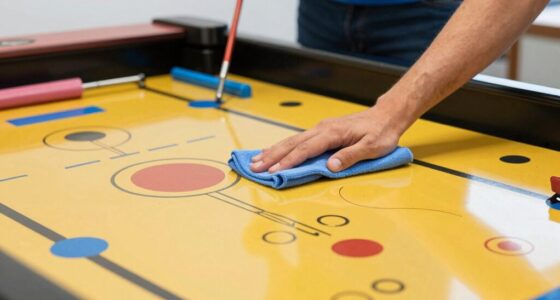

Pinball machines teach risk and reward by challenging you to aim for targets that can boost your score or trigger special features, while penalties like losing the ball remind you of potential setbacks. Visual cues, score multipliers, and engaging gameplay push you to weigh the dangers and benefits of each shot. The game’s design encourages strategic thinking and emotional responses, helping you better understand balancing risk and reward. Keep exploring to discover even more about how this timeless game shapes decision-making skills.
Key Takeaways
- Pinball machines use visual cues and score multipliers to encourage players to take risky shots for higher rewards.
- The game balances rewards with penalties like ball drain to teach risk management.
- Feedback mechanisms, such as score increases or penalties, reinforce decision-making based on risk assessment.
- Unpredictable ball movement heightens emotional investment, mirroring real-world risk considerations.
- Players learn to weigh potential gains against possible losses, improving strategic thinking through gameplay.

Have you ever wondered how a simple game of pinball can teach you about risk and reward? When you step up to a pinball machine, you’re immediately engaged not just by its flashing lights and buzzing sounds, but also by the intricate game design that challenges your decision-making. Every tilt, shot, and target is carefully crafted to balance risk and reward, and understanding this balance helps you see how the game influences your player psychology. As you aim for high scores, you realize that taking certain risks—like launching the ball hard or aiming for tricky targets—can either pay off with big points or lead to losing your ball entirely. This tension between pushing your luck and playing it safe is at the heart of both pinball and many real-life decisions.
Pinball’s clever design balances risk and reward, shaping player psychology and decision-making through visual cues, rewards, and penalties.
The game design of pinball machines emphasizes risk and reward through visual cues, score multipliers, and bonus modes. When you hit a specific target or complete a sequence, the game often rewards you with increased points or special features, encouraging you to take chances. Conversely, missing targets or losing the ball can result in penalties, like draining your ball or reducing your score. This push-and-pull keeps you alert and attentive, constantly weighing whether to aim for a risky shot that might boost your score or play conservatively to preserve your current standing. Your player psychology is deeply engaged here, as the thrill of potential reward motivates you to take calculated risks, even if there’s a chance of setbacks. Additionally, the game’s feedback mechanisms mirror real-world decision-making processes, reinforcing the concept that weighing risks and rewards is a fundamental part of strategic play. Recognizing these elements can help you better understand how game design influences behavior and decision-making.
Pinball machines also tap into your instinctual desire for achievement. The design makes rewards feel immediate and tangible, reinforcing your willingness to take risks. When you succeed in a risky shot, it’s a rush that encourages you to continue pushing your luck, creating a cycle of engagement. At the same time, the unpredictability of ball movement and machine responses heightens your emotional investment, making each decision feel impactful. This mirrors how people evaluate risk in everyday life—balancing potential gains against possible losses. Furthermore, the incorporation of visual cues guides players towards certain targets and decisions, subtly influencing their perceptions of risk and reward. Your responses are shaped by the game’s feedback loops, which condition you to take chances when the potential reward outweighs the risk. A deeper understanding of how player psychology is influenced by game mechanics can provide insights into broader decision-making processes.
Ultimately, pinball teaches you that risk and reward are not just abstract concepts but are deeply rooted in game design and player psychology. It’s a dynamic interplay that keeps you coming back, eager to master the balance between pushing your limits and playing it safe. The more you understand this, the better you become at making strategic decisions, both on and off the game.

New Era Pinball Game Black – Interactive Tabletop or Floor Arcade Pinball Machine for Kids & Adults – LED Scoring, Lights & Sounds, Fast & Fun 3-Ball Launch Game – Ideal Gift for Birthdays & Christmas
- Interactive Mini Pinball Game: Fast-paced fun with LED scoring and sounds
- Suitable for All Ages: Perfect for kids and adults, portable design
- Enhances Hand-Eye Coordination: Boosts reflexes and focus through gameplay
As an affiliate, we earn on qualifying purchases.
As an affiliate, we earn on qualifying purchases.
Frequently Asked Questions
How Do Different Pinball Machine Designs Influence Player Decision-Making?
Different pinball machine designs influence your decision-making by incorporating design innovation that targets player engagement. For example, unique layouts, innovative targets, and varied scoring opportunities create different risk-reward scenarios, encouraging you to choose between safe shots or high-risk, high-reward plays. These design elements keep you engaged, challenge your skills, and push you to weigh immediate risks against potential rewards, making each game dynamic and exciting.
Can Playing Pinball Improve Real-Life Risk Assessment Skills?
Playing pinball can sharpen your risk perception and reward optimization skills. As you decide when to go for risky shots or play it safe, you learn to evaluate potential outcomes quickly. This practice transfers to real-life situations, helping you better assess risks and benefits. By mastering timing and decision-making during the game, you become more confident in managing risks and maximizing rewards outside of the pinball machine.
What Psychological Effects Do Pinball Games Have on Players?
Playing pinball boosts your engagement and sharpens your cognitive effects, making your mind more alert and responsive. The fast-paced action stimulates your attention span, encouraging quick decision-making. It also triggers dopamine release, giving you a sense of excitement and satisfaction. These psychological effects can enhance your mood, improve focus, and foster a sense of accomplishment, making pinball not just fun but also beneficial for mental agility.
Are There Specific Strategies to Maximize Rewards in Pinball?
To maximize rewards in pinball, you need to master score optimization and risk management, like balancing on a tightrope. Focus on hit targets that yield high points while avoiding reckless shots that could drain your ball. Use strategic nudges and timing to lock balls or activate features, boosting your score without risking unnecessary losses. Consistently honing these skills transforms your game into a calculated dance of risk and reward.
How Does the Randomness in Pinball Impact Learning About Risk?
The randomness in pinball impacts your understanding of risk by introducing chance variability and decision uncertainty. As you play, you realize that even well-planned shots can result in unexpected outcomes, teaching you to weigh the likelihood of success versus failure. This unpredictability helps you develop intuition about managing risk, encouraging you to take calculated chances while accepting that some outcomes remain beyond your control.
Conclusion
Playing pinball isn’t just fun; it’s a lesson in risk and reward. Every shot you take involves decisions that balance potential points against the risk of losing the ball. Did you know that the average player scores around 10,000 points per game? That statistic shows how understanding when to play it safe or go all-in can dramatically boost your success. So, next time you play, remember—your choices mirror real-life strategies of risk and reward.