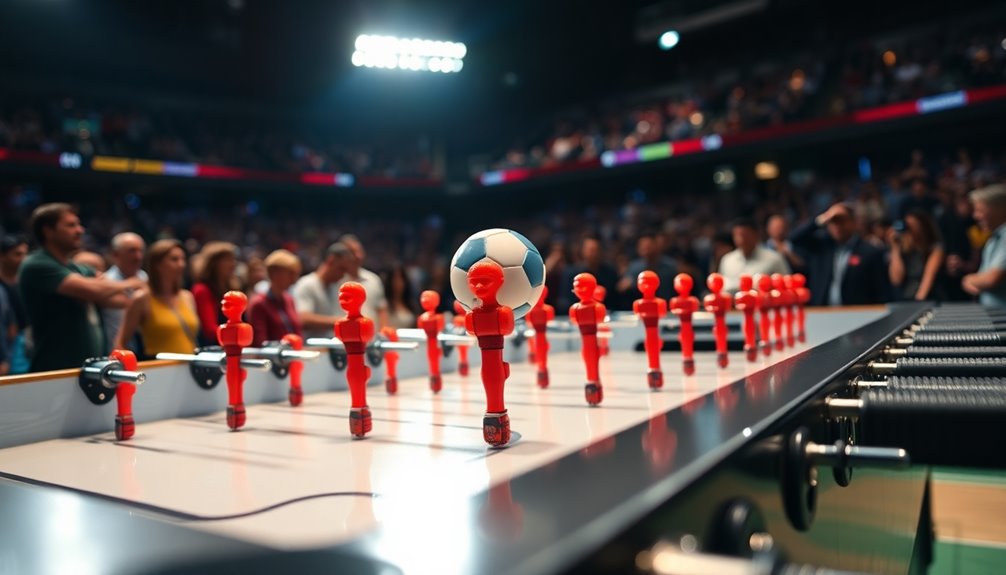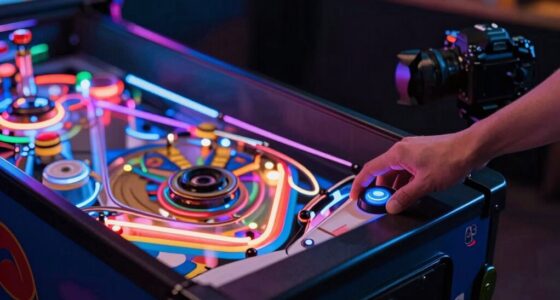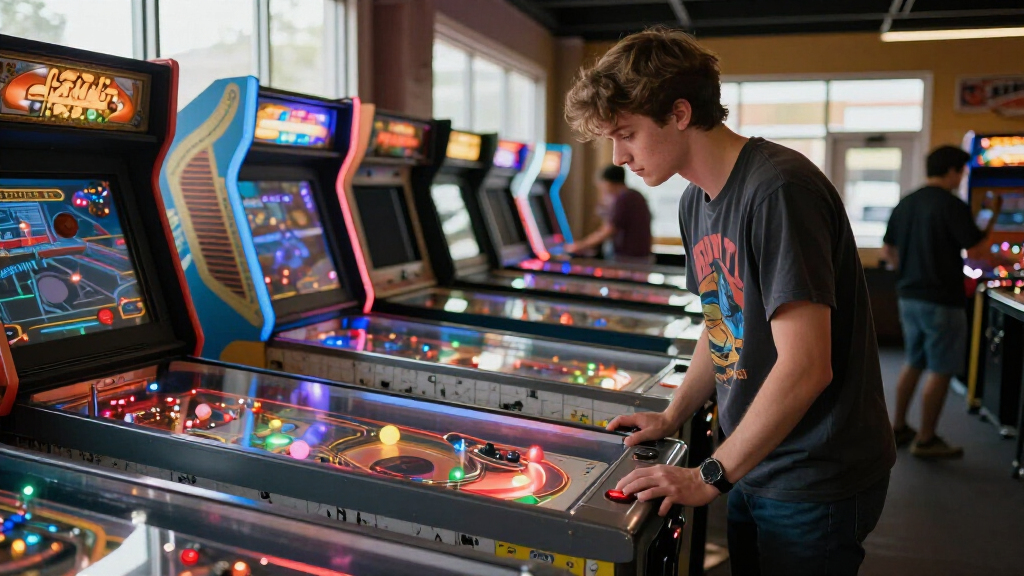

Shopping for an arcade-style pinball machine means choosing between the physical game of steel balls, flippers and mechanical parts, and a digital machine that recreates pinball on a screen. The physical option gives each shot tangible weight, distinctive sound and a cabinet that feels like arcade furniture; the digital option typically costs less, takes up less room and can offer a much larger table library. The real decision is whether authentic physical play justifies the higher price, footprint and upkeep. Choose a physical machine if the cabinet itself and the feel of live play are central to the purchase. Choose digital if you want variety, easier setup and lower ownership costs.

Play games on Amazon Luna for your game nights, included with Prime
- A rotating selection of games, no download needed
- Play on TV, laptop or phone
- Fast, free delivery for your gear, too
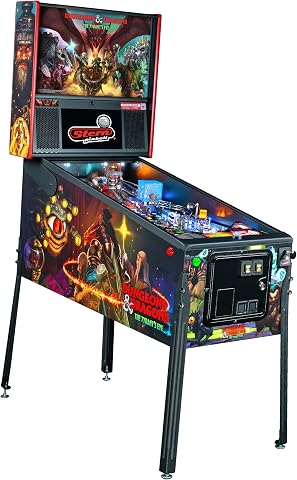
Stern Pinball Dungeons & Dragons: The Tyrant’s Eye Pro Edition Arcade Pinball Machine
- ✔ Edition: Pro Edition
- ✔ Campaign modes: 28
- ✔ Selectable adventurers: Paladin, Wizard, Cleric, Rogue

Alice Goes to Wonderland Pinball Machine with LED Lighting
- ✔ Gameplay: Mechanical flippers, bumpers, spinners, and multiball modes
- ✔ Theme: Alice in Wonderland
- ✔ Lighting: LED

Street Fighter II Arcade Pinball, Premium Series
- ✔ Game type: Electronic tabletop arcade pinball
- ✔ Theme: Street Fighter II
- ✔ Features: Vibrating bumpers, multicolored LEDs, electronic scoreboard, automated ball-gutter detection
At a Glance
| Criteria | Physical arcade-style pinball machine | Digital arcade-style pinball machine | Winner |
|---|---|---|---|
| Play feel and authenticity | Real ball movement, flippers, switches and cabinet sound | Screen-based play; controls and cabinet quality vary by model | A |
| Table variety | Usually one table per machine, with some themed variations | Often many tables, with additional digital tables available | B |
| Upfront cost | High; new and collectible machines can cost several thousand dollars | Lower; options range from compact units to premium cabinets | B |
| Space and setup | Large, heavy cabinet; needs a stable location and power | Smaller models fit more homes; setup is usually simpler | B |
| Maintenance | Mechanical parts may need adjustment, cleaning or repair | Little mechanical upkeep; software and controls may need attention | B |
| Social and display appeal | Strong arcade presence and familiar head-to-head play | Can support multiplayer, but has less physical presence | A |
| Long-term value | Can hold appeal for collectors, but resale depends on condition and demand | Broad play variety for the money, though software support and licensing can change | Depends |
Stern Pinball Dungeons & Dragons: The Tyrant’s Eye Pro Edition Arcade Pinball Machine
For buyers who want an arcade cabinet with a substantial game structure, Stern’s Dungeons & Dragons Pro is the strongest fit in this group. Its 28 modes, four selectable adventurers, unlockable characters, multiballs, and three possible endings give the game a campaign framework that goes beyond a sequence of isolated rounds. More than 45 monsters, hand-drawn artwork, orchestral music, and custom voice performances reinforce the role-playing theme while giving the cabinet a more elaborate presentation than the compact Alice or tabletop Street Fighter II.That breadth is also the reason it ranks first for overall arcade-style appeal: the supplied description gives us the clearest sense of a large, feature-rich pinball experience. It does not, however, establish specific mechanical details such as flipper configuration or cabinet dimensions. Buyers who prioritize known mechanical components may find Alice’s description more concrete, while Street Fighter II is far easier to place in a small room. Stern is the pick for a dedicated game area, not for a desk or tight apartment corner.There is a progression tradeoff, too. Ranger, Barbarian, and Bard must be unlocked through the campaign, so not every adventurer is immediately available. That can give play a sense of progression, but it may frustrate buyers who want every option accessible from the start. We also have no listed measurements, weight, or performance details to assess delivery and setup. Its scale and feature set make it the most ambitious choice here, but prospective owners should confirm space and installation needs before committing.
Pros:
- 28 campaign modes and three possible endings offer more stated progression than the other picks.
- Four selectable adventurers plus three unlockable characters support different play approaches.
- More than 45 monsters, original orchestral music, and custom voice performances create a layered theme.
- Multiballs add pinball-style variation to the campaign structure.
Cons:
- The arcade cabinet requires substantial space.
- Three adventurers require campaign progress to unlock.
- The supplied details do not include dimensions or specific mechanical playfield components.
Best for: Buyers with room for an arcade cabinet who want themed campaign progression, varied modes, and a detailed fantasy presentation.
Not ideal for: Shoppers with limited floor space or anyone who wants all characters available immediately without campaign unlocking.
Bottom line: Choose Stern for the deepest described arcade campaign, provided you have the room and are comfortable unlocking some characters through play.
“Choose Stern for the deepest described arcade campaign, provided you have the room and are comfortable unlocking some characters through play.”
Alice Goes to Wonderland Pinball Machine with LED Lighting
Alice Goes to Wonderland is the middle-ground choice for buyers who want mechanical pinball elements at home without the listed substantial-space requirement of Stern’s arcade cabinet. Its flippers, bumpers, spinners, and multiball modes make the gameplay description more recognizably mechanical than Street Fighter II’s electronic tabletop format. The compact cabinet is intended for home spaces, while LED lighting and custom artwork give it a visible presence even when the fantasy theme is not in play.Compared with Stern, Alice offers fewer details about structured progression: the listing names challenges inspired by the Mad Hatter, Cheshire Cat, and White Rabbit, but does not specify a mode count or branching campaign. That makes it a simpler proposition for buyers who prefer a themed home game over an elaborate campaign. Against Street Fighter II, it is the better fit for someone who puts physical flippers and spinners ahead of compact tabletop effects.The main limitation is missing information. No dimensions or weight are provided, so “compact” does not tell us whether it will fit a particular shelf, table, or room. The listing also gives no customer or performance details from which to judge how the components play over time. That uncertainty matters more here than it does with Stern’s clearly described arcade format. We would shortlist Alice for its combination of mechanical features and home-focused design, then verify its actual size and setup requirements before buying.
Pros:
- Mechanical flippers, bumpers, and spinners support skill-based play.
- Multiball adds variety to the core game.
- The compact home cabinet is positioned for smaller spaces than a full arcade machine.
- Alice-inspired challenges, artwork, and LED lighting give it a distinct visual theme.
Cons:
- No dimensions or weight are supplied, making space planning difficult.
- No performance details are provided for judging the play experience.
- The listing does not specify the number or structure of its game modes.
Best for: Home buyers who want mechanical flippers, bumpers, spinners, and multiball in a cabinet described as compact.
Not ideal for: Buyers who need confirmed dimensions, want a clearly specified campaign, or expect detailed performance information before choosing.
Bottom line: Pick Alice when mechanical gameplay and a home-oriented cabinet matter more than a detailed campaign or confirmed measurements.
“Pick Alice when mechanical gameplay and a home-oriented cabinet matter more than a detailed campaign or confirmed measurements.”
Street Fighter II Arcade Pinball, Premium Series
Street Fighter II is the practical choice when available space matters more than full-size cabinet scale. This electronic tabletop game brings together fast flippers, vibrating bumpers, flashing multicolored LEDs, and an electronic scoreboard. Automated ball-gutter detection and a three-drain game-ending rule give the play a defined arcade-like structure, while familiar characters, music, and sound effects connect each round to the fighting game series.Against Alice, Street Fighter II offers more explicit electronic feedback and a clear tabletop footprint, while Alice is the stronger option for buyers seeking named mechanical components such as spinners and bumpers. Compared with Stern, Street Fighter II is far easier to imagine in a small room, but its compact format cannot promise the same full-cabinet presence. The listing calls it pinball, yet the electronic tabletop design is an important distinction for anyone expecting the feel and scale of a traditional arcade machine.This pick makes sense for casual play, younger players, or a shared surface where a full cabinet would be impractical. Its recommended age is six and up, and the scoreboard makes tracking high scores part of the appeal. The tradeoff is that the product description does not provide dimensions or detail the flipper mechanics beyond calling them fast. Buyers seeking deeper campaign play should look to Stern; those who want a mechanical home cabinet should compare Alice closely. Street Fighter II wins on compactness and franchise presentation, not on scale.
Pros:
- Tabletop format suits limited spaces more readily than Stern’s arcade cabinet.
- Vibrating bumpers and flashing LEDs provide visible and tactile feedback.
- Electronic scoreboard tracks high scores, with automated ball-gutter detection.
- Official Street Fighter II characters, music, and sound effects anchor the theme.
Cons:
- Tabletop scale differs from full-size arcade pinball gameplay.
- The game ends after three drains, which may not suit every player’s preferred format.
- Dimensions and detailed mechanical specifications are not included.
Best for: Buyers who want a compact, electronically scored pinball-style game for a desk, game room surface, or casual family play.
Not ideal for: Players who expect a full-size arcade cabinet or prioritize mechanical pinball components and a larger play experience.
Bottom line: Choose Street Fighter II for compact, themed electronic play, while keeping expectations aligned with its tabletop scale.
“Choose Street Fighter II for compact, themed electronic play, while keeping expectations aligned with its tabletop scale.”
As an Amazon Associate we earn from qualifying purchases.
Key Differences
The biggest difference is what the player interacts with. A physical machine sends a real ball across a playfield, with bumps, rebounds and timing that are difficult to reproduce exactly on a screen. That tangible response is the point for many enthusiasts, and it gives each cabinet a distinct character. Digital play trades that sensory fidelity for access: one machine can contain a library of tables, making it easier to sample different layouts and themes without buying multiple cabinets.
Ownership also feels different. A physical machine is a substantial purchase and a substantial object; buyers need room, a suitable route into the home and a plan for upkeep. A digital machine can be a practical way to get regular pinball play without committing to a full-size cabinet. It may still be a sizable purchase if built as a dedicated cabinet, but it generally costs less and requires less mechanical attention. The better value depends on whether the buyer values one table’s physical authenticity or many tables’ variety.
Neither format is automatically the right substitute for the other. Digital machines suit people who want convenient play and broad choice. Physical machines suit people who care about real-ball behavior, cabinet art and the experience of owning an arcade object. Before comparing specific models, check what tables are included, whether additional software requires separate purchases, and how much room the machine needs.
Detailed Comparison
Play feel and authenticity (Physical arcade-style pinball machine wins — major)
The physical machine wins by a wide margin: the ball, flippers, bumpers and playfield are all real, and cabinet sounds come from the game itself. Digital versions can reproduce rules, lighting and table layouts, but their feedback depends on the screen, controls and any vibration features. For players who notice ball response and mechanical timing, this is a major gap; for casual play, a good digital cabinet can still be satisfying.
Table variety (Digital arcade-style pinball machine wins — major)
Digital machines usually win because one unit can provide numerous licensed or original tables, depending on its software library. A physical machine normally centers on a single playfield, so trying another design means finding another machine. This is a major practical difference for players who get bored with one layout or want to explore many eras and themes. Check the actual included library: table counts, add-on costs and licensing vary.
Upfront cost (Digital arcade-style pinball machine wins — major)
Digital machines win for affordability. Physical cabinets often cost several thousand dollars, especially when new, restored or collectible. Digital options span a range, but even a dedicated cabinet commonly costs less than buying a comparable collection of physical machines. The gap is major for first-time buyers; paying more for physical play makes sense only if the real-ball experience or collectible cabinet is a priority.
Space and setup (Digital arcade-style pinball machine wins — moderate)
Digital machines generally take less space and are easier to place, particularly compact models. Full-size physical machines are heavy and need enough clearance for play, delivery and service access. This is a moderate-to-major difference in apartments, shared rooms or homes with narrow entrances. Measure the full route and final footprint before buying either format, since premium digital cabinets can also be bulky.
Maintenance (Digital arcade-style pinball machine wins — moderate)
Digital machines win on routine ownership effort. Physical machines have moving parts and may need cleaning, adjustments or replacement components; age and condition affect the work. Digital models avoid most mechanical service but can still develop control, display or software issues. The gap is moderate: buyers who enjoy maintaining arcade equipment may not see upkeep as a drawback, while buyers seeking simple plug-in play will likely prefer digital.
Physical cabinets usually win as furniture and as a shared attraction. Their artwork, sounds and mechanical play make them a visible focal point, and friends can gather around the same table. Digital cabinets can still support multiplayer and deliver arcade styling, but a screen cannot provide the same physical presence. The difference is moderate and matters most when the machine is meant to anchor a game room or collection.
Long-term value (moderate difference)
This is a genuine split. A physical machine may retain collector interest if it is a sought-after title kept in good condition, but resale is not guaranteed and repairs can affect value. A digital machine often gives more tables per dollar, though its library may depend on software support and licensing. Physical wins for collectible ownership; digital wins for variety and everyday cost per table. Compare specific titles and support terms before assigning resale value.
Physical arcade-style pinball machine: Pros and Cons
Pros:
- Real ball, playfield and mechanical response
- Distinctive cabinet art, sound and arcade-room presence
- Potential collector appeal for sought-after, well-kept titles
Cons:
- High purchase price, often several thousand dollars
- Large, heavy cabinet with delivery and placement demands
- Mechanical upkeep can require time, parts or specialist service
- Usually centered on one table
Digital arcade-style pinball machine: Pros and Cons
Pros:
- Lower entry cost and less space than most full-size physical machines
- Access to many tables from one machine, depending on the library
- Less mechanical maintenance and easier setup
- Convenient way to try varied themes and rules
Cons:
- Screen-based play does not fully match a real ball and playfield
- Table libraries, add-on costs and software support vary
- May have less display and collector appeal than a physical cabinet
- Premium digital cabinets can still take up substantial room
Who Should Choose What
Choose Physical arcade-style pinball machine if:
- You want the real-ball feel and mechanical response above all else.
- You have room for a full cabinet and are comfortable budgeting for upkeep.
- You value a particular physical table, its artwork or its potential collector interest.
Choose Digital arcade-style pinball machine if:
- You want a lower-cost way to play a broad range of tables.
- Your space is limited or you want easier delivery and placement.
- You prefer low-maintenance entertainment for casual play or varied household use.
Skip both if: Skip both if you mainly want occasional pinball and lack room or budget for a dedicated machine; playing at a local arcade or using a console or PC pinball game may fit better.
Value for Money
Digital is the better value for most buyers who want a home pinball experience: it costs less than a physical machine in many cases and spreads the purchase across a library of tables. That value depends on the included games and the cost of additions, so compare the actual catalog rather than a headline table count. Paying more for a physical cabinet is worthwhile for players who specifically want real-ball behavior, a particular title or a collectible object. If those qualities are secondary, the extra expense, room and service needs are hard to justify.
Final Verdict
For most households seeking variety, manageable ownership and a lower initial cost, choose a digital arcade-style pinball machine. Choose a physical machine if authentic ball play and the cabinet experience are the reason you are shopping; that is where the premium has a clear purpose. The biggest deciding factor is whether real mechanical play matters enough to outweigh owning more tables for less money. If it does, buy physical. If it does not, digital is the more practical choice.
Frequently Asked Questions
Can a digital pinball machine feel like a real one?
It can reproduce table layouts, rules and visual effects, and some models add vibration or cabinet controls. It still uses a simulated ball and screen, so it does not fully reproduce the physical response of a real playfield.
Are physical pinball machines difficult to maintain?
They need more attention than digital models because their mechanical parts can require cleaning, adjustment or repair. The amount of work depends on age, condition and use. Ask about service history when buying a used cabinet.
Is a digital machine worth paying more for if it has a larger table library?
It may be, if you expect to play many different tables and the library includes games you want. Check which tables are included, what costs extra and whether software support is available before paying a premium.
Which type is better for a game room?
A physical cabinet makes a stronger display piece and gives guests an authentic shared game. A digital model is often easier to fit and can offer more games in the same room. Choose based on whether presence or variety matters more in your space.
Fall Picks
fall essentials
As an affiliate, we earn on qualifying purchases.