TL;DR
Interactive pinball machines combine player-controlled flippers with sensors, software, lights, sound, and mechanical features that respond to the ball. You can enjoy a machine without Wi-Fi, but learning its rules and shots can improve your scores; chance still affects every game.
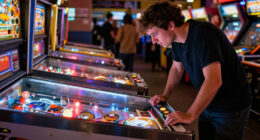
A steel ball can rattle up a ramp, flash past a target, and trigger a burst of music before you have time to blink. That quick chain of events is the appeal of interactive pinball machines: your hands control the flippers, while the table reacts with lights, sounds, moving parts, and changing goals.

Play games on Amazon Luna for your game nights, included with Prime
- A rotating selection of games, no download needed
- Play on TV, laptop or phone
- Fast, free delivery for your gear, too
Here, interactive does not have to mean connected to an app or the internet. Pinball is interactive by design, and modern electronics add another layer to the physical game. You’ll see how those pieces work together, what makes a table feel lively, and what to check if you’re thinking about bringing one home.
Flippers give you direct control, while sensors and the controller make the machine react to your shots.
Modern rules can turn ramps and targets into changing missions, bonuses, or multiball.
Most basic play does not require Wi-Fi; connected features depend on the model and service.
Learn one visible objective and repeat a useful shot before trying to master every rule.
Try machines at an arcade before buying, and check condition, space, delivery access, and repair needs.
What makes a pinball machine respond to your shots?
An interactive pinball machine is a physical game in which you control flippers to keep a ball in play and aim at features, while sensors and a controller register what happens. The controller then changes scoring, lights, sound, displays, or mechanisms in response. That loop makes each shot feel like a conversation with the table.
Start with the playfield, the sloped surface dotted with targets, lanes, and ramps. When the ball passes a switch or hits a target, a sensor sends a signal to the game controller. The controller applies the table’s rules, then may flash a lamp, play a sound, update the score, or fire a solenoid-powered kicker that sends the ball back into action. This division of work matters: the ball’s path is governed by gravity, impact, and friction, while the controller interprets those physical events. The table can respond quickly and consistently to a detected hit, but it cannot make the ball follow a perfectly scripted route.
Imagine aiming for a flashing ramp during a busy arcade session. A clean shot might light a new objective; a missed shot could send the ball toward your flippers with a sharp clack. The ball’s movement remains physical and sometimes unpredictable, but the electronics make the machine’s reaction immediate and specific. That feedback helps you connect cause and effect: you can tell which shot advanced the objective, then decide whether to try it again or protect the ball.
A dot-matrix screen or color LCD can show your score, instructions, and animations, while speakers add music and sound effects. These parts give you feedback, much like dashboard lights tell you what a car is doing. The display can explain a goal, but action on the playfield is still the real test of whether you can reach it. You can still play without an internet connection: the basic sensing and rules happen inside the machine, so a lost signal does not interrupt the core game.
Popular right now

KitchenAid 3-Piece Pasta Roller and Cutter Set for Stand Mixers

eufy E25 Robot Vacuum and Mop with HydroJet Roller Mop

De'Longhi Classic Signature Espresso Machine
As an affiliate, we earn on qualifying purchases.
Why modern tables feel different every time you play
Interactive pinball machines feel varied because software can track your progress and change what the table rewards during a game. A shot may start a mission, collect an item, open a scoring opportunity, or help trigger multiball. The physical table stays in front of you, but the rules can shift as you hit different targets. That gives a shot more than one purpose: it can be valuable for points now and also set up a later goal. The tradeoff is that a new player may not know which opportunity is worth pursuing until the display and lights make the rules clearer.
Think of the playfield as a small stage. The ramps and targets are the scenery, while the controller changes the scene when you make a shot. On one turn, a flashing lane might be worth extra points; later, the same lane could advance a mission. You learn the table partly by noticing these signals and remembering which shots matter. Since the rules layer changes what a familiar shot is worth, memorizing the layout alone is not enough; you also have to read the current state of the game.
Multiball puts two or more balls on the playfield at once. It can create a rush of noise and opportunity, but you also have more balls to control. A beginner may focus on keeping any one ball alive; a practiced player might aim for a particular shot while tracking where the others are heading. The mode rewards quick attention, though the extra activity can make precise aiming harder. It is a moment of greater scoring potential and greater risk, not a guaranteed payoff.
That blend of skill and chance is part of the fun. You can improve by learning a table’s shots and rules, but the ball can still take an awkward bounce. Better knowledge helps you choose where to aim and when to wait, yet it cannot remove uncertainty from a physical ball ricocheting around a crowded playfield. A familiar table can reward a different strategy on a new game, much like a song you know well can sound different in a crowded room.
How to read a table and find your first good shots
To get more from an interactive pinball machine, first learn what its lights and displays are asking you to do, then focus on one repeatable shot at a time. You do not need to memorize every rule before you start. A few deliberate games can show you where the ball travels and which targets trigger clear feedback. This approach reduces the number of things you are trying to manage at once: instead of reacting to every sound and flashing lamp, you can test one idea and see whether the machine confirms it.
- Scan the playfield. Find the flippers, ramps, targets, and any bright arrows or flashing lamps. A lit arrow often points toward a current objective.
- Watch the display. Check for a short instruction or mission name when a ball starts. If the screen says to hit a ramp, try that shot rather than firing at every target.
- Notice the response. Listen for a sound, watch for a light change, and see whether the score or mission advances after a hit. That response tells you whether the shot counted, which is useful when the playfield is busy and several things are happening together.
- Repeat one useful shot. If a particular ramp is reachable from a controlled flipper position, practice aiming for it before chasing every bonus. A repeatable shot gives you a reliable option, though pursuing it every time may mean passing up other goals.
- Keep the ball alive. Use the flippers with timing and restraint. Nudging can help in some situations, but excessive force may trigger a tilt and end the ball. The aim is to correct a dangerous path without sacrificing control of the game.
For example, at a barcade you might see a bright blue lane and a screen prompt to collect three items. Start by aiming for that lane and observing what happens. Even if the ball drains quickly, you leave with a clearer idea of the table’s rhythm and a better plan for your next credit.
Some machines explain their rules more clearly than others, and a busy soundtrack can make instructions easy to miss. That is fine. Follow one visible cue, then build your understanding as you play. A simple goal gives you a way to learn even when the machine’s full rule set feels overwhelming.
What connected features add—and when you can ignore them
Some interactive pinball machines connect to apps, online leaderboards, or network services, but those features are optional extras on many models. The table can still offer its core play through local switches, software, speakers, and displays. Before you buy, check the specific machine’s features rather than assuming every modern table needs Wi-Fi. This distinction affects what you are paying for: a connected feature can extend competition or add convenience, while the basic play remains available without an account or network.
Online score tracking can add a friendly challenge. If you and a friend own the same connected model, you might compare scores after a weekend of practice or check a leaderboard to see how your game stacks up. That can give practice a shared goal, though a score comparison is most meaningful when players use the same table and conditions. Software updates can also change or refine a machine’s rules, depending on the manufacturer and model, which means owners may want to check what an update changes before installing it.
Connected services vary. An app may need an account, a supported region, or a particular version of the machine. Service terms can change over time, so verify current details with the manufacturer before treating an online feature as part of the purchase. If a feature depends on ongoing service, its usefulness may also depend on the manufacturer continuing to support it.
For a casual player, the best feature may still be a mechanical toy that spins or a colorful screen that celebrates a successful shot. If your home machine sits in a basement with no reliable signal, you can still enjoy its local rules and feedback. Connectivity adds another layer; it does not create the basic interaction.
Should you play at an arcade or buy a machine?
Arcades and bars let you try pinball with little commitment, while owning a machine gives you convenient access at home but takes space, money, and upkeep. The right choice depends on how often you play and whether you enjoy learning one table in depth. A quick try at a local venue can tell you more than a long product description. Playing first also lets you compare different layouts and rule styles, which helps you learn what you actually want before taking on the cost and work of ownership.
| Choice | What you get | What to weigh |
|---|---|---|
| Arcade or bar | Many themes and tables, with play available by the game | Availability, local prices, and how busy the venue is |
| Home machine | Easy access and time to learn the same table | Purchase price, delivery access, space, and maintenance |
New machines generally cost several thousand dollars, while used prices depend on condition, age, demand, and location. A low listing price can hide worn parts or a repair problem, so inspect the playfield, check that switches and moving features work, and ask about repair history. If possible, play a full game before making an offer. The lower upfront cost of a used table can come with more uncertainty about repairs, so the condition and availability of parts matter as much as the asking price.
Measure the cabinet and the route into your home. A machine may fit in a game room but fail to clear a narrow hallway or basement turn. Leave room to stand at the front and move comfortably; playing shoulder-to-wall can turn a fun game into a cramped chore. Delivery access is part of the practical cost because a difficult route may require extra planning or professional help.
Care varies by condition and model. Owners may clean the playfield, replace worn parts, or troubleshoot switches, while electrical or mechanical faults may call for an experienced technician. A buyer who enjoys tinkering may welcome that work; someone who wants to press start and play may prefer an arcade. In either case, routine upkeep affects how reliably the machine plays, so ownership includes time as well as the purchase price.
Who can enjoy pinball, from first-timers to league players
Pinball works for casual players who want a lively game and for experienced players who enjoy learning precise shots, table rules, and ball control. You can have fun right away by keeping the ball moving, even if you do not know the scoring strategy. Practice adds layers without making the first game a test.
A first-time visitor might play for the flashing lights and the satisfying thump of a flipper. After a few tries, that same player may start catching the ball on a flipper, waiting for a clearer shot, or learning when a nudge helps. The table becomes less like a noisy toy and more like a puzzle with a steel ball for a cursor.
Some players join leagues or tournaments, where they can compare scores and learn from others. Competitive play rewards practice and knowledge of a particular table, though luck still affects how the ball bounces. A strong player can make better choices; no player can fully command every rebound.
Families should check the age rating and venue guidance for a specific machine or game, especially where a themed display includes material intended for older audiences. The physical game is approachable, but themes and presentation can vary. Pick a table that suits the group, then let everyone take a turn.
Frequently Asked Questions
How does an interactive pinball machine work?
Flippers let you strike the ball toward ramps, lanes, and targets. Sensors detect where the ball goes, and the controller applies the rules, then changes the score, lights, sound, display, or mechanical features.
Do modern pinball machines need Wi-Fi?
Usually not for basic play. Some models use an internet connection or app for optional features such as online scores or software updates, but check the manufacturer’s details for the specific machine.
Is pinball skill-based or luck-based?
Both matter. Practice helps you aim, control the ball, and learn a table’s rules, while unpredictable bounces keep chance in the game.
What does multiball mean?
Multiball is a mode where two or more balls are active on the playfield at once. It can create scoring chances, but controlling several balls is harder than tracking one.
How much does a pinball machine cost?
Prices vary with model, condition, age, demand, and location. New machines generally cost several thousand dollars, while used prices can be lower or higher depending on the machine; check current local listings and inspect it before buying.
How much room does a home pinball machine need?
Measure the cabinet and leave space in front for a player to stand comfortably. Check the delivery route too, since a hallway, doorway, or basement turn can be tighter than the game room itself.
What should I inspect before buying a used machine?
Check playfield wear, working switches and moving features, repair history, and parts availability. Play a game if you can, and ask an experienced technician to inspect the machine if you are unsure about its condition.
Conclusion
Remember this: an interactive pinball machine is a physical game with a responsive rule system. Follow one light, aim for one useful shot, and notice how the table answers with a flash, a clack, or a new objective.
If you are curious, play a few different tables before choosing a favorite. The right one will make you want to try that ramp again—and listen for the next bright chime.