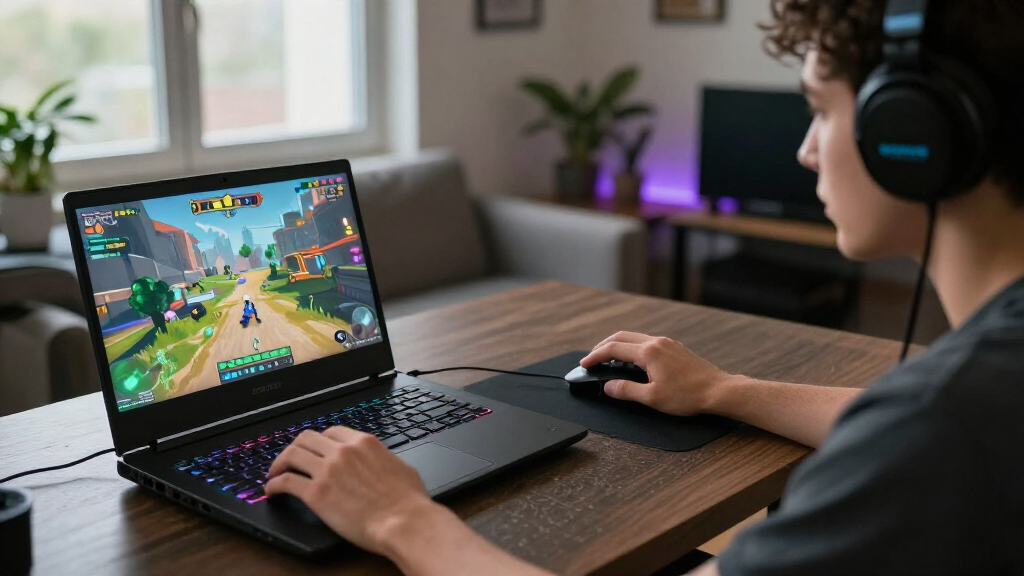

Gaming laptops with RTX graphics range from entry-level RTX 3050 systems to newer RTX 5070 and RTX 5060 options, and my best overall pick is the ASUS ROG Strix G16 (2025) for its RTX 5060, strong processor, and 1TB SSD. The GIGABYTE GAMING A16 stands out for buyers seeking an RTX 5070, while the HP Victus 15 with RTX 4050 and 32GB RAM offers a more accessible mix of graphics power and memory. The main tradeoffs are graphics capability versus configuration value, screen size versus portability, and whether a lower-memory model needs an upgrade. I rank these options by how well their GPU, memory, storage, display, and overall configuration fit real gaming needs—not by graphics chip alone. Read on for the full breakdown and help matching a laptop to your games and budget.

Play games on Amazon Luna for your game nights, included with Prime
- A rotating selection of games, no download needed
- Play on TV, laptop or phone
- Fast, free delivery for your gear, too
Complete the kit

Key Takeaways
- The ASUS ROG Strix G16 (2025) leads the balanced group: RTX 5060 graphics, a Core i7-14650HX, 16GB DDR5, and 1TB storage make it a stronger all-round configuration than the RTX 3050 and RTX 4050 systems.
- The GIGABYTE GAMING A16 is the graphics-first choice: its RTX 5070 is the highest-tier GPU in this list, paired with a 165Hz WUXGA screen and 1TB SSD, though its Core Ultra 9 185 naming and configuration should be checked carefully before purchase.
- RTX 3050 models require the most compromise: they can suit lighter gaming and tighter budgets, but 8GB RAM versions in particular may need memory upgrades sooner than the 16GB alternatives.
- Memory and storage create meaningful differences within the same GPU tier: the HP Victus RTX 4050 with 32GB RAM and 1TB SSD is a more ready-to-play setup than RTX 4050 options with 8GB RAM or 512GB storage.
- Screen size changes the experience as much as the GPU tier: the 17.3-inch Acer Nitro V RTX 5060 favors a larger view, while 15-inch Victus and Nitro models make more sense when desk space and carrying size matter.
| Alienware 16 Aurora Gaming Laptop, RTX 5050, Intel Core 7 240H |  | Best for a Higher-Resolution Display | Processor: Intel Core 7 240H | Graphics: NVIDIA GeForce RTX 5050 Laptop GPU | Display: 16-inch WQXGA (2560 x 1600) LED | VIEW LATEST PRICE | See Our Full Breakdown |
| HP Victus 15.6-Inch FHD 144Hz Gaming Laptop, Intel Core i5-13420H, RTX 3050, 8GB DDR4, 512GB SSD, Windows 11 Home |  | Best Entry-Level RTX Pick | Processor: Intel Core i5-13420H, 8 cores, 12 threads | Graphics: NVIDIA GeForce RTX 3050, 6GB GDDR6 | Display: 15.6-inch FHD IPS, 1920 x 1080, anti-glare | VIEW LATEST PRICE | See Our Full Breakdown |
| GIGABYTE GAMING A16 Gaming Laptop, 16-Inch WUXGA 165Hz, Intel Core Ultra 9 185, NVIDIA GeForce RTX 5070, 16GB DDR5, 1TB SSD, Black Steel |  | Best for High-Refresh RTX 5070 Gaming | Processor: Intel Core Ultra 9 185 | Graphics: NVIDIA GeForce RTX 5070 Laptop GPU, up to 115W TGP | Display: 16-inch WUXGA, 1920 x 1200 | VIEW LATEST PRICE | See Our Full Breakdown |
| HP Victus 15.6-Inch Gaming Laptop, Ryzen 7 7445HS, RTX 4050, 32GB DDR5, 1TB SSD, FHD 144Hz, Windows 11, Mica Silver |  | Best for Multitasking and Ready-to-Play Memory | Processor: AMD Ryzen 7 7445HS, 6 cores, 12 threads | Graphics: NVIDIA GeForce RTX 4050 Laptop GPU, 6GB GDDR6 | Display: 15.6-inch FHD IPS, 1920 x 1080, anti-glare, 300 nits | VIEW LATEST PRICE | See Our Full Breakdown |
| ASUS ROG Strix G16 Gaming Laptop, 16-inch FHD 165Hz, Intel Core i7-13650HX, GeForce RTX 4060, 16GB DDR5, 1TB SSD |  | Best for Sustained Gaming and Display Color | Processor: Intel Core i7-13650HX | Graphics: NVIDIA GeForce RTX 4060 Laptop GPU, 8GB, up to 140W Max TGP | Display: 16-inch; resolution listed as 1920 x 1200 and 1920 x 1080 | VIEW LATEST PRICE | See Our Full Breakdown |
| Lenovo LOQ 15.3-Inch Gaming Laptop, Ryzen 7 250, 16GB RAM, 512GB SSD, RTX 5060, Luna Grey |  | Best for a Balanced RTX 5060 Setup | Processor: AMD Ryzen 7 250, octa-core | Graphics: NVIDIA GeForce RTX 5060, 8GB GDDR7 | Memory: 16GB DDR5 | VIEW LATEST PRICE | See Our Full Breakdown |
| Acer Nitro V 15 Gaming Laptop, 16-inch FHD 165 Hz, Intel Core 5 120H, RTX 4050, 16 GB RAM, 512 GB SSD (Renewed) |  | Best Renewed RTX 4050 Pick | Condition: Renewed | Processor: Intel Core 5 120H, 8 cores | Graphics: NVIDIA GeForce RTX 4050, GDDR6 | VIEW LATEST PRICE | See Our Full Breakdown |
| HP Victus 15 Gaming Laptop, 15.6-inch FHD 144Hz, Intel Core i5-13420H, 16GB RAM, 512GB SSD, NVIDIA GeForce RTX 3050 |  | Best for Entry-Level RTX Gaming | Processor: Intel Core i5-13420H, 8 cores, up to 4.6GHz | Graphics: NVIDIA GeForce RTX 3050, 6GB | Memory: 16GB DDR4 | VIEW LATEST PRICE | See Our Full Breakdown |
| Acer Nitro V 17.3-Inch Gaming Laptop, Ryzen 5 240, 16GB DDR5 RAM, 512GB SSD, RTX 5060 |  | Best Large-Screen RTX 5060 | Processor: AMD Ryzen 5 240, 6 cores and 12 threads | Graphics: NVIDIA GeForce RTX 5060 Laptop GPU, 8GB GDDR6 | Memory: 16GB DDR5 | VIEW LATEST PRICE | See Our Full Breakdown |
| Acer Nitro V 15 Gaming Laptop, Intel Core i5-13420H, NVIDIA GeForce RTX 4050, 15.6-inch FHD 165Hz IPS Display, 8GB DDR5, 512GB SSD |  | Best Upgradeable Starter RTX 4050 | Processor: Intel Core i5-13420H | Graphics: NVIDIA GeForce RTX 4050 Laptop GPU, 6GB GDDR6 | Memory: 8GB DDR5; maximum 32GB | VIEW LATEST PRICE | See Our Full Breakdown |
| HP Victus 15 Gaming Laptop, Intel Core i5-13420H, NVIDIA GeForce RTX 4050, 16GB RAM, 512GB SSD, 15.6-inch FHD 144Hz, Windows 11 Home |  | Best Balanced RTX 4050 Pick | Processor: Intel Core i5-13420H, 8 cores, up to 4.6GHz | Graphics: NVIDIA GeForce RTX 4050, 6GB GDDR6 | Memory: 16GB DDR4 | VIEW LATEST PRICE | See Our Full Breakdown |
| Alienware 15 Gaming Laptop, Intel Core 7 240H, NVIDIA GeForce RTX 4050 |  | Best for Portable Premium Features | Processor: Intel Core 7 240H, 10 cores, up to 5.2GHz | Graphics: NVIDIA GeForce RTX 4050 | Memory: 16GB DDR5-5600, expandable to 32GB | VIEW LATEST PRICE | See Our Full Breakdown |
| HP Victus 15.6-Inch FHD 144Hz Gaming Laptop, Intel Core i5-12450H, NVIDIA GeForce RTX 3050, 16GB RAM, 512GB PCIe SSD, Windows 11 Pro |  | Best RTX 3050 for a High-Refresh Screen | Processor: Intel Core i5-12450H, up to 4.4GHz | Graphics: NVIDIA GeForce RTX 3050, 6GB GDDR6 | Memory: 16GB DDR4-3200 | VIEW LATEST PRICE | See Our Full Breakdown |
| ASUS ROG Strix G16 (2025) 16-Inch Gaming Laptop, Intel Core i7-14650HX, NVIDIA GeForce RTX 5060, 16GB DDR5, 1TB PCIe 4.0 SSD, 165Hz FHD+ Display, Wi-Fi 7, Windows 11 Home |  | Best for Higher-Tier RTX Performance | Processor: Intel Core i7-14650HX | Graphics: NVIDIA GeForce RTX 5060 Laptop GPU, 8GB | Memory: 16GB DDR5-5600 | VIEW LATEST PRICE | See Our Full Breakdown |
| HP Victus 15 Gaming Laptop, 15.6-inch FHD, Intel Core i5-12500H, NVIDIA GeForce RTX 3050, 8 GB RAM, 512 GB SSD |  | Best Entry-Level RTX Option for Upgrade-Minded Buyers | Processor: 12th Gen Intel Core i5-12500H | Graphics: NVIDIA GeForce RTX 3050, listed with 8GB graphics memory | Memory: 8GB | VIEW LATEST PRICE | See Our Full Breakdown |
| gaming laptops with RTX graphic | Processor | Graphics | Display | Memory |
|---|---|---|---|---|
| Alienware 16 Aurora Gaming Lap | Intel Core 7 240H | NVIDIA GeForce RTX 5050 Laptop GPU | 16-inch WQXGA (2560 x 1600) LED | 16GB DDR5, 5600 MHz; expandable to 32GB |
| HP Victus 15.6-Inch FHD 144Hz | Intel Core i5-13420H, 8 cores, 12 threads | NVIDIA GeForce RTX 3050, 6GB GDDR6 | 15.6-inch FHD IPS, 1920 x 1080, anti-glare | 8GB DDR4, 3200 MHz |
| GIGABYTE GAMING A16 Gaming Lap | Intel Core Ultra 9 185 | NVIDIA GeForce RTX 5070 Laptop GPU, up to 115W TGP | 16-inch WUXGA, 1920 x 1200 | 16GB DDR5 |
| HP Victus 15.6-Inch Gaming Lap | AMD Ryzen 7 7445HS, 6 cores, 12 threads | NVIDIA GeForce RTX 4050 Laptop GPU, 6GB GDDR6 | 15.6-inch FHD IPS, 1920 x 1080, anti-glare, 300 nits | 32GB DDR5 |
| ASUS ROG Strix G16 Gaming Lapt | Intel Core i7-13650HX | NVIDIA GeForce RTX 4060 Laptop GPU, 8GB, up to 140W Max TGP | 16-inch; resolution listed as 1920 x 1200 and 1920 x 1080 | 16GB DDR5-4800 |
| Lenovo LOQ 15.3-Inch Gaming La | AMD Ryzen 7 250, octa-core | NVIDIA GeForce RTX 5060, 8GB GDDR7 | 15.3-inch IPS, 1920 × 1200, 165Hz | 16GB DDR5 |
| Acer Nitro V 15 Gaming Laptop | Intel Core 5 120H, 8 cores | NVIDIA GeForce RTX 4050, GDDR6 | 16-inch IPS, 1920 × 1080, 165Hz, 3ms | 16GB DDR5-4800; maximum 32GB |
| HP Victus 15 Gaming Laptop | Intel Core i5-13420H, 8 cores, up to 4.6GHz | NVIDIA GeForce RTX 3050, 6GB | 15.6-inch IPS, 1920 × 1080, 144Hz | 16GB DDR4 |
| Acer Nitro V 17.3-Inch Gaming | AMD Ryzen 5 240, 6 cores and 12 threads | NVIDIA GeForce RTX 5060 Laptop GPU, 8GB GDDR6 | 17.3-inch IPS, 1920 × 1080 | 16GB DDR5 |
| Acer Nitro V 15 Gaming Laptop | Intel Core i5-13420H | NVIDIA GeForce RTX 4050 Laptop GPU, 6GB GDDR6 | 15.6-inch IPS, 1920 × 1080, 165Hz | 8GB DDR5; maximum 32GB |
| HP Victus 15 Gaming Laptop | Intel Core i5-13420H, 8 cores, up to 4.6GHz | NVIDIA GeForce RTX 4050, 6GB GDDR6 | 15.6-inch Full HD, 144Hz, anti-glare | 16GB DDR4 |
| Alienware 15 Gaming Laptop | Intel Core 7 240H, 10 cores, up to 5.2GHz | NVIDIA GeForce RTX 4050 | 15.3-inch WUXGA (1920 x 1200), 16:10, 165Hz | 16GB DDR5-5600, expandable to 32GB |
| HP Victus 15.6-Inch FHD 144Hz | Intel Core i5-12450H, up to 4.4GHz | NVIDIA GeForce RTX 3050, 6GB GDDR6 | 15.6-inch Full HD IPS, 144Hz, anti-glare | 16GB DDR4-3200 |
| ASUS ROG Strix G16 | Intel Core i7-14650HX | NVIDIA GeForce RTX 5060 Laptop GPU, 8GB | 16-inch, 1920 x 1200, 165Hz, 3ms | 16GB DDR5-5600 |
| HP Victus 15 Gaming Laptop | 12th Gen Intel Core i5-12500H | NVIDIA GeForce RTX 3050, listed with 8GB graphics memory | 15.6-inch Full HD LED IPS | 8GB |
More Details on Our Top Picks
Alienware 16 Aurora Gaming Laptop, RTX 5050, Intel Core 7 240H
The Alienware 16 Aurora pairs an RTX 5050 with a 16-inch WQXGA screen, giving it more display resolution than the Full HD panels on the HP Victus models here. That extra workspace suits players who also use their laptop for creative or everyday tasks, while the 120Hz refresh rate keeps motion smoother than a standard 60Hz screen. Its 1TB SSD also offers more room for a game library than the Victus RTX 3050 model’s 512GB drive. The Cryo-Chamber cooling design is intended to direct airflow at core components, but the laptop still weighs 5.5 pounds. I’d choose it for the sharper screen and newer graphics tier, not portability; its memory tops out at 32GB, a limit to weigh against the 32GB HP Victus RTX 4050.
Pros:- 16-inch WQXGA resolution gives games and work more screen detail than the Full HD Victus options.
- RTX 5050 graphics provide a newer GPU tier than the RTX 3050 in the HP Victus 15.6-inch model.
- 1TB SSD provides more storage than the 512GB drive in the HP Victus RTX 3050.
- Cryo-Chamber cooling design focuses airflow on core components.
Cons:- At 5.5 pounds, it is less convenient to carry than a compact everyday laptop.
- Memory expansion is capped at 32GB.
- The 120Hz refresh rate is lower than the 144Hz and 165Hz displays on several alternatives.
Best for: Players who want a sharper 16-inch screen, a 1TB game library drive, and RTX 5050 graphics in a desktop-replacement-style laptop.
Not ideal for: Frequent travelers or memory-intensive users who need a lighter laptop or more than 32GB of RAM.
- Processor:Intel Core 7 240H
- Graphics:NVIDIA GeForce RTX 5050 Laptop GPU
- Display:16-inch WQXGA (2560 x 1600) LED
- Refresh rate:120Hz
- Memory:16GB DDR5, 5600 MHz; expandable to 32GB
- Storage:1TB SSD
- Wireless:Wi-Fi 7 and Bluetooth
- Weight:5.5 pounds
Our verdict“Choose the Alienware 16 Aurora if WQXGA clarity and a 1TB SSD matter more to you than lower weight or a faster refresh rate.”
HP Victus 15.6-Inch FHD 144Hz Gaming Laptop, Intel Core i5-13420H, RTX 3050, 8GB DDR4, 512GB SSD, Windows 11 Home
The HP Victus with RTX 3050 is the most entry-level choice in this group: its 15.6-inch 1080p screen and 144Hz refresh rate make a straightforward match for players who prioritize responsive Full HD gaming over higher resolution. The dedicated RTX 3050 with 6GB of GDDR6 gives it a distinct graphics advantage over laptops relying only on integrated graphics, while HDMI 2.1 and Ethernet make desk setup simple. Compared with the HP Victus RTX 4050, though, this version has an older GPU tier and just 8GB of DDR4 memory, which can constrain newer games and multitasking. The panel’s listed 250-nit brightness and 45% NTSC gamut also make it a less appealing choice for bright rooms or color-focused work. I’d pick it for basic RTX gaming, not for headroom.
Pros:- RTX 3050 graphics include 6GB of dedicated GDDR6 memory.
- 144Hz anti-glare display supports smoother motion in Full HD games.
- HDMI 2.1, Ethernet, Wi-Fi 6, and Bluetooth 5.3 provide useful connection options.
- Full-size backlit keyboard includes a numeric keypad.
Cons:- 8GB of DDR4 memory can limit demanding games and multitasking.
- The 250-nit, 45% NTSC display is a weak fit for bright rooms or color-sensitive work.
- RTX 3050 graphics sit below the RTX 4050 in the other HP Victus option.
Best for: First-time PC gamers who want a dedicated RTX GPU, a high-refresh Full HD screen, and built-in Ethernet for a stationary setup.
Not ideal for: Players who run demanding games alongside streams or multiple apps, or who need a brighter, more color-accurate display.
- Processor:Intel Core i5-13420H, 8 cores, 12 threads
- Graphics:NVIDIA GeForce RTX 3050, 6GB GDDR6
- Display:15.6-inch FHD IPS, 1920 x 1080, anti-glare
- Refresh rate:144Hz
- Memory:8GB DDR4, 3200 MHz
- Storage:512GB NVMe M.2 SSD
- Ports:USB-C, 2 x USB-A, HDMI 2.1, RJ-45 Ethernet, audio combo jack
- Weight:5.06 pounds
Our verdict“Choose this Victus for entry-level RTX gaming at 1080p, but look to the RTX 4050 Victus if you want stronger graphics and more memory.”
GIGABYTE GAMING A16 Gaming Laptop, 16-Inch WUXGA 165Hz, Intel Core Ultra 9 185, NVIDIA GeForce RTX 5070, 16GB DDR5, 1TB SSD, Black Steel
The GIGABYTE GAMING A16 takes the highest-performance graphics position in this five-laptop group with its RTX 5070 Laptop GPU, listed at up to 115W TGP, and a 165Hz WUXGA display. That pairing favors players seeking smooth action and stronger GPU headroom than the RTX 4050 HP Victus or RTX 4060 ASUS ROG Strix G16. The 1920 x 1200 resolution is less demanding than the Alienware’s WQXGA panel, which can be a practical match for high-refresh gaming, though the listing does not specify panel type or brightness. A slim 0.76-inch chassis, 180-degree hinge, USB4, and USB-C charging add flexibility; the advertised battery maximum is not a guarantee of gaming runtime. I’d favor it for graphics performance, while the ASUS has a stated 100% sRGB display and higher listed GPU power.
Pros:- RTX 5070 Laptop GPU is the strongest graphics tier among these five listed models.
- 165Hz WUXGA display pairs a high refresh rate with 16:10 screen space.
- USB4 Type-C supports high-speed data, DisplayPort, and PD 3.0 charging.
- Slim chassis, 180-degree hinge, and dual-fan WINDFORCE cooling add practical flexibility.
Cons:- Display panel type and brightness are not specified.
- The listed battery life of up to 14 hours is an advertised maximum, not a gaming-runtime figure.
- Its 115W maximum GPU TGP is below the ASUS ROG Strix G16’s listed 140W maximum.
Best for: Players prioritizing an RTX 5070 and a 165Hz 16-inch screen, with USB4 connectivity and a slimmer chassis for occasional travel.
Not ideal for: Buyers who need confirmed screen brightness or panel details, or who expect long battery sessions while gaming.
- Processor:Intel Core Ultra 9 185
- Graphics:NVIDIA GeForce RTX 5070 Laptop GPU, up to 115W TGP
- Display:16-inch WUXGA, 1920 x 1200
- Refresh rate:165Hz
- Memory:16GB DDR5
- Storage:1TB SSD
- Connectivity:Wi-Fi 6E; USB4 Type-C with DisplayPort and PD 3.0
- Chassis thickness:0.76 inches
Our verdict“Choose the GAMING A16 if RTX 5070 graphics and a 165Hz screen lead your list, but favor the ASUS if documented display color and higher GPU power matter more.”
HP Victus 15.6-Inch Gaming Laptop, Ryzen 7 7445HS, RTX 4050, 32GB DDR5, 1TB SSD, FHD 144Hz, Windows 11, Mica Silver
This HP Victus makes a strong practical case for buyers who want a balanced RTX gaming setup without upgrading memory immediately: it combines an RTX 4050 with 32GB of DDR5 and a 1TB SSD. That memory capacity is twice the 16GB included with the Alienware 16 Aurora and ASUS ROG Strix G16, making this Victus better suited to keeping games, voice chat, and other applications open together. Its 15.6-inch Full HD IPS screen runs at 144Hz and reaches a listed 300 nits, while the ASUS offers a faster 165Hz refresh rate and broader 100% sRGB coverage. The Victus remains a 5.06-pound laptop, and its Full HD resolution is less detailed than the Alienware’s WQXGA screen. I’d choose it for ready-to-go memory and storage, not a premium display or lighter carry.
Pros:- 32GB DDR5 memory provides more multitasking capacity than the 16GB Alienware and ASUS options.
- 1TB SSD offers room for a larger installed game library than the 512GB HP Victus RTX 3050.
- RTX 4050 graphics and a 144Hz IPS display suit Full HD gaming.
- 300-nit anti-glare display and FreeSync Premium support practical, smoother play.
Cons:- Full HD resolution is less detailed than the Alienware 16 Aurora’s WQXGA panel.
- The 144Hz refresh rate is below the 165Hz panels on the GIGABYTE and ASUS models.
- At 5.06 pounds, it is not a particularly light option for frequent travel.
Best for: Players who multitask, keep several applications open, or want 32GB of RAM and a 1TB SSD without starting with a memory upgrade.
Not ideal for: Gamers seeking a higher-resolution screen, a 165Hz-or-faster panel, or a lighter laptop for daily commuting.
- Processor:AMD Ryzen 7 7445HS, 6 cores, 12 threads
- Graphics:NVIDIA GeForce RTX 4050 Laptop GPU, 6GB GDDR6
- Display:15.6-inch FHD IPS, 1920 x 1080, anti-glare, 300 nits
- Refresh rate:144Hz
- Memory:32GB DDR5
- Storage:1TB SSD
- Ports:2 x USB-A, USB-C with DisplayPort, HDMI 2.1, RJ-45 Ethernet
- Weight:5.06 pounds
Our verdict“Choose this HP Victus if 32GB of memory and 1TB of storage matter more than a higher-resolution or faster-refresh display.”
ASUS ROG Strix G16 Gaming Laptop, 16-inch FHD 165Hz, Intel Core i7-13650HX, GeForce RTX 4060, 16GB DDR5, 1TB SSD
The ASUS ROG Strix G16 is a well-rounded choice for players who want the RTX 4060 tier paired with a display specified for color work as well as fast gaming. Its 165Hz screen is listed with 100% sRGB coverage and Pantone Validation, details missing from the GIGABYTE GAMING A16 listing. The RTX 4060 has 8GB of graphics memory and up to 140W Max TGP, while liquid-metal CPU cooling, a third intake fan, and a MUX Switch with Advanced Optimus are designed to support sustained performance and direct graphics switching. Against the GIGABYTE’s RTX 5070, the ASUS gives up a higher GPU tier; against the HP Victus RTX 4050, it offers a stronger graphics class and a faster screen. The 5.5-pound weight and inconsistent listed resolution—1920 x 1200 and 1920 x 1080—are meaningful caveats.
Pros:- RTX 4060 offers 8GB of graphics memory and up to 140W Max TGP.
- 165Hz display is listed with 100% sRGB coverage and Pantone Validation.
- Liquid-metal CPU cooling and a third intake fan are designed for sustained workloads.
- MUX Switch with Advanced Optimus supports graphics switching.
Cons:- The 5.5-pound weight makes it less convenient to carry than a lighter gaming laptop.
- The display resolution is listed inconsistently as 1920 x 1200 and 1920 x 1080.
- Its RTX 4060 sits below the RTX 5070 in the GIGABYTE GAMING A16.
Best for: Gamers who want an RTX 4060 with 8GB graphics memory, a high-refresh color-focused screen, and cooling features for extended sessions.
Not ideal for: Buyers seeking the strongest listed GPU, a lightweight system, or certainty about the display’s exact resolution before purchase.
- Processor:Intel Core i7-13650HX
- Graphics:NVIDIA GeForce RTX 4060 Laptop GPU, 8GB, up to 140W Max TGP
- Display:16-inch; resolution listed as 1920 x 1200 and 1920 x 1080
- Refresh rate:165Hz
- Display color:100% sRGB, Pantone Validated
- Memory:16GB DDR5-4800
- Storage:1TB PCIe Gen4 SSD
- Cooling:Conductonaut Extreme liquid metal on CPU; Tri-Fan Technology
- Weight:5.5 pounds
Our verdict“Choose the ROG Strix G16 if display color, cooling features, and RTX 4060 performance matter more than the GIGABYTE’s higher GPU tier.”
Lenovo LOQ 15.3-Inch Gaming Laptop, Ryzen 7 250, 16GB RAM, 512GB SSD, RTX 5060, Luna Grey
The Lenovo LOQ pairs an RTX 5060 with 8GB of GDDR7 and a Ryzen 7 octa-core processor, giving it a stronger graphics-and-CPU balance than the RTX 4050 Acer Nitro V 15. Its 15.3-inch, 1920 × 1200 display adds vertical room over standard Full HD, while 165Hz and 100% sRGB make it a better fit for both fast games and color-sensitive everyday work. Dolby Vision is another display feature the lower-tier Victus 15 does not list. The tradeoff is the 512GB SSD, which can fill quickly with a sizable game library, and the 300-nit brightness may limit visibility in bright rooms. I’d choose this over the larger Nitro V 17 when a more compact screen and sharper 16:10 workspace matter more than screen size.
Pros:- RTX 5060 with 8GB GDDR7 graphics memory
- 165Hz WUXGA display with 100% sRGB and Dolby Vision
- Ryzen 7 250 octa-core processor and 16GB DDR5
- HDMI 2.1, Thunderbolt, Wi-Fi 6, and a camera privacy shutter
Cons:- 512GB SSD leaves limited room for a large collection of modern games
- 300-nit maximum brightness may be modest in bright environments
Best for: Players who want RTX 5060 graphics, a high-refresh 16:10 screen, and a capable eight-core processor in a mid-size laptop.
Not ideal for: Gamers with large installed libraries or those who need a particularly bright display for sunlit rooms.
- Processor:AMD Ryzen 7 250, octa-core
- Graphics:NVIDIA GeForce RTX 5060, 8GB GDDR7
- Memory:16GB DDR5
- Storage:512GB NVMe SSD
- Display:15.3-inch IPS, 1920 × 1200, 165Hz
- Color coverage:100% sRGB
- Wireless:Wi-Fi 6, Bluetooth 5.3
- Weight:4.8 pounds
Our verdict“Choose the LOQ for a well-rounded RTX 5060 laptop with a sharper, color-capable display, but plan around its limited SSD capacity.”
Acer Nitro V 15 Gaming Laptop, 16-inch FHD 165 Hz, Intel Core 5 120H, RTX 4050, 16 GB RAM, 512 GB SSD (Renewed)
This renewed Acer Nitro V 15 stands out for pairing an RTX 4050 with 16GB of DDR5 and a 165Hz IPS screen, so it arrives with a stronger memory baseline than the other Acer Nitro V 15 in this group, which has only 8GB. That difference matters for multitasking and newer games that feel constrained when memory is scarce. Its 3ms response-time listing also suits quick-moving play, while Ethernet and Wi-Fi 6 offer flexible connections. The key compromise is condition: buyers should be comfortable choosing a renewed unit rather than a new laptop. Its 250-nit screen is dimmer than the 300-nit Acer Nitro V 15 listing, and the RTX 4050 sits below the RTX 5060 in the Lenovo LOQ and Nitro V 17. I’d shortlist it for a 16GB setup, not for maximum graphics headroom.
Pros:- RTX 4050 graphics paired with 16GB DDR5
- 165Hz IPS panel with a listed 3ms response time
- Wi-Fi 6, Bluetooth, and wired Ethernet
- Memory can be expanded up to 32GB
Cons:- Renewed condition may not suit buyers seeking a new unit
- 250-nit screen is less suited to bright rooms
- 512GB SSD can constrain larger game libraries
Best for: Buyers open to a renewed laptop who want an RTX 4050, 16GB DDR5, and a fast-refresh display without starting at 8GB of memory.
Not ideal for: Shoppers who require a new-condition machine, brighter screen, or the stronger graphics tier offered by the RTX 5060 models.
- Condition:Renewed
- Processor:Intel Core 5 120H, 8 cores
- Graphics:NVIDIA GeForce RTX 4050, GDDR6
- Memory:16GB DDR5-4800; maximum 32GB
- Storage:512GB SSD
- Display:16-inch IPS, 1920 × 1080, 165Hz, 3ms
- Brightness:250 nits
- Weight:Approximately 4.66 pounds
Our verdict“Pick this renewed Nitro V 15 if you want 16GB memory and RTX 4050 performance from the outset, and are comfortable with renewed condition.”
HP Victus 15 Gaming Laptop, 15.6-inch FHD 144Hz, Intel Core i5-13420H, 16GB RAM, 512GB SSD, NVIDIA GeForce RTX 3050
The HP Victus 15 is the entry point in this group for buyers who want dedicated RTX graphics and a high-refresh display without stepping up to an RTX 4050 or 5060 laptop. Its RTX 3050 has 6GB of video memory, while 16GB of RAM gives it a more usable starting configuration than the 8GB Acer Nitro V 15. The 144Hz anti-glare panel suits competitive play, though it is less responsive on paper than the 165Hz Acer Nitro V 15 and Lenovo LOQ displays. The processor is a capable Core i5-13420H, but the graphics tier is the main limit for demanding games and higher visual settings. At 5.06 pounds, it is also heavier than either Acer Nitro V 15 listed here. I’d choose it for mainstream 1080p gaming, not for the longest graphics runway.
Pros:- RTX 3050 graphics with 6GB video memory
- 16GB RAM and a Core i5-13420H processor
- 144Hz anti-glare IPS display
- HDMI 2.1, USB-C, Ethernet, and Wi-Fi 6
Cons:- RTX 3050 is a lower graphics tier than the RTX 4050 and RTX 5060 options here
- The 144Hz display trails the 165Hz panels in the Acer Nitro V models
- At 5.06 pounds, it is relatively heavy for a 15.6-inch laptop
Best for: Newer PC gamers seeking a 16GB, RTX-equipped laptop for 1080p play and everyday use.
Not ideal for: Players targeting demanding games at high settings or buyers who prioritize a lighter laptop and faster-refresh panel.
- Processor:Intel Core i5-13420H, 8 cores, up to 4.6GHz
- Graphics:NVIDIA GeForce RTX 3050, 6GB
- Memory:16GB DDR4
- Storage:512GB SSD
- Display:15.6-inch IPS, 1920 × 1080, 144Hz
- Battery:70Wh
- Connectivity:Wi-Fi 6, HDMI 2.1, USB-C, Ethernet
- Weight:5.06 pounds
Our verdict“Choose the Victus for accessible 1080p gaming with 16GB RAM, but step up to an RTX 4050 or 5060 model for more graphics headroom.”
Acer Nitro V 17.3-Inch Gaming Laptop, Ryzen 5 240, 16GB DDR5 RAM, 512GB SSD, RTX 5060
The Acer Nitro V 17 combines an RTX 5060 with a 17.3-inch screen, making it the most screen-focused RTX 5060 pick in this batch. That larger Full HD panel gives games and split-screen work more physical space than the Lenovo LOQ’s 15.3-inch display, while dual-fan cooling and quad exhausts support sustained gaming workloads. The tradeoff is that the supplied refresh-rate details conflict: the description says 180Hz, but the specifications say 165Hz, so I would not choose it based on the higher figure without confirming the exact panel. Its Ryzen 5 240 has six cores, compared with the LOQ’s eight-core Ryzen 7 250, and the 512GB drive is modest for a gaming machine. This makes more sense for players who value screen size over portability or CPU headroom.
Pros:- RTX 5060 Laptop GPU with 8GB GDDR6
- Large 17.3-inch Full HD IPS display
- Dual-fan cooling with a quad-exhaust design
- USB4, HDMI 2.1, Wi-Fi 6E, and a 76Wh battery
Cons:- Refresh rate is listed as both 165Hz and 180Hz
- Six-core Ryzen 5 has fewer cores than the Lenovo LOQ’s Ryzen 7
- 512GB SSD may fill quickly with installed games
Best for: Gamers who want a large 17.3-inch display and RTX 5060 graphics for desktop-style play at home.
Not ideal for: Frequent travelers, buyers who need a confirmed display refresh rate, or users who want more CPU cores and storage.
- Processor:AMD Ryzen 5 240, 6 cores and 12 threads
- Graphics:NVIDIA GeForce RTX 5060 Laptop GPU, 8GB GDDR6
- Memory:16GB DDR5
- Storage:512GB PCIe Gen4 NVMe SSD
- Display:17.3-inch IPS, 1920 × 1080
- Refresh rate:165Hz in specifications; 180Hz in description
- Cooling:Dual fans with quad exhaust
- Wireless:Wi-Fi 6E
Our verdict“Choose the Nitro V 17 if a large screen matters more than portability, but verify its panel refresh rate before buying.”
Acer Nitro V 15 Gaming Laptop, Intel Core i5-13420H, NVIDIA GeForce RTX 4050, 15.6-inch FHD 165Hz IPS Display, 8GB DDR5, 512GB SSD
This Acer Nitro V 15 offers an RTX 4050 and 165Hz IPS display in a compact gaming-laptop format, with a useful mix of Thunderbolt 4, Ethernet, and Wi-Fi 6. Its clearest drawback is the 8GB of DDR5 memory: that is half the capacity in the renewed Nitro V 15 and the HP Victus 15, so demanding games and multitasking may be constrained until an upgrade. The listed maximum of 32GB gives buyers a path to improve it, but that means budgeting for and fitting more memory rather than getting a ready-to-go 16GB configuration. Compared with the Victus, this Acer has a faster 165Hz panel and RTX 4050 graphics, while the Victus starts with more RAM but uses RTX 3050 graphics. It suits hands-on buyers willing to upgrade; others should favor a 16GB model.
Pros:- RTX 4050 Laptop GPU with 6GB GDDR6
- 165Hz Full HD IPS display with 300-nit brightness
- Memory can be expanded to a listed maximum of 32GB
- Thunderbolt 4, Ethernet, Wi-Fi 6, and a numeric keypad
Cons:- 8GB DDR5 is a limiting starting capacity for demanding games and multitasking
- 512GB SSD offers limited room for a large installed game library
Best for: PC gamers comfortable upgrading laptop memory who want RTX 4050 graphics, a 165Hz display, and Thunderbolt 4.
Not ideal for: Buyers who want to play demanding games or multitask without adding memory, or who prefer a ready-to-use 16GB configuration.
- Processor:Intel Core i5-13420H
- Graphics:NVIDIA GeForce RTX 4050 Laptop GPU, 6GB GDDR6
- Memory:8GB DDR5; maximum 32GB
- Storage:512GB PCIe Gen 4 SSD
- Display:15.6-inch IPS, 1920 × 1080, 165Hz
- Brightness:300 nits
- Ports:Thunderbolt 4, HDMI, Ethernet, and four USB ports
- Weight:4.7 pounds
Our verdict“Pick this Nitro V 15 if you plan to upgrade its memory; otherwise, the renewed Acer Nitro V 15 or HP Victus starts with 16GB.”
HP Victus 15 Gaming Laptop, Intel Core i5-13420H, NVIDIA GeForce RTX 4050, 16GB RAM, 512GB SSD, 15.6-inch FHD 144Hz, Windows 11 Home
The HP Victus 15 with RTX 4050 is a sensible middle ground for Full HD gaming: its 16GB of RAM and 144Hz anti-glare screen are ready for everyday play without requiring an immediate memory upgrade. Compared with the Victus RTX 3050 models in this roundup, its newer graphics chip gives it the stronger starting point for current games and supported RTX features. The 512GB SSD is quick for loading games, but a modest library can fill it soon, so storage expansion or external storage may be needed. The 7.1-pound weight also makes it less appealing to carry regularly than the lighter Alienware 15. I’d choose this Victus for a straightforward 15.6-inch gaming setup, not for frequent travel or a large built-in game library.
Pros:- RTX 4050 graphics with 6GB of GDDR6 memory offer a newer graphics tier than the RTX 3050 Victus models.
- 144Hz anti-glare Full HD display supports fluid play and helps reduce distracting reflections.
- 16GB of DDR4 RAM provides a ready-to-use baseline for gaming and everyday multitasking.
- NVMe PCIe SSD and full-size backlit keyboard make loading games and typing convenient.
Cons:- At 7.1 pounds, it is heavier than the Alienware 15 listed at 4.9 pounds.
- 512GB of storage can limit how many large games stay installed.
- The RTX 4050 is a midrange graphics option, not the higher tier offered by the ROG Strix G16 with RTX 5060.
Best for: Full HD players who want an RTX 4050, 16GB of RAM, and a high-refresh display in a conventional 15.6-inch laptop.
Not ideal for: Commuters who carry a laptop daily or players who want more than 512GB of built-in storage without adding a drive.
- Processor:Intel Core i5-13420H, 8 cores, up to 4.6GHz
- Graphics:NVIDIA GeForce RTX 4050, 6GB GDDR6
- Memory:16GB DDR4
- Storage:512GB NVMe PCIe SSD
- Display:15.6-inch Full HD, 144Hz, anti-glare
- Operating system:Windows 11 Home
- Weight:7.1 pounds
Our verdict“Choose this Victus for a ready-to-play Full HD RTX 4050 setup, but look elsewhere if portability or a larger graphics tier matters more.”
Alienware 15 Gaming Laptop, Intel Core 7 240H, NVIDIA GeForce RTX 4050
The Alienware 15 pairs RTX 4050 graphics with a 16:10, 165Hz WUXGA screen, giving games and desktop work more vertical room than the 16:9 Victus displays. Its 4.9-pound weight is also a meaningful advantage over the 7-pound-plus Victus options, while Wi-Fi 6 and a 1TB SSD make it better equipped for a broad game library and wireless use. Alienware’s Cryo-tech cooling and one-click Stealth mode add useful control over performance and noise, though the listing does not provide a graphics-memory figure or detailed power limits. The RTX 4050 remains below the ROG Strix G16’s RTX 5060 in this group’s graphics hierarchy. I’d favor this model for a more portable, feature-rich RTX 4050 laptop, rather than the strongest graphics performance available here.
Pros:- 165Hz WUXGA 16:10 display offers smooth motion and more vertical screen space than a standard Full HD panel.
- Listed weight of 4.9 pounds is lower than the HP Victus models in this batch.
- 1TB SSD provides more room for games than the 512GB drives in the Victus options.
- Cryo-tech cooling, Stealth mode, and AlienFX controls offer performance and lighting customization.
Cons:- RTX 4050 graphics sit below the RTX 5060 in the ASUS ROG Strix G16.
- Memory is listed as 16GB, with expansion capped at 32GB.
- The product data does not specify RTX graphics memory or detailed graphics power limits.
Best for: Players who want a relatively portable 15-inch RTX laptop with a 165Hz 16:10 display, 1TB SSD, and gaming-focused controls.
Not ideal for: Buyers prioritizing the strongest GPU in this group or anyone who needs more than the listed 32GB maximum memory support.
- Processor:Intel Core 7 240H, 10 cores, up to 5.2GHz
- Graphics:NVIDIA GeForce RTX 4050
- Memory:16GB DDR5-5600, expandable to 32GB
- Storage:1TB SSD
- Display:15.3-inch WUXGA (1920 x 1200), 16:10, 165Hz
- Cooling:Alienware Cryo-tech
- Wireless:Wi-Fi 6
- Weight:4.9 pounds
Our verdict“Pick the Alienware 15 for a lighter, feature-rich RTX 4050 laptop with a spacious 16:10 screen, not for the highest graphics tier.”
HP Victus 15.6-Inch FHD 144Hz Gaming Laptop, Intel Core i5-12450H, NVIDIA GeForce RTX 3050, 16GB RAM, 512GB PCIe SSD, Windows 11 Pro
This HP Victus RTX 3050 keeps the core gaming setup familiar: 16GB of RAM, a 144Hz Full HD IPS panel, and a 512GB PCIe SSD. That screen can show motion more smoothly than a standard 60Hz display, though the product lists brightness at just 250 nits, a limitation for bright rooms. Compared with the newer RTX 4050 Victus in this roundup, the RTX 3050 is the less capable graphics tier, so buyers should temper expectations for demanding games and newer visual effects. Its Windows 11 Pro operating system and Wi-Fi 6 distinguish it from the Windows 11 Home Victus options, but they do not change that GPU gap. I’d pick this model for a 144Hz display and Pro edition, while players seeking more graphics headroom should choose an RTX 4050 or the ROG Strix RTX 5060.
Pros:- 144Hz IPS anti-glare display supports smooth motion and wide viewing angles.
- 16GB of DDR4 RAM avoids the immediate memory shortfall of the 8GB Victus RTX 3050.
- Windows 11 Pro and Wi-Fi 6 set it apart from the Windows 11 Home Victus models.
- Dedicated RTX 3050 graphics include 6GB of GDDR6 memory.
Cons:- RTX 3050 is a lower graphics tier than the RTX 4050 Victus and RTX 5060 ROG Strix.
- Listed 250-nit brightness may be limiting in bright rooms.
- 512GB SSD capacity leaves limited space for a large game collection.
Best for: Players seeking a 16GB RTX 3050 laptop with a 144Hz IPS screen, Wi-Fi 6, and Windows 11 Pro.
Not ideal for: Gamers targeting demanding new releases at higher settings, or users who play in bright spaces and need a brighter display.
- Processor:Intel Core i5-12450H, up to 4.4GHz
- Graphics:NVIDIA GeForce RTX 3050, 6GB GDDR6
- Memory:16GB DDR4-3200
- Storage:512GB PCIe SSD
- Display:15.6-inch Full HD IPS, 144Hz, anti-glare
- Display brightness:250 nits
- Operating system:Windows 11 Pro
- Wireless:Wi-Fi 6, Bluetooth 5.0
Our verdict“Choose this Victus if Windows 11 Pro and a 144Hz IPS screen matter more than stepping up to RTX 4050 graphics.”
ASUS ROG Strix G16 (2025) 16-Inch Gaming Laptop, Intel Core i7-14650HX, NVIDIA GeForce RTX 5060, 16GB DDR5, 1TB PCIe 4.0 SSD, 165Hz FHD+ Display, Wi-Fi 7, Windows 11 Home
The ASUS ROG Strix G16 is the graphics leader among these five picks, pairing an RTX 5060 with 8GB of graphics memory and an Intel Core i7-14650HX. That makes it a more compelling choice for players who want additional headroom than the RTX 4050 Alienware 15 or the RTX 3050 Victus models. Its 16-inch, 165Hz 1920 x 1200 display adds screen space, while the 1TB Gen 4 SSD gives a larger starting library than the 512GB Victus drives. Tri-fan cooling, a vapor chamber, and liquid metal are designed for sustained gaming, and tool-free RAM and SSD access helps with upgrades. The tradeoffs are a substantial 2.65kg chassis, a resolution below higher-resolution panels, and listed battery life of only two hours. This is the pick for desk-focused performance, not long unplugged sessions.
Pros:- RTX 5060 Laptop GPU with 8GB of graphics memory is a higher tier than the RTX 4050 and RTX 3050 options here.
- 165Hz 16-inch 1920 x 1200 display combines smooth motion with extra vertical space.
- 1TB PCIe Gen 4 SSD offers twice the listed capacity of the Victus models with 512GB drives.
- Tri-fan cooling, vapor chamber, liquid metal, and tool-free RAM and SSD access support gaming and upgrades.
Cons:- Listed battery life is 2 hours, limiting unplugged use.
- At 2.65kg, it is heavier than the Alienware 15.
- The 1920 x 1200 display is not a higher-resolution panel.
Best for: Players who want the highest listed GPU tier in this batch, a 165Hz screen, and accessible memory and storage upgrades.
Not ideal for: Frequent travelers or gamers who need long battery life or a higher-resolution display.
- Processor:Intel Core i7-14650HX
- Graphics:NVIDIA GeForce RTX 5060 Laptop GPU, 8GB
- Memory:16GB DDR5-5600
- Storage:1TB PCIe Gen 4 SSD
- Display:16-inch, 1920 x 1200, 165Hz, 3ms
- Wireless:Wi-Fi 7
- Cooling:Vapor chamber, tri-fan technology, Conductonaut Extreme liquid metal
- Weight:2.65kg
Our verdict“Choose the ROG Strix G16 for the strongest listed RTX graphics and upgrade access, provided you can accept its weight and short listed battery life.”
HP Victus 15 Gaming Laptop, 15.6-inch FHD, Intel Core i5-12500H, NVIDIA GeForce RTX 3050, 8 GB RAM, 512 GB SSD
The HP Victus 15 with RTX 3050 is the most compromised gaming setup in this group, mainly because it ships with only 8GB of RAM. That can constrain multitasking and some games, so I’d treat a memory upgrade as part of the plan rather than expect it to match the ready-to-play 16GB Victus RTX 3050. Its Core i5-12500H and dedicated RTX 3050 still give it a clear gaming identity, while the Full HD IPS display offers broad viewing angles and the full-size backlit keyboard includes a numeric keypad. Unlike the 144Hz Victus models, the supplied data does not list a high refresh rate. Compared with the newer RTX 4050 Victus, this is also the older graphics tier. It suits buyers willing to upgrade; players who want a balanced setup out of the box should choose another option.
Pros:- Dedicated RTX 3050 graphics provide a gaming-focused GPU rather than relying on integrated graphics.
- Core i5-12500H offers a 12th-generation H-series processor.
- Full HD IPS display has listed 178-degree viewing angles.
- Backlit full-size keyboard includes a numeric keypad and fingerprint recognition.
Cons:- 8GB of RAM is less than the 16GB included with the other Victus models in this batch.
- The supplied display specifications do not list a high refresh rate.
- RTX 3050 graphics are a lower tier than the RTX 4050 Victus and RTX 5060 ROG Strix.
Best for: Hands-on buyers who want a dedicated RTX GPU and full-size keyboard and are prepared to address the 8GB memory limitation.
Not ideal for: Players who want 16GB RAM and a listed high-refresh display out of the box, or those seeking newer RTX 4050 graphics.
- Processor:12th Gen Intel Core i5-12500H
- Graphics:NVIDIA GeForce RTX 3050, listed with 8GB graphics memory
- Memory:8GB
- Storage:512GB SSD
- Display:15.6-inch Full HD LED IPS
- Operating system:Windows 11 Home
- Weight:2.29kg
- Keyboard:Full-size backlit QWERTY with numeric keypad
Our verdict“Consider this Victus only if you are comfortable upgrading its 8GB RAM; otherwise, the 16GB Victus RTX 3050 is the more ready-to-play choice.”
How We Picked
I compared each laptop by the parts that shape gaming use: GPU tier, processor class, installed memory, SSD capacity, and screen size and refresh rate. I gave more weight to configurations that pair a capable RTX GPU with enough memory and storage for a practical setup, rather than treating the graphics chip as the whole story. I also accounted for product condition where specified: the renewed Acer Nitro V belongs behind comparable new configurations because condition and warranty terms can vary.
The order favors balanced performance and fewer immediate compromises. The RTX 5060 and RTX 5070 options rank ahead of the RTX 4050 and RTX 3050 group for buyers seeking more graphics headroom, while configuration differences separate laptops sharing a GPU class. A strong value position does not mean every buyer needs the fastest model: lower-tier Victus choices remain useful for lighter gaming, but limited memory or storage affects their ranking. Product titles do not provide GPU power limits, battery capacity, or full display color details, so I do not treat those as verified advantages.
Factors to Consider When Choosing Gaming Laptops With RTX Graphics
Choosing among these laptops is less about finding the biggest RTX number and more about avoiding a mismatch between your games, screen, and configuration. I would weigh the following factors before paying for a higher GPU tier or assuming a listing is ready for demanding games.
Match the RTX tier to the games you actually play
An RTX label identifies a graphics family, not a guarantee that every laptop will deliver the same frame rates. The RTX 5070 and RTX 5060 models in this roundup offer a higher tier of graphics hardware than the RTX 4050 and RTX 3050 picks, but laptop GPU power limits and cooling also affect performance. Competitive games at a modest resolution may not need the same graphics headroom as visually demanding single-player games. Features such as DLSS can help in supported titles, though they do not remove the need to check game-specific performance. A common mistake is paying for the highest GPU while overlooking an undersized memory configuration. If you play a mix of new demanding games, prioritize the GPU tier and check independent performance data for the exact laptop configuration.
Treat RAM and upgradeability as part of the purchase
Installed memory can shape day-to-day smoothness, especially when a game runs alongside a browser, voice chat, or streaming software. The list includes both 8GB and 16GB configurations, plus an HP Victus RTX 4050 model with 32GB, so similarly named laptops can be far apart in readiness. Before buying an 8GB model, check whether its memory is upgradeable, how many slots it has, and whether any memory is soldered. A low-memory configuration may look like a way to save, but adding compatible RAM takes time and may affect warranty terms depending on the seller and region. Compare the total cost and effort of upgrading against a model that arrives with more memory. I would also check whether the listing specifies one or two memory modules, since that can affect bandwidth.
Choose screen size and resolution for your setup
A 15- or 16-inch screen is easier to fit in a backpack and on a small desk, while the 17.3-inch Nitro V offers more viewing area for games and multitasking. Larger displays can make a laptop less convenient to carry, and they do not automatically mean a sharper or more color-accurate image. Refresh rates such as 144Hz and 165Hz are most useful when the laptop can produce high frame rates in the games you play; demanding games may run below the panel’s maximum refresh rate. Check the exact resolution, panel type, brightness, and color coverage in the seller’s specifications rather than relying on screen size alone. A high refresh rate is a weaker reason to pay extra if you mainly play slower, graphics-heavy games. For a laptop used mostly at a desk, an external monitor may matter more than a small difference in built-in screen size.
Budget for storage based on your game library
The roundup includes 512GB and 1TB SSD configurations, and the difference becomes practical once large games, updates, and personal files share the drive. A 512GB drive can work for a compact library, but it may require frequent uninstalling as your collection grows. Check whether the laptop has a second M.2 slot or supports a straightforward SSD replacement before treating future storage upgrades as simple. Do not assume every model with the same product-family name has the same internal layout. A larger factory SSD is convenient, while an upgradeable smaller drive may be a reasonable fit if you already have compatible storage. Leave room for the operating system and updates rather than planning to fill the advertised capacity completely.
Check the exact GPU and listing condition
Retail listings can group similar names while changing the processor, memory, GPU, or condition, so verify the full model number and configuration before ordering. This roundup includes several HP Victus and Acer Nitro variants that look alike by name but differ in RTX tier or installed RAM. One Acer Nitro V is explicitly renewed, which makes seller return terms, warranty coverage, and battery condition more relevant than they are for a new unit. Ask whether the listing’s specifications describe the exact item rather than a family-level template. Also confirm the GPU is the laptop version and review its power rating when that information is available. A careful listing check can prevent paying for a configuration that does not match the one you intended to buy.
Decide when a higher-tier model is worth the extra spend
Paying more for a stronger GPU makes sense when you want higher settings, a longer useful life for demanding games, or a screen resolution that places more load on graphics. It is less compelling if you mostly play lightweight esports titles, where a balanced processor, adequate memory, and a responsive display may serve you better. Compare the whole configuration rather than paying a premium for an RTX tier while accepting only 8GB RAM or a small SSD. Cooling design and GPU power limits can change how much performance a higher-tier chip delivers, so consult tests of the exact laptop when possible. A model with a slightly lower GPU but 16GB or 32GB memory and more storage may be the more convenient choice. Set a performance target before shopping so feature upgrades do not pull you away from what your games need.
Frequently Asked Questions
Is an RTX 3050 gaming laptop still a sensible choice in 2027?
It can still make sense for lighter games, esports, older releases, and buyers who do not expect to run every new game at high settings. In this lineup, RTX 3050 models are the entry point, and their value depends heavily on the rest of the configuration. I would favor a 16GB version over an 8GB model when the other details are similar, or verify upgrade options before choosing the smaller-memory configuration. If you want more graphics headroom for demanding new games, the RTX 4050 and RTX 5060 choices are stronger places to look. Check performance tests for the exact laptop rather than assuming the GPU name predicts a particular frame rate.
Should I choose an RTX 5060 laptop or an RTX 5070 laptop?
The RTX 5070 GIGABYTE GAMING A16 is the graphics-first pick in this group, while the ASUS ROG Strix G16 (2025) offers an RTX 5060 in a balanced configuration with a Core i7-14650HX and 1TB SSD. The right choice depends on the laptop’s GPU power limit, cooling, and the games and resolution you use; the GPU tier alone cannot settle the comparison. Look for independent tests of the exact configurations, since laptop versions of the same GPU can perform differently. If the 5070 model’s other specifications or listing details do not suit you, the 5060 system may be the more rounded fit. Choose the higher tier when measured performance gains matter to your games, not just because the number is larger.
Is 8GB of RAM enough for a gaming laptop, or should I upgrade?
Eight gigabytes is a limiting configuration for a modern gaming laptop, particularly if you keep other apps open while playing. This roundup includes 8GB RTX 3050 and RTX 4050 models, but also options with 16GB or 32GB already installed. Before buying an 8GB laptop, confirm that its memory can be upgraded and check the number of slots and supported capacity. If an upgrade is not practical, a 16GB configuration is usually the simpler purchase for gaming and everyday multitasking. Compare the upgrade cost and compatibility with the difference between the listings before deciding.
Does a 165Hz screen matter if a game cannot reach 165 frames per second?
A 165Hz panel can still display frame rates below 165, and its extra refresh capacity is most useful when a game runs at higher frame rates. You do not need to hit the panel’s maximum in every title to benefit, but the advantage is smaller in demanding games that stay well below it. The 144Hz and 165Hz models here should be compared alongside their resolution, panel quality, and GPU performance. Check whether the display supports adaptive sync if screen tearing is a concern, since the product titles alone do not establish that detail. For slower games, image quality and comfortable size may matter more than a modest refresh-rate difference.
Is a renewed RTX 4050 laptop a better buy than a new RTX 3050 model?
The renewed Acer Nitro V’s RTX 4050 gives it a higher GPU tier than the RTX 3050 options, but condition, warranty, and seller terms add uncertainty. I would compare the exact memory and storage configuration, return window, battery condition, and warranty coverage before choosing it. A new RTX 3050 laptop may be the calmer choice if reliable condition and straightforward support matter more than graphics capability. The renewed model is more appealing when its condition is clearly described and the buyer accepts the servicing and return terms. Do not compare GPU names alone when one option is renewed and the other is new.
Conclusion
For most buyers seeking a well-rounded step up, I recommend the ASUS ROG Strix G16 (2025) as best overall: its RTX 5060, Core i7-14650HX, 16GB DDR5, and 1TB SSD form a strong combination. Choose the HP Victus 15 RTX 4050 with 32GB RAM as my best value-oriented configuration if memory and storage readiness matter more than having the newest GPU tier. For a best premium graphics pick, look at the GIGABYTE GAMING A16 with RTX 5070, after confirming the exact listing and performance details. Newcomers with lighter gaming needs can start with an HP Victus RTX 3050 with 16GB RAM, while buyers who want a bigger built-in screen should look at the 17.3-inch Acer Nitro V RTX 5060. I would skip 8GB configurations unless upgradeability is confirmed, and choose the renewed Nitro only when its condition and warranty terms are acceptable.
Black Friday Picks

KitchenAid Classic Series 4.5-Quart Tilt-Head Stand Mixer, Onyx Black
As an affiliate, we earn on qualifying purchases.