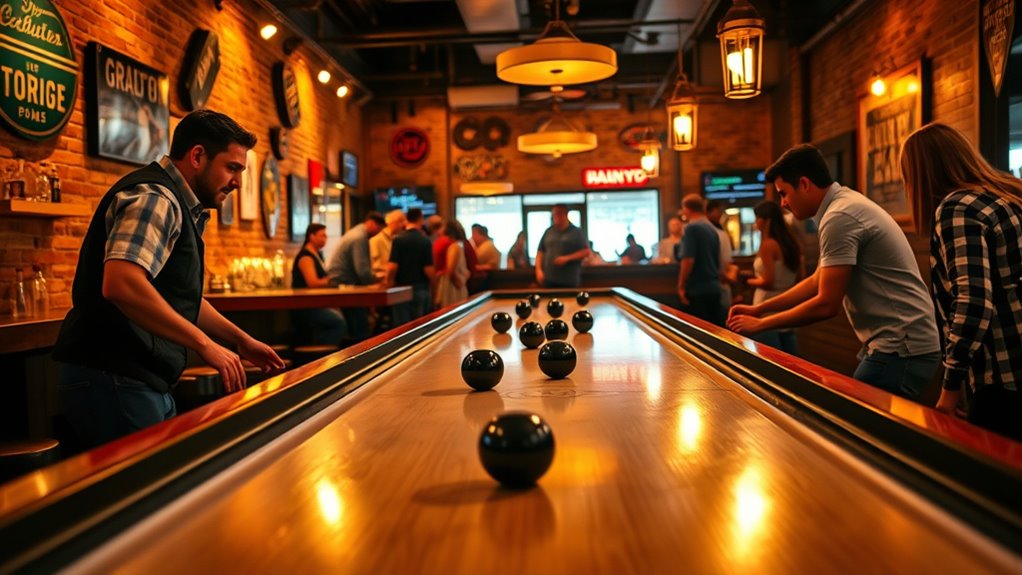
Shuffleboard has surged in popularity across American bars, blending its rich history with modern social scenes. Its simple rules and strategic gameplay make it accessible for everyone, while the tactile, engaging experience fosters camaraderie among players. Bars often host friendly competitions, keeping the tradition alive and introducing it to new generations. If you’re curious about how shuffleboard continues to wow crowds and evolve, there’s plenty more to discover below.
Key Takeaways
- Shuffleboard’s transition from aristocratic pastime to a popular social game boosted its appeal in bars.
- Shorter tables and faster gameplay adaptations made shuffleboard more accessible in bar environments.
- Its social and inclusive nature encourages participation across skill levels, fostering community in bars.
- The game combines tradition with modern social engagement, maintaining relevance across generations.
- Bars host friendly competitions, enhancing camaraderie and strategic learning among players.
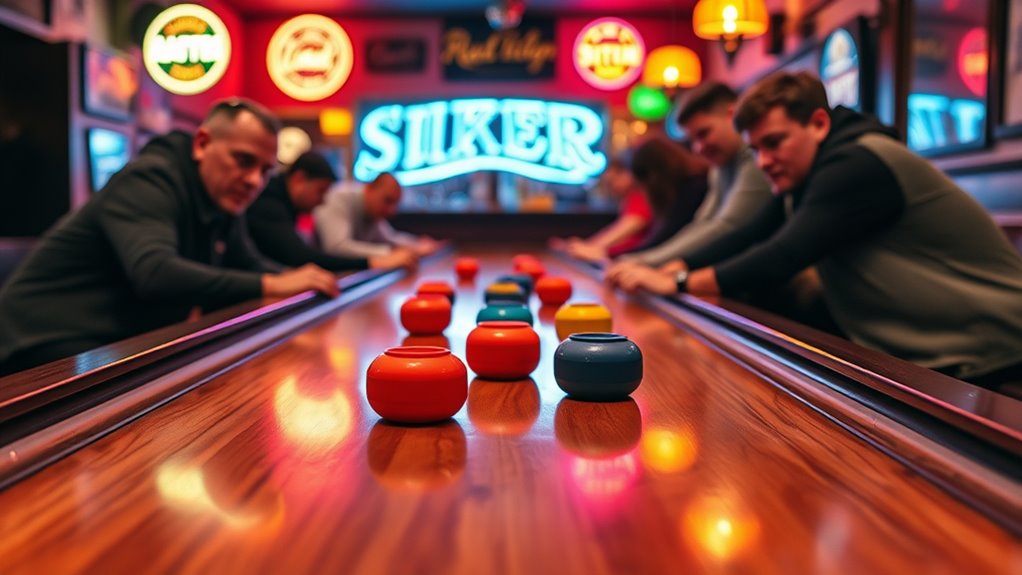
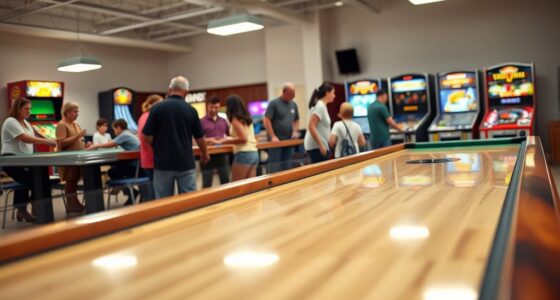
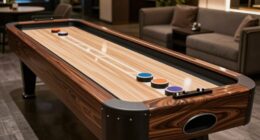
Have you ever wondered why shuffleboard remains a staple in American bars? Its enduring popularity isn’t accidental; it’s rooted in a rich history evolution that spans centuries. Originally played on courts in 15th-century England, shuffleboard made its way to America in the 19th century, where it transformed from an aristocratic pastime into a popular social game. Over the years, the game adapted to fit the lively bar scene, with shorter tables and faster-paced gameplay that encouraged friendly competition among patrons. Today, shuffleboard’s historical roots shine through in the way it combines tradition with modern social interaction, making it an attractive option for bars seeking to foster camaraderie.
As you engage with the game, you’ll notice that mastering shuffleboard involves more than just sliding pucks down a smooth surface. Understanding gameplay strategies is key to outplaying your opponents. The game’s rules are straightforward: players aim to slide pucks into scoring zones at the far end of the table, trying to outscore their rivals while blocking their shots. But winning often hinges on clever tactics like “knocking” opponents’ pucks out of scoring positions or positioning your own pucks to maximize points. Developing these strategies takes practice and focus, especially as you learn to judge angles, force, and spin to control puck movement. Bars that emphasize shuffleboard often host friendly competitions, encouraging players to refine their gameplay strategies and learn from each other, which keeps the game engaging and dynamic. Recognizing the cultural significance of shuffleboard helps explain its lasting appeal in social settings.
The social aspect of shuffleboard plays a significant role in its rise within American bars. Unlike many other bar games, shuffleboard invites participation from players of all skill levels, making it accessible and inclusive. Its simple rules lower the barrier to entry, while the strategic depth offers enough challenge to keep seasoned players coming back. The game’s tactile nature—sliding smooth pucks across a polished surface—also creates a satisfying sensory experience that draws people in. As you become more familiar with shuffleboard’s history evolution and gameplay strategies, you’ll appreciate how it combines the charm of tradition with the excitement of friendly competition. This blend of accessibility, strategy, and social engagement explains why shuffleboard continues to thrive in bars across the country, cementing its place as a beloved pastime for generations to come.
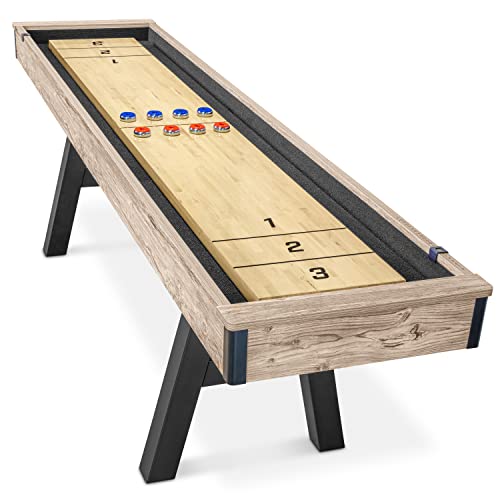
GoSports Premium 9 ft Shuffleboard Table with 8 Pucks, Shuffleboard Wax, and Brush
9 FT SHUFFLEBOARD TABLE: Premium game room size shuffleboard is large enough for competitive games and plays like…
As an affiliate, we earn on qualifying purchases.
As an affiliate, we earn on qualifying purchases.
Frequently Asked Questions
What Is the History of Shuffleboard in America?
You might find it interesting that shuffleboard’s historical origins trace back to 15th-century Europe, especially in the Netherlands and England. When it arrived in America, regional variations emerged—some played on long, narrow courts, others on shorter tables. Over time, shuffleboard became popular in bars and social clubs, evolving into the lively game you see today. Its rich history and regional differences make it a unique and enduring part of American leisure culture.
How Is Shuffleboard Different From Other Bar Games?
You’ll find shuffleboard differs from other bar games through its focus on competitive gameplay and social interaction. Unlike quick-paced games, shuffleboard involves skillful sliding pucks across a smooth surface, emphasizing strategy and precision. It encourages friendly competition and conversation among players, making it a social activity. The game’s relaxed pace allows you to connect with others, creating a fun, engaging atmosphere that sets shuffleboard apart from more fast-paced bar games.
Are There Professional Shuffleboard Leagues in the US?
Yes, professional shuffleboard leagues exist in the US, shining like stars in the night sky of competitive sports. You can find organized events through league organizations that host professional tournaments, drawing skilled players from across the country. These leagues elevate shuffleboard from casual fun to a serious sport, offering players a chance to compete at high levels and showcase their talent on national stages.
What Equipment Is Needed to Play Shuffleboard at Home?
To play shuffleboard at home, you’ll need a shuffleboard table, which can be installed as part of your home setup. Make sure to choose the right size and quality for your space. You’ll also need shuffleboard pucks and wax or silicone spray for smooth gameplay. Regular equipment maintenance, like cleaning the surface and replacing worn pucks, helps keep your game fair and enjoyable. Proper setup guarantees hours of fun.
How Has Shuffleboard’s Popularity Grown Over Recent Years?
You’ve likely noticed shuffleboard’s popularity climbing, with participation in shuffleboard tournaments increasing by over 30% in the past two years. This surge shows how more people are embracing shuffleboard, whether for fun or competition. As you learn shuffleboard scoring and join local events, you’ll see firsthand how this game’s growth fuels its mainstream appeal, making it a favorite pastime in bars and community centers nationwide.
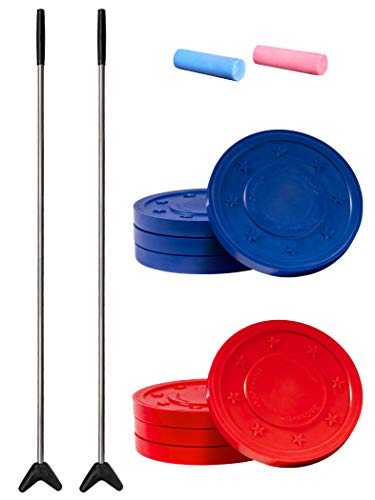
GoSports Driveway Shuffleboard Game Set
SHUFFLEBOARD GAME SET: Full shuffleboard game kit includes 2 shuffleboard cue sticks (47 inch length), 8 pucks (4…
As an affiliate, we earn on qualifying purchases.
As an affiliate, we earn on qualifying purchases.
Conclusion
As you delve into the shuffleboard trend, you’ll notice it’s more than just a game—it’s transforming American bar culture. Did you know that over 60% of bars now feature shuffleboard tables? This surge shows how it’s bringing people together, creating lively atmospheres, and boosting social interaction. So next time you visit your favorite bar, give shuffleboard a shot—you might just discover your new favorite way to unwind and connect.

Shuffleboard Pucks w/ 2 Cans Shuffleboard Wax, Mini Dustpan and Brush for Shuffleboard Table, Complete Shuffleboard Accessories Bundle (2 1/8" (53mm), Medium Speed)
𝗧𝗔𝗕𝗟𝗘 𝗦𝗛𝗨𝗙𝗙𝗟𝗘𝗕𝗢𝗔𝗥𝗗 𝗨𝗟𝗧𝗜𝗠𝗔𝗧𝗘 𝗗𝗘𝗔𝗟: Set of 8 shuffleboard pucks, 2 cans shuffleboard wax, 1 set of mini shuffleboard…
As an affiliate, we earn on qualifying purchases.
As an affiliate, we earn on qualifying purchases.
GoSports Driveway Shuffleboard Game Set
SHUFFLEBOARD GAME SET: Full shuffleboard game kit includes 2 shuffleboard cue sticks (47 inch length), 8 pucks (4…
As an affiliate, we earn on qualifying purchases.
As an affiliate, we earn on qualifying purchases.