To prevent warping, rust, and sticky cushions on your pool table, keep the room’s humidity between 40% and 50%. Use a hygrometer to monitor levels regularly and adjust with humidifiers or dehumidifiers as needed. Avoid placing your table near heat, sunlight, or damp areas. Proper maintenance and environmental control can save you from costly repairs down the line—stay tuned for tips on keeping your table in top shape.
Key Takeaways
- Maintain indoor humidity between 40-50% using hygrometers, humidifiers, or dehumidifiers to prevent material expansion or contraction.
- Regularly inspect and clean felt and cushions to identify and address signs of moisture damage early.
- Avoid placing the pool table near direct sunlight, heating vents, or damp areas to minimize environmental fluctuations.
- Cover the table when not in use to protect against humidity changes and dust accumulation.
- Ensure the table is level and well-ventilated, and perform routine maintenance to prolong its lifespan and maintain optimal playability.

TempPro TP49 Digital Hygrometer Indoor Thermometer Humidity Meter Room Thermometer with Temperature and Humidity Monitor Mini Hygrometer Outdoor Thermometer (Previously ThermoPro)
Face Icon Comfort Indicator: Humidity temperature gauge features face icons to indicate DRY/COMFORT/WET air conditions, quickly informs you…
As an affiliate, we earn on qualifying purchases.
As an affiliate, we earn on qualifying purchases.
How Humidity Affects Your Pool Table’s Wood and Felt
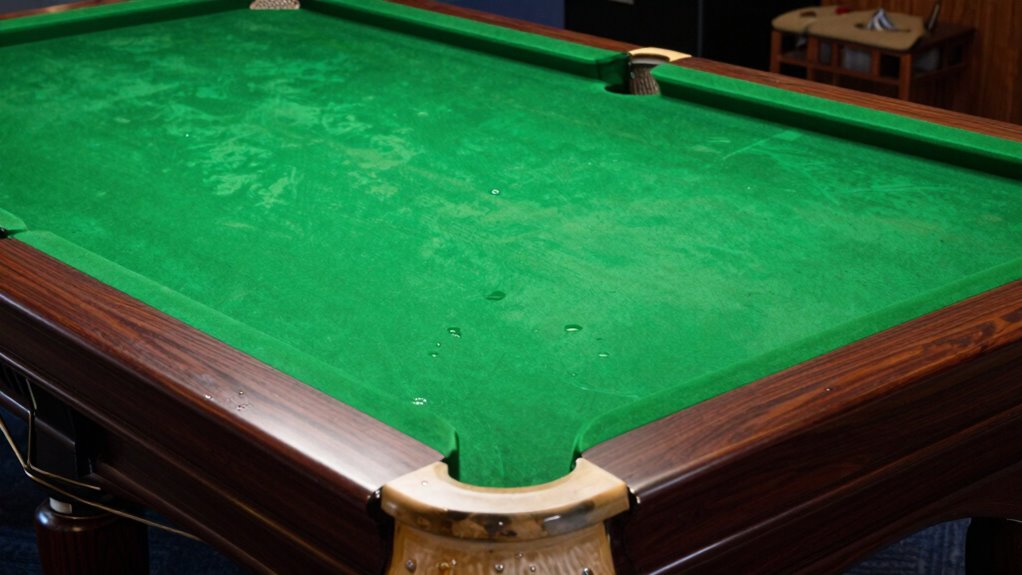
Humidity can considerably impact your pool table’s wood and felt, especially if it fluctuates frequently. Excess moisture causes the wood to swell and warp, which can distort the table’s surface and affect gameplay. Conversely, low humidity leads to drying out and cracking of the wood, making the structure less stable. The felt is also vulnerable; high humidity can cause it to become damp, leading to mold and a sticky surface that hampers ball movement. Regular pool table cleaning helps maintain the felt’s condition, but if damage occurs, felt replacement might be necessary to restore proper play. Additionally, Free Floating conditions can make it challenging to maintain a consistent environment, so using dehumidifiers or humidifiers may help stabilize humidity levels. Maintaining a consistent environment also helps prevent material degradation, which can compromise the integrity of your table over time. Proper humidity control is essential to prevent wood warping and ensure your table remains in optimal condition over time. To further protect your table, consider using protective covers when it’s not in use, especially during seasonal changes.

Expeditious Pro Worsted Pool Table Cloth – Fast Speed High Accuracy Pre-Cut Bed and Rails (Powder Blue, 8 ft)
As an affiliate, we earn on qualifying purchases.
As an affiliate, we earn on qualifying purchases.
Signs of Too Much or Too Little Humidity on Your Pool Table

You’ll want to watch for obvious signs that your pool table’s humidity levels are off. Warping or cracking wood, sticky cushions, or uneven felt can all indicate too much or too little moisture. Recognizing these symptoms early helps you maintain a perfect playing surface. Additionally, maintaining appropriate support and boundaries in your environment ensures optimal humidity levels and protects your investment. Being aware of environmental controls, such as humidifiers or dehumidifiers, can further help prevent damage caused by improper humidity. Proper climate regulation is essential for preserving the quality and longevity of your pool table. Regularly monitoring indoor humidity levels can help you detect fluctuations before they cause irreversible damage. Humidity management is a key factor in ensuring your pool table stays in top condition over time.
Warping or Cracking Signs
Have you noticed any warping or cracking on your pool table? These are clear signs that your table is struggling with humidity issues. Warping often causes the wood to bend or become uneven, making the playing surface unreliable. Cracks in the wood, especially near edges or joints, indicate the wood is drying out and shrinking. You might also see paint peeling or chipping, which shows the material is expanding and contracting due to fluctuating humidity levels. If you spot these signs, it’s a sign you need to adjust the environment around your table. Maintaining proper humidity levels helps prevent further damage and keeps your table in top condition for years to come. Proper humidity control is essential for preserving the quality and longevity of your pool table. Additionally, monitoring and controlling humidity can also prevent issues like rusty hardware and sticky cushions, ensuring the overall playability and appearance of your table remain optimal.
Cushion Stickiness Indicators
Cushion stickiness is a key indicator of humidity levels affecting your pool table. When cushions feel sticky or tacky, it signals humidity-related cushion damage, either from excess moisture or dryness. Too much humidity can cause the cushions to become overly sticky, affecting ball rebound and shot accuracy. Conversely, low humidity can make cushions feel dry and brittle, increasing the risk of cracking or splitting. Use these cushion stickiness indicators to assess your environment:
| Indicator | Cause |
|---|---|
| Sticky cushions after cleaning | High humidity, moisture absorption |
| Cushions feeling dry or cracked | Low humidity, dehydration of materials |
| Uneven cushion rebound | Humidity fluctuation causing damage |
| Excessive cushion wear | Prolonged exposure to moisture |
| Cushion surface peeling | Excess humidity or poor maintenance |
Additionally, maintaining optimal humidity levels can help prevent material degradation and prolong the lifespan of your cushions. Proper humidity control can also preserve the structural integrity of your pool table, ensuring consistent gameplay.
Excessive or Low Humidity Symptoms
When humidity levels stray from the ideal range, your pool table shows clear signs of imbalance. Humidity fluctuations can cause the wood to expand or contract, leading to warping or cracking. If you notice the cushions feeling sticky or the felt swelling, it’s likely too much humidity, often caused by poor storage environments. Conversely, if the slate feels dry or develops cracks, humidity might be too low. In environments with inconsistent humidity, you may see the ball roll unevenly or the rails become loose. Maintaining stable humidity helps keep your table in top condition, preventing damage and preserving playability. Regularly monitor your storage environments and use humidifiers or dehumidifiers to keep humidity levels steady and avoid these symptoms. Additionally, understanding the effects of humidity on wood can help you better manage your pool table’s environment.
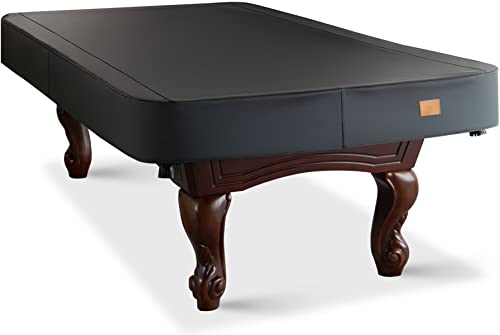
BEARCOVER Heavy Duty Leatherette Billiard Pool Table Cover, Waterproof & Tearproof Cover for Pool Table 7/8/9FT (Black Charcoal/Matte, 8FT-(100"LX 56"WX 8“H))
【Material】: Made of heavy duty leatherette,It is a popular choice for pet owners,It is stain-proof, odor-proof, and puncture-proof,…
As an affiliate, we earn on qualifying purchases.
As an affiliate, we earn on qualifying purchases.
What Is the Ideal Humidity Level for Your Pool Table?
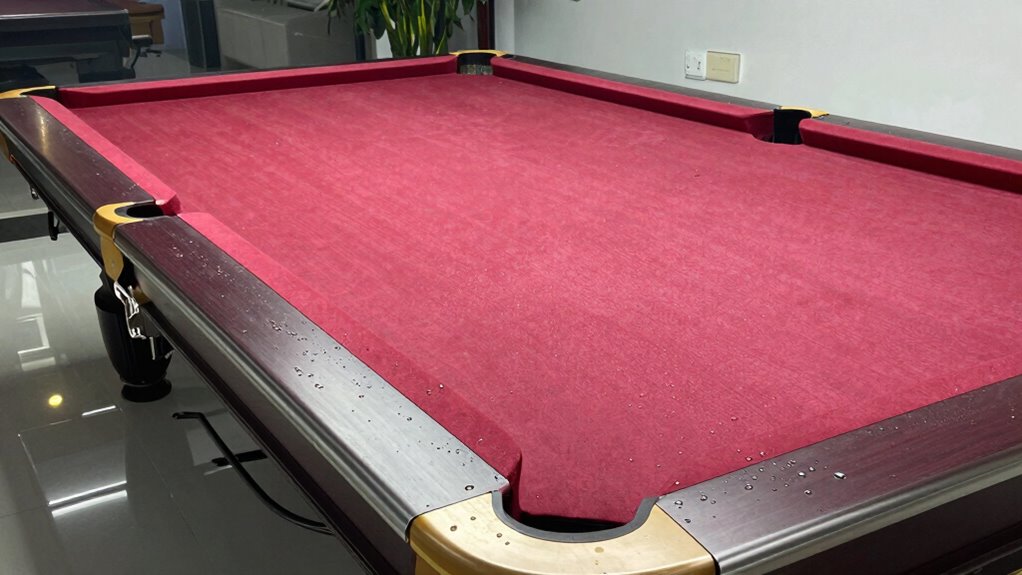
Maintaining the right humidity level is essential for preserving your pool table’s condition and playability. The ideal range is between 40% and 50%, which minimizes humidity fluctuations that cause wood to expand or contract. The consistent humidity prevents warping, cracked cushions, and rust. Visualize this with a simple grid:
| Room Condition | Effect on Table | Result |
|---|---|---|
| High humidity | Material expansion | Cushions stick, warping |
| Low humidity | Material contraction | Cracks, shrinkage |
| Stable humidity | Balanced material | Perfect playability |
Additionally, proper humidity control can help maintain the longevity of your pool table and ensure optimal playing conditions. Implementing humidity regulation devices can further stabilize the environment and protect your investment. Keeping humidity levels steady helps prevent wood damage, ensuring your table remains in top condition for years to come. Regular monitoring of humidity levels using hygrometers is also recommended to detect fluctuations early and take corrective action.

iEsstros 8ft Pool Table Felt 8ft Billiard Cloth with 6 Pcs Cloth Strips and Staple Remover Pool Table Felt Replacement Kit Parts-Black
【Contents of replacement kit】1 X 8FT Pool Table Felt,6 X Cloth Strips, 1 X Staple Puller
As an affiliate, we earn on qualifying purchases.
As an affiliate, we earn on qualifying purchases.
Tips for Controlling Room Humidity to Protect Your Pool Table
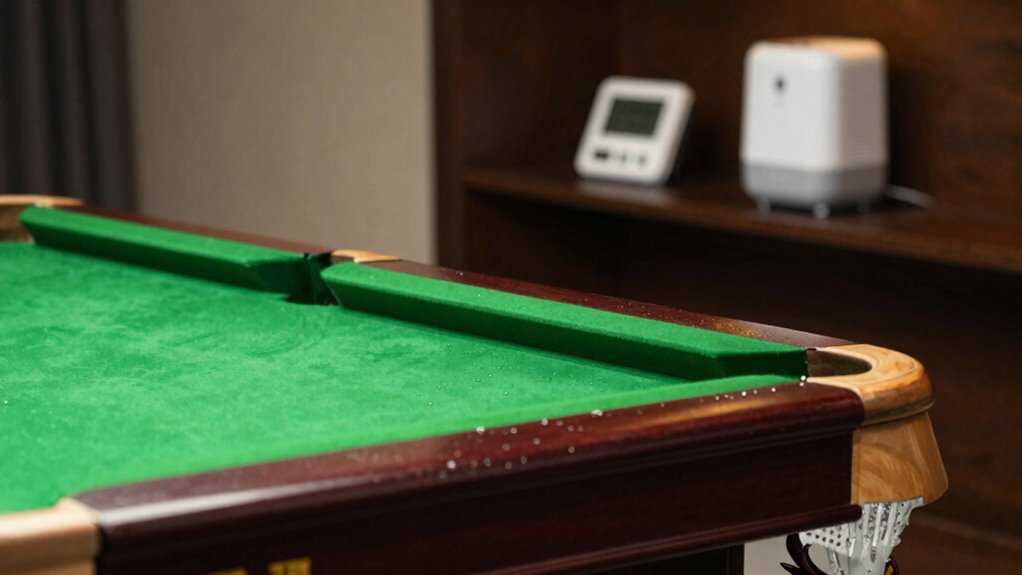
Keeping your room’s humidity levels steady is essential to prevent warping and cracking. You can achieve this by using humidity control devices that monitor and adjust the moisture in the air. Consistent humidity helps protect your pool table and keeps it in prime condition. Additionally, maintaining proper humidity levels can also prevent mold growth and reduce static electricity buildup. Using environmental monitoring devices can help you keep an eye on indoor air quality and humidity levels in real time. Regularly checking your home environment ensures a healthier space and preserves your furniture. Being aware of humidity fluctuations can further safeguard your pool table from damage over time. Monitoring indoor air quality ensures a healthier environment and preserves your furniture.
Maintain Consistent Humidity Levels
To protect your pool table from warping and damage, controlling the humidity levels in the room is essential. Fluctuating humidity causes wood expansion and contraction, which can lead to warping and cracking. Maintaining consistent humidity helps minimize these effects by reducing moisture absorption and release in the wood. Use a hygrometer to monitor humidity levels regularly, aiming for around 40-50%. If levels fluctuate, adjust ventilation or employ simple measures like opening windows or using a fan. Avoid extreme dryness or dampness, as both can harm the wood and cushions. Keeping humidity steady prevents the wood from expanding or shrinking abruptly, preserving the table’s shape and playing surface. Consistency is key to ensuring your pool table remains in top condition for years to come.
Use Humidity Control Devices
Using humidity control devices is one of the most effective ways to keep your pool table in perfect condition. These devices help maintain a stable environment, preventing warping of the wood and rust on metal parts. They also protect neoprene cushions from cracking and keep the felt smooth, reducing maintenance needs. You can choose between humidifiers, dehumidifiers, or hygrometers to monitor humidity levels closely. Properly regulated humidity minimizes stickiness of cushions and preserves felt quality. Here’s a quick overview:
| Device Type | Function | Best For |
|---|---|---|
| Humidifier | Adds moisture when dry | Dry climates |
| Dehumidifier | Removes excess moisture | Humid environments |
| Hygrometer | Monitors humidity levels | Ensures ideal conditions |
How to Use Dehumidifiers and Humidifiers Effectively
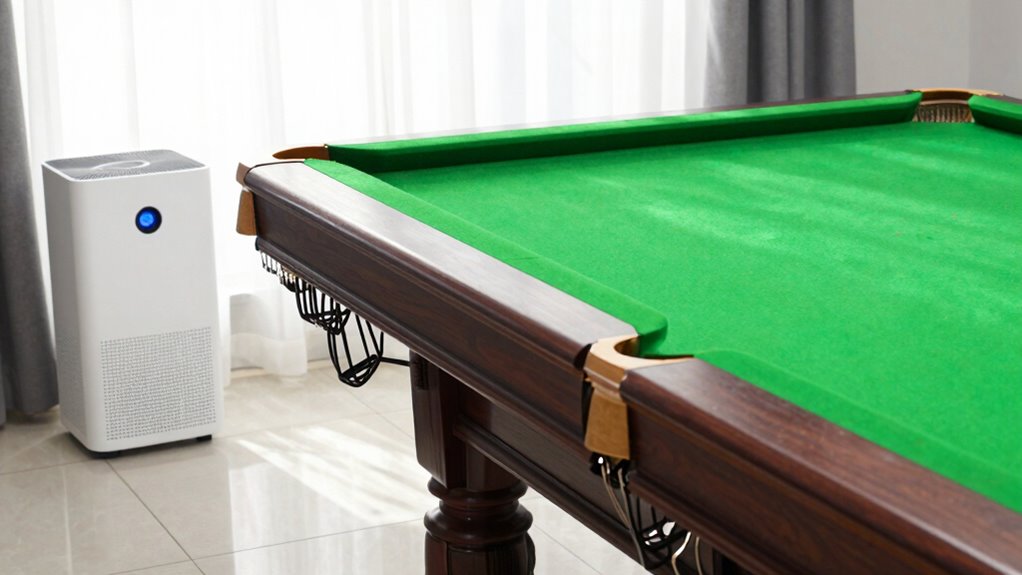
Maintaining the right humidity levels around your pool table is essential to prevent warping, cracking, and other damage. Use dehumidifiers in humid environments to remove excess moisture, and humidifiers in dry spaces to add needed humidity. Place these devices in well-ventilated areas, and set them to target levels around 40-50% humidity. Regularly monitor the humidity with a hygrometer to guarantee accuracy. Keep your table’s pH balance in mind, as fluctuating moisture can affect the wood’s stability. Also, check your cleaning frequency—dust and debris can trap moisture and promote damage. Properly balancing humidity helps maintain the table’s structural integrity and playing surface, extending its lifespan and ensuring ideal play conditions.
Common Mistakes That Can Damage Your Pool Table and How to Avoid Them
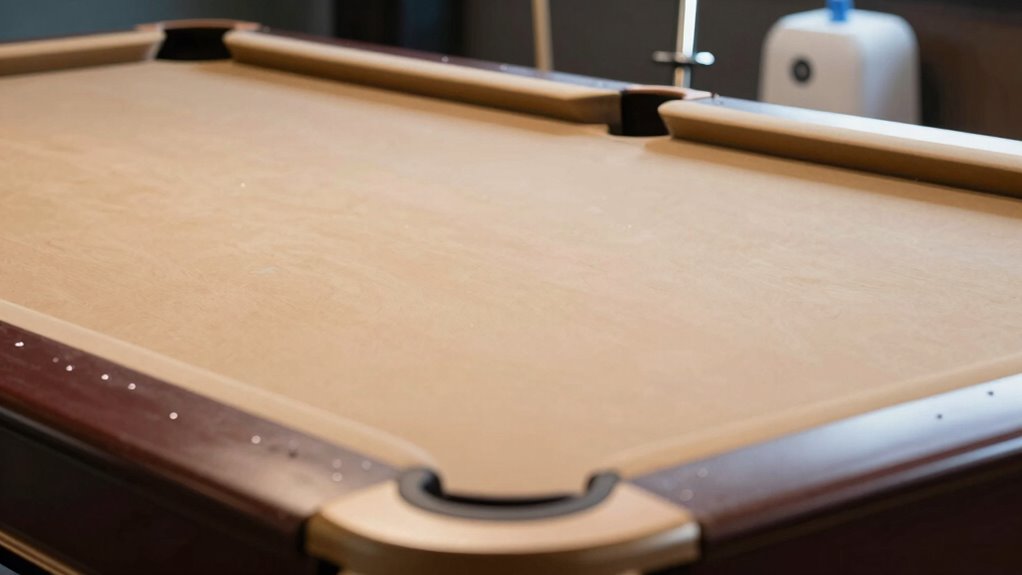
One of the biggest mistakes you can make is neglecting to keep your pool table level, which can cause uneven wear on the felt and warping of the wood. Your pool table material, whether slate, wood, or composite, reacts to environmental factors like humidity and temperature. Ignoring these factors can lead to warping, rust, and sticky cushions. Avoid placing your table near direct sunlight, heating vents, or in damp areas, as rapid changes in humidity can damage the structure. Additionally, using improper cleaning products or neglecting regular maintenance accelerates deterioration. Always ensure your table remains level and protected from environmental extremes. Proper placement and consistent care help maintain your table’s integrity, preventing costly repairs and prolonging its lifespan.
Year-Round Maintenance Tips to Keep Your Pool Table in Top Shape
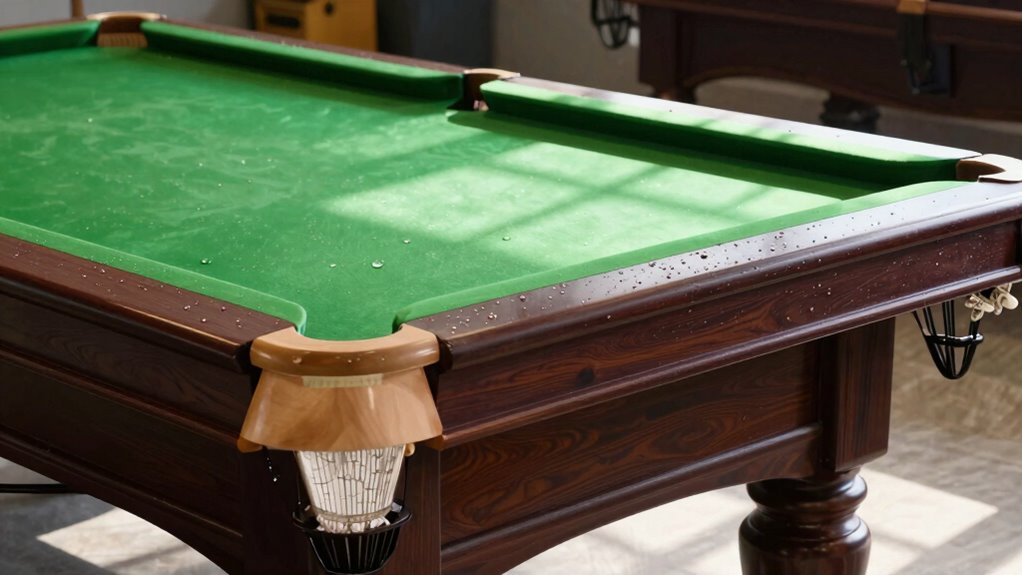
Keeping your pool table in top condition requires consistent attention throughout the year. Regularly inspect and clean your table to prevent warping and rust. Use the right pool table accessories for cleaning and polishing the felt and wood surfaces. Keep humidity levels stable to avoid warping and cushion sticking. Cover your table when not in use to protect it from dust and moisture.
Here’s a quick maintenance checklist:
| Task | Frequency |
|---|---|
| Clean the felt and rails | Weekly |
| Polish the wood surfaces | Monthly |
| Check humidity levels | Daily or weekly |
| Use a table cover | After each game |
| Inspect and replace accessories | As needed |
Staying diligent preserves your table’s quality and longevity.
Frequently Asked Questions
How Often Should I Check My Pool Table’s Humidity Levels?
You should check your pool table’s humidity levels weekly to guarantee proper moisture control. Regular humidity monitoring helps you catch any fluctuations early, preventing warping, rust, or sticky cushions. Use a reliable hygrometer and maintain consistent humidity levels around 50-60%. If you notice changes, adjust your environment or use a dehumidifier or humidifier as needed. Consistent checks keep your table in top condition and prolong its lifespan.
Can Indoor Plants Affect My Pool Table’s Humidity?
Indoor plants can definitely impact your pool table’s humidity. Houseplant moisture releases vapor into the air, which can skyrocket indoor humidity levels if you have many or large plants. This increased indoor humidity can cause warping, rust, and sticky cushions on your table. To protect your game, monitor indoor plant humidity and consider using dehumidifiers or placing plants farther away from your pool table. Keep your setup dry as if your game depends on it—because it does!
What Are the Best Materials for a Humidity-Resistant Pool Table?
You should choose hardwoods like maple, oak, or cherry for a humidity-resistant pool table, as they’re sturdy and less prone to warping. Additionally, opt for protective coatings like polyurethane or varnish to seal the wood and prevent moisture damage. These materials work together to keep your table stable, smooth, and free from warping, rust, or sticky cushions, ensuring you can enjoy playing for years to come.
How Does Seasonal Weather Change Impact My Pool Table’s Condition?
Seasonal humidity and climate fluctuations can considerably affect your pool table’s condition. During high humidity, you might notice warping or warped cushions, while dry seasons can cause the slate to crack or develop gaps. To protect your table, monitor seasonal humidity levels, use a dehumidifier or humidifier as needed, and keep the table in a climate-controlled environment. This way, you prevent damage caused by changing weather patterns and maintain ideal play conditions.
Are There Specific Cleaning Products That Help Prevent Rust and Warping?
You can keep rust and warping at bay by using specific cleaning solutions designed for pool tables. Look for products that contain rust inhibitors, which form a protective barrier against moisture. Don’t just spray and forget—regularly clean and maintain your table to prevent issues before they start. It’s better to nip problems in the bud than deal with costly repairs later. Stay proactive, and your table will thank you for it.
Conclusion
By mastering humidity control, you’re shielding your pool table like a fortress against nature’s unpredictable moods. Keep the environment steady, and your cherished game surface will stay true—free from warping, rust, and sticky cushions—standing tall like a seasoned guardian. With attentive care and the right tools, you’ll guarantee your table remains a faithful partner in countless spirited matches, weathering time’s subtle whispers and the ever-changing dance of the air.