To master basic ping pong techniques, focus on developing your footwork and grip to control your shots and move quickly. Practice side-to-side shuffles, quick step-ins, and fluid movement to improve agility and reaction time. Choose a comfortable grip—shakehand or penhold—and keep it relaxed for better control. Consistent practice helps build muscle memory and enhances your overall game. Keep exploring, and you’ll discover even more ways to elevate your skills.
Key Takeaways
- Master fundamental footwork like side-to-side shuffles and quick step-ins to improve movement and positioning.
- Choose a comfortable grip, such as shakehand or penhold, and practice maintaining it consistently.
- Focus on controlling the paddle to develop accurate forehand and backhand strokes.
- Incorporate basic drills that simulate match conditions to build confidence and consistency.
- Develop agility through simple movement drills to enhance reaction time and overall gameplay.
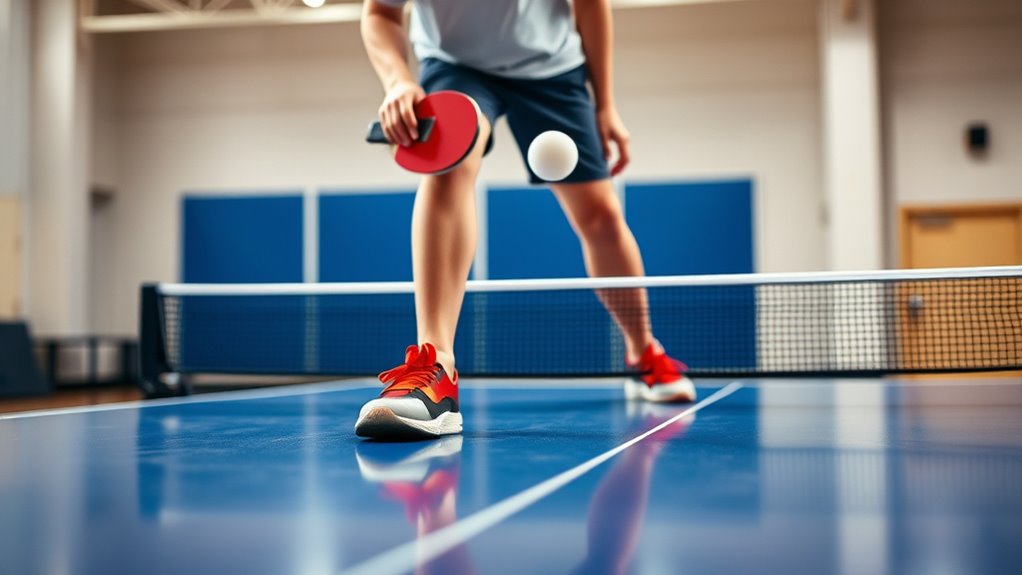
Getting started with ping pong can be exciting, but mastering the basics is essential for improving your game. One of the first areas you’ll want to focus on is your footwork. Good footwork allows you to reach the ball quickly and position yourself ideally for each shot. To develop better movement, incorporate footwork drills into your practice routine. These drills can include side-to-side shuffles, quick step-ins, and lateral movements. Practice moving smoothly and maintaining balance so you can respond swiftly to your opponent’s shots. The goal is to make your footwork natural and efficient, reducing the time it takes to get into the right position. As you get comfortable, increase the speed and complexity of these drills, simulating match situations. Consistent practice will help you develop agility and coordination, which are vital for controlling rallies and reducing unforced errors.
Another key aspect for beginners is understanding grip variations. Your grip on the paddle influences your control, power, and spin. There are several grip styles, but the two most common are the shakehand grip and the penhold grip. The shakehand grip resembles shaking hands with the paddle, offering versatility and ease of use for both forehand and backhand strokes. To execute this grip, hold the paddle as if you’re gripping a handshake, with your index finger resting along the side of the blade and your thumb wrapping around the handle. The penhold grip, often used by Asian players, involves holding the paddle like a pen, with the fingers gripping the front of the handle and the thumb supporting the back. Both grip variations have their advantages, but as a beginner, experimenting with these grips helps you find what feels most natural and comfortable.
Once you’ve tried different grip variations, focus on maintaining a relaxed grip to avoid tension, which can hinder your stroke execution. Practice controlling the paddle with your chosen grip while performing simple drills like forehand and backhand drives. This will build muscle memory and help you develop consistency. Remember, your grip and footwork are interconnected; a proper grip combined with good movement will give you better control over your shots and make it easier to adapt to different situations during a game.
Frequently Asked Questions
What Equipment Is Essential for Beginner Ping Pong Players?
For beginner ping pong players, essential equipment includes a good paddle and balls, which are vital for practice and improvement. When selecting equipment, focus on beginner gear that offers control and comfort, making it easier to learn proper techniques. You don’t need expensive gear at first—just make sure your paddle isn’t too heavy, and the balls are durable. Proper equipment selection helps you enjoy the game and develop your skills faster.
How Should I Choose the Right Paddle for Me?
Choosing the right paddle is like selecting your own Excalibur—you want it to feel just right. Focus on paddle material, like wood or composite, for control and speed. Also, consider grip style—pencil or shakehand—that suits your comfort. Try different paddles at the store or club, and pick one that feels balanced in your hand, giving you confidence for every rally. Remember, comfort and control are key!
What Are Common Mistakes Beginners Make in Ping Pong?
You often struggle with serve accuracy because you neglect footwork fundamentals. Beginners tend to stay static, making their serves predictable and less precise. Also, rushing shots instead of controlled strokes can cause mistakes. Focus on maintaining proper stance and foot positioning to improve accuracy. Practicing slow, deliberate serves helps develop consistency. Remember, good footwork and controlled technique are key to reducing errors and elevating your overall game.
How Can I Improve My Reaction Time Quickly?
To boost your reaction time quickly, try incorporating reaction time exercises like rapid-fire drills, where you respond to unpredictable ball placements. For example, imagine a player practicing with a partner, constantly varying shot angles. Pair this with mental focus techniques, such as visualization and deep breathing, to sharpen your concentration. Consistent practice of these methods helps your brain process information faster, giving you quicker reactions during matches.
Are There Specific Drills to Enhance Consistency?
You can improve your consistency by practicing specific drill routines regularly. Focus on hitting the ball with steady, controlled strokes, aiming for uniformity in each shot. Incorporate drills like rallying against a wall or with a partner, emphasizing consistent placement and timing. Practice these drills daily to develop muscle memory and better control, which will ultimately enhance your overall consistency during matches.
Conclusion
As you step onto the table, imagine the ball as a glowing orb, soaring between your paddle and your opponent’s side like a fleeting comet. With each practiced swing, you’ll feel the rhythm build, your movements becoming smoother, more confident. The sound of the ball’s gentle thwack echoes like a heartbeat, marking your progress. Keep your focus sharp, stay adaptable, and watch your skills grow, turning each game into a dance of precision and control.