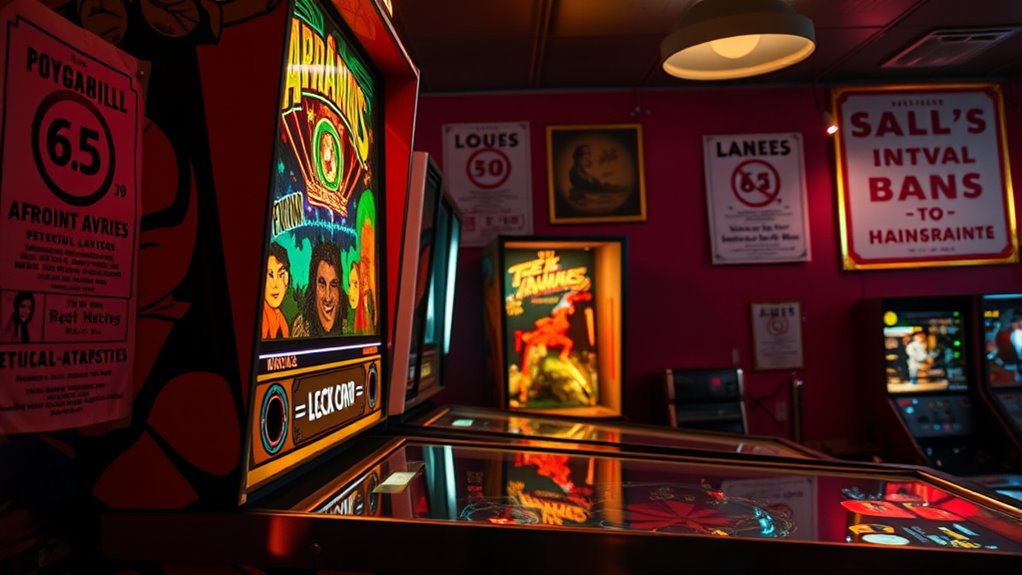

Pinball’s legal history shows a shift from early moral panic and gambling bans to modern recognition as a skill-based game. Initially, authorities feared it encouraged gambling, leading to restrictions and court battles over whether it was chance or skill. Over time, technological advances and legal rulings clarified its status, allowing pinball to flourish today. If you explore further, you’ll discover how societal debates and legal changes shaped pinball’s acceptance in modern laws.

Play games on Amazon Luna for your game nights, included with Prime
- A rotating selection of games, no download needed
- Play on TV, laptop or phone
- Fast, free delivery for your gear, too
Key Takeaways
- Early pinball faced bans due to associations with gambling and moral concerns over chance and prizes.
- Legal debates centered on whether pinball was a game of skill or chance, influencing its regulation.
- Courts’ varied rulings affected the classification and legality of pinball machines nationwide.
- In the 1970s, technological and legal clarifications led to wider acceptance of pinball as a skill-based game.
- Today, pinball is legally recognized and culturally embraced, marking a shift from past restrictions.
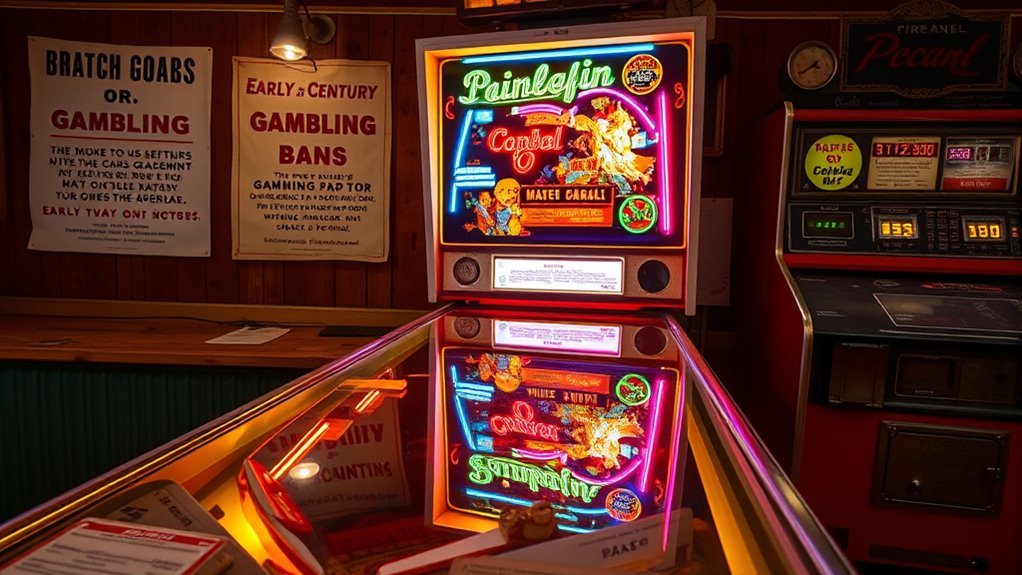
Have you ever wondered how pinball, once considered a game of skill, became embroiled in legal battles and moral debates? In the early 20th century, pinball machines burst onto the scene as popular arcade attractions. But their rise wasn’t without controversy. Many city officials and moral guardians viewed pinball as more than just innocent fun; they saw it as a form of gambling that threatened public morals. This led to strict arcade regulation, with some cities banning pinball entirely or imposing heavy restrictions. These bans often stemmed from the belief that pinball machines encouraged gambling-like behavior since players could win prizes or credits, blurring the lines between a skill game and a game of chance. As a result, the classification of pinball machines became a central issue in legal debates. Were they purely a game of skill, or did they resemble gambling devices? Authorities argued that because players could influence the outcome through skill, pinball should be classified as a game of skill, exempting it from gambling laws. Conversely, opponents claimed that the element of chance, especially in the design of the machines, made pinball akin to gambling, prompting bans and crackdowns.
This debate over game classification fueled legal battles throughout the mid-20th century. Pinball manufacturers fought to show that their machines fell under the category of skill-based entertainment, which would exempt them from gambling statutes. They argued that the skill required to control the flippers, anticipate ball movement, and master the game distinguished pinball from gambling devices that relied purely on chance. Courts, however, didn’t always agree, and the distinction between a game of skill and a game of chance became a pivotal point in legal rulings. The classification influenced whether arcade owners could legally operate pinball machines and whether they could be taxed or regulated. Over time, some jurisdictions accepted the skill-based nature of pinball, leading to the removal of bans and the emergence of legal pinball arcades. Additionally, advances in game classification clarified the legal status of pinball, helping to dispel past misconceptions.
In the 1970s, the legal landscape shifted again when the invention of digital pinball machines and the rise of modern arcade regulations clarified the classification of pinball. Today, most regions recognize pinball as a game of skill, allowing it to thrive legally and culturally. The history of pinball’s legal battles reflects broader societal concerns about morality, chance, and skill, but it also highlights how regulation and classification can evolve. You can now enjoy pinball freely in arcades and entertainment centers, a far cry from the moral panic and legal restrictions of the past.
Popular right now

Breville Bambino Espresso Machine, Brushed Stainless Steel (BES450BSS)

Breville Barista Express Espresso Machine with Built-In Grinder, Black Sesame

Ninja Prestige Smart XL Pro Cook System 10-in-1 Air Fryer and Countertop Oven, Stainless Steel, DT551
As an affiliate, we earn on qualifying purchases.
Frequently Asked Questions
How Did Pinball’s Association With Gambling Influence Legal Actions?
Your understanding is that pinball’s association with gambling considerably impacted legal actions, especially around arcade regulations and gaming controversies. Authorities often targeted pinball machines, claiming they encouraged gambling and illegal betting. This led to bans and strict regulations in many areas. Over time, as laws evolved and perceptions shifted, pinball was reclassified as a game of skill, easing restrictions and ending the era of widespread legal battles.
Were There Specific Court Cases That Shaped Pinball Laws?
You should know that court cases like the 1930s Chicago crackdown on arcade machine gambling played a big role in shaping pinball laws. These cases challenged the idea that pinball was a game of skill, linking it to gambling prohibition. As a result, courts influenced regulations, making pinball machines more legal by emphasizing their skill-based nature and reducing their association with illegal gambling activities.
How Have State Laws Varied Historically Regarding Pinball Machines?
You’ll find that state laws on pinball machines have varied greatly over time, especially regarding arcade regulations and taxation policies. Some states initially banned pinball due to gambling concerns, while others embraced it with strict rules. As perceptions shifted, many regions relaxed restrictions, taxing machines differently or regulating their placement. Your experience with pinball’s legality depends heavily on where you are, reflecting evolving attitudes toward arcade entertainment and gaming regulations.
What Role Did Public Opinion Play in Changing Pinball Legislation?
Public opinion wielded more power than a tidal wave in shaping pinball laws. When society saw pinball as a moral threat or a corrupting influence, laws swiftly turned against it. But as perceptions shifted, fueled by grassroots efforts and changing morals, public perception softened. This moral influence helped push legislation toward leniency, transforming pinball from a villain to a beloved pastime, proving how public opinion truly drives legal change.
Are There Any Notable International Differences in Pinball Regulation?
You’ll find notable international differences in pinball regulation due to varying arcade regulations and cultural perceptions. In some countries, pinball is seen as a harmless game, leading to relaxed laws. In others, it’s still viewed with suspicion, resulting in stricter controls or bans. These differences reflect local attitudes toward gambling, entertainment, and youth activities, shaping how governments approach pinball laws worldwide.
Conclusion
Today, pinball’s legal journey shows how attitudes evolved from strict gambling bans to embracing the game as a pastime. Remember, if you were around in the 1930s, you’d think it was just a “flipper” of fortunes, not a legal battleground. The shift proves that laws can change—what was once outlawed can become a beloved entertainment. So, next time you enjoy a game, appreciate how history shaped this timeless machine.