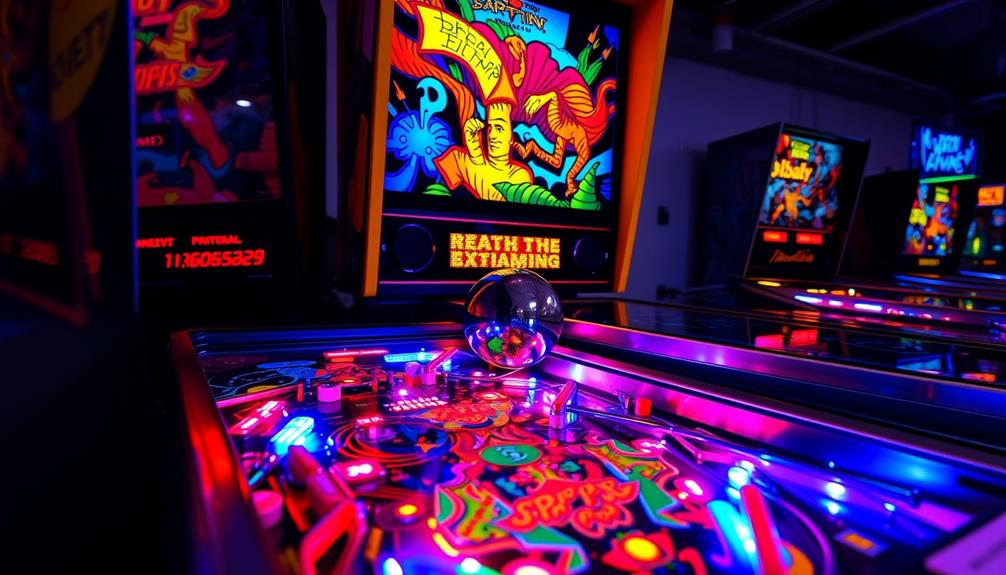

You should replace pinballs when you notice signs of wear, like chips, cracks, dents, or dull surfaces that affect bounce and trajectory. Regular use can cause gradual damage, impacting gameplay and potentially harming your machine. Using durable materials and proper maintenance helps extend their lifespan, but eventually, worn or damaged balls need replacing to keep your game smooth and safe. Keep exploring to find out how to maintain and replace them effectively.

Play games on Amazon Luna for your game nights, included with Prime
- A rotating selection of games, no download needed
- Play on TV, laptop or phone
- Fast, free delivery for your gear, too
Key Takeaways
- Replace pinballs when visible signs of wear such as chips, cracks, or dents appear to maintain optimal gameplay.
- Change balls that no longer bounce or roll consistently to prevent scoring issues and damage.
- Regularly inspect for surface deterioration or dullness that affects ball behavior and replace as needed.
- Swap out worn or damaged balls promptly to protect the playfield and sensitive components from damage.
- Follow manufacturer recommendations and perform routine checks to determine ideal replacement intervals based on usage.
As an affiliate, we earn on qualifying purchases.
Signs That Your Pinballs Are Showing Wear and Tear
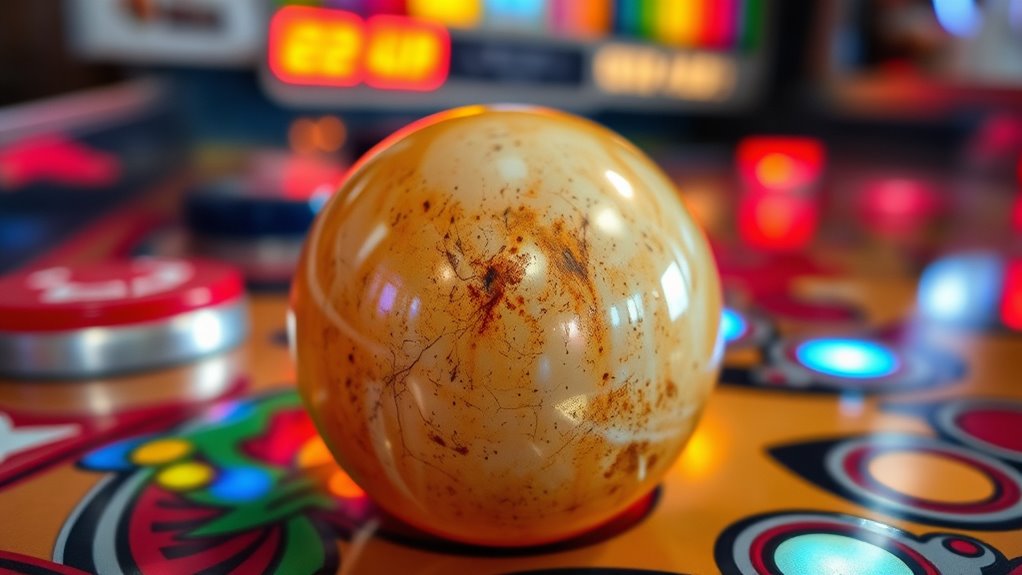
How can you tell if your pinballs are wearing out? One key indicator is changes in ball material. Over time, the surface may become rough, dull, or develop small chips, affecting gameplay. If the ball feels noticeably less smooth or starts to show cracks, it’s a sign it needs replacing. Additionally, the manufacturer’s reputation plays a role; balls from well-known brands often resist wear longer, signaling higher quality. If your balls show significant wear despite good quality, it’s a clear sign they’re nearing the end of their lifespan. Pay attention to how the balls bounce and roll—if they no longer react predictably or cause unusual noise, it’s time to contemplate replacing them. Regular inspection ensures your game stays consistent and enjoyable. Also, consider the material quality of the pinballs, as higher-grade materials tend to last longer and maintain optimal performance over time.
How Regular Use Affects Pinball Longevity
The more you play, the faster wear and tear can affect your pinball machine’s parts. Frequent use stresses mechanical components, reducing their lifespan and increasing the need for repairs. Understanding how regular play impacts durability helps you maintain your machine and plan for replacements. Regular maintenance, such as inspecting and cleaning machine parts, can extend the lifespan and ensure smoother gameplay.
Wear and Tear Impact
Frequent use of pinballs inevitably leads to wear and tear that can shorten their lifespan. Over time, the ball’s contact with bumpers, targets, and playfield surfaces causes gradual degradation. Historical evolution shows that modern manufacturing materials aim to reduce damage, but older models may suffer more. Collector considerations highlight that well-maintained pinballs last longer and retain value. The following table illustrates common wear points:
| Wear Point | Impact on Longevity |
|---|---|
| Bumper contacts | Decrease responsiveness |
| Playfield surface | Causes scratches and dents |
| Flipper mechanisms | Reduce flipping power |
| Targets and switches | Lead to misfires or failures |
Proper maintenance extends lifespan, especially important for vintage or collectible pinballs. Regular inspections and timely repairs are essential to prevent minor issues from escalating into major damage, which can significantly affect the overall durability of the pinball.
Playtime Frequency Effects
Regular use profoundly influences a pinball’s lifespan by accelerating wear on its components. The type of ball material you choose plays a vital role; softer materials may wear faster, while harder ones last longer but can cause more surface damage. The manufacturing process also impacts durability—well-made balls with precise molding and smooth surfaces reduce friction and minimize deterioration over time. Frequent play increases the number of impacts, which wears down both the ball and the playfield, leading to faster degradation. If you play often, consider replacing the pinball more frequently to prevent damage and maintain ideal game performance. Properly selected materials and manufacturing quality help extend the time between replacements, ensuring your pinball remains in good condition longer despite regular use. Additionally, understanding material durability can guide you in choosing the best balls for longevity.
Mechanical Component Durability
When you play your pinball machine often, mechanical components experience increased stress and wear. Historical innovations, like improved switch designs and durable coil materials, have extended part longevity. However, frequent use accelerates deterioration, especially in flippers, bumpers, and relays. Regular maintenance helps, but understanding future advancements can also boost durability. Upcoming innovations, such as smart sensors and advanced materials, aim to monitor wear and enhance mechanical resilience. These developments could predict failures before they happen, reducing downtime and repair costs. Additionally, Gold IRA rollovers are becoming an increasingly popular way to diversify retirement portfolios, which can indirectly support the financial stability needed for ongoing maintenance and upgrades of your pinball machine. Ultimately, the more you play, the more you’ll need to contemplate replacing or upgrading key components to keep your machine functioning smoothly. Staying informed about historical and future innovations ensures your pinball remains vibrant and operational for years to come.
Material Types and Their Impact on Durability

The materials used in pinballs greatly influence their durability and how quickly they wear down. Stronger compositions resist damage longer, extending the time between replacements. Understanding the differences in material strength and wear helps you choose the right pinballs for lasting performance. Additionally, considering the artistic significance of materials can enhance the visual appeal and cultural value of the game components.
Material Strength and Wear
Material strength plays a crucial role in determining how well pinballs withstand repeated impacts and friction. Stronger materials resist material fatigue and surface degradation, extending how long your pinballs stay in top shape. Softer or weaker materials may crack or chip faster, leading to uneven play and the need for earlier replacements. The table below compares common material types:
| Material | Durability | Susceptibility to Surface Degradation |
|---|---|---|
| Bumper Rubber | High | Low |
| Plastic | Moderate | Moderate |
| Glass | Very high | Very low |
Choosing the right material helps reduce wear, making your pinballs last longer and perform better over time. Additionally, understanding how different materials respond to wave and wind in a beach environment can influence the longevity of associated equipment or protective coatings.
Longevity by Composition
Choosing the right pinball material substantially influences how long your game pieces last. Different compositions impact durability through factors like material degradation and manufacturing quality. High-quality materials, such as resin or specialized plastics, resist wear better and maintain their bounce longer. Conversely, cheaper or poorly manufactured pinballs may degrade quickly, losing shape and surface smoothness. For example, Mazda Tuning emphasizes that material quality and manufacturing processes are critical for durability and performance. Consider these points: – Material type: Harder plastics last longer than softer alternatives. – Manufacturing quality: Well-made pinballs resist chipping and cracking. – Exposure to play: Frequent or aggressive play accelerates material degradation.
The Role of Cleaning and Maintenance in Extending Pinball Life

Regular cleaning and maintenance are essential if you want your pinball machine to last longer and perform better. Keeping the playfield free of dust and debris prevents wear and ensures smooth gameplay. Regularly inspecting and cleaning components like bumpers and targets preserves their function. For vintage restoration projects, careful cleaning restores original parts, maintaining value. Custom ball selection also impacts longevity; softer or worn balls cause less damage. Use a microfiber cloth for surfaces and a gentle cleaner for plastics. Keep the coin door and switches dust-free with compressed air. Additionally, paying attention to proper maintenance techniques can significantly extend your pinball machine’s lifespan.
When to Consider Replacing Damaged or Cracked Balls
Damaged or cracked pinball balls can considerably impact gameplay and cause unnecessary wear on your machine. When you notice chips, cracks, or dents, it’s time to consider replacing them. Damaged balls can detract from pinball aesthetics, making your machine less appealing. They may also lower collector value if you’re preserving or selling your game. Regularly inspecting your balls and understanding the benefits of glycolic acid exfoliating toner can help maintain your overall maintenance routine for your machine and accessories.
You should replace a ball if:
- The surface is chipped or cracked, affecting ball trajectory
- It shows visible signs of excessive wear or flattening
- It no longer maintains a consistent bounce or roll
Replacing damaged or cracked balls keeps gameplay smooth and maintains the visual appeal. This simple step helps preserve your pinball machine’s integrity and value over time.
The Effects of Worn Pinballs on Gameplay and Scoring

Worn pinballs can substantially disrupt gameplay and skew your score because they don’t bounce or roll as predictably as new balls. This inconsistency affects shot accuracy and can lead to missed targets or unintended ball drains. Over time, scoring becomes less reliable, making it harder to achieve high scores or complete challenging objectives. If you’re into pinball customization or collecting collector’s editions, maintaining pristine balls is even more critical to preserve the game’s original feel and aesthetics. Worn balls may also cause excessive wear on the playfield, risking damage to sensitive components. Replacing your pinballs regularly guarantees smoother gameplay and accurate scoring, especially if you want to enjoy your machine as intended or keep your collector’s edition in top condition.
Best Practices for Replacing Pinballs Safely and Effectively
To replace pinballs safely and effectively, start by turning off and unplugging your machine to prevent accidental activation or injury. Handle new pinballs carefully to avoid damage, and always choose high-quality replacements suited for your game. When installing, guarantee the ball is clean and free of defects to maintain ideal gameplay. Consider pinball customization options to enhance your machine’s appearance and performance, but keep collector considerations in mind—original parts often maintain value.
- Use gloves to prevent fingerprints and dirt on the ball
- Double-check that the ball fits smoothly in the playfield
- Keep spare pinballs on hand for quick replacements
Following these best practices helps guarantee safety, preserves your pinball’s condition, and keeps your gameplay smooth and enjoyable.
Tips to Prolong the Lifespan of Your Pinballs
Proper maintenance and careful handling are key to extending the life of your pinballs. Start by choosing the right ball material—urethane or resin balls tend to last longer than plastic, resisting wear and chipping. Regularly inspect your pinballs for scratches, dents, or cracks, and replace them if damage is visible. Maintaining a clean playing surface minimizes unnecessary impact, reducing wear on the balls. Be mindful of the replacement frequency; rotating or swapping out balls periodically prevents excessive wear on any single ball, prolonging its lifespan. Avoid harsh cleaning chemicals that can degrade the ball material. With attentive care, your pinballs will stay in good shape longer, ensuring smoother gameplay and reducing the need for frequent replacements.
Frequently Asked Questions
How Do I Identify a Cracked or Damaged Pinball?
To identify a cracked or damaged pinball, examine the ball carefully for visible cracks, chips, or dents, especially around its surface. Check for inconsistencies in the ball material, which could indicate manufacturing defects or wear over time. If you notice any unusual texture, color changes, or if the ball feels rough or uneven, it’s time to replace it. Damaged pinballs can affect gameplay and cause further damage to your machine.
Can Using Different Types of Pinballs Affect Game Performance?
Imagine your pinball game as a racecar, now imagine swapping out the tires with soggy bread—sounds chaotic, right? Using different ball material and manufacturing quality can drastically affect game performance. Cheaper or mismatched balls might bounce unpredictably or wear faster, spoiling your perfect shot. Stick to the recommended type for your machine to guarantee smooth play, consistent bounces, and a game that’s more fun than a soggy bread racecar.
Are There Specific Brands Recommended for Durability?
When choosing pinball brands, you want durability tips that guarantee long-lasting play. Reputable brands like Valley, Stern, and Williams are known for their durable pinballs, which resist cracking and surface wear. Look for high-quality materials and proper maintenance to extend their lifespan. By selecting trusted brands and following durability tips, you’ll enjoy a smoother game experience and reduce the frequency of replacements.
How Often Should I Replace Pinballs in a Commercial Arcade?
Imagine the clink of a pinball bouncing through your arcade, a sound that signals lively gameplay. To keep this momentum, you should replace pinballs during regular pinball maintenance, typically every 6 to 12 months, depending on usage. Regularly replacing worn or chipped balls helps maintain arcade game longevity, ensuring smooth play and preventing damage to your machines. Consistent upkeep keeps your arcade vibrant and players coming back for more.
Does Temperature or Humidity Impact Pinball Wear and Tear?
Climate effects like temperature and humidity can considerably impact pinball wear and tear. High humidity accelerates corrosion and causes material sensitivity issues, leading to faster deterioration of the ball’s surface. Extreme temperatures can cause expansion or contraction of materials, affecting the ball’s smoothness and gameplay. To protect your pinballs, keep your arcade environment stable, control humidity levels, and regularly inspect for signs of climate-related damage.
Conclusion
Keep an eye on your pinballs like a hawk, because their wear and tear can turn your game into a sinking ship. Regular maintenance, timely replacements, and choosing durable materials will keep your gameplay smooth as silk. Think of your pinballs as your trusty crew—when they start showing signs of fatigue, it’s time for a fresh crew member. With proper care, your pinball adventures will stay lively, ensuring every game is a winning voyage.
Halloween Picks
halloween
As an affiliate, we earn on qualifying purchases.