Your perception of prizes greatly impacts your motivation to play redemption games. When prizes seem desirable, fair, and clearly displayed, you’re more likely to engage repeatedly. Conversely, if prizes appear insignificant or unfair, your interest drops quickly. Offering a variety of valuable, ethical, and transparently awarded prizes helps build trust and loyalty. If you want to uncover how strategic presentation and fairness boost overall game success, keep exploring insights on this fascinating topic.

Play games on Amazon Luna for your game nights, included with Prime
- A rotating selection of games, no download needed
- Play on TV, laptop or phone
- Fast, free delivery for your gear, too
Key Takeaways
- Perceived prize value directly influences player motivation and willingness to continue playing.
- Clear presentation and visibility of prizes enhance their desirability and perceived worth.
- Fairness and transparency in prize distribution build trust and increase player engagement.
- Offering meaningful and varied prizes encourages repeated participation and loyalty.
- Ethical and sustainable prize practices boost brand reputation and positive player perception.
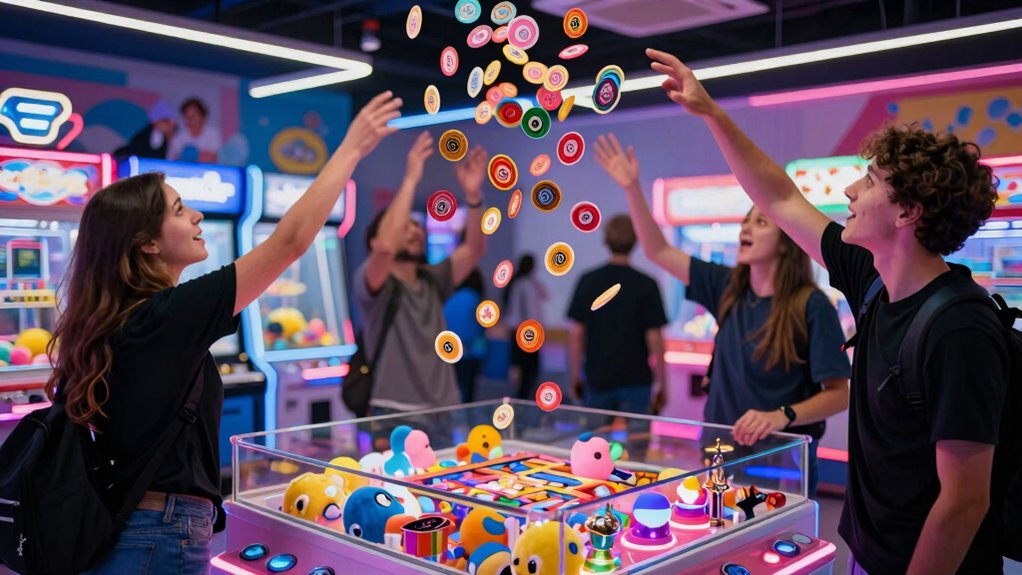
Understanding how players perceive prizes can markedly influence the success of redemption games. When you design or manage these games, you need to grasp that the way players view the prize value directly impacts their motivation to play. If players see the prizes as desirable and worth their effort, they’re more likely to stay engaged and invest time into the game. Conversely, if the prizes seem insignificant or not worth the effort, players quickly lose interest, and your game’s success diminishes. The perception of prize value isn’t just about the actual worth but how players interpret that worth relative to their expectations and experience. For instance, a small prize might seem appealing if it’s rare or highly desirable, while a large, common prize may feel underwhelming. As a game operator, you should focus on offering prizes that strike a balance between perceived value and affordability, ensuring players feel rewarded without depleting your resources.
Player engagement hinges on this perception. When players believe the prizes are valuable, they’re more likely to participate repeatedly, increasing their overall engagement with the game. This isn’t just about initial attraction but about building a sense of reward that keeps players coming back. To achieve this, you should showcase the prizes clearly and make their value obvious, whether through displays, signage, or in-game cues. Highlighting the exclusivity or limited availability of certain prizes can also amplify their perceived value, boosting player motivation. Additionally, offering a variety of prizes that cater to different tastes ensures a broader appeal, making players feel that their preferences are acknowledged and rewarded. Incorporating ethical practices into your prize offerings and game management can further elevate player trust and brand reputation.
It’s essential to understand that perception can be influenced by presentation and perceived fairness. If players think the game is fair and that they have a real chance at winning meaningful prizes, they’ll perceive the prizes as more valuable, fostering trust and loyalty. On the other hand, if the game feels rigged or the prizes seem unattainable, players might disengage regardless of the actual prize value. Consistent, transparent communication about how prizes are earned and the chances of winning helps reinforce positive perceptions. Moreover, considering the importance of biodiversity and sustainable practices can also enhance the overall perception of your brand, appealing to environmentally conscious players. Incorporating environmentally friendly practices into your prize offerings and game management can further elevate player trust and brand reputation.
In the end, your goal is to shape how players see the prizes, because their perception directly impacts their engagement and the overall success of your redemption game. Focus on making prizes desirable, clearly visible, and fairly attainable, and you’ll create an environment where players feel motivated, rewarded, and eager to keep playing.
redemption game prize display shelves
As an affiliate, we earn on qualifying purchases.
As an affiliate, we earn on qualifying purchases.
Frequently Asked Questions
How Does Prize Perception Influence Player Motivation?
Prize perception directly impacts your motivation by triggering excitement and desire through prize anticipation. When you see appealing rewards, your player psychology shifts, making you more enthusiastic to participate and invest effort. Clear, attractive prizes enhance your perception of value, encouraging continued engagement. Fundamentally, the better you perceive the prize, the more motivated you become to play, driven by the anticipation and the rewarding feeling of winning something meaningful.
What Psychological Factors Affect Prize Desirability?
Ever wonder what makes a prize truly desirable? It’s all about psychological factors like prize anticipation and reward expectations that build excitement and drive your motivation. When you imagine winning, your brain releases feel-good chemicals, boosting your desire. The more vivid and attainable the prize seems, the stronger your craving becomes. These factors heighten your engagement, making the game more thrilling and increasing your chances of redemption success.
How Do Redemption Game Designs Impact Prize Appeal?
Redemption game designs profoundly impact prize appeal through thoughtful prize packaging and variety. When you present prizes with attractive packaging, players perceive them as more valuable, increasing their excitement. Offering a diverse range of prizes keeps players engaged, as they’re more likely to find something that appeals to them personally. Cleverly designed prize displays and options create a sense of anticipation and satisfaction, boosting the overall success of the redemption game.
What Role Does Prize Value Perception Play in Game Strategy?
Like ancient traders valuing rare artifacts, you view the prize hierarchy through a strategic lens. Your perception of reward hierarchy influences your game approach—aiming for high-value prizes or settling for smaller wins based on perceived worth. If you see a prize as highly valuable, you’re more motivated to invest effort. Conversely, undervaluing rewards might lead you to play more casually, impacting your overall game strategy and success.
How Can Operators Enhance Prize Attractiveness Effectively?
You can enhance prize attractiveness by focusing on prize packaging and variety. Use eye-catching packaging that makes each prize feel special and valuable. Offer a diverse selection to appeal to different preferences, increasing excitement and perceived worth. Regularly update your prize options to keep players enthusiastic to try their luck again. By making prizes visually appealing and varied, you boost their perceived value, encouraging more game participation and higher redemption rates.
Conclusion
Remember, perceptions shape reality, especially in redemption games. When players see prizes as valuable and attainable, they’re more likely to keep playing and enjoy the experience. Your goal is to create a winning perception—make prizes enticing yet achievable, and players will keep coming back. As the saying goes, “You catch more flies with honey than vinegar.” Focus on positive perceptions, and you’ll boost your game’s success and keep your players hooked.
Halloween Picks
halloween
As an affiliate, we earn on qualifying purchases.