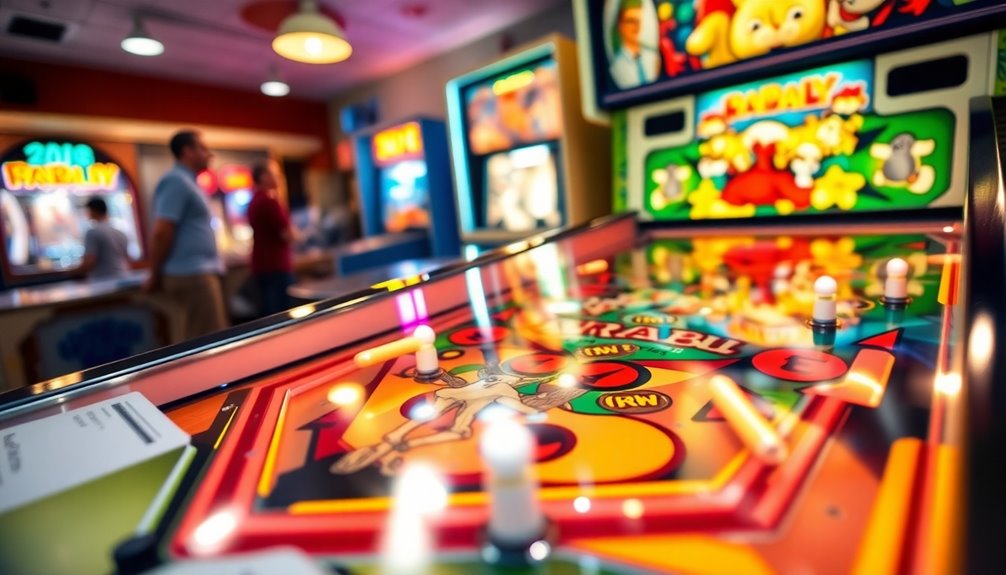
A coin door controls access to your arcade machine’s payment system, accepting coins or tokens and protecting against theft or tampering. You can configure it to accept various coins, set up tokens, or enable free play for casual gaming. Proper maintenance and security measures help prevent vandalism. If you want to learn more about choosing the right coin door and creating an authentic arcade experience, keep exploring for detailed tips and setup ideas.
Key Takeaways
- Coin doors protect the coin mechanism, prevent tampering, and facilitate maintenance in arcade machines.
- Acceptable payment types include coins and tokens, with validation technology to prevent counterfeit acceptance.
- Free play mode disables coin mechanisms, allowing casual or practice gameplay without inserting coins.
- Proper configuration involves hardware setup, software adjustments, and testing for reliable coin and token recognition.
- Regular maintenance, security measures, and calibration ensure authentic arcade experiences and prevent theft or malfunctions.
What Is a Coin Door and Why Is It Essential?

Have you ever wondered what a coin door is and why it’s an essential part of arcade machines? A coin door is the panel that covers the coin mechanism, which accepts coins or tokens to start gameplay. It’s crucial because it controls access to the slot and helps prevent tampering or theft. The coin mechanism is the core component that verifies and accepts coins, ensuring only valid currency is used. Security features are built into the coin door to protect against unauthorized access and coin tampering, such as lockable doors and reinforced panels. These features keep the machine secure while allowing easy maintenance and coin collection. Additionally, incorporating AI-driven security routines can enhance the machine’s longevity and operational efficiency. Without a reliable coin door, arcade operators risk losing revenue and dealing with potential vandalism. Implementing secure locking mechanisms further safeguards against theft and unauthorized access, maintaining the integrity of the gaming environment. Proper maintenance procedures are essential to ensure the coin door functions correctly over time and continues to protect the machine effectively. Understanding the mechanics of coin validation can also help in troubleshooting and preventing coin jams or false readings.
What Types of Coins and Tokens Do Arcade Machines Use?
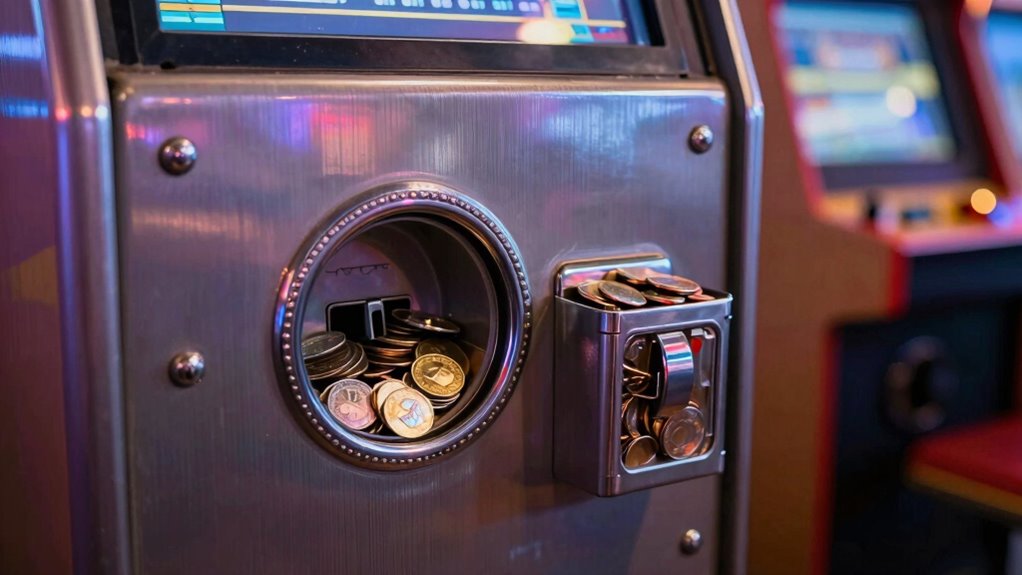
Arcade machines typically accept standard coins like quarters, but many also use specialized tokens designed for specific venues. These tokens often serve as a form of payment or access within a particular arcade or amusement center. Understanding the types of coins and tokens helps you better grasp how these machines operate and are maintained. Additionally, some arcade setups incorporate home theater projectors for enhanced entertainment experiences in game rooms. Knowing the coin acceptance mechanisms can also help in troubleshooting or upgrading your arcade equipment, especially when dealing with different token standards used across various locations. Recognizing coin validation techniques is essential for ensuring proper operation and preventing fraud. Moreover, being aware of validation methods can assist in identifying counterfeit tokens or coins, safeguarding your arcade investment.
Standard Coin Types
Most arcade machines accept specific types of coins and tokens designed for easy validation and durability. These standard coins often reflect the currency history of their region and are familiar to players worldwide. If you’re into coin collection, you’ll notice these coins are crafted to withstand frequent use and rough handling. Typically, you’ll see:
- Quarters, especially in North America, which became a standard in the 20th century
- Tokens that mimic official coins but are unique to arcades or specific games
- Dimes and nickels, sometimes used in older or specialized machines
- International coins, like yen or euros, in arcades outside North America
These coins and tokens serve as a tangible link to currency history and help guarantee smooth gameplay while preventing counterfeit issues. Coin validation technology ensures that only authentic coins are accepted, and counterfeit prevention measures are continuously improved to adapt to evolving counterfeit techniques. Additionally, modern validation systems may incorporate digital authentication methods for enhanced security. Incorporating industry standards helps maintain consistency and trust in the validation process across different arcade venues. Furthermore, adherence to standardized coin sizes and materials ensures compatibility and reliable operation across various machines.
Specialized Arcade Tokens
While standard coins like quarters and dimes are common in many machines, specialized arcade tokens serve a unique role in gaming venues. These tokens often feature custom designs that match the arcade’s branding or theme. The arcade token design can vary widely, from simple logos to intricate images. To produce these tokens, operators use custom coin molds, ensuring each token is unique and durable. Additionally, the selection of token materials can influence their longevity and ease of use. Moreover, the choice of material composition can affect the tokens’ resistance to wear and counterfeiting. Using high-quality materials can also help prevent token tampering, which is a concern in many arcade environments. Ensuring the security features of tokens is crucial for maintaining fair play and protecting revenue.
How to Configure Coin Doors for Different Payment Options
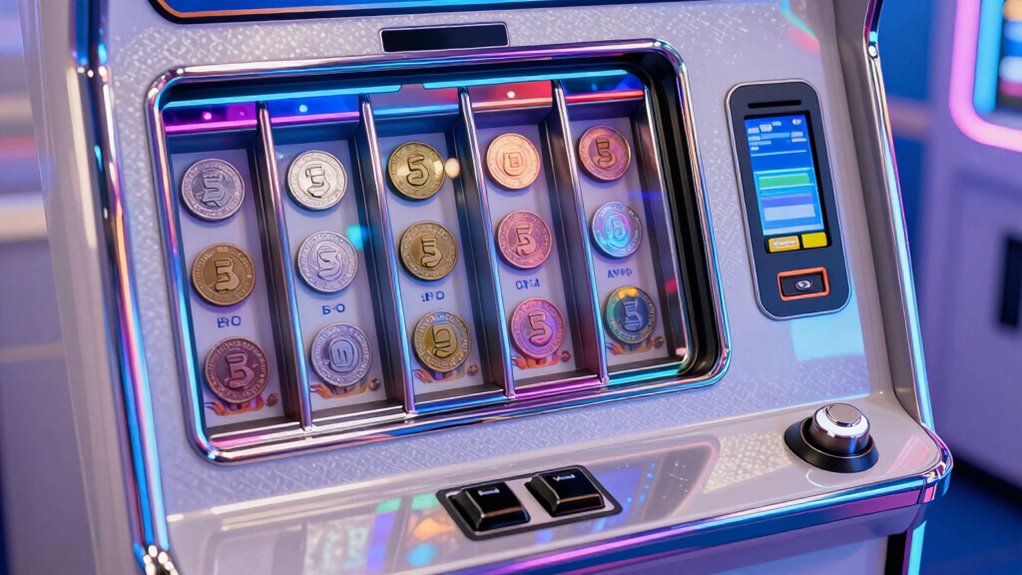
Configuring coin doors for different payment options requires understanding the specific hardware and software settings involved. This involves selecting the right coin acceptor or bill validator, configuring the machine’s control board, and setting software parameters for each payment type. Additionally, understanding the Victorian Steampunk Roleplay themes can inspire the aesthetic integration of payment hardware, adding to the immersive experience. Connecting the payment hardware to the arcade machine’s control system, adjusting software settings for coin, token, or bill acceptance, testing each payment method to ensure proper recognition, and setting up the machine to accept multiple payment options simultaneously are essential steps. Properly configuring these components can also extend the hardware compatibility, ensuring reliable operation across different devices. To enhance overall system reliability, it’s important to consider software updates that improve payment recognition and security features. Being aware of the electric power generation capabilities, such as how bike generators convert pedaling into energy, can be useful if power sources need to be sustainable or portable for your setup. Proper configuration can also help optimize the payment system’s efficiency and reliability.
How to Enable Free Play Mode on Your Arcade Machine

To enable free play mode, you’ll need to access the settings menu on your arcade machine. Once there, locate the option to configure free play and select it. This process allows you to customize your gameplay experience quickly and easily.
Accessing the Settings Menu
Accessing the settings menu on your arcade machine is the first step to enabling free play mode. Start by locating the control panel or coin door, where you’ll find the main menu button or switch. You might need to open the coin door for access or use a service key to unlatch it. Once inside, navigate through the menu options, which often include settings for coin slot maintenance and token dispenser troubleshooting. Look for an option labeled “Settings,” “Service Mode,” or similar. Use the joystick or buttons to select this and enter the configuration. Be cautious not to alter other settings unintentionally. With the menu open, you can now proceed to adjust the free play mode or other game preferences as needed.
Configuring Free Play Option
Enabling the free play mode on your arcade machine typically involves accessing the settings menu and changing the relevant option. First, navigate to the game’s control panel or service mode. Once there, locate the setting for “Free Play” or “Free Mode.” You may need to disable the coin mechanism or token dispenser, which normally requires inserting coins or tokens to start gameplay. Turning off these features allows players to enjoy the game without any payment. Some machines let you toggle free play directly, while others require adjusting DIP switches or software settings. Make sure to save your changes before exiting. This setup is perfect for home use or demonstrations, eliminating the need for coins or tokens and providing endless play.
Customizing Your Home Arcade Settings for Personal Preference
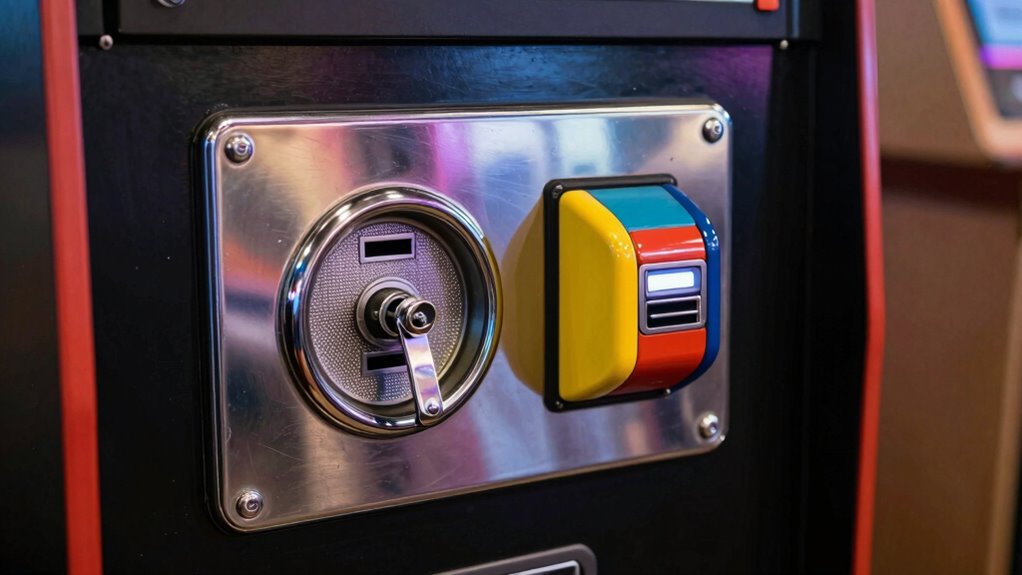
Customizing your home arcade settings allows you to tailor the gaming experience to your personal preferences, making each session more enjoyable. You can modify coin door parameters, such as coin acceptance and ticket payout, to suit your style. Proper coin door maintenance ensures smooth operation and quick arcade game customization. Think about setting the start-up screens, sound levels, and difficulty to match your mood. You might also personalize the button layouts or control sensitivities for comfort. This flexibility helps create a unique environment that feels just right. With some simple tweaks, your arcade can be as personalized as you want, enhancing every game session. Focus on these key areas to optimize your setup:
Personalize your home arcade by adjusting settings, maintaining the coin door, and customizing controls for a perfect gaming experience.
- Adjusting coin acceptance settings
- Customizing game difficulty levels
- Fine-tuning sound and display options
- Maintaining the coin door for reliability
Common Coin Door Problems and How to Fix Them
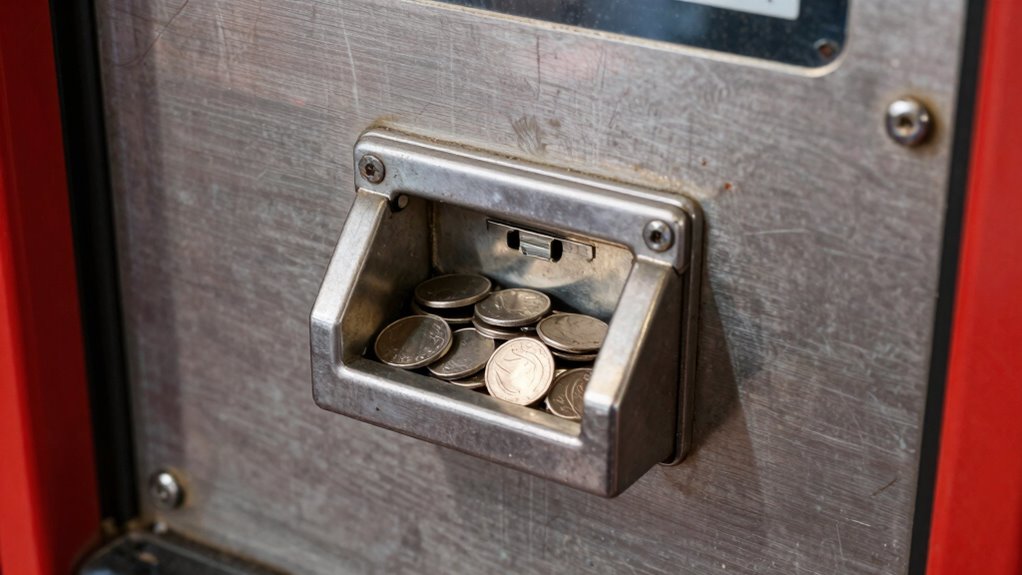
Coin jams are a common issue that can often be fixed with simple troubleshooting, like clearing out debris or adjusting the coin path. Button malfunctions, on the other hand, usually involve checking connections or replacing faulty parts. Understanding these quick fixes helps keep your coin door running smoothly.
Coin Jam Solutions
When coins get stuck in the door, it can disrupt gameplay and frustrate players. A common issue is a coin jam, often caused by debris or misaligned coins in the coin trap. To fix this, first, turn off power and carefully open the coin door. Then, inspect the coin trap and remove any jammed coins or debris that might block the path. Sometimes, a coin jam occurs because coins are too thick or improperly fed. You might need to adjust the coin guide or clean the trap to prevent future jams. Keep an eye on these key points:
- Clearing debris from the coin trap
- Realigning misfed coins
- Checking for worn or damaged parts
- Ensuring proper coin size and thickness
Regular maintenance helps keep the coin door functioning smoothly.
Button Malfunction Fixes
Button malfunctions are a common issue that can prevent players from starting or controlling the game properly. Often, the problem stems from issues with the coin slot mechanisms or the coin acceptor calibration. First, check if the coin acceptor is properly calibrated; miscalibration can cause buttons to not register correctly or not trigger at all. Clean the coin slot mechanisms to ensure coins pass smoothly without jamming. If the buttons still don’t respond, inspect the wiring for loose connections or corrosion that might interfere with signals. Adjust the coin acceptor calibration as needed, following the manufacturer’s instructions. Sometimes, replacing worn-out buttons or cleaning internal contacts resolves the problem quickly. Regular maintenance helps prevent these issues and keeps your game running smoothly.
Best Practices for Maintaining and Cleaning Your Coin Door

Maintaining and cleaning your coin door regularly is essential to guarantee smooth operation and prevent malfunctions. Establishing a consistent cleaning schedule helps keep coin slot maintenance simple and effective. Regularly inspect for dirt, dust, and debris that can cause jams or misreads. Use a soft cloth and gentle brush to clean the coin slot and surrounding areas, avoiding harsh chemicals. Lubricate moving parts sparingly to ensure smooth operation without attracting dirt. Keep track of your cleaning schedule to avoid neglect. Here are some key practices:
Regular cleaning and inspection ensure your coin door stays smooth and trouble-free.
- Schedule weekly or bi-weekly cleanings
- Use compressed air to remove dust from internal components
- Wipe down surfaces with a damp cloth, avoiding excess moisture
- Check for signs of wear or damage during each cleaning session
Consistent attention keeps your coin door functioning flawlessly.
How to Prevent Coin Theft and Vandalism in Your Arcade

To effectively prevent coin theft and vandalism in your arcade, implement robust security measures that deter potential offenders. Installing security cameras provides visible surveillance, discouraging theft and vandalism while allowing you to monitor activity remotely. Ensure cameras are strategically positioned to cover all coin doors and high-risk areas. Additionally, use tamper proof locks on your coin doors and coin mechanisms. These locks are designed to resist tampering and forced entry, making it more difficult for thieves to access coins or vandalize equipment. Combining visible security cameras with high-quality tamper proof locks creates multiple layers of protection, greatly reducing the likelihood of theft or vandalism. Regularly review footage and maintain locks to guarantee ongoing security effectiveness.
Choosing the Right Coin Door for Your Arcade Setup
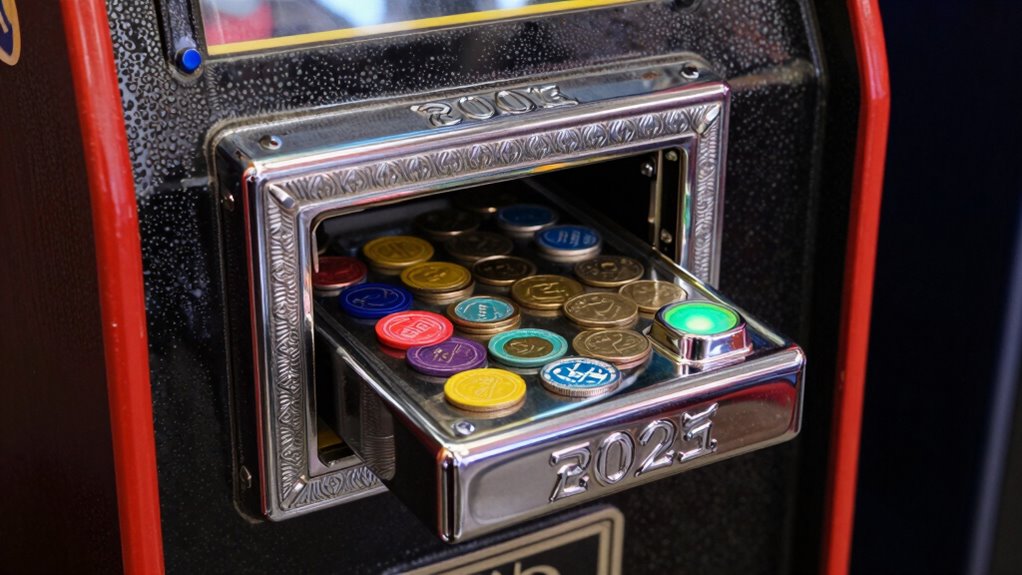
Choosing the right coin door is essential for ensuring smooth operation and security in your arcade. You want a coin door that matches your coin acceptance needs, offers reliable security measures, and fits your setup. Consider these factors:
Selecting the right coin door ensures smooth operation, security, and seamless coin acceptance for your arcade setup.
- Compatibility with your arcade cabinet or machine
- Type of coin or token it accepts
- Built-in security features like lock mechanisms
- Ease of maintenance and coin retrieval
A well-chosen coin door enhances user experience and minimizes theft risks. It should seamlessly handle coin and token acceptance while safeguarding against vandalism. Think about your specific security needs and the types of coins or tokens you’ll use. The right choice will streamline your operations and keep your arcade running smoothly, ensuring customers can enjoy their experience without concerns over security or coin handling issues.
Tips for Creating an Authentic Arcade Experience at Home

Creating an authentic arcade experience at home starts with paying attention to the details that make arcade environments special. Focus on authentic arcade game design elements, like colorful cabinets, proper lighting, and sound effects that mimic real arcades. Incorporate a well-engineered coin mechanism to enhance realism—choose one that’s easy to operate and durable. This not only simulates true coin operation but also adds to the tactile satisfaction of gameplay. Consider installing a coin door that accepts tokens or coins, replicating the classic arcade feel. Keep the setup clean and organized, and ensure your games are properly calibrated for smooth operation. These touches help recreate that nostalgic arcade atmosphere, making your home setup immersive and enjoyable for every player.
Frequently Asked Questions
Can Coin Doors Be Retrofitted to Modern Payment Systems?
Yes, you can retrofit coin doors to support modern payment integration. By installing compatible hardware and electronic components, you enable your coin door to accept digital payments like credit cards or mobile apps. Retro fitting coin doors is a practical way to upgrade your arcade or vending machine, making transactions smoother and more convenient. Just guarantee you choose the right retrofit kit and follow installation instructions carefully for seamless integration.
What Safety Measures Are Recommended for Coin-Operated Machines?
Imagine your coin-operated machine as a fortress needing protection. You should install a sturdy coin lock to prevent unauthorized access and an emergency stop to instantly shut it down in emergencies. Regularly inspecting locks, ensuring clear signage, and training staff on safety protocols are essential. These measures safeguard users and equipment, creating a secure environment where safety isn’t just a feature—it’s an unbeatable shield against chaos.
How Do I Troubleshoot a Jammed or Stuck Coin in the Door?
When you encounter a jammed coin in the coin mechanism, start by unplugging the machine for safety. Open the coin door and gently remove the jammed coin with tweezers or pliers, being careful not to damage the mechanism. Check for any debris or misaligned parts that could cause the jam. After clearing the jam, inspect the coin path, then test the mechanism to make sure smooth operation before closing the door.
Are There Legal Regulations for Using Tokens Instead of Coins?
Imagine holding a shiny token, ready to unlock your arcade game. Legally, using tokens instead of coins depends on local regulations and your location’s laws. You need to ensure compliance with token regulations, which often involve licensing or specific standards. Check local gaming laws to avoid legal issues. Staying informed helps you enjoy your arcade experience without worrying about legal compliance, making every game both fun and lawful.
How Can I Upgrade My Coin Door to Accept Digital Payments?
You can upgrade your coin door to accept digital payments by exploring hardware upgrade options like digital payment systems or card readers. To do this, you’ll need to integrate digital payment hardware with your existing setup, ensuring compatibility. Many providers offer plug-and-play solutions that connect easily. By choosing the right hardware upgrade options, you can modernize your coin door, making it more convenient for users to pay with credit cards, mobile payments, or other digital methods.
Conclusion
By understanding your coin door options and settings, you can turn your arcade into a playground of endless fun. Whether you’re adding tokens, enabling free play, or safeguarding against theft, you hold the key to creating a seamless experience. Think of your coin door as the heartbeat of your arcade—keeping the rhythm smooth and secure. With the right setup, you’ll transform your space into an authentic, timeless arcade paradise.