The evolution of light gun games takes you from simple mechanical shooting galleries like “Wild Gunman” to highly realistic, digitally enhanced experiences like “House of the Dead.” Early models focused on durability and straightforward mechanics, while modern controllers emphasize comfort, precision, and immersive features like recoil and motion tracking. Advances in technology have made gameplay more authentic and engaging. If you keep exploring, you’ll discover how these innovations continually reshape your gaming experience.
Get ready for Prime Big Deal Days — try Prime free
Exclusive member deals on October 6–7, plus fast free delivery. Cancel anytime.
As an affiliate, we earn on qualifying purchases.
Key Takeaways
- Light gun games evolved from mechanical arcade shooting galleries to digital, high-tech experiences with enhanced realism.
- Early arcade guns prioritized durability and simple mechanics for rough handling and long hours of play.
- Transition to console controllers introduced ergonomic designs, digital sensors, and advanced tracking for better accuracy.
- Technological advancements like recoil and weight simulation increased immersion and authenticity in gameplay.
- Modern light gun games combine arcade robustness with home comfort, pushing the boundaries of realism from Wild Gunman to House of the Dead.
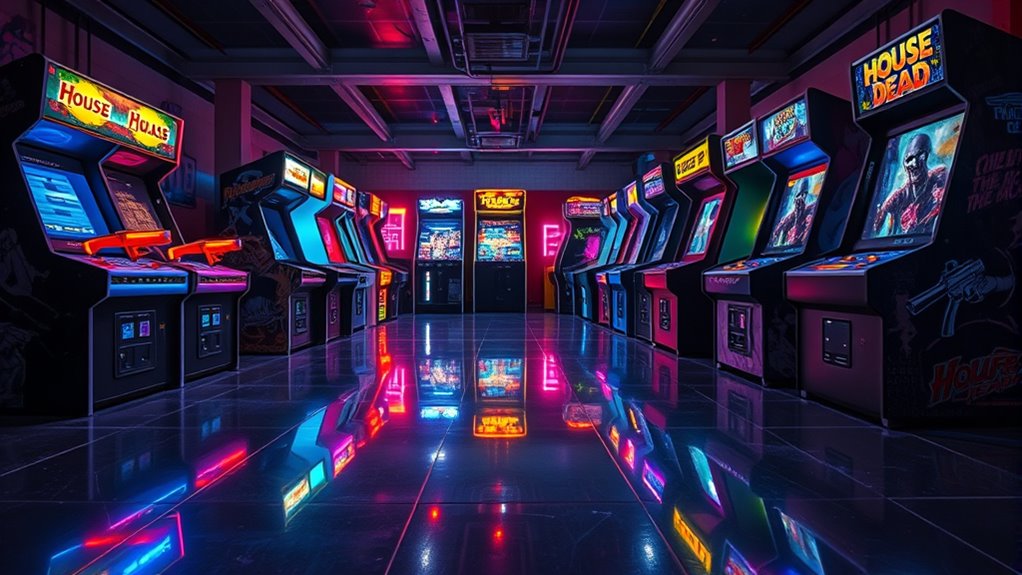
Light gun games have come a long way since their inception, transforming from simple, mechanical shooting galleries into immersive, high-tech experiences. When you look at the evolution of gun controllers, you’ll notice how their design has played a pivotal role in shaping gameplay. Early arcade models focused on durability and straightforward functionality. These arcade gun controllers were often large, heavy, and built to withstand continuous use in busy arcade settings. They featured simple triggers and basic aiming mechanisms, which were perfect for quick, repetitive shooting games. The design prioritized robustness over comfort, as arcade operators needed equipment that could endure long hours and rough handling. In contrast, console gun controllers evolved to emphasize comfort and precision, catering to home players who sought a more immersive experience. These controllers became smaller, lighter, and more ergonomically designed, allowing you to hold and aim more naturally. The shift from arcade to console also meant integrating more advanced technology, like motion sensors and better tracking, to enhance accuracy and realism. Additionally, the development of gun controller technology has bridged the gap between arcade and home gaming, enabling more seamless and realistic shooting experiences across different platforms.
The difference in gun controller design between arcade and console reflects their distinct environments and user expectations. Arcade guns had to be simple and durable, often with minimal electronics, since they were connected to bulky cabines with limited space for complex circuitry. Console controllers, however, could incorporate more sophisticated components, including optical sensors and wireless connectivity, to improve responsiveness. You might notice that arcade guns often used mechanical parts like rubber grips and metal triggers, while console versions integrated digital sensors and refined ergonomics for extended play sessions. This evolution allowed for more precise targeting and a more comfortable grip, making gameplay feel more natural and less fatiguing.
Furthermore, the technological advancements in gun controller design have blurred the lines between arcade and console experiences. Modern gun controllers for home use now mimic their arcade counterparts with high-fidelity tracking and realistic weight, providing an authentic shooting experience. Some even feature recoil mechanisms or adjustable grips, echoing the durability of arcade models but with the refined comfort suited for prolonged use at home. Whether you’re playing at an arcade or on your console, the improvements in gun controller design enhance immersion and accuracy, making each shot feel more real. Overall, the progression from mechanical to digital, from bulky to ergonomic, showcases how technological innovation continues to push the boundaries of light gun gaming, creating experiences that are both engaging and increasingly realistic.
As an affiliate, we earn on qualifying purchases.
Frequently Asked Questions
How Did Light Gun Technology Influence Modern Gaming Controls?
Light gun technology paved the way for modern gaming controls by introducing precise aiming and shooting mechanics. You now experience immersive gameplay through motion controls and virtual reality, which build on that foundation. These innovations let you interact more naturally with games, enhancing realism. As a result, light gun tech considerably influenced how you engage with games today, making controls more intuitive and exciting.
What Are the Differences Between Arcade and Home Light Gun Systems?
You’ll notice arcade light gun systems often have superior sensor accuracy, making gameplay more precise and immersive. They’re built for durability and high-performance, enhancing gameplay realism in busy arcade environments. Home systems, however, prioritize convenience and affordability, which can reduce sensor accuracy and overall realism. While home guns are easier to use and more accessible, arcade setups deliver a more authentic shooting experience, emphasizing precision and realism.
How Did Light Gun Games Impact Arcade Culture in the 1980S?
Light gun games shot through 1980s arcades like a lightning bolt, electrifying socialization and fueling competitive gameplay. You felt the rush as players gathered around, testing reflexes and battling for high scores. These games turned arcades into vibrant hubs of excitement, where skill and quick thinking created a shared experience. Their impact made arcades more than just places to play—they became social arenas where competition and camaraderie thrived.
Are There Legal Restrictions on Light Gun Game Adaptations?
Yes, there are legal restrictions on light gun game adaptations. You face regulatory challenges and licensing issues that can limit how you develop and distribute these games. Governments often impose age restrictions, content regulations, and safety standards to protect players and prevent misuse. To navigate these restrictions, you need to obtain proper licenses and ensure your game conforms with local laws, making the process more complex but essential for legal success.
What Future Innovations Are Expected in Light Gun Gaming Technology?
Imagine stepping into a game where reality blurs seamlessly with virtual action. Future light gun gaming tech will likely harness augmented reality and advanced motion sensors, creating immersive experiences that feel as real as the world around you. Expect more precise tracking, wireless freedom, and interactive environments. These innovations will make your gameplay more dynamic and engaging, turning every shot into a step closer to truly living the adventure.
Conclusion
You might think light gun games are outdated, but they’ve actually evolved into immersive experiences that still thrill today. From the nostalgic Wild Gunman to the intense House of the Dead, technology has transformed how you interact and feel connected to the game. So, even if you’re skeptical, give these games a try—you might just find yourself hooked by their exciting blend of skill and nostalgia. Light gun games continue to surprise and entertain.
Fall Picks
fall essentials
As an affiliate, we earn on qualifying purchases.