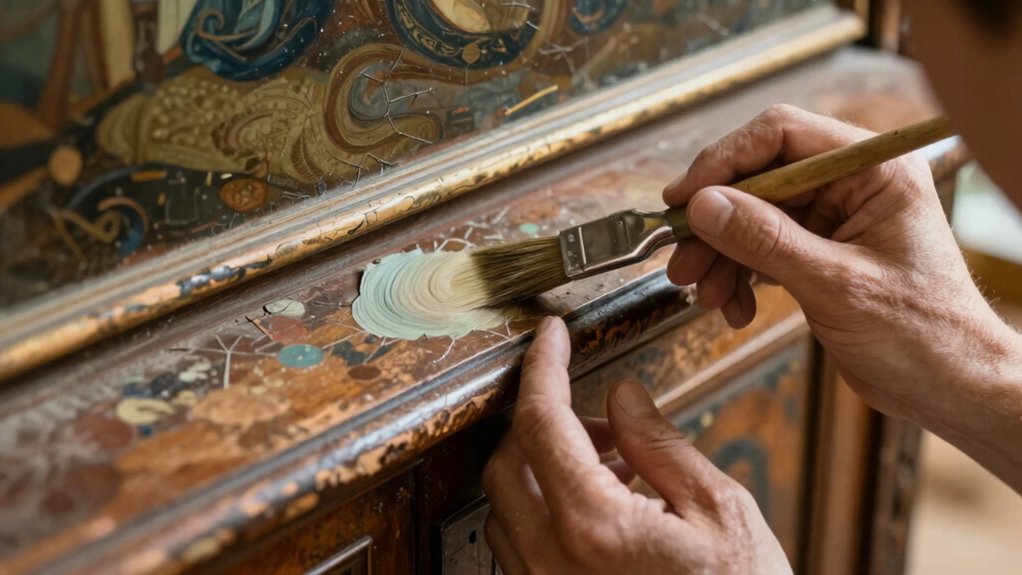

To restore cabinet artwork without overdoing it, you should start with a careful assessment of damage and choose gentle, compatible cleaning methods. Use authentic materials and colors that match the original. Work gradually, frequently stopping to evaluate your progress and guarantee you’re preserving the piece’s character. Document every step to maintain historical integrity. With patience and attention, you’ll bring back beauty while respecting the piece’s true history—more tips await to guide your restoration process.
Key Takeaways
- Assess damage thoroughly to determine appropriate, gentle restoration methods that preserve original details.
- Use historically accurate colors and compatible materials to maintain authenticity.
- Work gradually and regularly evaluate progress to avoid over-restoring.
- Document each step for future reference and to ensure fidelity to the original artwork.
- Consult experts or reference historical sources for delicate or valuable pieces.
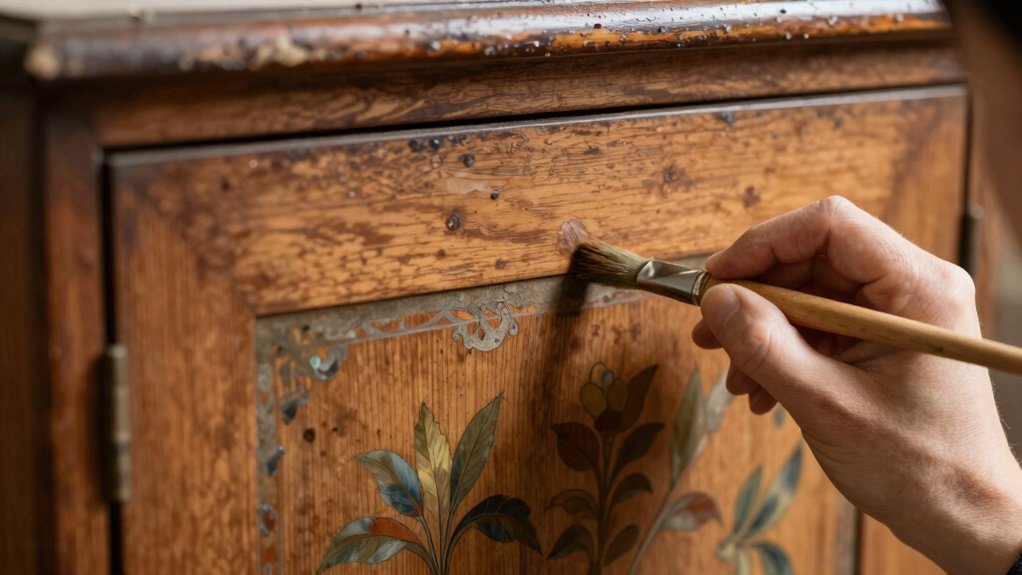
Have you ever wondered how to bring new life to faded or damaged cabinet artwork? Restoring these pieces requires a delicate balance—preserving their original beauty while guaranteeing they don’t lose their authenticity. When you approach restoration, it’s essential to use proper techniques that respect the artwork’s history. Restoration techniques should focus on maintaining historical accuracy, meaning you need to understand the era, style, and materials originally used. This understanding helps ensure that restorations are respectful of historical integrity, which is crucial for maintaining the piece’s value and authenticity. This is where a comprehensive understanding of materials can significantly enhance the quality of your restoration work. This way, your efforts enhance the piece without making it look artificially new or out of place. You want the restored artwork to feel seamless and true to its origins, which calls for a careful eye and patience.
Start by thoroughly evaluating the damage. Is it just surface wear, or are there deeper issues like fading, scratches, or peeling paint? Once you identify what needs fixing, you can choose appropriate restoration techniques. For minor surface damage, cleaning with gentle, non-abrasive methods often suffices. For more significant issues, you might need to carefully fill in chips or cracks with compatible fillers that match the original materials. When repainting or retouching, select colors that closely resemble the original palette. Using modern paints might be tempting for ease, but sticking to historically accurate colors and techniques ensures your work remains authentic. Additionally, understanding restoration best practices can help prevent unintended damage and preserve the artwork’s character. It’s also important to consider the age and condition of the piece to tailor your approach effectively. Incorporating proper conservation techniques can further safeguard the artwork for future generations.
A key part of restoring cabinet artwork without overdoing it is knowing when to stop. You want to enhance the piece, not overhaul it completely. Over-restoring can strip away the character and age that give the artwork its charm and historical value. To avoid this, work gradually, frequently stepping back to evaluate your progress. Use magnification tools if necessary to see details clearly. Remember, the goal isn’t perfection in the modern sense but fidelity to the original artistry and intent. If possible, consult historical references or experts to verify your choices, especially when dealing with rare or valuable pieces.
Throughout the process, document your steps. This documentation not only helps you track what you’ve done but also preserves the historical context of your restoration. If the piece is ever studied or appraised, you’ll have records of your work and the techniques used, reinforcing the importance of maintaining historical accuracy. Restoring cabinet artwork with respect and precision can revive its beauty while honoring its history. Done thoughtfully, your efforts will result in a piece that looks both refreshed and authentic—an enduring testament to the craftsmanship of its time.

Nuvo Titanium Infusion Cabinet Makeover Kit – Easy DIY 7-Piece Set, Brilliant White, Long-Lasting Finish
Ultra-White Brilliance: Experience the transformative power of Titanium Infusion, an ultra-white hue inspired by the artist’s palette –…
As an affiliate, we earn on qualifying purchases.
As an affiliate, we earn on qualifying purchases.
Frequently Asked Questions
How Do I Identify the Original Finish of the Cabinet?
To identify the original finish of your cabinet, start by examining its surface for clues like color, texture, and sheen. Use finish identification techniques such as testing a small hidden area with mineral spirits or a solvent to see how it reacts. Keeping historical accuracy in mind, research the cabinet’s era and style, which can guide you toward the authentic finish. This approach helps guarantee your restoration remains true to its original look.
What Tools Are Essential for Delicate Restoration Work?
You might be surprised to learn that delicate restoration starts with precise tools. You need soft brushes for gentle cleaning and detailed work, and careful solvent selection to avoid damaging the finish. Regular brush maintenance ensures they stay effective, preventing scratches. Using the right solvents prevents over-erosion of the original artwork. This thoughtful approach preserves your cabinet’s beauty without overdoing it, making every restoration step both effective and respectful of the piece’s history.
How Can I Prevent Future Damage During Restoration?
To prevent future damage, focus on preventing moisture damage by controlling humidity levels and avoiding water contact. Use dehumidifiers or climate control if necessary. Additionally, choose protective coatings that are suitable for artwork, like matte or gloss varnishes, which shield without altering appearance. Regularly inspect your restoration work and keep the cabinet in a stable environment to help preserve it long-term.
Is It Better to Restore or Replace Damaged Artwork?
You should restore rather than replace damaged artwork, as preserving its historical accuracy is essential. Replacing can erase the story behind the piece, like rewriting history itself! Think about ethical considerations—restoration honors the artist’s original vision and maintains authenticity. When done carefully, restoration breathes new life into the artwork without sacrificing its integrity, ensuring future generations can appreciate its true history and craftsmanship.
How Long Does a Typical Cabinet Artwork Restoration Take?
A typical cabinet artwork restoration usually takes between one to three weeks, depending on the damage’s extent. You’ll use cleaning techniques carefully to remove dirt without harming the original finish. Color matching is essential to guarantee restorations blend seamlessly with the original artwork. You should be patient, allowing each step to dry properly and to achieve a natural look, without rushing the process to avoid overdoing it.

Model Shipways Fair American Acrylic Paint Set – 7 1OZ. Bottles
As an affiliate, we earn on qualifying purchases.
As an affiliate, we earn on qualifying purchases.
Conclusion
So, next time your cabinet artwork looks more “vintage” than intentional, remember: restoration isn’t about turning back the clock but about preserving the story. Don’t go overboard—unless you’re aiming for a Picasso-inspired disaster. Keep your brush steady, respect the original charm, and embrace the imperfect beauty of age. After all, in the world of art restoration, a little crackle adds character—just don’t let it turn into a full-blown crackage!

Kitchen Cabinet Cleaner – Gentle, Residue-Free and Effective Everyday Degreaser & Grime Remover for Wood, Painted and Finished Furniture – Complete with Cleaning Brush & Cabinet Cleaner Spray 32oz
Complete Cleaning Kit for Effortless Cabinet Care – Everything you need for spotless cabinets in one easy set….
As an affiliate, we earn on qualifying purchases.
As an affiliate, we earn on qualifying purchases.

Restoring Antique Tools
Used Book in Good Condition
As an affiliate, we earn on qualifying purchases.
As an affiliate, we earn on qualifying purchases.