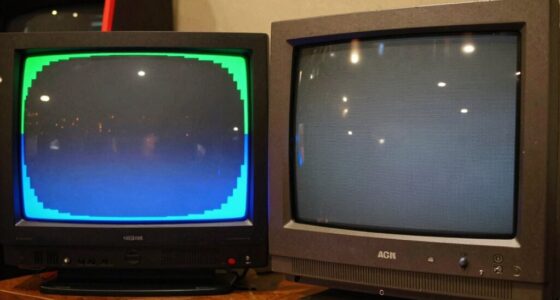

Traditional light guns no longer work on modern flat-panel screens because these displays lack the electromagnetic signals and phosphor glow that older CRTs used for detection. To enjoy shooting games today, you’ll need infrared or camera-based light guns, which use sensors or cameras for aiming and are compatible with newer screens. If you want to know how these systems work and how to get the best performance, keep exploring for detailed options and tips.

Play games on Amazon Luna for your game nights, included with Prime
- A rotating selection of games, no download needed
- Play on TV, laptop or phone
- Fast, free delivery for your gear, too
Key Takeaways
- Traditional light guns rely on CRT-specific electromagnetic signals, making them incompatible with modern flat-panel displays.
- Infrared sensor-based guns and camera tracking systems are effective alternatives for accurate targeting on modern screens.
- Proper calibration and sensor setup are crucial for maintaining accuracy and reducing errors with modern light gun systems.
- Display latency and technology differences significantly impact light gun responsiveness and overall gameplay performance.
- Virtual reality with motion controllers offers an immersive, accurate alternative that surpasses traditional light gun limitations on modern displays.
As an affiliate, we earn on qualifying purchases.
Why Don’t Traditional Light Guns Work on Modern Flat-Panel TVs?

Have you ever wondered why old light guns don’t work on modern flat-panel TVs? The main reason is that traditional light guns were designed for analog CRT screens, which use electromagnetic tracking to detect the gun’s position. CRTs generate a phosphor glow when hit by an electron beam, and the light gun detects this signal to pinpoint where you’re aiming. Modern flat-panel displays, like LCDs and OLEDs, don’t produce this type of electromagnetic signal. Instead, they use digital signals and different technologies that don’t emit the same light patterns. As a result, the electromagnetic tracking system that old light guns rely on is incompatible with these screens. This fundamental difference is why classic light guns can’t effectively work on today’s sleek, flat-panel displays. Additionally, understanding the differences in display technology can help explain why such peripherals are no longer compatible. The shift from analog to digital signals in modern screens has made it impossible for traditional light guns to function properly. Moreover, advancements in display technology have led to alternative input methods better suited for modern devices.
Which Light Gun Types Are Compatible With Modern Displays?
Because traditional light guns rely on electromagnetic signals that modern flat-panel TVs don’t produce, they simply won’t work with these displays. Instead, compatible options include infrared sensor-based guns, which use an IR emitter and receiver to detect your aim accurately. These guns often sync with the screen via infrared signals, making them effective on some newer TVs. Another option is camera tracking systems, which use cameras to monitor your gun’s position relative to the screen. These systems don’t depend on the display’s technology directly, so they work across various modern screens. Moreover, display technology significantly influences accessory performance, and understanding it is crucial for choosing the right light gun. While less common, these types of light guns provide better compatibility with flat-panel displays than classic models, ensuring you can still enjoy precise aiming and gameplay without needing CRT technology. Understanding display compatibility is essential for selecting the right light gun for your setup, especially considering different display technologies and their influence on accessory performance. Additionally, modern display features can impact how well certain light gun systems function, making it important to consider your specific display when choosing accessories. Being aware of interactivity options can help you select the most effective and responsive light gun system for your gaming environment.
How Do Infrared and Camera-Based Light Gun Technologies Differ?

Infrared and camera-based light guns use different sensor types, which affects how they detect targets and respond to movement. You’ll find that calibration methods and accuracy levels vary between the two, influencing gameplay precision. Understanding these differences helps you choose the right technology for your setup. Additionally, safety considerations is essential when integrating these devices into your gaming environment to ensure safe operation. Moreover, sensor technology plays a crucial role in determining how reliably each system tracks your actions. Recognizing the detection mechanisms behind each system can help you troubleshoot issues and optimize performance. Familiarity with target detection methods can also improve your overall gaming experience.
Sensor Types Compared
Different sensor types in light guns use distinct technologies to detect your shots, affecting their accuracy and performance. Infrared systems rely on motion sensors and emitters to track the gun’s position, often with wired connections for low latency. Camera-based systems use the device’s camera to visually identify the gun’s aiming point, frequently utilizing wireless connectivity for convenience. Infrared guns tend to be more responsive on standard screens, while camera-based models excel on modern, high-resolution displays. The choice depends on your gaming setup and preferences. Here’s a quick comparison:
| Feature | Infrared Light Gun | Camera-Based Light Gun |
|---|---|---|
| Detection Method | Motion sensors + IR emitters | Visual recognition via camera |
| Connectivity | Usually wired | Wireless options available |
| Compatibility | Widely compatible with CRTs and some LCDs | Works best on modern screens |
| Accuracy | High on compatible displays | Varies with lighting and calibration |
| Latency | Low, due to direct detection | Slightly higher, depends on processing |
Calibration and Accuracy
How accurately your light gun calibrates depends largely on its sensing technology. Infrared sensors rely on precise sensor calibration to detect the gun’s position accurately, but they can be affected by ambient IR sources or reflections, which may hinder accuracy. Camera-based systems, on the other hand, use image processing to identify the gun’s position, often requiring careful calibration of the camera’s view for accuracy enhancement. Calibration procedures differ: infrared guns need alignment with the sensor, while camera-based guns require calibration of the camera’s perspective. Proper sensor calibration guarantees consistent performance, reducing errors and improving responsiveness. Ultimately, understanding each technology’s calibration needs helps you optimize accuracy, making your light gun more reliable and fun to use on modern screens.
What Features Make a Light Gun Work Well on Today’s Screens?
To guarantee a light gun works effectively on today’s screens, it must have features that adapt to modern display technologies. Incorporating advanced motion sensors helps the gun detect your movements accurately, even on high-refresh-rate screens. These sensors improve responsiveness and reduce lag, ensuring precise targeting. Additionally, a glow-in-the-dark tip enhances visibility in dim lighting, making aiming easier without external illumination. Modern screens often have different refresh rates and pixel structures, so a light gun needs to respond reliably to these changes. Features like motion sensors and glow-in-the-dark elements enable the gun to function smoothly across various display types, providing an immersive and accurate gaming experience. The compatibility with different display technologies is crucial for consistent performance. Without these features, performance on contemporary screens can be inconsistent and frustrating. Vetted – Two Green Leaves
Can Software or Hardware Tweaks Improve Light Gun Performance?
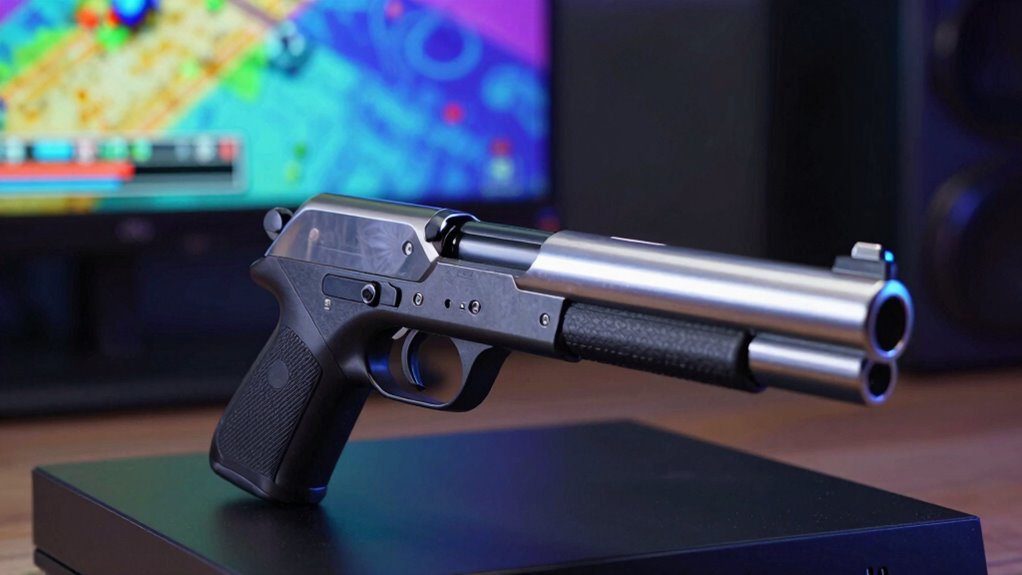
While hardware features set the foundation for a light gun’s performance, software and firmware tweaks can markedly enhance accuracy and responsiveness. You can achieve this through targeted software enhancements that fine-tune calibration, reduce lag, and improve tracking speed. Hardware modifications, like upgrading sensors or adding external components, can also make a difference. Consider these improvements:
- Implementing custom calibration routines for precise aiming
- Installing firmware updates to optimize responsiveness
- Upgrading hardware components for better detection and reduced latency
- Adjusting software settings to further refine performance and responsiveness
Additionally, understanding and adjusting display refresh rates can significantly impact the gun’s tracking accuracy on modern screens. These tweaks can turn an average light gun into a more reliable and immersive experience. Don’t underestimate the power of software adjustments or simple hardware upgrades—they’re key to maximizing your gun’s potential on modern screens.
Troubleshooting Common Light Gun Problems on Flat-Panel TVs
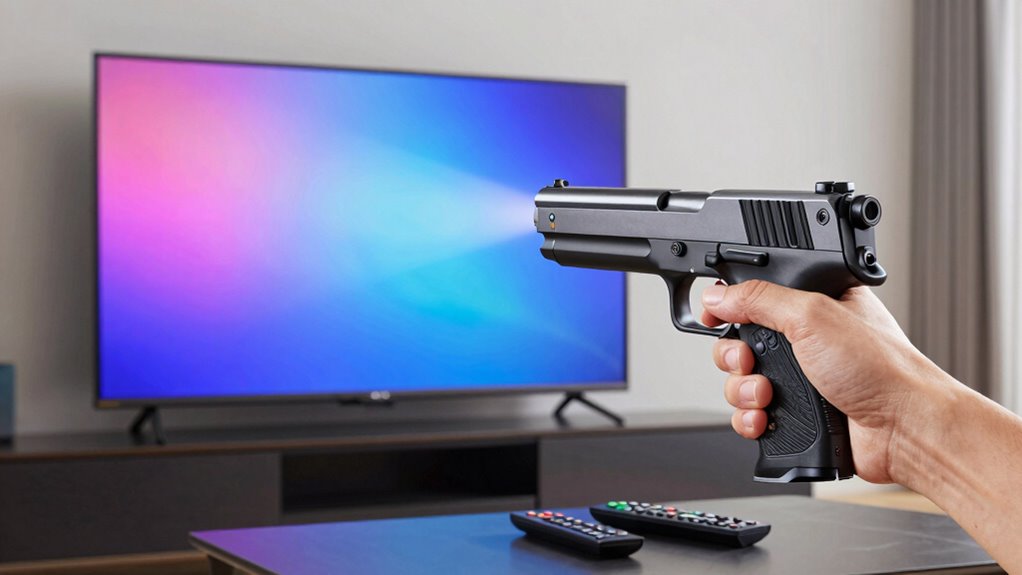
Troubleshooting common light gun problems on flat-panel TVs can be challenging, but understanding the root causes helps you fix issues quickly. Many problems stem from mismatched display technology or calibration errors, especially in retro gaming setups. If your gun isn’t accurately targeting, try recalibrating it with the TV’s settings, ensuring the screen’s refresh rate matches the gun’s requirements. Modern display technology, like LCDs and OLEDs, often causes latency or flickering that interferes with light gun responses. Make sure your gun is compatible with your TV type, and consider using specialized software or external sensors to improve accuracy. Clean your gun’s sensor regularly, and verify that your gaming console or PC has the latest firmware updates. These steps help restore proper function and enhance your retro gaming experience. Additionally, understanding display technology can help you select the best setup for accurate light gun performance, especially since display compatibility plays a crucial role. Recognizing how display latency impacts response times can further optimize your gaming precision. Moreover, knowing how to adjust calibration settings can significantly improve targeting accuracy and overall gameplay quality. For optimal results, exploring sound and visual synchronization techniques can also help reduce lag and improve overall responsiveness.
Are There Better Alternatives for Immersive Shooting Games?
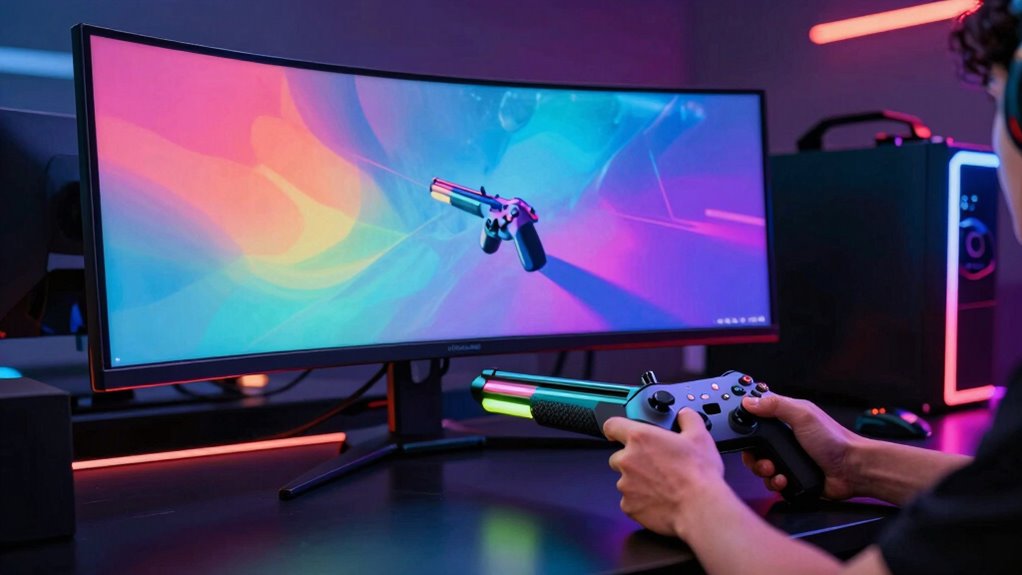
Are traditional light gun setups the best way to achieve immersive shooting experiences? Not necessarily. Virtual reality with motion controllers offers a more engaging alternative. Imagine feeling truly inside the game, with:
Virtual reality with motion controllers provides unmatched immersion and realistic shooting experiences beyond traditional light guns.
- Realistic hand movements that mirror your actions
- 3D environments that surround you from all angles
- Instant, natural feedback that heightens excitement
- Proper household organization to keep your gaming area safe and clutter-free
These elements make VR setups far more immersive than flat-panel light guns. Motion controllers track your movements precisely, creating a seamless experience. While light guns work on certain screens, display compatibility is a crucial factor for effective gameplay, and VR with motion controllers provides a sense of presence and interaction that’s unmatched. Additionally, ergonomic design in modern controllers reduces fatigue during extended play sessions. If you crave realism and deep immersion, exploring virtual reality options is definitely worth considering.
Frequently Asked Questions
Can I Use Old Light Guns With Modern Gaming Consoles?
You probably can’t use old light guns with modern gaming consoles because of retro compatibility issues. These guns were designed for CRT screens, and calibration challenges make them incompatible with flat-panel displays like LCDs and LEDs. Modern consoles lack the necessary signals for traditional light guns, so unless you use specialized adapters or emulators, your vintage guns won’t work. Expect to face significant hurdles in trying to get them to function properly.
Do All Flat-Screen TVS Support Light Gun Functionality?
Think of flat-screen compatibility like a chameleon adapting to its environment—you won’t find all TVs supporting light gun technology. Modern screens typically lack the hardware needed for traditional light guns, especially LCDs and LEDs. Some newer models might support specialized gun peripherals, but most standard flat screens don’t. To enjoy light gun gameplay, you need compatible TVs or alternative controllers designed for modern displays.
Are There Wireless Light Guns Compatible With Current Systems?
Yes, wireless light guns compatible with current systems do exist, thanks to advances in modern technology. You can find models that use Bluetooth or RF connections, making setup easy and eliminating cords. These wireless options work best with compatible TVs and gaming consoles that support their technology. Keep in mind, performance may vary depending on the device and system, so check compatibility before purchasing for the best experience.
How Does Screen Refresh Rate Affect Light Gun Accuracy?
The screen refresh rate directly impacts light gun accuracy because higher refresh rates reduce flicker, making flicker synchronization easier. When your screen refreshes quickly, the gun can more precisely detect where you’re aiming, improving responsiveness and accuracy. Conversely, lower refresh rates cause flicker issues that disrupt flicker synchronization, decreasing precision. So, a higher refresh rate enhances your light gun experience by providing smoother visuals and better synchronization.
Can VR Headsets Replace Traditional Light Gun Experiences?
Like switching from a bicycle to a motorcycle, VR headsets can replace traditional light gun experiences, but not perfectly. You can use virtual reality with motion controllers to simulate shooting games effectively. VR offers immersive gameplay, yet it may lack the tactile feedback of a light gun. While VR enhances realism and interaction, it still can’t fully replicate the precise aiming and response feel of classic light guns.
Conclusion
While it might seem like light guns are a thing of the past, modern tech still offers options that work with flat-screen TVs. Don’t worry if your old gun doesn’t fit—newer infrared or camera-based models can give you that immersive feel you crave. So, if you’re ready to upgrade, you’ll find solutions that deliver great gameplay without the hassle. After all, fun should always be within reach—no matter the screen type.
Evergreen bestsellers Picks
bestsellers
As an affiliate, we earn on qualifying purchases.