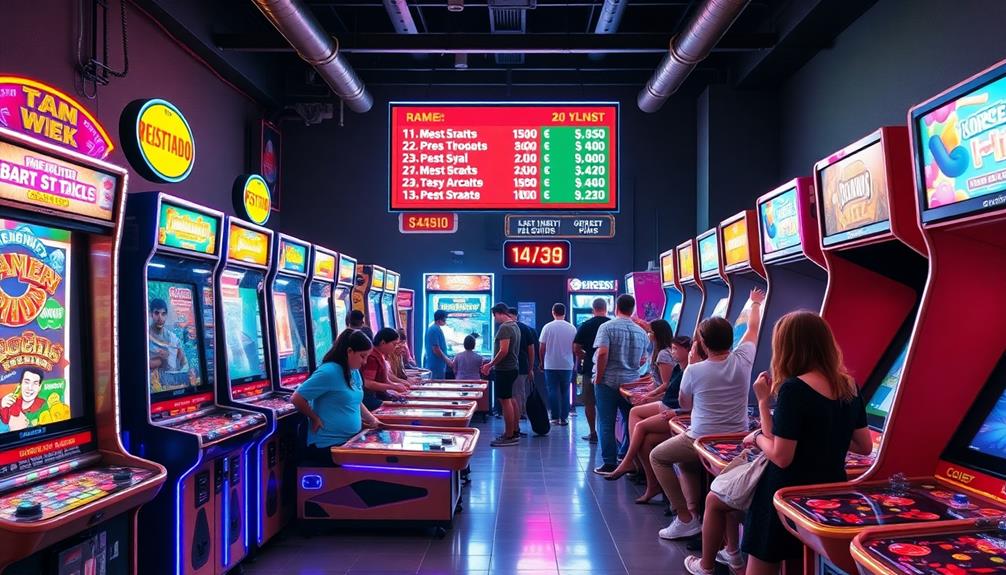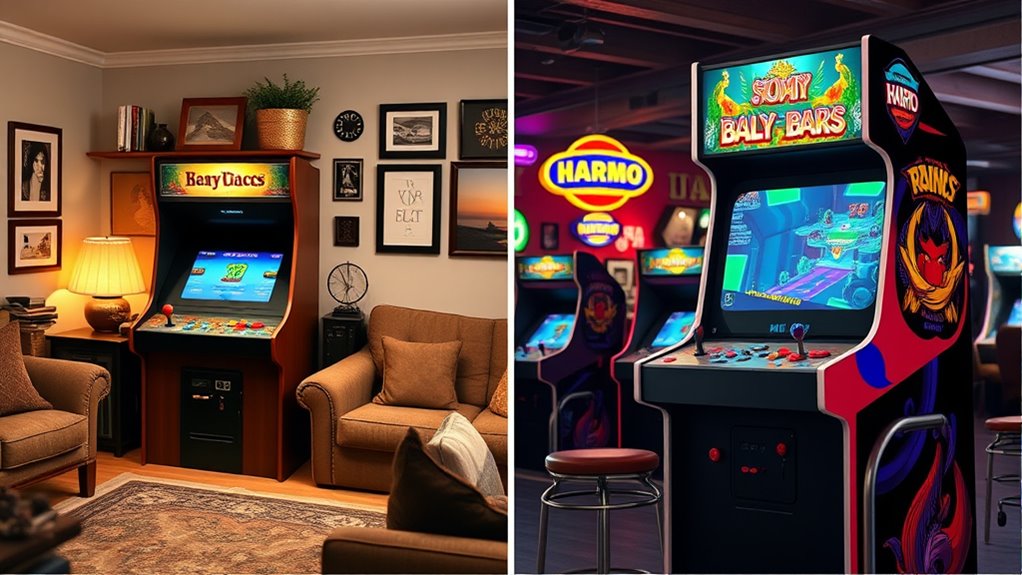

When comparing home and commercial arcade machines, you’ll find that commercial units are built for durability, with heavy-duty cabinets, resilient electronics, and larger controls designed for frequent, long-term use. Home machines, on the other hand, focus more on aesthetics, comfort, and customization, often using lighter materials that may not withstand intense daily play. If you want to discover more about these differences and what makes each unique, there’s much more to explore.
Key Takeaways
- Commercial arcade machines are built with reinforced cabinets and industrial-grade components for durability, unlike lighter, less robust home units.
- User interfaces in commercial machines prioritize durability and quick access, while home machines focus on customization and user comfort.
- Commercial machines are designed to withstand heavy daily use and rough handling, whereas home units are intended for casual, less frequent play.
- Construction materials differ, with commercial units using heavy-duty metals and plastics, and home units often utilizing lighter, cost-effective materials.
- Technological advancements have improved durability in modern home arcade machines, narrowing the gap with commercial standards.
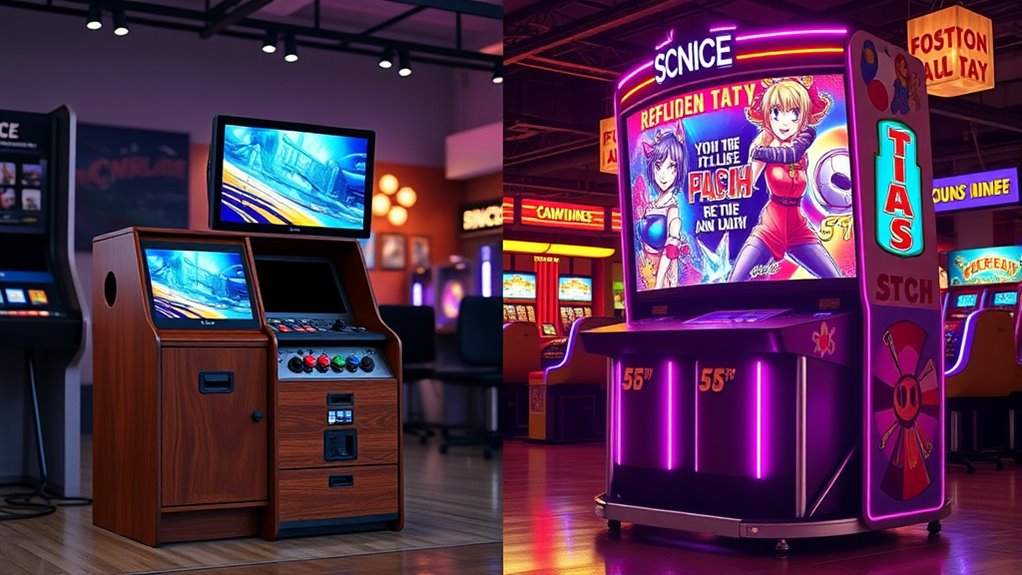
Arcade machines come in various types, each designed to deliver a unique gaming experience. When you’re exploring the differences between home and commercial arcade machines, understanding their hardware durability and user interface design becomes essential. Commercial arcade machines are built to withstand constant, heavy use. Their hardware durability is a top priority, featuring reinforced cabinets, high-quality components, and robust wiring that can handle daily wear and tear without faltering. These machines are designed to operate for hours on end, often in busy arcade settings, so their internal parts are engineered for longevity. You’ll find that the internal electronics are more resilient, and the cabinets are constructed from sturdy materials like heavy-duty steel or reinforced plastics, ensuring they can endure rough handling and frequent use.
Commercial arcade machines are built for heavy use with reinforced cabinets and durable internal components.
In contrast, home arcade machines tend to focus more on aesthetic appeal and user comfort, which can sometimes mean sacrificing a bit of hardware durability. While many home units are still well-made, they often use lighter materials and less industrial-grade components to keep costs down. This doesn’t necessarily mean they’re fragile, but they’re generally not meant for the same relentless, commercial environment. You might notice slight differences in how the cabinet feels—less heavy and more streamlined—making them easier to move or fit into a home space. However, this lighter construction can sometimes impact durability over time, especially if you’re playing intensively or moving the machine frequently.
User interface design also varies markedly between the two types. Commercial arcade machines prioritize clear, intuitive interfaces that allow players to start and enjoy games quickly. The controls are often larger, more responsive, and designed for durability, ensuring that even after many hours of use, they remain functional. The screens are usually larger and brighter with high resolution to attract players and enhance visibility. The layout is straightforward, minimizing confusion and maximizing engagement in a busy arcade environment.
Home arcade machines, on the other hand, tend to emphasize personalized user experience. The interface design can be more customizable, with options to tweak game settings, controls, and display preferences. The controls might be smaller or more compact, prioritizing comfort for casual use rather than ruggedness. The user interface is often more user-friendly for beginners, with menus and options that are easy to navigate without needing experience in arcade settings. This focus on comfort and customization makes home machines more appealing for personal use, even if they don’t match the ruggedness of their commercial counterparts. Additionally, advancements in technology durability mean that some modern home units are increasingly capable of handling intensive use, blurring the lines between the two categories.
Frequently Asked Questions
What Safety Features Do Commercial Arcade Machines Have?
Commercial arcade machines prioritize safety by adhering to strict safety standards and including features like emergency shutoff buttons. These safety standards guarantee the machines are built with durable, reliable components and are regularly maintained. The emergency shutoff allows you to quickly power down the machine in case of malfunctions or emergencies, reducing risks. By focusing on these safety features, they protect users while providing a fun, secure gaming experience.
How Often Do Arcade Machines Require Maintenance?
You should perform preventative maintenance on your arcade machines every few months to keep them running smoothly. Regular checkups help identify issues early, reducing downtime. Use troubleshooting tips like inspecting connections, cleaning components, and updating software. This proactive approach minimizes breakdowns and prolongs your machine’s lifespan. By sticking to a maintenance schedule, you ensure a reliable gaming experience and avoid costly repairs down the line.
Can Home Arcade Machines Be Upgraded Easily?
Yes, you can upgrade your home arcade machine easily. With DIY upgrades and hardware modifications, you have the flexibility to enhance performance, add new games, or improve visuals. Many components like controllers, screens, and sound systems are designed for simple swaps or upgrades. Just make certain you follow proper procedures and use compatible parts, and you’ll enjoy customizing your setup without much hassle or technical expertise.
What Are the Energy Consumption Differences?
Home arcade machines generally consume less power than commercial ones, making them more energy-efficient for everyday use. Commercial machines are designed for constant operation, which increases their power usage considerably. You’ll find that home models prioritize energy efficiency to save on electricity costs, while commercial machines focus on durability and high performance, often resulting in higher energy consumption. If you’re mindful of power use, home machines are a more energy-efficient choice.
How Long Is the Typical Lifespan of Each Type?
You can expect home arcade machines to last around 5 to 10 years, depending on usage and maintenance, while commercial machines often last 8 to 15 years due to higher durability expectations. Commercial units usually come with longer warranty coverage, reflecting their robust build and frequent use. Proper care and regular servicing extend the lifespan of both types, but commercial machines are designed to endure more intensive gaming environments.
Conclusion
Whether you’re setting up a home arcade or running a commercial one, knowing the key differences helps you make the right choice. From build quality to game selection, each type serves a purpose. Remember, you get what you pay for, so don’t cut corners. By understanding these distinctions, you can avoid barking up the wrong tree and create an arcade experience that hits the mark. In the end, it’s all about matching your setup to your passion.