
CRT filters can mimic some visual aspects of vintage CRTs, like scanlines and phosphor glow, but they can’t fully replicate the organic flicker, warmth, and imperfections of real monitors. Actual CRTs offer a unique texture, depth, and tactile feel that digital effects struggle to match. If you want authentic arcade authenticity, understanding these differences will help you decide whether to stick with real CRTs or digital filters — and you’ll find out more as it continues.
Key Takeaways
- Digital CRT filters replicate visual effects like scanlines and glow but lack the organic flicker and decay of real CRTs.
- Authentic CRTs offer unique warmth, depth, and tactile qualities that digital filters cannot fully emulate.
- Physical imperfections and aging effects in real CRTs contribute to their nostalgic charm, unlike static digital simulations.
- Purists prefer genuine CRTs for true arcade authenticity despite higher costs, maintenance, and space requirements.
- Modern technology cannot perfectly replicate the nuanced imperfections, curvature, and organic glow of true CRT displays.
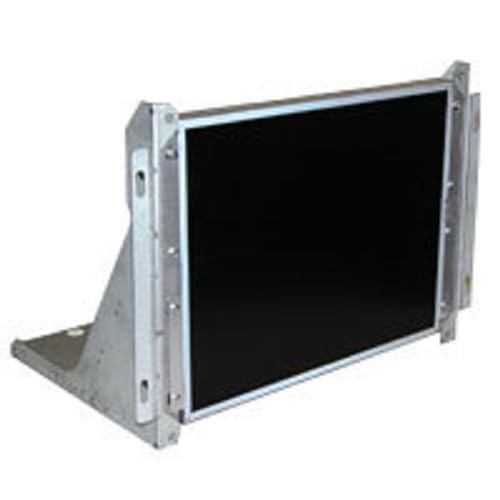
19 Inch Arcade Monitor Complete with CRT Mount for CRT Replacement, for Upright Cabinet Replacement.
- Jamma and Mame Compatible: Ready for arcade systems
- Manufacturer Warranty: Includes warranty for peace of mind
As an affiliate, we earn on qualifying purchases.
As an affiliate, we earn on qualifying purchases.
What Are CRT Filters, and How Do They Mimic Vintage Displays?

CRT filters are digital effects designed to replicate the look and feel of vintage cathode-ray tube displays. They simulate the pixel response, mimicking how old monitors handle color blending and motion, which often results in softer edges and subtle blurring. These filters also replicate imperfections like scanlines, phosphor glow, and color bleed, enhancing the authentic feel. To achieve this, developers carefully adjust display calibration settings within the filter, ensuring the contrast, brightness, and color accuracy resemble those of original CRTs. By fine-tuning pixel response and calibration, CRT filters create a convincing vintage aesthetic without the need for actual CRT hardware. This approach allows you to enjoy the nostalgic arcade look on modern screens while maintaining sharp performance and flexibility. Additionally, understanding the impact of contrast ratio helps in fine-tuning the visual fidelity of these filters for a more authentic experience. When properly calibrated, CRT filters can even emulate the subtle color bleeding characteristic of vintage displays, further enhancing realism. Moreover, display calibration techniques are crucial for achieving the most accurate reproduction of a CRT-like appearance.
How Do Digital CRT Filters Compare to Actual CRT Monitors?

Digital CRT filters aim to replicate the look of real CRT monitors, but you might notice differences in visual authenticity, such as color depth and glow. Performance and latency can vary, often making digital filters feel less immediate than actual screens. Additionally, digital filters offer more flexibility and customization, but they may not perfectly match the unique characteristics of real CRTs.
Visual Authenticity Differences
While digital CRT filters have made impressive strides in mimicking the look of real CRT monitors, subtle differences remain that can affect visual authenticity. You might notice that pixel phosphor glow and scanline resolution aren’t perfectly replicated. Digital filters often simulate scanlines but lack the organic flickering and uneven phosphor decay of true CRTs. This affects the overall feel, especially in how images breathe and shimmer. The table below highlights key differences:
| Aspect | Digital CRT Filter | Actual CRT Monitor |
|---|---|---|
| Pixel Phosphor | Simulated glow, uniform | Organic glow with decay variability |
| Scanline Resolution | Fixed, often sharp | Slightly uneven, flickering effects |
| Phosphor Decay | Modeled, uniform fade | Natural, inconsistent decay |
| Flickering | Mimicked through algorithms | Organic, subtle flickering |
Additionally, the organic flickering of true CRTs contributes significantly to their authentic arcade appearance, a feature digital filters continue to struggle to emulate fully.
Performance and Latency
When it comes to performance and latency, digital CRT filters often have an edge over real CRT monitors. They process signals faster, reducing input lag and providing more responsive gameplay. This can be especially noticeable in fast-paced games where timing is critical. Digital filters also excel in maintaining consistent color accuracy, ensuring that shades don’t shift or wash out over time. Unlike actual CRTs, which have inherent screen curvature that can cause slight delays in image rendering, digital filters typically produce a flatter image with minimal latency. This makes them more reliable for precise gameplay and smooth visuals. Additionally, image rendering in digital filters benefits from modern processing techniques that further minimize delay and artifacting. While real CRTs offer authentic aesthetics, digital filters tend to deliver a more stable and responsive experience, giving you an advantage in competitive scenarios.
Flexibility and Customization
Although real CRT monitors offer a certain level of authenticity, digital CRT filters provide far greater flexibility and customization options. You can tweak settings like curvature, scanlines, and color intensity to match your preferences or specific arcade styles. Unlike hardware, which requires physical adjustments and risks affecting hardware longevity, digital filters allow instant, non-invasive changes. You can also fine-tune display calibration easily, ensuring ideal image quality without damaging your equipment. This adaptability is especially useful for enthusiasts seeking a visual authenticity that can be tailored to different setups. Additionally, digital filters often include advanced image processing features that enhance the overall visual experience. Modern digital filters often incorporate adaptive algorithms that automatically optimize image quality based on your display environment. Some filters even simulate CRT glow effects to further mimic the authentic arcade look. Here’s a quick comparison:
| Feature | Real CRT Monitors | Digital CRT Filters |
|---|---|---|
| Customization | Limited, hardware-based | Extensive, software-based |
| Display calibration | Manual, complex | Simple, adjustable |
| Hardware longevity | Affected by use | Not impacted |
| Flexibility | Fixed | High, adaptable |
This makes digital filters ideal for personalized setups without risking hardware wear.
What Makes Real CRTS Look and Feel Different From Digital Filters?
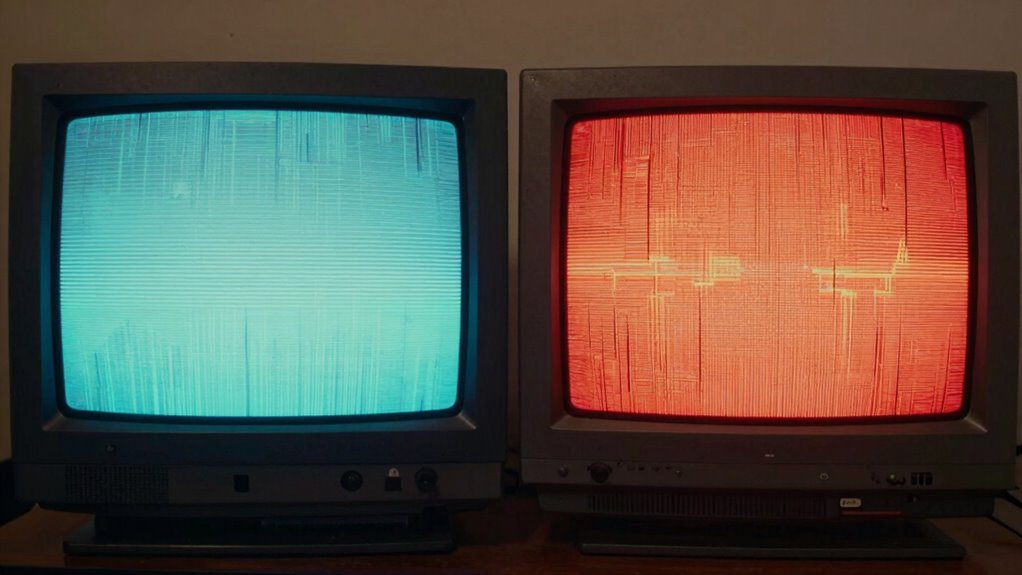
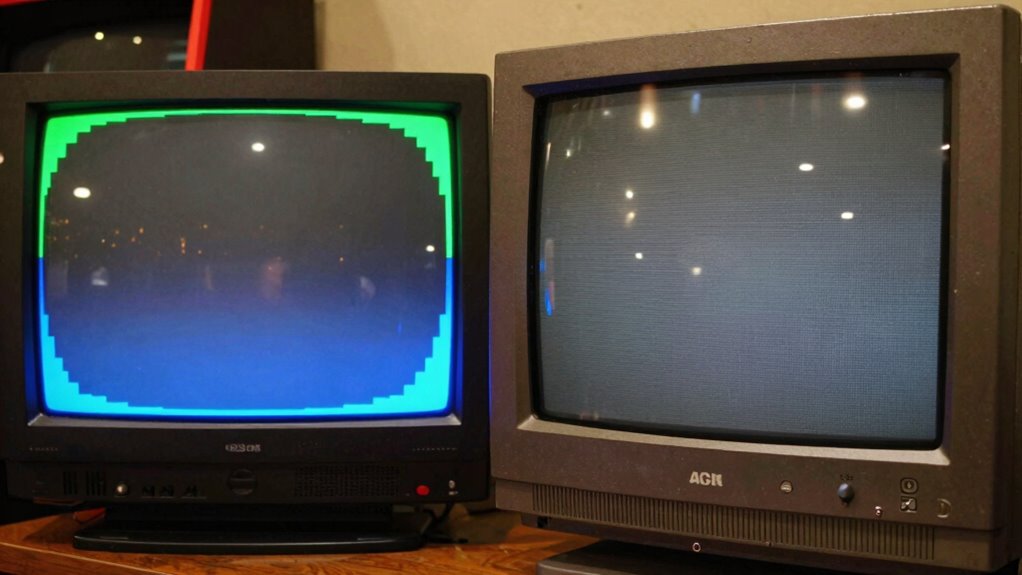
Real CRTs look and feel different from digital filters because of the way they process and display images. The natural scanlines, phosphor glow, and subtle color variations create a tactile experience that digital filters can’t replicate. These authentic display characteristics serve as powerful nostalgia triggers, reminding you of arcade cabinets and classic gaming setups. Over time, display aging introduces slight imperfections—fading phosphors, minor screen distortions—that add to their charm and authenticity. Digital filters attempt to mimic these effects, but they often lack the nuanced depth and organic feel of real CRTs. When you look at a genuine CRT, you experience a warmth and unpredictability that digital simulations struggle to reproduce, making the authentic look more immersive and true to retro gaming origins. Additionally, the inherent vetted nature of real CRTs provides a level of authenticity that digital filters cannot fully emulate, emphasizing the importance of genuine displays in preserving the true arcade aesthetic. The organic qualities of real CRTs are difficult for digital filters to fully replicate, which is why many enthusiasts prefer authentic displays. Moreover, the natural image processing of CRTs contributes to their unique visual signature, further setting them apart from digital effects. This authenticity is what truly captures the essence of vintage gaming experiences.
Why Do Purists Prefer Authentic CRTs for Retro Gaming?

Purists prefer authentic CRTs because they deliver an unmatched visual and tactile experience that digital filters can’t replicate. This authenticity enhances nostalgia by preserving the original look and feel of classic arcade games. Additionally, authentic CRTs allow precise display calibration, ensuring colors, geometry, and brightness match the original intent. Here’s why they matter:
Authentic CRTs preserve the original arcade look, offering unmatched visual, tactile, and nostalgic authenticity for retro gaming.
- Nostalgia enhancement: Authentic CRTs evoke a deeper connection to the arcade era.
- Accurate image rendering: They display every pixel with genuine scanlines and phosphor glow, capturing the visual fidelity of the original hardware.
- Tactile feedback: The physical curvature and weight contribute to a more immersive experience.
- Authentic glow and scanlines: These subtle effects maintain the vintage aesthetic that filters often miss.
- Understanding display technology: Authentic CRTs utilize cathode ray tube technology, which is fundamental to their unique visual qualities. Moreover, their long-lasting durability ensures that these displays remain functional and true to their original design over decades. The inherent reliability of CRTs makes them a preferred choice for enthusiasts who seek longevity and authenticity. Recognizing the energy efficiency differences between CRTs and modern displays also influences their desirability among purists.
How Do Emulators Reproduce CRT Effects, and What Are Their Limits?
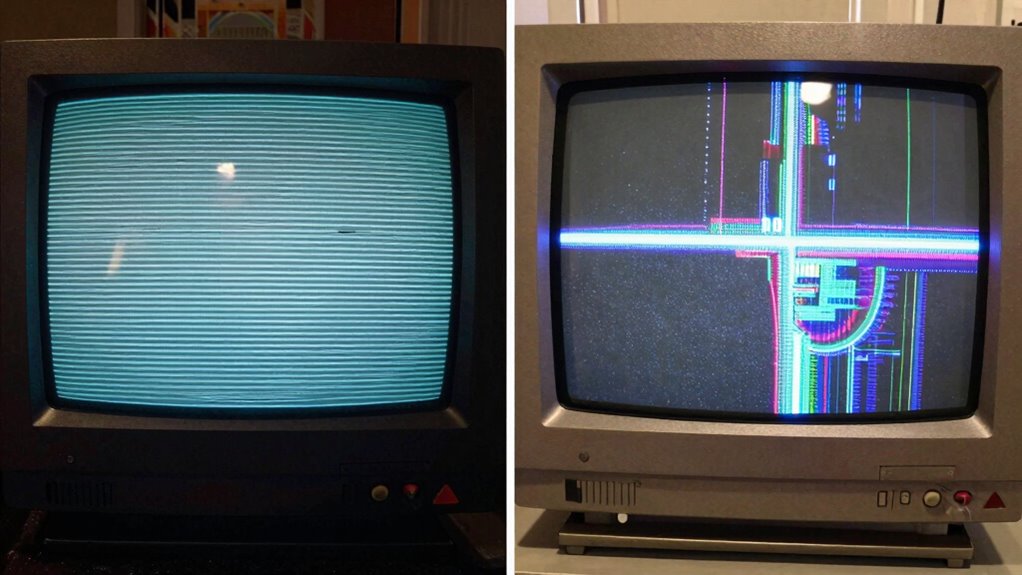
You rely on emulators to mimic CRT effects through digital techniques like scanline rendering and color grading. These methods aim to replicate the look and feel of real CRTs, but they have inherent limitations. Digital effects can’t fully capture all the nuances of an authentic CRT display, which affects the overall realism.
Emulation Techniques Explained
Emulators replicate CRT effects by applying complex graphical algorithms that mimic the glow, scanlines, and curvature of traditional screens. They simulate chromatic aberration by slightly offsetting color channels, creating a more authentic color bleed. Screen flicker is reproduced through subtle brightness fluctuations to emulate the CRT’s phosphor decay. To achieve these effects, developers use techniques like:
- Overlaying scanline patterns that vary in opacity and spacing
- Applying curvature algorithms to mimic screen convexity
- Introducing chromatic aberration for color fringing effects
- Adjusting flicker parameters to simulate phosphor decay and flicker
While these methods enhance realism, they can’t perfectly replicate the physical imperfections and nuances of real CRTs, which remain challenging to fully emulate digitally.
Limitations of Digital Effects
While emulators do a remarkable job of simulating CRT effects through digital techniques, they inherently fall short of capturing the full complexity of real screens. Digital artifacts and visual distortions are simplified, often missing subtle nuances like scanlines or phosphor glow. Emulators rely on algorithms that mimic these effects, but they can’t perfectly reproduce the unique behavior of electron beams or phosphor decay.
| Effect Type | Emulator Capabilities | Limitations |
|---|---|---|
| Scanlines | Basic overlay, adjustable | Lacks natural flicker |
| Phosphor Glow | Simulated brightness | Static, less dynamic |
| Geometric Distortion | Simple warping | Inconsistent accuracy |
This gap means the digital effects are approximations, not replacements for authentic CRT behavior.
What Are the Practical Factors When Choosing Between CRTs and Digital Filters?
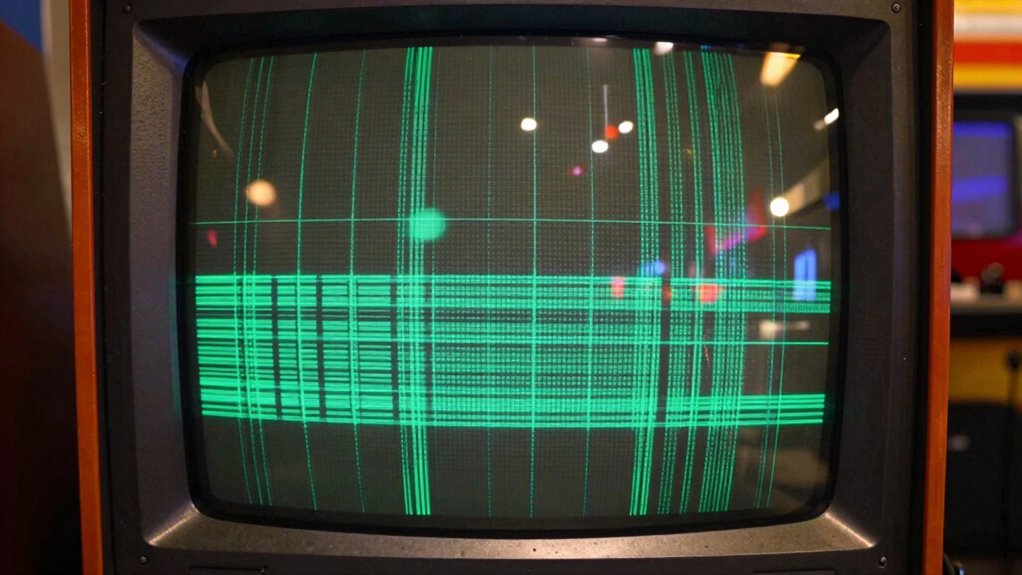
When choosing between CRTs and digital filters, practical considerations like image quality, cost, and ease of implementation play a essential role. Your nostalgia factor influences whether authentic visuals outweigh convenience or affordability. Additionally, display longevity is fundamental; CRTs typically last longer and age better over time. Consider these factors: 1. image quality: CRTs provide authentic scanlines and color depth, while digital filters can sometimes introduce artifacts. 2. cost: CRTs are often more expensive upfront and harder to find, but digital filters are cheaper and easier to set up. 3. ease of implementation: Digital filters are straightforward to use with modern hardware; CRTs may require more maintenance. 4. display longevity: CRTs tend to have a longer lifespan if well maintained, whereas digital filters do not wear out physically. Understanding CRT display technology can help enthusiasts gauge the longevity of their display choices based on technological advancements and market shifts.
Can Modern Tech Fully Replicate the CRT Experience?

Modern technology has made significant strides in mimicking the CRT experience, but fully replicating the look and feel remains a challenge. Achieving perfect color accuracy is difficult because digital filters often struggle to reproduce the subtle nuances of CRT phosphors and their vibrant glow. Screen curvature is another hurdle; while some modern displays incorporate curved screens, they rarely match the authentic concave shape of CRTs, which influences how images are perceived. Despite advances in pixel response times and contrast, these details are hard to perfect digitally. You might notice that even the most sophisticated emulators or filters fall short of capturing the depth, warmth, and organic imperfections of a real CRT. Ultimately, while tech can get close, it can’t fully replicate the unique charm of an authentic CRT display.
Which Option Best Fits Your Arcade or Retro Gaming Goals?
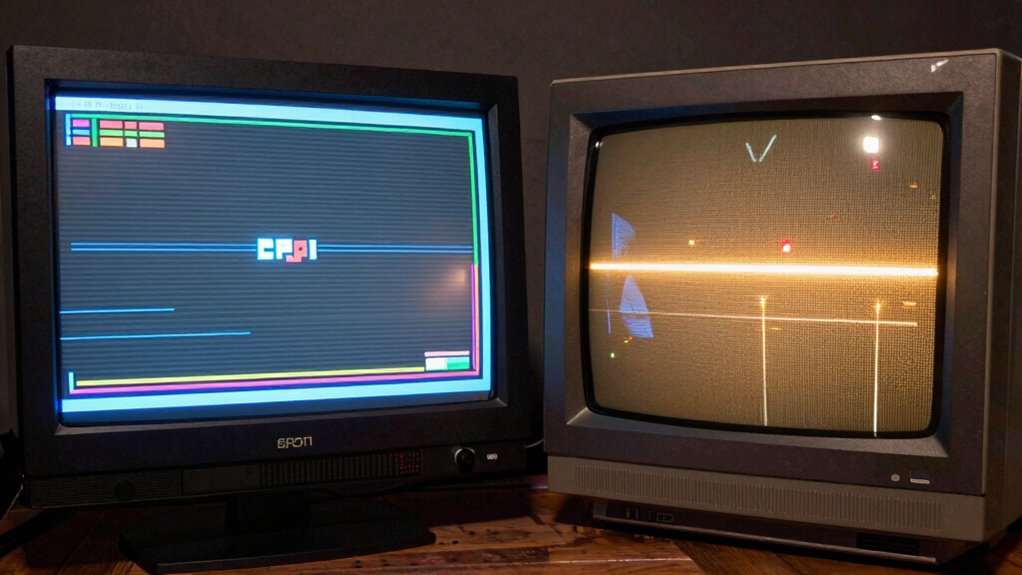
Choosing between CRTs and modern displays depends on your specific arcade or retro gaming goals. If authenticity matters most, a real CRT offers authentic scanline artifacts and the phosphor glow that many purists seek. However, if you prioritize convenience, durability, or space savings, modern screens with CRT filters might suffice. Consider these factors:
- Authentic visuals: Real CRTs produce genuine scanline artifacts and phosphor glow, enhancing authenticity. The underlying Display technology significantly impacts image quality and authenticity, influencing your final choice. Additionally, the material composition of CRTs contributes to their unique visual characteristics and overall appeal. Understanding the electronic components involved can further help in assessing their longevity and performance.
- Image consistency: Modern displays with filters can mimic scanlines but may lack the true glow and slight imperfections.
- Maintenance and space: CRTs need regular upkeep and are bulky, while modern options are compact and low-maintenance.
- Cost: Authentic CRTs can be expensive and hard to find, whereas filters or emulation are more budget-friendly.
- Display technology The underlying technology significantly impacts image quality and authenticity, influencing your final choice.
Match your choice to your goals—whether true vintage feel or practical gaming setup.
Frequently Asked Questions
Are There Any Health Concerns Using CRT Monitors Long-Term?
Using CRT monitors long-term can cause eye strain, especially if you don’t take breaks or adjust brightness. While concerns about radiation exposure are common, the levels emitted are generally considered safe with proper usage. To protect your health, guarantee good lighting, maintain a proper distance, and limit continuous viewing time. These steps help minimize potential eye discomfort and reduce any minor radiation risks associated with prolonged CRT use.
How Does Screen Glare Affect the Arcade Experience?
Screen glare can really impact your arcade experience by making it harder to see details and enjoy gameplay. When screen reflection clashes with ambient lighting, it causes eye strain and reduces immersion. To improve your experience, adjust your lighting to minimize reflections and reduce glare. You might also consider positioning your monitor differently or using anti-glare filters, making gameplay more comfortable and visually clear.
Can Digital Filters Cause Eye Strain Over Extended Play?
Yes, digital filters can cause eye strain over extended play. They may contribute to digital eye fatigue, especially if the screen resolution isn’t optimized, leading to increased eye effort. Prolonged exposure to screens with high contrast or flickering effects from filters can strain your eyes. To reduce discomfort, take regular breaks, adjust brightness, and make certain your display settings support comfortable viewing, helping you enjoy longer gaming sessions without strain.
What Are the Cost Differences Between CRTS and Digital Emulation Setups?
The cost comparison between CRTs and digital emulation setups varies markedly. CRTs tend to be more expensive due to their rarity, higher setup expenses, and maintenance costs. You might spend hundreds or even thousands on a good CRT, especially if you want authentic arcade quality. In contrast, digital emulation setups are generally more affordable, with lower initial costs for hardware and minimal upkeep, making them a budget-friendly alternative.
Are There Environmental Impacts Associated With CRT Disposal or Recycling?
You should know that CRT disposal poses environmental risks because of recycling hazards, toxic materials, and lead content. When you discard a CRT improperly, you risk contaminating soil and water, harming ecosystems and human health. Recycling hazards can include releasing harmful chemicals into the environment or exposing workers to dangerous substances. Proper recycling processes help mitigate these impacts, so always guarantee you dispose of CRTs responsibly to protect the environment.
Conclusion
Ultimately, whether you choose digital filters or authentic CRTs depends on your passion. Digital filters offer convenience and consistency, but they can’t fully capture the warmth and nuance of real CRTs. On the other hand, authentic CRTs provide a genuine experience, yet come with maintenance and space challenges. You can’t have both worlds perfectly, but you can find the balance that best fuels your retro gaming journey. It’s about what feels right for you.