Coin doors protect and organize coin mechanisms in arcade and vending machines, ensuring security and easier maintenance. Coin mechs and acceptors identify and validate coins using sensors and mechanical parts, quickly accepting valid coins and rejecting counterfeits. Choosing the right system depends on your coin size, volume, and durability needs. Proper installation and regular cleaning prevent jams, while upgrades can boost security and reliability. If you’d like to learn detailed tips and troubleshooting advice, keep exploring this guide.
Key Takeaways
- Coin doors protect coin mechanisms from theft and vandalism while providing easy access for maintenance and adjustments.
- Coin mechs and acceptors detect and validate coins using sensors that measure size, weight, and metal content for quick acceptance or rejection.
- Proper installation involves secure mounting, correct wiring, and calibration to ensure accurate coin recognition and prevent jams.
- Common causes of coin jams include misaligned coins, debris buildup, worn parts, or incompatible coin sizes, which can be prevented with regular maintenance.
- Upgrading coin acceptors with advanced security features improves reliability, reduces tampering, and simplifies troubleshooting for better system security.

TW-389 Anti Finishing Colorful LED Light Coin Mech Acceptor Coins Selector for Arcade Machines/Toy Vending Machines/Slot Machine
Advanced CPU Comparable Plastic Plate Front Entry Coin Selector TW-389 Coin Acceptor, coin Validator, coin mech for Mechanism…
As an affiliate, we earn on qualifying purchases.
As an affiliate, we earn on qualifying purchases.
What Are Coin Doors and Why Do They Matter?
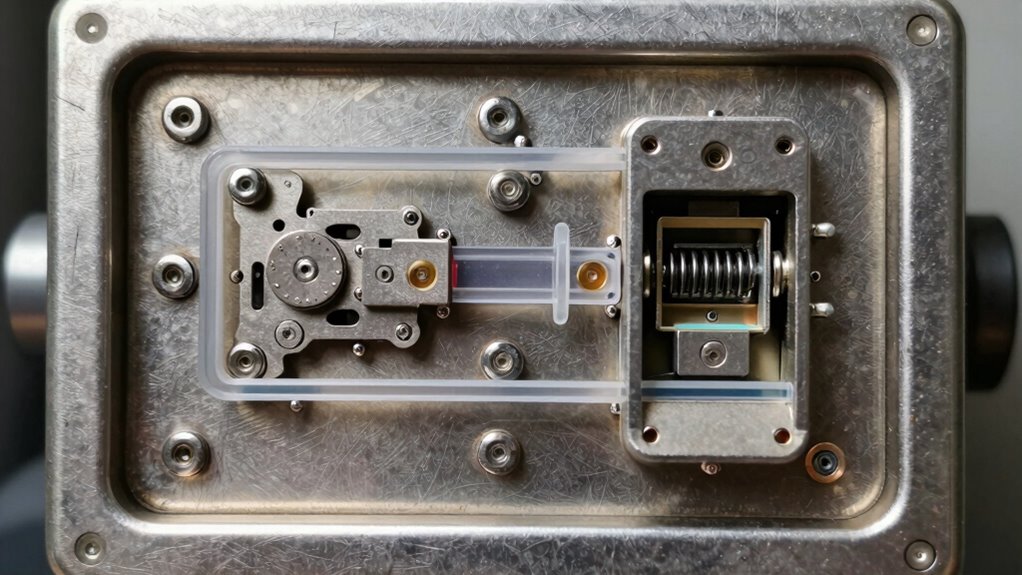
Have you ever wondered how arcade machines keep their coins secure and organized? That’s where coin doors come in. These sturdy panels protect the coin mechanism and prevent theft or tampering. Coin security is essential to ensure the machine functions smoothly and profits aren’t lost. The design of the coin door also matters because it influences how easily you can access and service the coin acceptor. A well-designed coin door features secure locks and durable materials, making it tough for anyone to tamper with the coins. Plus, thoughtful coin design, like the size and shape of the coin slot, helps prevent jams and guarantees coins flow smoothly. In short, coin doors are indispensable for maintaining the integrity and efficiency of arcade machines. Digital concepts play a key role in modern coin door systems, enhancing their reliability and security features, including jam-proof setup to minimize operational issues. Incorporating precision engineering ensures these systems operate seamlessly and reduce downtime, especially when combined with robust security measures. Additionally, advancements in technology integration continue to further improve the safety and functionality of these systems.

Space Jam 2 limited Edition Coin (PS4)
Heavily embossed collectible coin featuring LeBron James
As an affiliate, we earn on qualifying purchases.
As an affiliate, we earn on qualifying purchases.
How Do Coin Mechs and Acceptors Work in Arcade and Vending Machines?
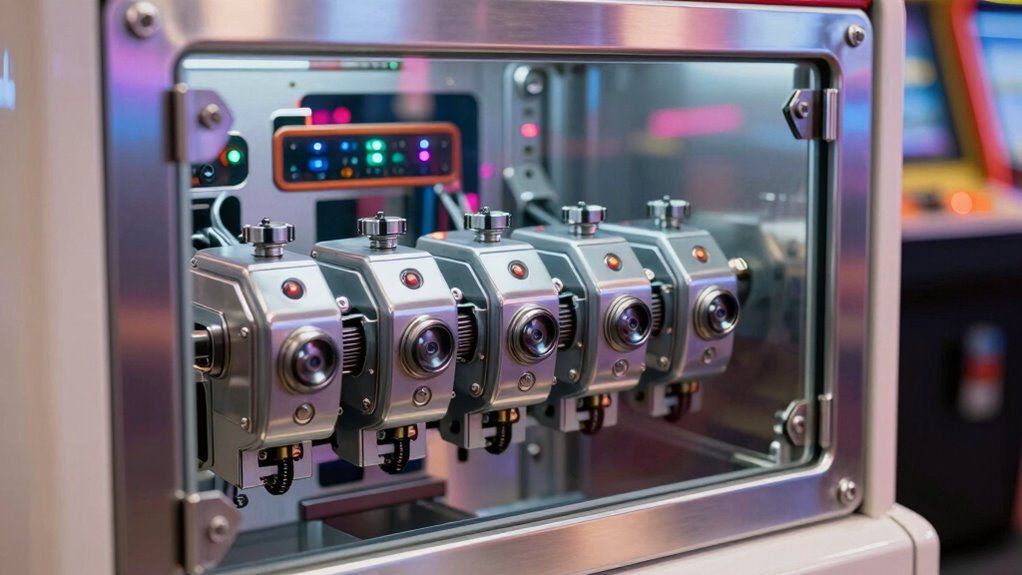
Ever wondered how arcade and vending machines distinguish valid coins from counterfeit or unwanted objects? It all comes down to coin selection and currency compatibility. Coin mechs and acceptors use a combination of sensors and mechanical parts to identify genuine coins based on size, weight, and metal composition. When you insert a coin, the machine measures these attributes to make certain it matches the accepted currency. If the coin passes the tests, it’s accepted and triggers the machine’s internal mechanisms; if not, it’s rejected. Modern coin acceptors often include electronic sensors that scan the coin’s properties rapidly, ensuring smooth operation. This process guarantees only valid coins are accepted, preventing fraud and maintaining proper transaction flow in arcade and vending machines. Additionally, the integration of security measures helps prevent coin tampering and enhances the reliability of the acceptance process.
AceMining Portable Door Lock Home Security Door Lock Travel Lockdown Locks for Additional Safety and Privacy Perfect for Traveling Hotel Home Apartment College
SECURITY AND PRIVACY : This portable door lock provides you with extra security and privacy, greatly improving your…
As an affiliate, we earn on qualifying purchases.
As an affiliate, we earn on qualifying purchases.
How to Choose the Right Coin Mech for Your Setup
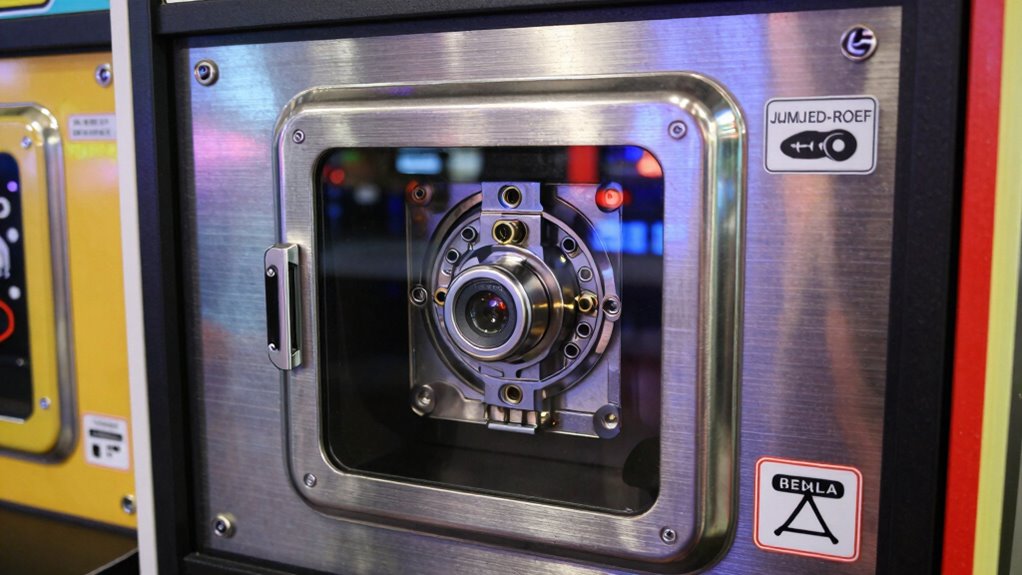
Choosing the right coin mech for your setup requires considering several key factors to guarantee compatibility and reliable operation. First, think about your coin collection—ensure the mech accepts the coin sizes and denominations you plan to use. Next, consider the coin design; some mechs are better suited to specific shapes or materials, reducing jams or misreads. You should also verify the coin capacity to handle your expected volume without frequent emptying. Compatibility with your existing coin door and ease of adjustment are essential for smooth operation. Finally, assess the durability and build quality to guarantee longevity, especially if your setup sees heavy use. Selecting a coin mech aligned with your coin collection and design needs will streamline your setup and improve user experience.

NUOBESTY Vending Machine Coin Slot Mechanism Semi-Circular Metal Coin Entry Assembly Replacement Part for Arcade and Automatic Machines Compatible Repair and Upgrade
Maintenancefriendly design: benefit from easytoclean and maintain vending coin slot accessories, reducing operational hassle for vending operators,vending machine…
As an affiliate, we earn on qualifying purchases.
As an affiliate, we earn on qualifying purchases.
Installing and Connecting Coin Acceptors Made Easy
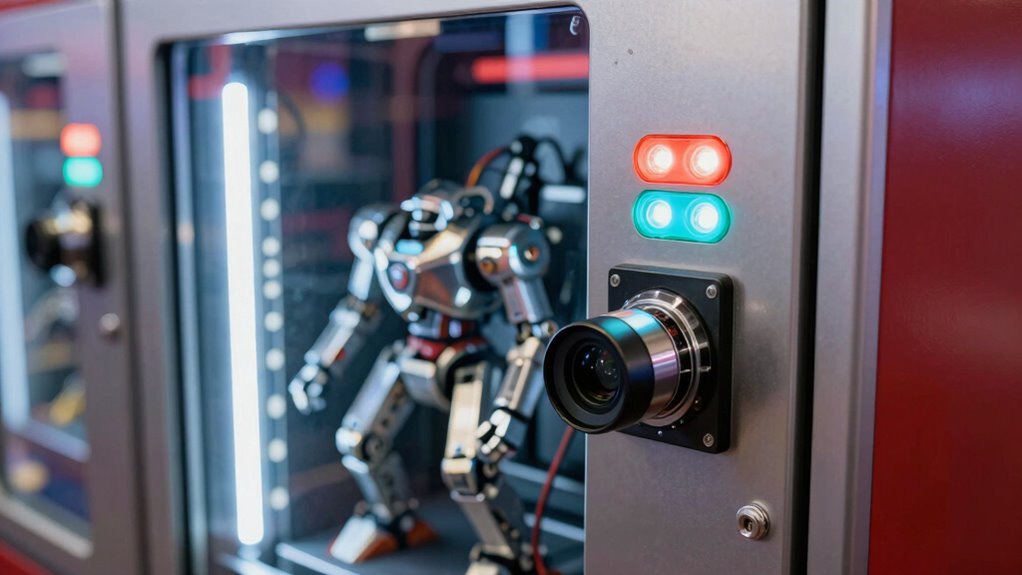
Getting your coin acceptor set up is straightforward when you understand the wiring and power connections. Once you mount the device securely, you can connect the cables and make sure everything is properly grounded. Additionally, verifying the regional flavor of your coin mechanism can help ensure compatibility with local currency standards. Using a precise measurement tool can also assist in diagnosing any issues with coin recognition accuracy. It’s important to consider performance metrics to monitor the device’s efficiency and reliability over time. Regularly testing the device with different coins can help maintain optimal accuracy levels and prevent jams or misreads. Furthermore, understanding drone bees and hive health can provide insights into the importance of reliable operation and maintenance.
Wiring and Power Setup
Are you unsure where to start with wiring your coin acceptor? Begin by connecting the power supply, guaranteeing the voltage matches the manufacturer’s specifications. Proper wiring is essential for reliable coin calibration, which ensures each coin is recognized correctly. Use secure connections to prevent disconnections or false readings. Many coin acceptors include built-in security features like tamper-proof wiring or protective enclosures; make sure these are correctly installed to prevent theft or vandalism. Double-check all wiring for proper insulation to avoid shorts. To enhance the durability of your setup, consider using high-quality wiring materials that resist wear and environmental factors. Additionally, understanding the leave no trace principles can help you ensure your setup minimizes environmental impact and promotes responsible use of resources. When wiring, it’s also important to follow industry standards and best practices to ensure safety and reliability. Once connected, test your setup with different coins to fine-tune coin calibration, ensuring smooth operation. A well-wired system with appropriate security measures guarantees accurate coin acceptance and long-term durability.
Mounting Coin Acceptor
Mounting your coin acceptor correctly is essential for reliable operation and easy maintenance. Start by selecting a secure, accessible location that allows smooth coin flow into the coin storage. Make sure the acceptor is aligned properly to facilitate effective coin sorting, preventing jams and misreads. Use the provided mounting brackets or hardware to firmly attach the acceptor to your machine frame, ensuring it’s stable during operation. Keep the coin path clear and avoid obstructions that could interfere with coin movement. Proper positioning also simplifies coin collection and cleaning. Once mounted, connect the acceptor to your wiring setup, ensuring all connections are tight and secure. Correct mounting not only improves performance but also makes troubleshooting and future maintenance straightforward. Additionally, secure mounting helps prevent vibration issues that could lead to misreads or mechanical failures. Paying attention to installation techniques is vital for optimal functionality and longevity of the coin mechanism.
Testing Coin Flow
Once your coin acceptor is installed and connected, testing coin flow is the next essential step to guarantee everything works smoothly. You need to confirm that coins move through the system correctly and that the acceptor registers each coin properly. During coin testing, insert coins one at a time and observe how they travel through the coin path. Check for any jams, misalignments, or blockages that could hinder coin flow. Listen for sounds indicating successful acceptance and verify that the machine’s coin counter updates accurately. If coins don’t flow smoothly or aren’t recognized, re-examine the setup, adjust the coin path, or clean the mechanism. Proper coin testing helps prevent future issues and ensures reliable operation of your coin door system. Additionally, testing procedures can help identify potential problems early, saving time and avoiding costly repairs later.
Why Coins Get Jammed and How to Avoid It
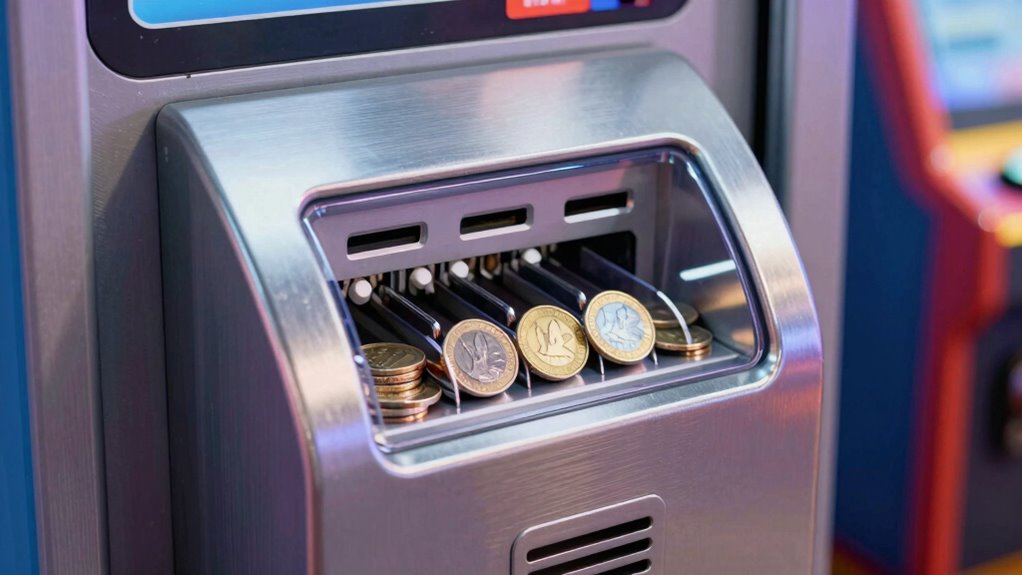
Coins often get jammed in coin doors because of improper insertion, worn-out components, or debris buildup. Coin corrosion can cause coins to stick or become rough, increasing the risk of jams. To prevent this, regularly clean and inspect your coin mechanisms for corrosion or damage. Ensuring coin size compatibility is essential; using coins that are too thick or thin can cause misfeeds or jams. Always use coins that match the recommended size for your coin mech. Debris such as dirt or dust can also block the coin path, so keep the area clean. Worn-out parts may not grip coins properly, leading to jams. Understanding coin measurements and materials is crucial for selecting the right coins and preventing jams. Additionally, understanding mechanism design can help you identify potential weak points in your setup and address them proactively. Proper installation techniques are also vital to ensure the coin acceptor functions smoothly over time. Maintaining your coin acceptor, using compatible coins, and keeping the mechanism clean—all contribute to reducing the chances of coins getting stuck. Regular preventive maintenance can significantly extend the lifespan of your coin mechanism and keep it operating reliably. Being aware of common causes of jams can help you troubleshoot issues more effectively.
Tips for a Jam-Proof Coin Door System
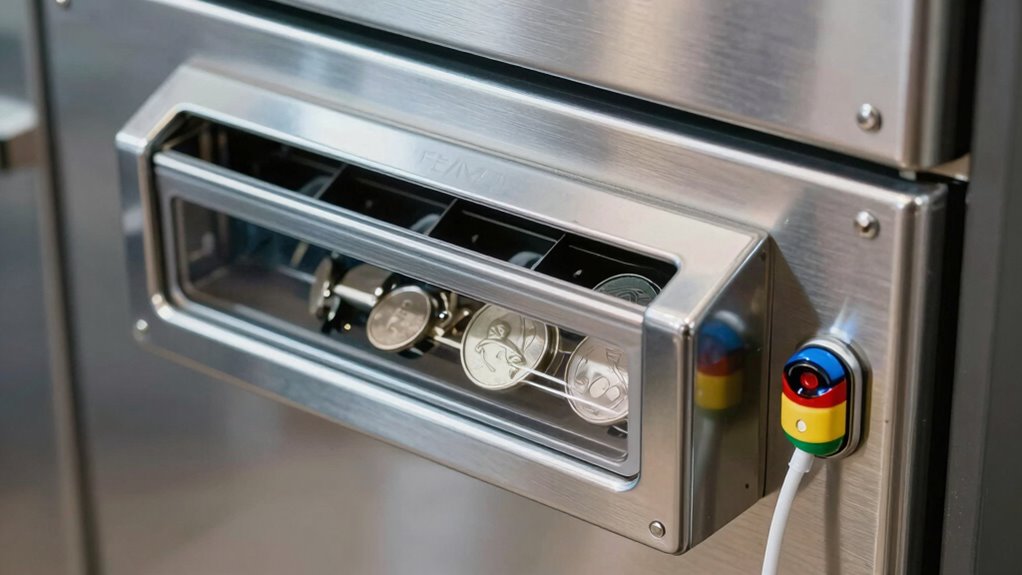
To keep your coin door system jam-free, start by ensuring proper coin alignment so coins move smoothly through the chute. Regular maintenance checks help catch any issues before they cause jams, saving you time and frustration. Staying on top of these simple steps can make your coin system operate reliably day after day.
Proper Coin Alignment
Proper coin alignment is vital for preventing jams and ensuring smooth operation of your coin door system. To achieve this, focus on correct coin calibration, which sets the precise size and weight parameters for accepted coins. Make sure each coin is properly oriented before insertion, as incorrect coin orientation can cause misreads or jams. Check that coins are fed flat and straight, avoiding tilting or skewing. Adjust the coin chute if needed, ensuring it guides coins smoothly without resistance. Regularly inspect the coin path for debris or misalignment that could disrupt flow. Proper calibration and correct coin orientation work together to reduce jams, improve accuracy, and keep your coin mechanism functioning reliably over time.
Regular Maintenance Checks
Regular maintenance checks are essential for keeping your coin door system jam-free and operating smoothly. You should regularly perform coin cleaning to prevent dirt and debris from causing jams or misfeeds. Use a soft cloth and mild cleaning solution to wipe down the coin mech and acceptor surfaces. Additionally, inspect your coin storage area to ensure coins are properly stacked and not overcrowded, which can lead to blockages. Clear out any jammed coins immediately and verify that the coin pathway is free of obstructions. Consistent checks help identify potential issues early, saving you time and preventing operational disruptions. Incorporating routine cleaning of coins and monitoring storage conditions keeps your system efficient, reliable, and less prone to jams.
Troubleshooting Coin Acceptance Issues

When your coin door isn’t accepting coins properly, it can disrupt the entire operation of your machine. First, check the coin calibration to verify the coin mech recognizes valid coins and rejects counterfeit ones. Miscalibration can cause genuine coins to be rejected or counterfeit coins to be accepted, leading to acceptance issues. Clean the coin path and sensors to remove dirt, debris, or residue that might interfere with proper detection. Inspect the coin acceptor for signs of damage or wear, especially if counterfeit coins have been used frequently. Adjust the coin calibration settings if needed, following the manufacturer’s instructions. If problems persist, consider replacing worn parts or upgrading to a more secure coin mechanism to prevent counterfeit coins from causing future issues.
Upgrade Your Coin Door for Better Reliability and Security

Upgrading your coin door can substantially boost both its reliability and security, helping prevent coin acceptance problems and counterfeit intrusions. Modern upgrades often include advanced coin customization options, allowing you to tailor the system for specific coin sizes or designs, reducing jams and misreads. This not only improves gameplay flow but also safeguards your machine’s coin collection. Enhanced security features, like tamper-proof locks and encrypted electronic components, keep your earnings safer from theft or vandalism. Additionally, upgrading can simplify maintenance and troubleshooting, saving you time and money. With a more reliable and secure coin door, you’ll ensure smooth operation, protect your revenue, and maintain the integrity of your coin collection for years to come.
Frequently Asked Questions
What Are the Common Signs of a Failing Coin Acceptor?
If your coin acceptor is failing, you’ll notice frequent coin jams and increased coin rejection. Coins might get stuck or bounce back, causing delays and frustration. You may also see inconsistent acceptance, where valid coins are rejected or invalid ones are accepted. These signs indicate the acceptor’s sensors or mechanics are malfunctioning, so it’s time to clean, adjust, or replace parts to keep your machine running smoothly.
How Often Should I Clean or Maintain My Coin Mech?
Think of your coin mech as the heartbeat of your machine—it needs regular checkups. You should perform a maintenance schedule monthly, or more often if you notice issues. Use gentle cleaning techniques like compressed air or soft brushes to clear dust and debris. Regular maintenance keeps it running smoothly, prevents jams, and ensures your customers get seamless service. Don’t wait for problems—stay ahead with consistent cleaning and care.
Can Coin Doors Be Customized for Different Currencies?
Yes, you can tailor coin doors for different currencies, enhancing international compatibility. Many coin mechs allow for currency conversion options, so you can easily adapt your coin acceptor to accept various coins around the world. This flexibility ensures your machine works seamlessly in different regions, making it ideal for international locations or businesses looking to cater to a broader customer base. Customization helps streamline operations and improve user experience globally.
What Safety Features Are Available for Coin Doors?
Imagine a vault guarding your coins—your coin door can have safety features like security sensors that detect tampering and trigger alarms. An emergency release provides quick access in emergencies, ensuring safety for staff and patrons. These features work together to protect your machine from theft or vandalism while allowing easy access when needed. With such safeguards, your coin door stays secure, reliable, and ready for any situation.
How Do I Troubleshoot Inconsistent Coin Acceptance?
To troubleshoot inconsistent coin acceptance, start by checking the coin calibration; make certain it’s aligned properly and matches the denomination you’re using. Next, look for coin jams—remove any stuck coins carefully to prevent future issues. Clean the coin mech regularly, and verify that the sensors and pathways are unobstructed. Adjust the calibration settings if needed, and test the acceptor with different coins to identify if the problem persists.
Conclusion
Getting your coin door setup just right ensures smooth operation and fewer headaches down the line. By understanding how coin mechs work, choosing the right components, and following best practices, you’ll keep things running like clockwork. It’s all about staying one step ahead of jams and issues before they become a real headache. With a little effort, you’ll have a reliable, secure system that stands the test of time—because a stitch in time preserves nine.