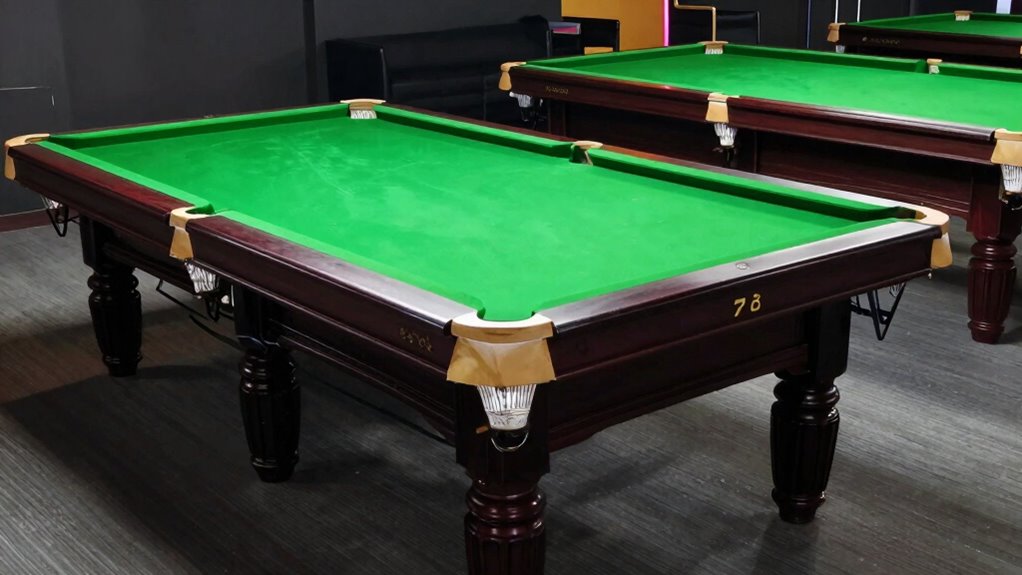

Choosing the right pool table size depends on your space, skill level, and play style. A 7-foot table is great for smaller rooms and casual games, offering easier control. An 8-foot table balances size and challenge, ideal for enthusiasts and recreational players. A 9-foot table suits serious players and tournaments but requires a larger area. To find the best fit for your needs, consider your space, skills, and preferences—all the details you need to make the perfect choice are just ahead.
Key Takeaways
- 7-foot tables are ideal for small spaces and casual play, requiring shorter cues and offering faster gameplay.
- 8-foot tables provide a balanced size suitable for both recreational and competitive play, fitting most home rooms.
- 9-foot tables are standard in tournaments, emphasizing accuracy, skill, and finesse, best for serious players.
- Room size should allow at least 5 feet of clearance around the table for comfortable shot-making and movement.
- Choose table size based on available space, skill level, and intended use to optimize gameplay and room compatibility.

GoSports 7 ft Pool Table with Wood Finish – Billiards Game Room Table for Adults & Family – Accessories Not Included
- Table Size: 7 ft x 4 ft x 2.5 ft
- Design Style: Rustic black wood finish
- Gameplay Surface: Gray felt top
As an affiliate, we earn on qualifying purchases.
As an affiliate, we earn on qualifying purchases.
How Pool Table Sizes Affect Your Game
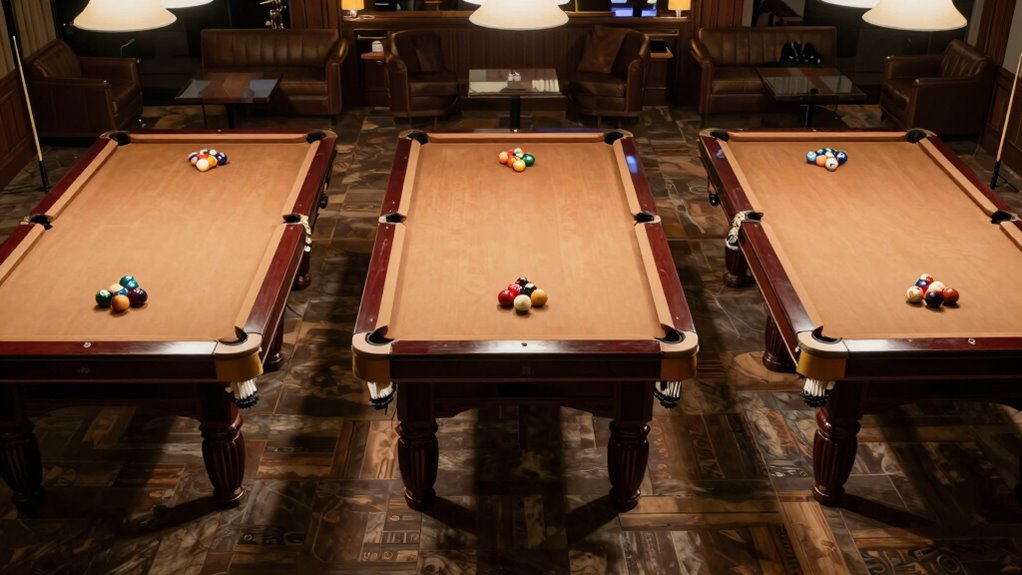
The size of your pool table directly impacts your gameplay, influencing how you aim, position, and strategize. On larger tables, you may need a longer cue stick to comfortably reach shots across the felt, which affects your stroke and precision. Smaller tables typically allow for shorter cue sticks, making quick, controlled shots easier. Additionally, ball size plays a role; larger balls are often used on bigger tables, requiring adjustments in your aiming and force. A larger table demands more planning and positioning, while a smaller one offers faster gameplay with less movement. Understanding these factors helps you select the right cue stick length and ball size, ultimately improving your overall skill and enjoyment during each game. Proper table sizing is also essential for developing consistent technique and ensuring an enjoyable experience for players of all skill levels. Moreover, it’s important to consider the table’s dimensions to match your available space and ensure comfortable movement around the table.
Comparing 7-Foot, 8-Foot, and 9-Foot Tables: Pros and Cons
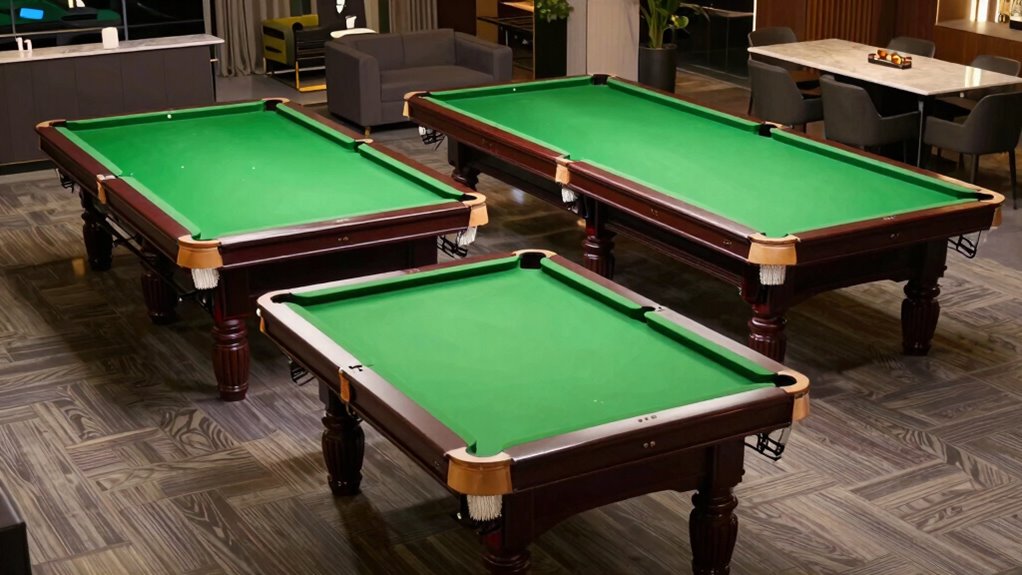
Choosing between 7-foot, 8-foot, and 9-foot tables impacts your playing experience and how much space you need. Smaller tables are more convenient for limited rooms, but larger ones offer a more authentic feel. Consider how each size fits your skill level and available space before making a decision. Additionally, understanding content formats used in digital media can help you find the best resources for improving your game. Being aware of personality assessment tools can also assist in selecting a table that matches your personal preferences and playing style.
Playing Experience Differences
Playing on different-sized pool tables considerably affects your overall experience, as each size offers unique advantages and challenges. On a 7-foot table, the smaller playing surface means you’ll use a shorter cue stick, which can improve control but limit shot range. The ball size remains consistent, but the quicker pace may challenge your precision. An 8-foot table provides a balanced experience, with a slightly longer cue stick and more room for strategic play, making it ideal for both casual and competitive players. The 9-foot table, often used in tournaments, demands longer cue sticks and emphasizes accuracy and finesse, especially with standard ball sizes. Overall, the table size influences your shot selection, cue stick handling, and how challenging you find each game.
Space and Placement Needs
Considering space and placement needs is essential when selecting a pool table size, as each option requires different room dimensions and setup considerations. A 7-foot table fits comfortably in smaller rooms, but you’ll need at least 16 feet of clearance for shots and comfortable furniture arrangement. An 8-foot table needs around 17-18 feet of space, making it suitable for medium-sized rooms where furniture placement remains flexible. For a 9-foot table, you’ll want at least 20 feet of clearance to allow proper gameplay without feeling cramped. Keep in mind that larger tables demand more space, which affects furniture arrangement and room layout. Ensuring enough room for movement around the table is fundamental for an enjoyable playing experience and seamless integration into your existing space. Additionally, room dimensions should be carefully measured to accommodate the chosen table size and ensure a comfortable playing environment.
Measuring Your Space to Find the Perfect Pool Table Size
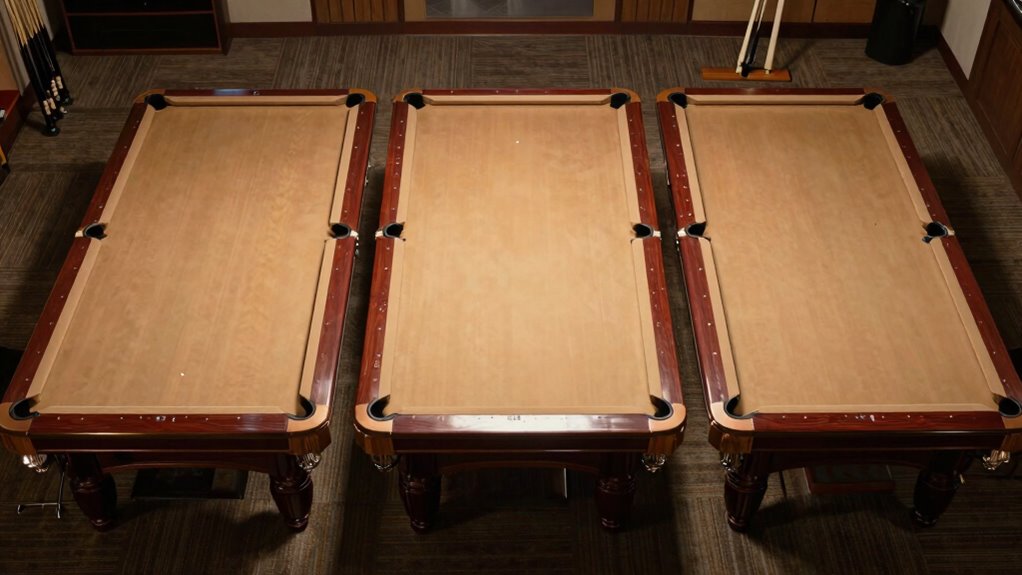
To guarantee your pool table fits comfortably in your space, start by measuring the available area carefully. You’ll want to assure enough room for players to make shots without obstruction. Consider the overall room aesthetics, making certain the table complements your decor. Lighting considerations are also vital—aim for even, glare-free illumination that enhances visibility. When measuring, keep these points in mind:
- Add at least 5 feet of clearance around the table for comfortable play.
- Account for room features like windows, doors, and furniture.
- Use precise measurements to match the table size with your space and lighting setup.
- Incorporate smart home technology to optimize lighting and environmental control for an ideal gaming atmosphere.
Accurate measurements help you select the right size, guaranteeing your pool table integrates seamlessly into your room while providing an ideal playing experience.
Which Pool Table Size Is Best for Your Room and Skill Level
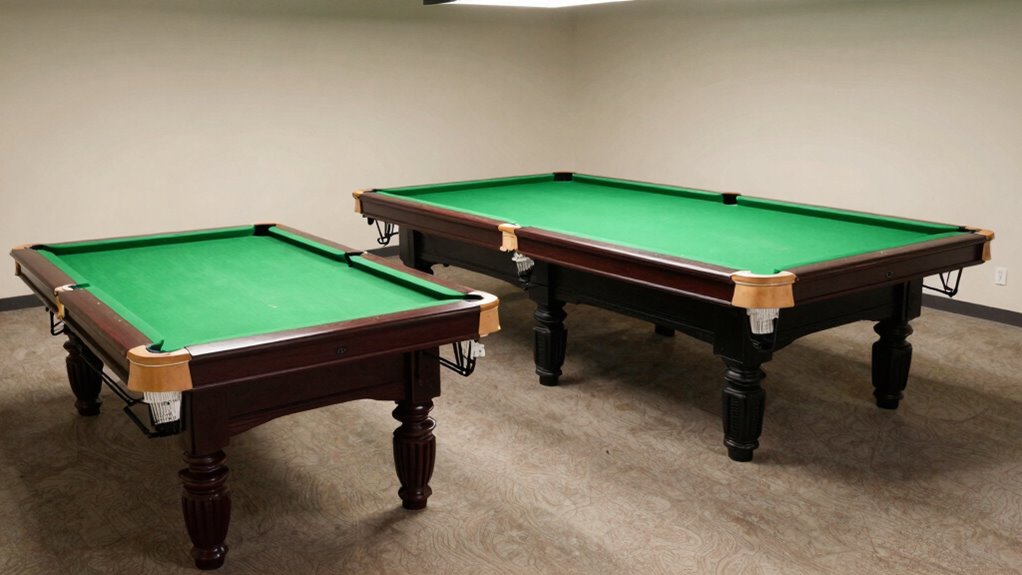
Choosing the right pool table size depends on your room space and what you want to achieve with your game. Smaller tables fit better in limited spaces, but larger tables can help improve your skills faster. Consider your skill level and room dimensions to find the best fit for both. Additionally, understanding cabling solutions can ensure your setup remains secure and well-maintained. Proper equipment maintenance can also extend the lifespan of your table and enhance your playing experience. Being aware of emerging trends in sports tech can further enhance your gameplay and provide innovative ways to connect with fellow enthusiasts.
Room Space Requirements
Selecting the right pool table size depends heavily on your room’s dimensions and your skill level. You need enough space to comfortably play without feeling cramped. Typically, you’ll want at least 5 feet of clearance around the table for cue strokes.
Consider these key points:
- Room size influences your choice: larger tables like 8- or 9-foot models require more space.
- Cue length matters: longer cues need more room for full swings.
- Tablecloth options can affect play area; thicker cloths might slightly reduce clearance.
- AI-generated design tips can help optimize your game space and enhance your overall playing experience.
Measuring your room and planning for proper clearance guarantees you select a size that fits well. This not only enhances your game but also helps you choose the right accessories, like tablecloths and cues, for ideal play.
Skill Development Focus
The size of your pool table can considerably impact your skill development, especially if you’re just starting out or aiming to improve your game. A smaller table, like a 7-foot, helps develop cue ball control because it requires more precise shot placement and careful stroke consistency. This focus on accuracy builds foundational skills that transfer well to larger tables later. Conversely, an 8-foot or 9-foot table offers more room for practicing advanced techniques, but it can be challenging for beginners to maintain consistent strokes on such a large surface. If your goal is to sharpen your overall game, choosing a size that encourages controlled play and steady cue ball control will help you progress faster. Balance your skill level with the table size to maximize your development.
Tips for Setting Up Your Pool Table for the Best Play

To guarantee your pool table plays smoothly and accurately, proper setup is essential. Start by leveling the table to ensure an even playing surface, which is vital for consistent ball roll and shot accuracy. Adjust the slate if necessary, and regularly perform table maintenance like cleaning the cloth and checking for loose pockets.
Ensuring your pool table is level and well-maintained guarantees smooth, accurate gameplay every time.
Remember to select a cue stick length that matches your playing style and table size for comfortable shots. Proper lighting over the table will reduce eye strain and improve visibility.
- Level the table and check for evenness
- Use the right cue stick length for your height and table size
- Maintain the cloth and hardware for optimal play
Key Factors to Consider Before Buying a Pool Table
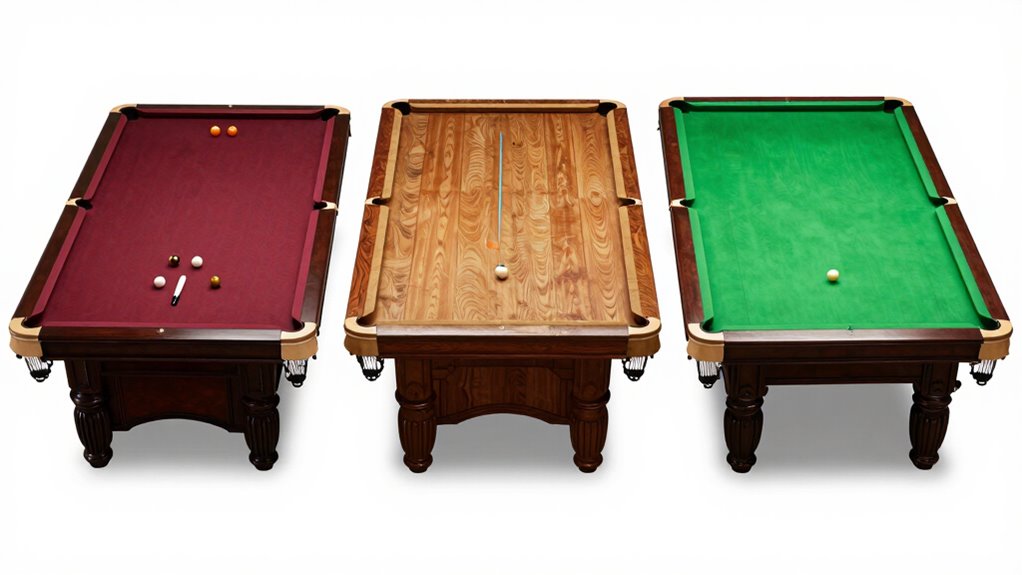
When you’re ready to buy a pool table, it’s crucial to take into account several key factors to guarantee you get the right fit for your space and playing style. First, consider the size—whether 7-foot, 8-foot, or 9-foot—based on your room dimensions and skill level. Think about pool table accessories like cues, balls, and racks that match your preferred game style. Also, assess your budget, including ongoing maintenance tips such as cleaning the felt regularly and keeping the table level. Material quality impacts durability and playability, so choose a sturdy slate bed and quality construction. Additionally, understanding proper maintenance procedures can extend the lifespan and performance of your table. Finally, make certain the table fits comfortably in your space without obstructing movement or other furniture. These factors help you make an informed purchase and enjoy your game for years.
Frequently Asked Questions
How Much Does Each Pool Table Size Typically Cost?
The cost comparison shows that 7-foot tables usually cost between $1,000 and $3,000, making them affordable for most setups. 8-foot tables typically range from $2,000 to $5,000, offering a good balance of size and price. 9-foot tables are the most expensive, often costing $3,000 to $10,000 or more, depending on quality. Your choice depends on your budget and space available.
Are There Differences in Maintenance Needs for Different Table Sizes?
Did you know that larger tables, like 9-foot ones, require about 30% more maintenance than smaller 7-foot tables? You’ll find that table maintenance, such as cloth cleaning and leveling, takes longer and more effort on bigger tables, which can impact table longevity. So, choose a size that fits your space and maintenance willingness, ensuring your table stays in top condition longer.
Can Smaller Tables Improve Beginner Skills Faster?
Yes, smaller tables can help beginners improve faster. They make practicing easier because shots are closer together, allowing for more consistent skill development. With a smaller table, you can focus on techniques and shot accuracy during beginner practice sessions. This helps build confidence and fundamental skills more quickly. As you progress, you can shift to larger tables for advanced play, but smaller tables are great for laying a solid foundation.
What Are the Common Materials Used for High-Quality Pool Tables?
Imagine the smooth glide of a cue ball across a high-quality surface—that’s thanks to premium materials. Most high-end pool tables use slate for the playing surface, offering superior flatness and consistency. The frame durability hinges on hardwoods like oak or maple, providing stability and longevity. Good materials guarantee your game remains precise, and the table stands strong over years, giving you confidence with every shot.
How Long Does It Take to Assemble a Standard-Sized Pool Table?
It typically takes about 3 to 6 hours to assemble a standard-sized pool table, depending on your experience and the complexity of the installation process. You’ll need to carefully follow the assembly instructions, organize the parts, and guarantee everything is level. If you have help, the process can go faster. Be patient and methodical to ensure your table is stable and plays perfectly.
Conclusion
Choosing the right pool table size is like finding the perfect fit for your game—it’s all about your space, skill level, and style. Whether you go for a 7-foot, 8-foot, or 9-foot table, each offers unique benefits that can elevate your play. Take your time, measure carefully, and pick what’s right for you. With the right table, you’ll turn your game into a smooth sailing adventure on the open sea.