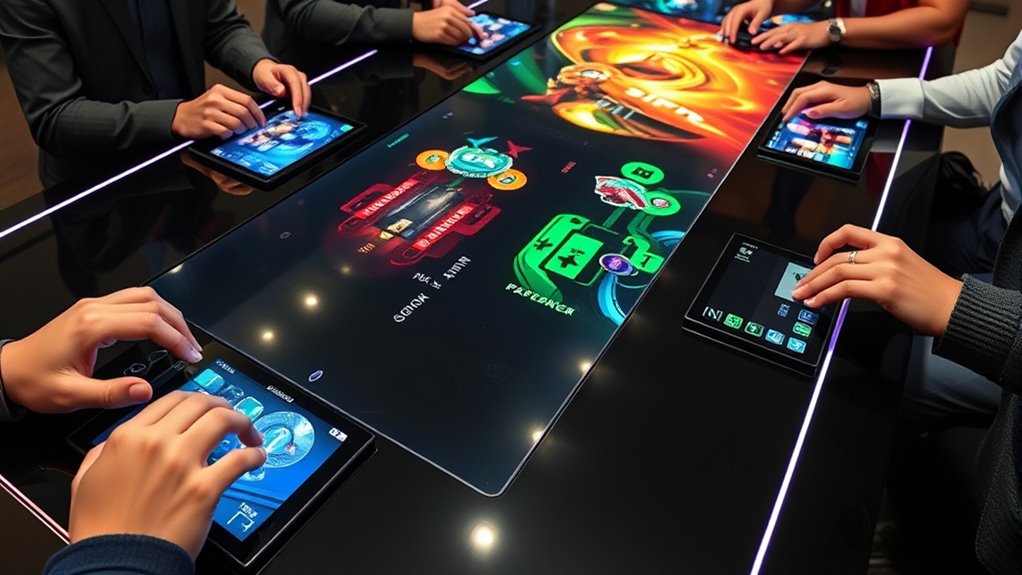

Innovations in table game design now blend digital and physical elements through electronic and hybrid tables, offering immersive and interactive experiences. You can manipulate digital assets directly on high-tech surfaces, enjoy AR-driven visuals, and benefit from real-time game analytics. These innovations speed up gameplay, reduce setup errors, and create new opportunities for customization. As technology evolves, traditional games become more engaging and dynamic—exploring these advancements will reveal how they shape the future of gaming.

Play games on Amazon Luna for your game nights, included with Prime
- A rotating selection of games, no download needed
- Play on TV, laptop or phone
- Fast, free delivery for your gear, too
Key Takeaways
- Integration of AR and smart table technology creates immersive, interactive gaming experiences combining physical and digital elements.
- Smart tables equipped with high-definition touchscreens and sensors enable seamless manipulation of digital assets directly on the surface.
- These innovations enhance gameplay with 3D projections, real-time analytics, and dynamic responses to player actions.
- Hybrid table designs open new creative avenues, blending rustic aesthetics with modern tech for personalized, engaging game environments.
- Future trends include supporting multiplayer connectivity, online tournaments, and evolving game genres to maintain relevance and excitement.
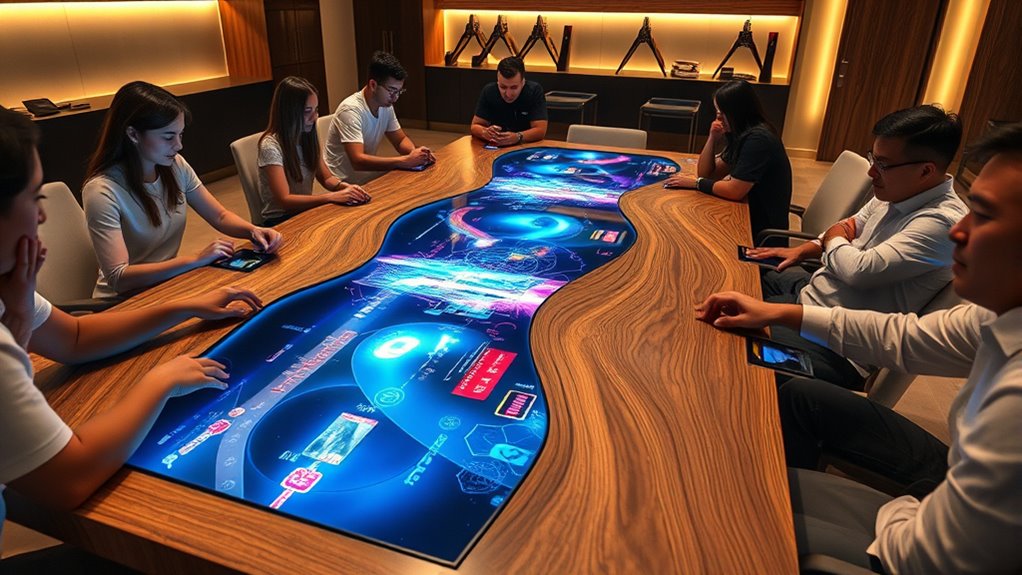
Innovations in table game design have transformed the way players experience classic and new games alike. One of the most exciting developments is the integration of augmented reality (AR) and smart table technology, which breathe new life into traditional gameplay. Instead of simply relying on physical pieces and cards, these innovations combine digital elements with real-world interactions, creating a more immersive and engaging environment. When you sit down at an augmented reality-enabled table, you’re not just holding a game piece—you’re entering a layered experience where virtual objects complement physical components, giving you a richer, more dynamic game. This fusion of physical and digital worlds allows for complex visualizations, interactive tutorials, and real-time game analytics, all at your fingertips.
Augmented reality and smart tables revolutionize traditional gameplay with immersive digital-physical fusion and real-time analytics.
Smart table technology, in particular, acts as the hub for these advancements. These tables are equipped with high-definition touchscreens, embedded sensors, and powerful processors that facilitate seamless interaction between players and the game. Instead of shuffling physical cards or moving tokens manually, you can manipulate digital assets directly on the table’s surface. This speeds up gameplay, reduces setup time, and minimizes errors. Plus, many smart tables come with built-in connectivity, enabling multiplayer experiences across different locations or even online tournaments with players around the world. You get to enjoy a social, competitive atmosphere without the constraints of physical proximity.
AR and smart tables also open doors to innovative game design that wasn’t possible before. For example, augmented reality can project fantastical 3D characters or interactive environments onto the table, enhancing storytelling and strategic depth. As you move your pieces or make decisions, the AR elements respond dynamically, making each move feel more consequential and visually mesmerizing. Similarly, smart tables can track game progress automatically, offer hints, or suggest moves, which is especially helpful for newcomers or casual players looking to improve their skills. This integration of technology doesn’t replace the traditional feel of board games; it elevates it, making gameplay more intuitive and visually stimulating. Additionally, the use of tactile and visual elements from the farmhouse kitchen textiles and accessories can inspire designs that blend rustic charm with modern tech aesthetics for a cozy yet innovative gaming environment.
You’ll find that these advancements also appeal to designers seeking to push the boundaries of creativity. They can craft hybrid games that combine physical and digital components in novel ways, creating experiences that are both familiar and inventive. Whether you’re playing a classic game with a tech twist or exploring entirely new genres, augmented reality and smart table technology are shaping the future of gaming. They make every session more interactive, personalized, and fun, ensuring that table games stay relevant and exciting for years to come.
Popular right now

Ninja DualZone Smart Air Fryer, 10 Qt, 6-in-1, DZ950

Sony WH-1000XM6 Wireless Noise-Canceling Over-Ear Headphones, Blue, Bundle

De'Longhi Dinamica Plus Fully Automatic Espresso Machine
As an affiliate, we earn on qualifying purchases.
Frequently Asked Questions
How Do Electronic Tables Impact Traditional Casino Employment?
Electronic tables impact traditional casino employment by causing some casino job displacement, as they require fewer staff to operate. You might find fewer dealers needed, but there’s an increase in demand for electronic table training. This shift encourages workers to develop new skills, ensuring they stay relevant. While jobs change, the technology also creates opportunities for technical roles and specialized support, helping casinos remain competitive while adjusting their workforce.
Are Hybrid Tables More Cost-Effective Than Fully Electronic Setups?
You’ll find hybrid tables generally more cost-effective than fully electronic setups because they require lower initial investment and offer flexible gameplay options. When doing a cost analysis, consider maintenance costs—hybrid tables tend to have reduced upkeep compared to fully electronic ones, which need frequent software updates and hardware repairs. This balance of affordability and versatility makes hybrid tables a smart choice for casinos seeking innovation without overspending.
What Are the Security Measures for Digital Betting Data?
You guarantee digital betting data stays secure by implementing strong data encryption, which protects sensitive information from unauthorized access. Additionally, you use access controls to restrict data access only to authorized personnel, reducing risks of breaches. Regular security audits and multi-factor authentication further enhance safety. These measures help safeguard player information, maintain trust, and comply with regulations, ensuring your digital betting operations remain secure and reliable.
How Do Players Perceive Electronic Versus Physical Table Experiences?
You might find that 65% of players prefer physical tables because of the tactile feedback, which enhances their engagement. Electronic tables often feel less authentic, making some players feel disconnected. However, others appreciate the sleek interface and faster gameplay. Overall, perceptions vary: some crave the traditional feel, while others embrace the modern convenience, impacting how you experience and enjoy different table game formats.
What Licensing Challenges Exist for Innovative Table Game Designs?
You face licensing challenges around intellectual property rights and regulatory compliance when designing innovative table games. You must secure proper licensing to protect your unique concepts and guarantee you’re not infringing on others’ patents or trademarks. Additionally, you need to meet strict regulatory standards for safety, fairness, and legality across different jurisdictions. Managing these legal hurdles requires careful planning, legal expertise, and ongoing compliance efforts to bring your innovative game to market successfully.
Conclusion
As you embrace these innovations, you’ll find yourself steering a landscape where tradition and technology weave together like a masterful tapestry. Electronic and hybrid tables don’t just enhance gameplay—they transform it into an immersive voyage, inviting you to explore new horizons. By blending the old with the new, you become part of a dynamic evolution that keeps the heart of table gaming beating stronger than ever, charting a course toward an exciting future you help shape.