Understanding the physics of bank shots and angles helps you control the cue ball’s trajectory. Spin, especially sidespin, influences how the ball deflects after cushion contact, while friction affects rebound speed and direction. Table conditions, like cloth and cushion material, also play a role in how the ball responds. By mastering these physics principles, you’ll improve shot accuracy and consistency. Keep exploring, and you’ll uncover more ways to optimize your bank shot techniques.

Play games on Amazon Luna for your game nights, included with Prime
- A rotating selection of games, no download needed
- Play on TV, laptop or phone
- Fast, free delivery for your gear, too
Key Takeaways
- Spin, such as sidespin, alters rebound angles by influencing the cue ball’s trajectory after cushion contact.
- Cushion friction determines how much speed and angle change the ball experiences during rebound.
- Proper understanding of incidence and reflection angles helps predict bank shot outcomes, considering spin effects.
- Applying controlled spin and adjusting for friction improves shot accuracy and compensates for deviations.
- Mastery of physics principles enables strategic shot planning and more precise bank shot execution.
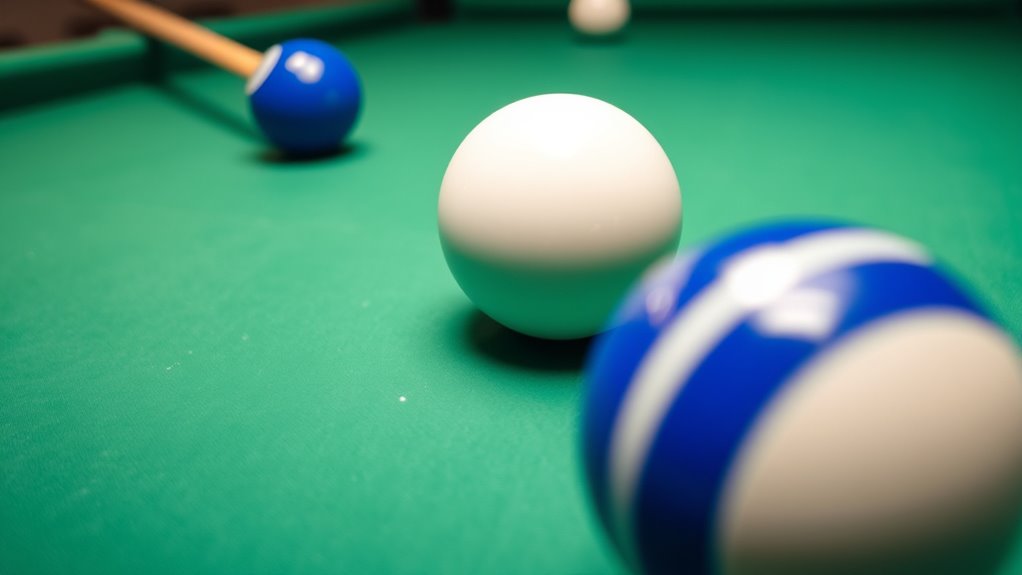
Understanding the physics behind bank shots and angles in billiards can considerably improve your game. When you’re aiming to make a bank shot, it’s essential to grasp how the cue ball interacts with the cushion and, ultimately, the object ball. Spin effects play a crucial role here; applying spin to the cue ball can alter its trajectory after contact with the cushion. For example, a sidespin can cause the ball to deflect at an angle different from what a simple geometric calculation would suggest, making your shot more accurate. Spin also affects how the ball bounces off the cushion—adding a little right or left spin can help you control the angle more precisely, especially in tricky bank shots.
Applying spin and understanding cushion interactions are key to mastering accurate bank shots in billiards.
Friction impacts are equally vital when analyzing bank shots. Both the cushion and the cloth of the table influence how the balls behave. When the cue ball hits the cushion, friction determines how much energy is lost during the collision. A higher friction cushion, often found on older tables or those with rougher surfaces, causes the ball to slow down more after contact, affecting the subsequent path of the ball. Conversely, a smoother cushion reduces friction, allowing the ball to rebound with more speed and less deviation. Similarly, the friction between the ball and the cloth impacts how much spin is translated into the shot and how the ball rolls afterward. If you want to execute precise bank shots, understanding how friction impacts ball movement lets you better predict the ball’s rebound angle and speed.
Additionally, ball behavior is influenced by the interaction of physics principles with the materials and conditions of the table, which can vary from one table to another. When planning a bank shot, you need to consider both the angle of incidence and the angle of reflection, but these are influenced by spin and friction effects. Spin can cause the ball to deviate from the expected path, especially if you’ve applied english—side spin—on the cue ball. Friction impacts both the initial contact and the ball’s after-contacts with cushions, which means you should adjust your aim and stroke strength accordingly. Practice helps you recognize how much spin to apply and how table conditions influence the shot’s outcome. By understanding these physics principles, you’ll learn to manipulate the cue ball more effectively, making bank shots more consistent and reliable.
In essence, mastering the physics of spin effects and friction impacts gives you a strategic advantage. It allows you to anticipate how balls will react after contact, helping you execute complex shots with confidence. Whether you’re trying to bank a difficult shot or simply improve your overall precision, recognizing how these factors influence ball behavior is key to elevating your billiards game.
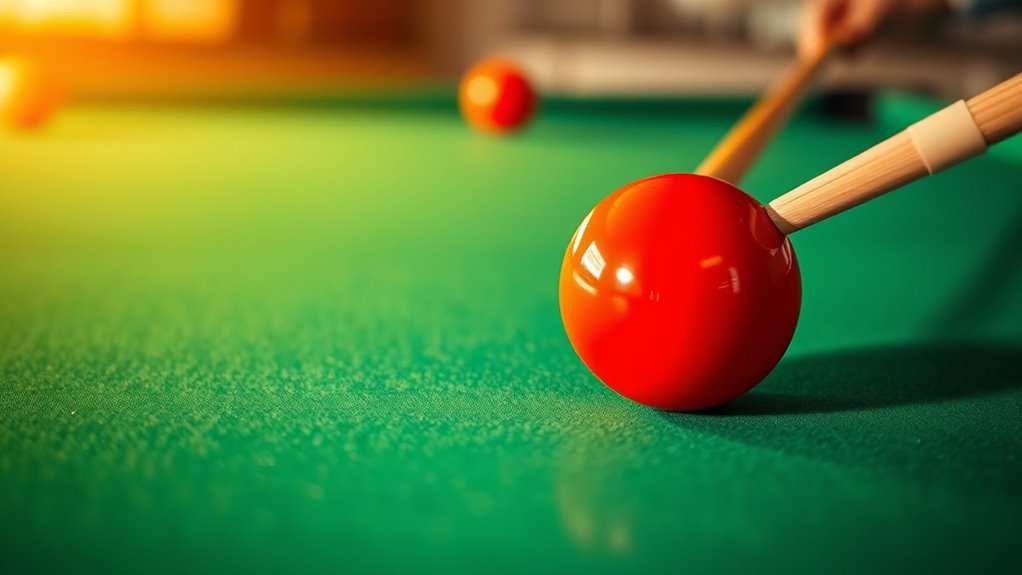
billiards cue ball with sidespin
As an affiliate, we earn on qualifying purchases.
As an affiliate, we earn on qualifying purchases.
Frequently Asked Questions
How Does Spin Affect Bank Shot Accuracy?
Spin effects can markedly impact your bank shot accuracy. When you apply spin, it influences how the cue ball interacts with the cushions and the target ball, often causing unexpected deflections or curve. This can either enhance or diminish shot precision, depending on how well you control the spin. Mastering spin effects allows you to make more precise shots, especially in tricky situations where angles and speed alone aren’t enough.
What Role Does Friction Play in Billiard Ball Trajectories?
Have you ever wondered how friction influences your shot? Frictional effects between the ball and the cloth considerably impact its trajectory, slowing it down and altering angles. Surface roughness increases friction, which can make shots more predictable or tricky, depending on the situation. You can use this to your advantage by adjusting your stroke and aiming, knowing that friction helps control the ball’s speed and direction on the table.
Can Environmental Factors Influence Shot Physics?
Yes, environmental factors like table humidity and air currents can influence your shot physics. Higher humidity makes the cloth more elastic, affecting ball roll and spin. Air currents can subtly alter the ball’s trajectory, especially over longer shots. You should consider these conditions before playing, as they can change how the ball behaves, making precise shots more challenging. Adjust your aim and force accordingly to compensate for these environmental influences.
How Do Different Table Materials Impact Shot Angles?
Different table materials considerably impact shot angles because your table surface affects ball roll and friction, while cushion elasticity influences how much the ball bounces off the rails. If your table has a smooth, slick surface, you’ll notice less friction, making angles easier to control. Conversely, a rougher surface increases friction, altering your shot path. Higher cushion elasticity produces more predictable rebounds, helping you plan angles more accurately.
What Physics Principles Govern Ball Collisions in Billiards?
You should understand that cue ball dynamics and collision elasticity govern ball collisions in billiards. When the cue ball strikes another, its motion depends on how energy transfers during the collision, which is influenced by elasticity. A highly elastic collision means minimal energy loss, allowing predictable ball paths. Your control of cue ball speed and angle directly affects how balls behave after impact, making physics essential for precise shots.
Conclusion
By understanding the physics behind bank shots and angles, you realize it’s not just luck but science at play. When you master the angles and predict the ball’s path, you prove that strategy and physics go hand in hand. Trust the math behind the cushions, and your shots become more consistent. Remember, in billiards, the truth of the game lies in the science—embrace it, and you’ll see your skills improve dramatically.
Halloween Picks
halloween
As an affiliate, we earn on qualifying purchases.