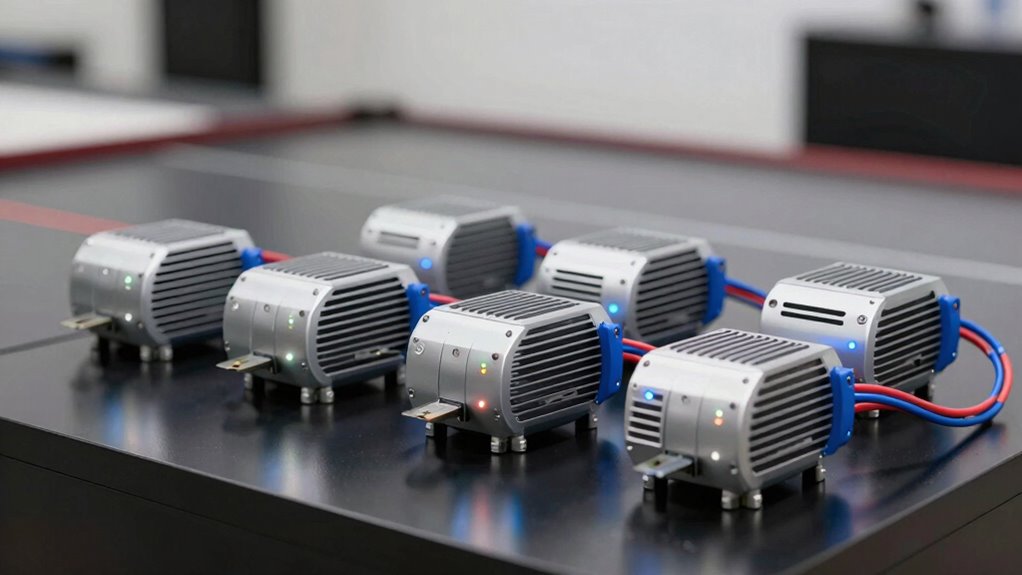

If you’re searching for an air hockey replacement blower motor, start by matching the fan’s physical layout and power connection to your table—not by choosing the biggest airflow number. My top pick for many replacement jobs is the Wathai 172mm axial fan, which is explicitly marketed for air hockey tables and moves 238 CFM. The 12V variable-speed fan is a better fit if quiet operation and adjustable airflow matter more, while the 120mm centrifugal blower suits compact projects where its smaller format is useful.

Play games on Amazon Luna for your game nights, included with Prime
- A rotating selection of games, no download needed
- Play on TV, laptop or phone
- Fast, free delivery for your gear, too
The key tradeoff is fit versus airflow versus control. These are different fan designs, sizes, and electrical setups, so they are not interchangeable just because each can move air. I’d check the original fan’s measurements, voltage, mounting points, connector, and table model before ordering. A fan that produces strong airflow but cannot be mounted or powered correctly is not a useful replacement.
Complete the kit


Key Takeaways
- The 172mm Wathai axial fan is the most direct table-replacement candidate, with 238 CFM airflow and a 110–120V AC plug; its 50 dBA noise level is a tradeoff.
- The 12V variable-speed fan stands apart for adjustable airflow and a listed 25 dB noise level, but it needs a compatible 12V supply and its table fit must be checked.
- The compact 120mm centrifugal blower is a project-oriented option, not a direct substitute for a large axial fan; its 24.6 CFM rating is much lower than the 172mm model’s.
- Before choosing, compare the old fan’s dimensions, airflow direction, voltage, wiring or plug, and mounting layout with the new unit’s details.
- Do not choose by airflow alone: table construction and hole pattern affect whether a fan can spread air evenly across the playing surface.
| Wathai 172mm x 150mm AC Axial Fan 110V 120V Air Hockey Table Replacement |  | Best Overall — the clearest direct replacement candidate | Fan type: Axial | Dimensions: 6.77 x 6 x 2 inches | Voltage: 110–120V AC | VIEW ON AMAZON | See Our Full Breakdown |
| Wathai Air Hockey Table Replacement Fan 12V Variable Speed AC 110V 120V |  | Best for Quiet, Adjustable Airflow | Fan type: 12V variable-speed fan | Dimensions: 4.72 x 4.72 x 1.5 inches | Power requirement: 12V | VIEW ON AMAZON | See Our Full Breakdown |
| Wathai EC 120mm x 32mm Centrifugal Blower Fan AC 110V/120V Dual Ball Bearings |  | Best Compact Project Option | Fan type: Centrifugal blower | Dimensions: 120 x 32mm | Voltage: 110–120V AC | VIEW ON AMAZON | See Our Full Breakdown |
| air hockey replacement blower motor | Fan type | Dimensions | Airflow | Speed |
|---|---|---|---|---|
| Wathai 172mm x 150mm AC Axial | Axial | 6.77 x 6 x 2 inches | 238 CFM | 2700 RPM |
| Wathai Air Hockey Table Replac | 12V variable-speed fan | 4.72 x 4.72 x 1.5 inches | 180 CFM at full speed | 4500 RPM |
| Wathai EC 120mm x 32mm Centrif | Centrifugal blower | 120 x 32mm | 24.6 CFM | 2200 RPM |
More Details on Our Top Picks
Wathai 172mm x 150mm AC Axial Fan 110V 120V Air Hockey Table Replacement
For buyers whose existing fan resembles a large, mains-powered axial unit, this is the most straightforward pick in the group. It is specifically described as an air hockey table replacement, measures 6.77 by 6 by 2 inches, and is rated at 238 CFM. That airflow figure gives it a clear advantage over the two smaller-format options here, though actual table performance still depends on the table’s plenum, hole pattern, and how well the fan seals against its housing.
The tradeoff is sound and simplicity. The fan runs at 2700 RPM and is listed at 50 dBA, so it may be more noticeable than the 12V variable-speed model, which is listed at 25 dB. It also has no speed controller, so there is no built-in way to tune airflow or reduce fan noise. Its 110–120V AC plug is convenient when it matches the original setup, but it is not a substitute for a 12V fan system. Compared with the compact centrifugal blower, this model is much more compelling when table-sized airflow is the priority; the centrifugal unit is the one to examine when available mounting space is smaller.
I would put this first only after checking the table’s opening and electrical arrangement. The stated dimensions and AC connection make compatibility measurable, but the listing information does not identify every table model or mounting pattern. Match the footprint and power first, then decide whether its stronger airflow is worth the louder operation.
Pros:- Marketed specifically as an air hockey table replacement
- Listed airflow of 238 CFM exceeds the two smaller-format picks
- 110–120V AC plug avoids a separate low-voltage supply when it matches the table
- Dual-ball bearings are specified with a 50,000-hour lifespan
Cons:- Listed 50 dBA noise may be noticeable during play
- No built-in speed control
- Large dimensions and AC power format limit compatibility with smaller or 12V setups
Best for: Owners replacing a large 110–120V axial fan who can confirm that the table’s opening, mounting arrangement, and plug match.
Not ideal for: Buyers who need quiet operation, adjustable fan speed, a 12V setup, or a fan small enough for a tight installation.
- Fan type:Axial
- Dimensions:6.77 x 6 x 2 inches
- Voltage:110–120V AC
- Power:32W
- Airflow:238 CFM
- Speed:2700 RPM
- Noise:50 dBA
- Bearing:Dual-ball, listed 50,000-hour lifespan
Our verdict“Choose this as my leading candidate when your table uses a matching large AC axial fan and airflow takes priority over quieter operation.”
Wathai Air Hockey Table Replacement Fan 12V Variable Speed AC 110V 120V
This model earns a distinct place because it offers something the 172mm AC fan does not: a multi-speed controller. Its listed output reaches 180 CFM at full speed, while the speed can be reduced when maximum airflow is unnecessary. That control can be useful for a home table where fan sound matters, especially beside the fixed-speed, 50 dBA 172mm unit. The manufacturer lists the fan at 25 dB, though buyers should treat noise figures as specification claims rather than a guarantee for a complete table installation.
The 12V electrical requirement is the main catch. The product title mentions AC 110–120V, but the fan itself is specified as 12V; the supplied description says some setups may need an adapter. I would verify exactly what power supply and controller are included and compare them with the table’s original wiring before purchase. This is not a simple plug-in replacement for the 110–120V axial model. Its 4.72-inch square footprint is also far smaller than the 172mm unit, so its airflow rating alone does not establish that it can cover the same table opening or provide an even cushion across the playing surface.
Against the 120mm centrifugal blower, this one brings higher stated maximum airflow and a speed controller, but it still requires careful power and mounting checks. I’d favor it when noise control and adjustability outweigh the convenience of a mains-powered plug. Skip it if you need a clearly documented direct fit or cannot supply compatible 12V power.
Pros:- Multi-speed controller provides more airflow flexibility than either fixed-speed option
- Listed maximum airflow is 180 CFM
- Listed noise level is 25 dB
- Compact 4.72-inch square body may suit installations with limited space
Cons:- Requires a compatible 12V power source; included supply details need checking
- Product information gives limited table-specific fit guidance
- Smaller fan format may not match the airflow distribution of a large original unit
Best for: Table owners with a compatible 12V arrangement who want to adjust airflow and put quieter operation ahead of plug-in simplicity.
Not ideal for: Buyers seeking a confirmed drop-in match for a particular table, or those who need a fan powered directly from a matching 110–120V AC connection.
- Fan type:12V variable-speed fan
- Dimensions:4.72 x 4.72 x 1.5 inches
- Power requirement:12V
- Airflow:180 CFM at full speed
- Speed:4500 RPM
- Power draw:Less than 3W at slowest speed; 11W at full speed
- Noise:25 dB
- Bearing:Dual-ball, listed 50,000-hour lifespan
Our verdict“Pick this when your table supports 12V power and adjustable, quieter airflow matters more than a clearly established drop-in fit.”
Wathai EC 120mm x 32mm Centrifugal Blower Fan AC 110V/120V Dual Ball Bearings
The 120mm centrifugal blower is the most specialized choice here. At 120 x 32mm, it has a slim, compact body that may be useful where a large axial fan cannot fit. It is rated at 24.6 CFM and 0.81 inches of water pressure, specifications that describe a different airflow profile from the broad, high-volume output of the 172mm axial fan. That can suit a constrained ventilation or custom build, but the listed CFM is much lower than the 238 CFM of the air-hockey-focused axial model.
Its 110–120V AC compatibility makes it more electrically similar to the 172mm option than the 12V variable-speed fan. That does not make it a direct replacement: the body shape, outlet direction, airflow volume, and mounting needs differ. The supplied wires are not pre-wired to the fan, so installation calls for electrical work and mounting screws. At around 42 dB, it is listed as quieter than the 172mm fan but louder than the 12V model’s stated 25 dB. Dual-ball bearings and a stated 50,000-hour lifespan are useful durability details, though bearing life alone cannot establish how long a fan will last in a particular table.
I rank it third because its compact form has a plausible role, but the available details do not make it the most convincing choice for restoring a typical table’s playing surface airflow. Compared with the 12V fan, it has an AC input but no speed control; compared with the 172mm fan, it uses far less stated airflow. Consider it for a measured, custom installation where its smaller blower format is specifically suitable, not as a blind swap.
Pros:- Compact 120 x 32mm body for space-limited projects
- Runs on 110–120V AC
- Dual-ball bearings with a stated 50,000-hour lifespan
- Listed airflow pressure figure may suit a custom ducted or constrained airflow path
Cons:- Listed 24.6 CFM is far below the 172mm fan’s 238 CFM
- Wires are not pre-wired, so installation requires additional electrical work
- No speed control and a listed noise level around 42 dB
Best for: DIY buyers building or repairing a compact ventilation setup who can work with separate wiring and have confirmed the blower’s size and airflow path suit the installation.
Not ideal for: Owners who want a clearly identified air hockey drop-in replacement, high stated airflow, pre-wired installation, or built-in speed adjustment.
- Fan type:Centrifugal blower
- Dimensions:120 x 32mm
- Voltage:110–120V AC
- Power:4W
- Speed:2200 RPM
- Airflow:24.6 CFM
- Air pressure:0.81 in H2O
- Noise:Around 42 dB
- Bearing:Dual-ball
Our verdict“Choose this only when its compact centrifugal format solves a specific fit problem and you have confirmed that its much lower airflow suits the table.”

How We Picked
I ranked these options around the job in the title: replacing the air-moving component in an air hockey table. I gave the strongest position to the unit explicitly described as an air hockey table replacement and backed by a substantial stated airflow figure. That makes the 172mm AC axial fan the clearest starting point for buyers whose original setup resembles its large, plug-in format.
After that, I weighed practical differences rather than treating every fan as a direct replacement. The 12V variable-speed model earns a separate role because adjustable output and quieter stated operation can help when a table’s layout and power arrangement suit it. The 120mm centrifugal blower ranks as a compact project option: its smaller footprint may help in a constrained installation, but its listed airflow is far below the larger axial fan’s. Across all three, I considered stated airflow, dimensions, voltage, connector or wiring needs, noise, bearing type, and how clearly the supplied information supports an air-hockey use case. I can’t confirm fit for a specific table without its model and original fan measurements, so I treat compatibility as a buyer check, not a promise.
| air hockey replacement blower motor | Bearing |
|---|---|
| Wathai 172mm x 150mm AC Axial | Dual-ball, listed 50,000-hour lifespan |
| Wathai Air Hockey Table Replac | Dual-ball, listed 50,000-hour lifespan |
| Wathai EC 120mm x 32mm Centrif | Dual-ball |
Factors to Consider When Choosing Air Hockey Replacement Blower Motor
I would treat replacement as a compatibility job before treating it as a performance upgrade. A table needs airflow delivered through its own plenum and playing-field holes; a fan’s headline CFM does not tell you by itself whether it will fit or distribute air properly. Use the original fan, its label, and the table manual as your reference.
Measure the original fan and mounting area
Record the old unit’s outer dimensions, depth, screw-hole positions, and the size and position of its air outlet. Compare those measurements against the candidate fan, not just the product title. The 172mm axial fan has a much larger body than either the 120mm centrifugal blower or the 4.72-inch-square 12V fan. Even a unit that fits inside the cabinet may not line up with the opening or seal against the housing. If the existing fan is not available, consult the table’s service documentation and inspect the mounting area before ordering.
Match voltage, connector, and wiring
Check the old fan label for its voltage and whether it uses an AC plug, direct wiring, or a low-voltage supply. The 172mm axial fan and the 120mm centrifugal blower are listed for 110–120V AC, while the variable-speed model specifies a 12V fan. The 120mm unit also has loose wires rather than pre-wired connections. Do not assume that an AC reference in a product title means the fan itself runs directly on mains voltage. If wiring requirements are unclear, ask a qualified repair professional to confirm the correct supply and connection method.
Think about airflow across the playing surface
The 172mm unit’s listed 238 CFM is the highest stated airflow in this lineup, followed by 180 CFM at full speed for the 12V model and 24.6 CFM for the centrifugal blower. These figures make the larger axial fan the strongest paper candidate for a high-volume replacement, but they do not predict the air cushion on every table. A fan must suit the table’s intake, plenum, and perforation layout. The centrifugal model also lists 0.81 inches of water pressure, so its pressure figure should not be compared to CFM as though they measure the same thing. If the table manual specifies a required airflow or fan type, use that guidance.
Balance noise and speed control
Fan noise may matter in a home game room, but listed sound levels are not always measured under the same conditions. The 172mm fan is listed at 50 dBA, the centrifugal blower at around 42 dB, and the variable-speed model at 25 dB. Treat those numbers as product specifications, not a guarantee of how loud the installed table will be. Only the 12V option includes a multi-speed controller, giving it a way to reduce airflow when full output is unnecessary. A fixed-speed model can be simpler to connect when it matches the original system, but it leaves less room to tune the sound and output.
Choose by the replacement job, not by the name
For a like-for-like change on a large AC axial setup, I would start with the 172mm fan and verify all measurements. If quiet, adjustable operation is the priority and the table supports a 12V arrangement, compare the variable-speed option closely. If the installation is unusually tight and a centrifugal blower is called for by the design, the compact 120mm unit may make sense, but its airflow rating is far lower than the other two. If none of the candidates matches the old fan’s voltage, mounting, and airflow needs, the safest choice may be a model specified for the exact table rather than a generic substitute.
Frequently Asked Questions
Which of these fans is the most direct air hockey table replacement?
The Wathai 172mm axial fan is the clearest direct-replacement candidate in this group because its product title and description explicitly identify air hockey table replacement use, and it is rated at 238 CFM. Still, that does not confirm it fits every table. Check the original unit’s dimensions, mounting points, voltage, and plug before buying.
Can I replace an AC fan with the 12V variable-speed model?
Not without confirming the table’s power arrangement and providing the correct 12V supply. The variable-speed fan specifies a 12V operating requirement, unlike the two 110–120V AC options. The product information gives limited details about compatibility with individual table models, so compare wiring and supplied power components with the original setup before choosing it.
Does the highest CFM rating automatically mean the best table performance?
No. The 172mm axial fan has the highest listed airflow here, but table performance depends on more than the fan’s CFM rating. The cabinet plenum, air outlet, hole pattern, fan position, and sealing all affect how air reaches the playing surface. Use the table manufacturer’s specifications where available and treat CFM as one comparison point rather than a guarantee.
Which option is likely to be the quietest?
The 12V variable-speed model has the lowest listed noise figure at 25 dB and includes speed control, so it is the most appealing choice on paper for noise-conscious buyers. The 120mm centrifugal blower is listed around 42 dB, and the 172mm axial fan at 50 dBA. Measurement methods and installed conditions may differ, so those figures are best used as rough product comparisons.
What should I check before ordering a replacement blower?
Compare the old fan’s dimensions, mounting-hole layout, fan type, voltage, connector, airflow direction, and any manufacturer-specified airflow needs with the new unit. Check whether wiring or a separate supply is required; the 120mm blower has wires that are not pre-wired, and the variable-speed model requires 12V. If the electrical details or fit remain uncertain, consult the table manual or a qualified repair professional before installation.
Conclusion
My recommendation depends on what the old unit looks like. For owners with a large 110–120V axial fan and matching mounting space, the 172mm Wathai is the strongest starting point because it is explicitly aimed at air hockey tables and lists the most airflow. For a buyer who already has a compatible 12V setup and values quieter, adjustable output, the variable-speed fan is the better match—provided its smaller footprint will serve the table’s airflow layout. The 120mm centrifugal blower is best kept for compact, custom projects where its form factor and pressure characteristics have been checked against the design.
I would not order any of the three solely on the word “replacement.” Measure first, verify the electrical connection, and confirm that the fan can feed the table’s air system. If those details do not line up, choose a fan documented for the exact table model rather than forcing a near match.