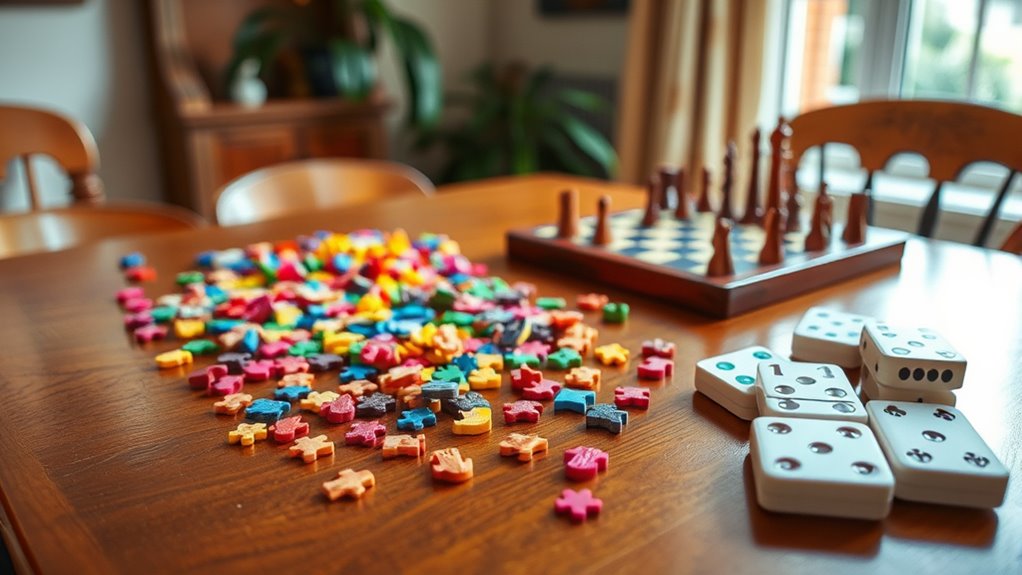

Playing table games actively stimulates your mind, helping to boost your memory, focus, and problem-solving skills. Games like chess, memory, or checkers challenge you to recall patterns, strategize, and think ahead, all while promoting mental agility. Plus, playing socially keeps your brain engaged and sharp. If you want to discover more about how these games support your brain health and how to get started, keep exploring what’s possible.
Key Takeaways
- Playing table games enhances memory, recognition, and neural pathways through active recall and pattern recognition.
- Strategic games like chess develop problem-solving skills, critical thinking, and mental flexibility.
- Engaging in table games improves focus, attention span, and cognitive speed by requiring sustained mental effort.
- Social interaction during gameplay stimulates communication skills and cognitive resilience, supporting overall brain health.
- Regular participation in table games provides comprehensive mental stimulation, helping delay cognitive decline and maintain mental sharpness.
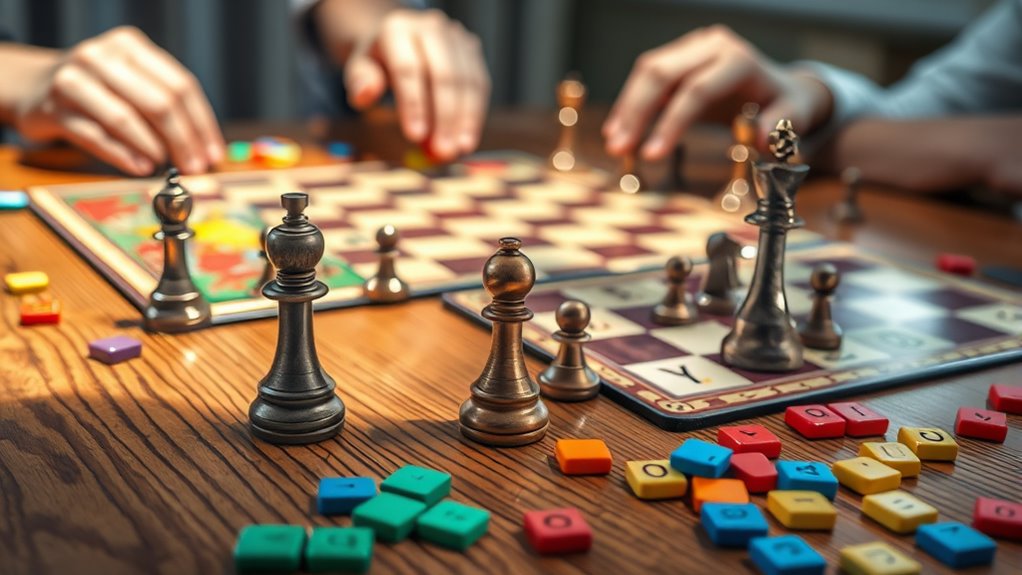
Many table games do more than just entertain; they also boost your cognitive skills and support brain health. When you sit down to play, you’re engaging your mind in ways that can improve memory and sharpen problem-solving strategies. These games challenge your brain to recall rules, remember patterns, or strategize against opponents, all of which contribute to maintaining and enhancing cognitive function. By regularly playing, you provide your brain with stimulating activities that can delay cognitive decline and keep your mental faculties sharp.
Memory enhancement is a key benefit of many table games. For instance, games like Memory or Concentration require you to remember the locations of matching cards or specific game pieces. This practice directly trains your brain to strengthen neural pathways associated with recall and recognition. As you become more familiar with game patterns and strategies, your ability to remember details improves both within the game and in everyday life. This mental exercise can translate into better recall of names, dates, or tasks, making daily routines smoother and more manageable.
Problem solving strategies are equally essential and are actively developed through gameplay. Games like chess or checkers push you to think multiple moves ahead, weighing potential outcomes and considering various solutions. These activities foster strategic thinking, encouraging you to analyze the current situation, anticipate your opponent’s moves, and adapt your approach accordingly. The process of devising and adjusting tactics sharpens your critical thinking skills, making you more adept at tackling complex problems outside the game. Over time, these problem-solving exercises strengthen your brain’s capacity for logical reasoning, planning, and decision-making.
Moreover, table games often require you to focus intensely, which enhances your concentration and attention span. As you follow complex rules or keep track of multiple variables, your brain trains itself to stay engaged for longer periods. This sustained focus can carry over into other areas of life, improving your ability to concentrate on work or learning new skills. Additionally, engaging in high-refresh-rate gaming experiences can further enhance your quick thinking and reaction times, which also benefits cognitive agility.
Playing these games also offers social interaction, which is another essential aspect of brain health. Engaging with others challenges your communication skills and exposes you to diverse perspectives, further stimulating your cognitive functions. Whether you’re competing or cooperating, each interaction encourages mental agility, emotional regulation, and adaptive thinking.
In essence, table games serve as enjoyable, effective tools for boosting memory, developing problem-solving strategies, and maintaining overall brain health. By consistently engaging in these activities, you give your brain the mental workout it needs to stay sharp, flexible, and resilient well into the future.
Frequently Asked Questions
Are Table Games Suitable for All Age Groups?
Yes, table games are suitable for all age groups when you consider age appropriateness and accessibility considerations. You can find games tailored to different skill levels, from simple, easy-to-understand options for children to more complex strategies for seniors. By choosing the right games and ensuring they are accessible, you create engaging experiences that promote social interaction, cognitive growth, and fun for everyone, regardless of age.
How Often Should I Play Table Games for Cognitive Benefits?
You should aim to play table games 3 to 4 times a week for cognitive benefits. Research shows that regular mental activity boosts brain function and reduces decline. Follow the frequency guidelines of 30 to 60-minute sessions for ideal duration, ensuring you stay engaged without fatigue. Consistency is key, so make it a habit, and you’ll likely see improvements in memory, problem-solving, and overall mental agility.
Can Table Games Replace Traditional Brain Training Exercises?
Table games can’t fully replace traditional brain training exercises, but they can complement your efforts in cognitive enhancement. While brain training programs target specific skills like memory and problem-solving, table games offer a fun, social way to challenge your brain and boost overall cognition. Incorporate both into your routine for balanced mental stimulation, and you’ll maximize your cognitive health and keep your mind sharp.
What Are the Best Table Games for Seniors?
You should go for classic games like Scrabble, chess, or Rummikub, as they offer excellent strategy variation and boost mental agility. These games also promote social interaction, which is just as essential as the game itself. They keep your mind sharp and your spirits high, proving that a little friendly competition can go a long way. Remember, variety is the spice of life—so mix things up for the best benefits!
Do Digital Versions of Table Games Offer the Same Benefits?
Digital adaptations of table games can offer cognitive benefits, but they may not fully replicate the social interaction and tactile engagement of traditional games. While they can help improve problem-solving and memory, excessive screen time effects could counteract these benefits. You might find digital versions convenient and engaging, but it is crucial to balance screen time with face-to-face play to maximize cognitive and social health.
Conclusion
Playing table games is like planting seeds for a sharper mind and healthier brain. Each move challenges your thinking, sharpens your memory, and keeps your mental gears turning smoothly. So, grab a board and get ready to turn every game into a fun workout for your brain. Remember, the more you play, the brighter your mind blooms—making these games your favorite tools for lifelong brain health.