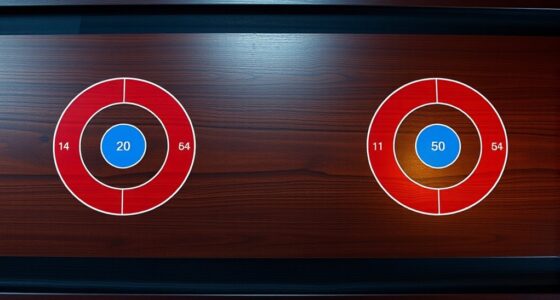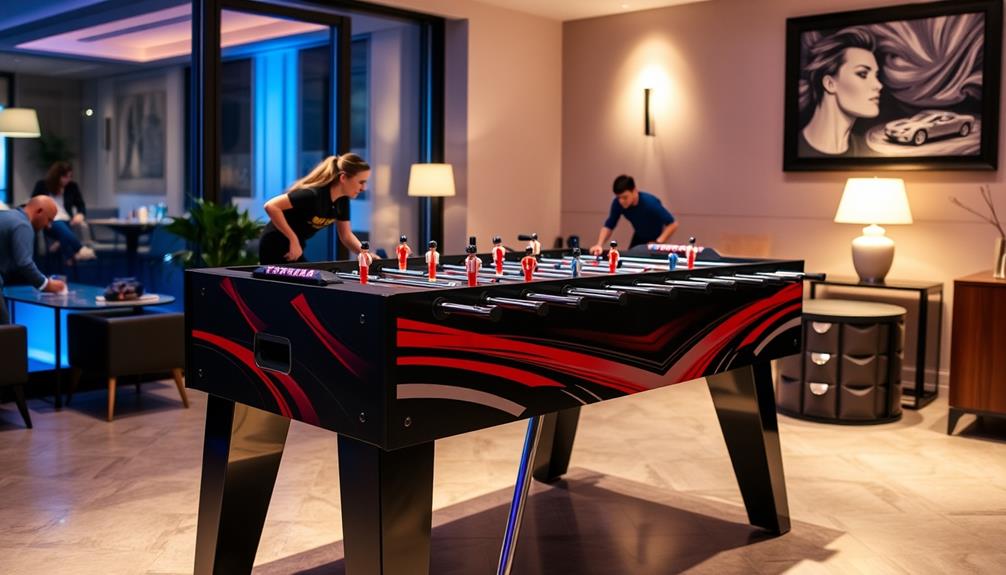
In shuffleboard, the scoring system depends on landing your pucks in designated zones closer to the end of the court, with higher points awarded for pucks that cross specific lines without falling off. The player or team with the most points after all pucks are played wins the round. Different game styles may have slight rule variations, but understanding how to position your pucks and interpret scores is key. Keep exploring to learn more about mastering shuffleboard scores.
Key Takeaways
- Scoring depends on landing pucks in specific zones, with higher points awarded for closer proximity to the end of the court.
- The highest-scoring pucks in a round determine the winner, following the game’s particular scoring rules.
- Casual and competitive versions may have different scoring methods, with electronic systems often used for accuracy.
- Equipment type and court surface influence puck movement and scoring potential during play.
- Understanding the rules helps players strategize shot placement and maximize scoring opportunities effectively.

Shuffleboard scoring systems can vary widely depending on the game version and setting, but understanding the basic rules is vital for competitive play and casual fun alike. When you’re learning how to score, it’s important to grasp how different game strategies influence the play and how equipment types can affect your success. The core concept in most shuffleboard games is to slide pucks or weights down a narrow court, aiming to land them in specific scoring zones. Your goal is to have your pucks closer to the end of the court than your opponent’s without falling off the scoring area altogether. The way points are awarded depends on the particular rules of the game you’re playing, but generally, the player or team with the highest-scoring pucks after all have been played wins that round.
Understanding game strategies involves more than just sliding pucks; it’s about controlling your shots and predicting your opponent’s moves. For example, in some versions, you might focus on knocking your opponent’s pucks out of scoring positions, while in others, you’ll aim for precise placement to maximize points. Recognizing when to play defensively or offensively is vital, especially as you learn to read the court’s layout and your opponent’s tendencies. The choice of equipment types also plays a role in how you develop your strategies. Traditional shuffleboard uses smooth, flat pucks made of wood or plastic, which glide easily but require finesse to control. Some players prefer heavier pucks to enable more aggressive shots, while others favor lighter ones for better maneuverability. The court surface itself can vary, affecting how the puck slides and how much control you have over your shots. Additionally, the use of arcade machines with electronic scoring features can simplify scorekeeping and add a modern twist to the game.
In casual settings, scoring might be simplified, with players just trying to land in the highest zone possible. However, in competitive environments, rules become more structured, and understanding how different equipment types interact with scoring systems can give you an advantage. For instance, using a puck that slides smoothly on a polished surface allows for more precise shots, which can be critical for strategic plays. Many players develop specific game strategies based on their equipment, focusing on consistency and accuracy. Whether you’re aiming to land your puck in the highest scoring zone or trying to knock an opponent’s puck out of position, knowing the scoring system helps you plan each shot. Ultimately, mastering both game strategies and equipment types makes your play more effective, and understanding the scoring rules guarantees you’re always aware of what’s at stake with each slide.
Frequently Asked Questions
What Are the Common Penalties in Shuffleboard Scoring?
In shuffleboard, common penalties include fouling, which results in penalty points or foul shots, and invalid shots that don’t count. If you step over the foul line or touch the puck improperly, you may lose points or get a foul shot. These penalties help keep the game fair, so always watch your stance and shot technique to avoid penalties and maximize your score.
How Do You Handle Tie Scores in Shuffleboard?
Like a duel at dawn, when scores tie in shuffleboard, you follow tie-breaking methods such as re-throws, closest-to-the-bow, or additional rounds. You can also make scoring adjustments, like awarding extra points or using a pre-agreed rule. Stay calm, remember your strategy, and keep the game fair. These methods make certain that every game concludes with a clear winner, turning tension into triumph.
Are There Different Scoring Rules for Indoor and Outdoor Shuffleboard?
Yes, there are scoring variations between indoor and outdoor shuffleboard. Indoor shuffleboard tends to have more standardized league rules, often emphasizing point zones and specific scoring methods. Outdoor shuffleboard, however, can feature more league differences, with some variations in how points are awarded and the use of different scoring rules. Always check your league’s specific guidelines, as these scoring variations can impact gameplay and strategy.
How Does a Player Decide Which Puck to Shoot First?
Did you know that experienced shuffleboard players win about 70% of their initial shots? When deciding which puck to shoot first, you should consider puck selection and your overall player strategy. Typically, you’d aim to shoot your best puck first, targeting the highest-scoring zone while blocking opponents. Your choice depends on your confidence level with certain pucks and the current game situation, helping you maximize your chances of gaining an early advantage.
Can Scoring Rules Vary Between Different Shuffleboard Leagues?
Yes, scoring rules can vary between different shuffleboard leagues due to league variations and regional differences. You might find that some leagues assign different point values for certain shots or have unique rules for scoring in specific situations. Always check the specific league’s rulebook before playing, as these variations can influence your strategy and how you approach scoring. Staying aware of local rules guarantees fair play and enhances your experience.
Conclusion
Now that you understand how shuffleboard scoring works, you’re ready to play and keep score confidently. Remember, “practice makes perfect,” so the more you play, the better you’ll get at strategic scoring. Whether you’re aiming for the highest points or knocking your opponent’s discs away, knowing the rules guarantees fair fun. So grab your paddle, step onto the court, and enjoy the game—because with a good grasp of scoring, victory becomes even sweeter!