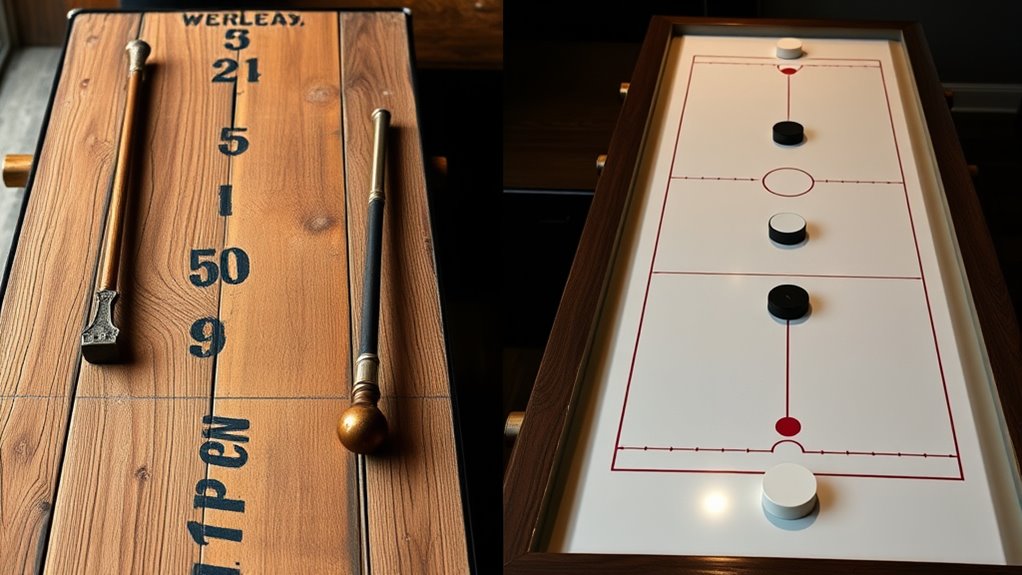

Shuffleboard started as shove-groat in 15th-century Europe, played on lawns with simple pucks and cues. Over time, it moved indoors to dedicated tables with smooth surfaces, standardized sizes, and evolving rules, making it more strategic and competitive. Technological and material advancements improved playability for all ages. Today, shuffleboard combines tradition with modern innovation in indoor and outdoor formats, creating a rich history you can explore further.
Key Takeaways
- Shuffleboard originated in 15th-century Europe as a lawn game with pucks and cues before moving indoors.
- It transitioned from outdoor yards to standardized indoor tables with smooth surfaces in the early 1900s.
- Scoring systems and puck designs evolved mid-20th century, adding strategic depth and gameplay variations.
- Technological advancements introduced electronic scoring and durable materials for enhanced playability.
- Modern shuffleboard blends tradition with innovation through diverse variants and improved equipment.
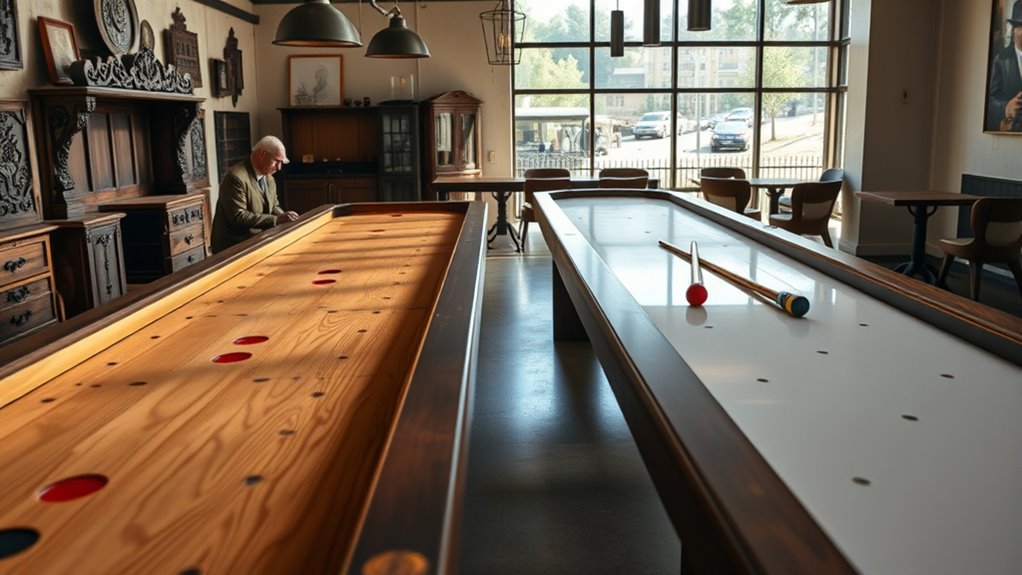
Shuffleboard has come a long way from its humble origins as a lawn game to become a popular indoor and outdoor activity enjoyed worldwide. Over the years, its history milestones reveal a game that has continually evolved, adapting to changing tastes and technological advances. In the early days, shuffleboard was played on long, narrow tables with simple rules, often in social clubs or outdoor yards. The game’s roots trace back to 15th-century Europe, where it was played on garden lawns using pucks and cues. These early versions laid the foundation for what would become a widespread pastime, but it was the 20th century that marked significant gameplay innovations.
During the early 1900s, shuffleboard transitioned from a lawn game to a more refined indoor activity. This shift brought about the development of dedicated shuffleboard tables, which introduced smooth surfaces and standardized dimensions. The incorporation of polished wood or synthetic surfaces improved playability, making it easier for players to slide pucks with precision. Around this time, the game’s rules also saw standardization, enabling players across different regions to compete under consistent guidelines. These milestones helped popularize shuffleboard in social clubs, bars, and recreational centers, fueling its growth and recognition.
Gameplay innovations continued into the mid-20th century, especially with the advent of scoring systems that added strategic depth. The introduction of scoring zones, such as the 1, 2, and 3-point areas, transformed shuffleboard into a game of skill and tactics. Additionally, innovations in puck design, including the use of weighted and textured pucks, allowed for better control and varied shot techniques. As the game evolved, new variations emerged, like the deck shuffleboard played on ships and outdoor courts designed to withstand weather conditions. These adaptations broadened the game’s appeal and extended its reach beyond traditional indoor settings.
Today, modern shuffleboard incorporates even more gameplay innovations, including electronic scoring systems, advanced materials for tables, and specialized equipment that enhance performance. These advancements have made the game more accessible to players of all ages and skill levels. Whether played indoors on sleek tables or outdoors on courts built for durability, shuffleboard continues to evolve, blending tradition with innovation. You can see how each milestone and gameplay innovation has shaped the game into the versatile, engaging sport it is today, connecting generations and cultures through its timeless appeal. Additionally, technological improvements such as electronic scoring systems have streamlined gameplay, making it easier for players to focus on skill rather than manual scorekeeping.
Frequently Asked Questions
What Materials Were Used in Early Shuffleboard Tables?
In shuffleboard history, early tables were crafted from wood, often with a smooth, polished surface for *ideal* gameplay. You’ll notice that the table construction prioritized durability and a slick finish, sometimes using materials like maple or oak. The playing surface was typically sealed with varnish or shellac to *guarantee* a smooth glide. These materials laid the foundation for the modern shuffleboard tables we see today, blending craftsmanship with function.
How Did Shuffleboard Rules Vary Across Different Regions?
You’ll find that regional variations in shuffleboard rules create a patchwork of playstyles, like a tapestry woven with different threads. In some areas, players focus on strategic shot placement, while others emphasize speed and flair. These rule discrepancies spark friendly rivalries and unique traditions, making each game a fresh adventure. Embrace these differences as part of shuffleboard’s charm, turning every match into a story worth telling.
When Did Shuffleboard Become Popular as a Social Game?
You’ll find that shuffleboard gained popularity as a social game in the late 19th and early 20th centuries, especially in bars and social gatherings. Its historical popularity soared during this time, making it a favorite pastime for communities looking for friendly competition. As a social game, shuffleboard became a staple in recreational venues, bringing people together for fun and camaraderie while enjoying leisure time.
What Are the Main Differences Between Indoor and Outdoor Shuffleboard?
You might be surprised to learn that outdoor shuffleboard often features larger courts with textured surfaces for better traction, while indoor courts prioritize smoothness for precise play. The scoring systems are similar, but outdoor courts can have different court designs to withstand weather, and indoor courts often have dedicated markings. The main difference lies in the environment and construction, which impact gameplay, equipment, and the overall experience.
How Has Technology Influenced Modern Shuffleboard Gameplay?
Technology has profoundly transformed modern shuffleboard gameplay by introducing digital scoring and augmented reality. You can now track scores instantly with digital systems, making gameplay smoother and more accurate. Augmented reality adds an immersive experience, overlaying virtual elements onto the court, enhancing strategy and engagement. These innovations make the game more dynamic, accessible, and exciting, ensuring you stay connected to the tradition while enjoying cutting-edge advancements.
Conclusion
As you see, shuffleboard has come a long way from its humble shove-groat beginnings to the sleek tables today. Imagine a bar owner who introduced modern shuffleboard, boosting social fun and community spirit. This evolution shows how a simple game can adapt and thrive through innovation, bringing people together across generations. So, next time you play, remember you’re part of a tradition that’s constantly evolving, connecting history with the present in every slide.