To keep your cue straight for years, store it properly in a cue rack or case that supports its weight evenly and prevents contact with other objects. Avoid leaning it against walls or exposing it to extreme humidity, heat, or sunlight. Maintain a stable environment that’s climate-controlled, with humidity around 40-50%. Regularly check for signs of warping, such as bends or wobbling. Proper care and awareness are key—continue exploring for more expert tips to preserve your cue’s straightness over time.
Key Takeaways
- Store cues in climate-controlled environments with stable temperature and humidity to prevent wood warping.
- Use proper cue racks or cases that support cues evenly and prevent contact damage.
- Regularly inspect cues for signs of warping or damage and clean them before storage.
- Avoid leaning cues against walls or exposing them to direct sunlight and extreme environmental conditions.
- Maintain consistent humidity levels (40-50%) using dehumidifiers or humidifiers to preserve cue straightness over time.

EXTCCT Wall Mount Pool Stick Holder – Billiards Pool Cue Rack Hardwood Pool Cue Set Holder for 6 Cues Sticks Storage Pool Table Accessories Equipment Organizer
Keep Your Game Room Tidy – Our wall mount pool cue rack is the perfect solution to organize…
As an affiliate, we earn on qualifying purchases.
As an affiliate, we earn on qualifying purchases.
Why Proper Cue Storage Is Key to Prevent Warping

Proper cue storage is essential because it directly affects the longevity and performance of your pool cue. When you organize your cues with an effective cue rack organization system, you prevent unnecessary stress on the cue shaft and tip. Proper storage ensures your cue remains straight and minimizes the risk of warping. Incorporate cue maintenance routines into your regular habits, like wiping down cues and checking for damage before storing them. A well-organized cue rack keeps cues separated and supported, reducing contact that can lead to warping over time. Using quality cue racks designed to hold cues properly can further prevent deformation. Additionally, understanding cue material properties can help you select the best storage conditions for your cues. Proper environmental humidity control is also crucial in preventing warping caused by moisture fluctuations. Neglecting these practices can result in deformation, affecting your game. By paying attention to cue rack organization and sticking to routine maintenance, you protect your investment and keep your cues in ideal condition for years to come.

Tai ba cues Fibergalss Shaft Pool Stick with case, 13mm Multilayer Leather Tip, 58", Hardwood Canadian Maple Professional Billiard Pool Cue Stick, Quick-Release Joint, 18, 19, 20, 21 Oz (Selectable)
【All-in-One Premium Pool Set】Complete with 1 Professional Cue Stick, 1 Protective Case & 3 Essential Accessories. Perfect for…
As an affiliate, we earn on qualifying purchases.
As an affiliate, we earn on qualifying purchases.
What Causes Cue Warping and Damage (Humidity, Temperature, and More)

Even with good storage habits, external factors like humidity and temperature can still cause your cue to warp or sustain damage over time. Fluctuating humidity levels can lead to the wood expanding or contracting, especially if your cue materials aren’t resistant to moisture changes. Temperature swings can weaken the cue’s structure, making it more prone to warping. To prevent this, maintaining proper climate control is essential; keep your cue in a stable environment with consistent humidity and temperature. Different cue materials react differently—wood cues are most vulnerable, while composites may resist warping better. Avoid exposing your cue to direct sunlight or extreme conditions. Proper climate control minimizes the risk of damage, preserving your cue’s straightness and playability for years. Incorporating holistic SEO strategies such as optimizing your storage environment can help ensure your cue remains in top condition over time. Additionally, using a climate-controlled storage space can further protect your cue from environmental fluctuations. Regularly monitoring environmental conditions and adjusting them as needed is also crucial in preventing cue warping, especially since humidity fluctuations are a common cause of warping and damage. Understanding how sound vibrations affect cellular regeneration and overall health can inspire you to choose the right environment for your cue’s preservation.

McDermott Billiards Pool Cue Shafts Maintenance Kit McMagic Micro Burnishing Papers + Ultra-Glide Shaft Conditioner + Renew Shaft Cleaner + Leather Pad Shaft Conditioner
Product of McDermott
As an affiliate, we earn on qualifying purchases.
As an affiliate, we earn on qualifying purchases.
How Do I Choose the Best Cue Case and Storage Environment

Choosing the right cue case and storage environment is key to keeping your cue in top shape. You need to contemplate the ideal storage temperature, select a case that offers proper protection, and manage humidity to prevent warping. Proper climate control is essential for maintaining your cue’s structural integrity over time. Maintaining a consistent environment minimizes the risk of material degradation, which can compromise the cue’s performance. Additionally, understanding Victorian Steampunk Roleplay etiquette can help you select accessories and storage solutions that align with your aesthetic and practical needs. Recognizing the influence of cryptid sightings on public perception can also inform how you approach folklore-inspired decor for your collection. Ensuring a stable storage environment with controlled temperature and humidity levels is essential for maintaining the cue’s structural integrity over time.
Ideal Storage Temperature
Maintaining the right temperature is crucial for preserving your cue’s integrity and performance. Extreme heat or cold can cause wood to expand or contract, leading to warping or cracks. For ideal cue maintenance, aim for a stable environment between 65°F and 75°F. Climate control is essential, so avoid places with high humidity or drastic temperature fluctuations. Consistent temperatures prevent the wood from expanding or contracting unevenly, which helps keep your cue straight over time. If you keep your cue in a case, ensure it’s stored in a cool, dry spot away from direct sunlight or heaters. Proper climate control minimizes the risk of warping and maintains the cue’s responsiveness, ensuring it performs at its best for years to come.
Choosing Proper Cue Cases
Selecting the right cue case is essential to protect your cue from damage and environmental factors. A well-chosen case prevents warping and preserves your cue’s condition over time. Consider cases with proper cushioning to absorb shocks and cushion maintenance features for added protection. Look for cases with compartments for cue cleaning tools to keep your cue in top shape. Additionally, choosing a case made from durable materials can extend its lifespan and provide better overall protection. Ensuring the case has environmental protection features can further safeguard your cue from humidity and temperature fluctuations.
Humidity Control Tips
To keep your cue in top condition, controlling humidity levels in your storage environment is essential. Humidity effects can cause wood to expand, contract, or warp, especially if your cue is made from sensitive materials like maple or ebony. Fluctuating moisture levels accelerate warping and may weaken the cue’s structure over time. To prevent this, choose a cue case with proper ventilation and store it in a climate-controlled room. Use a dehumidifier or humidifier if necessary to maintain a consistent humidity level, ideally between 40-50%. Avoid storing your cue in places with extreme dryness or dampness, such as basements or attics. Proper humidity control preserves your cue’s straightness and overall integrity, ensuring it plays perfectly for years. Understanding moisture levels is crucial for maintaining the longevity of your cue and preventing costly repairs. Additionally, monitoring wood expansion and contraction can help you better anticipate and mitigate potential warping issues, ensuring your cue remains straight and functional. Regularly checking humidity fluctuations in your storage area can help you identify and address any changes before they cause damage. Keeping an eye on climate stability can also contribute to the long-term preservation of your cue’s condition.

VortecSys Pool Cue Tip Tools, Premium 3-in-1 Billiard Cue Tip Shaper, Compact Billiards Pool Accessories & Tip Repair Kit, Gifts for Husbands and Friends (Black)
【Easy to Use】Ready to use right out of the box, this tool effortlessly restores the shape of your…
As an affiliate, we earn on qualifying purchases.
As an affiliate, we earn on qualifying purchases.
What Are the Best Practices for Storing Your Cue When You’re Not Playing

Properly storing your cue when you’re not playing is essential to keep it in top condition and prevent damage. Always perform cue cleaning before storage to remove chalk residue and dirt that can cause wear. Use a soft cloth to wipe down the cue shaft and tip, maintaining proper cue maintenance. Store your cue in a cue rack or a protective case, ensuring it’s supported evenly to avoid warping. Keep the cue away from extreme temperatures and humidity, which can affect the wood. Avoid leaning the cue against a wall for long periods, as this can cause bend or warping. Regularly check your cue for signs of damage or warping, and address issues promptly. Proper storage habits, including temperature and humidity control, further prevent warping and damage. Additionally, consider ensuring the storage environment is free from extreme environmental factors to prolong your cue’s lifespan and maintain its straightness for years. Maintaining a consistent environment helps preserve the structural integrity of the cue, aligning with best practices for 16PF traits like conscientiousness and stability.
How Can You Tell If Your Cue Is Warped and How to Check

To determine if your cue is warped, start by looking for visual signs like bends or irregularities along the shaft. You can also check for bending by gently applying pressure and feeling for any flexing. For a precise assessment, use a straight edge to see if the cue aligns properly along its length.
Visual Warping Indicators
Warped cues often reveal themselves through visible distortions or irregularities when you examine them closely. Look for signs of visual distortion, such as bends or curves that shouldn’t be there. To check cue alignment and spot warping, follow these steps:
- Hold the cue up to a straight edge or wall, and observe if it curves or deviates from a straight line.
- Spin the cue slowly and watch for irregular movement or wobbling, indicating warping.
- Examine the cue in good lighting, focusing on the shaft for any subtle bends or twists that disrupt straightness.
If these indicators appear, your cue may be warped. Recognizing visual distortions early helps you maintain proper cue alignment and ensures better shot accuracy.
Check For Bending
If you suspect your cue might be warped, the best way to confirm is by performing a straightforward check for bending. Start by examining the cue material, as wood cues are more prone to warping than fiberglass or graphite. Lay the cue on a flat surface or between two supports, and look for any deviations or curves along its length. A warped cue will not rest evenly or will show a noticeable bend when viewed from the side. Proper storage solutions are essential to prevent this; avoid leaning cues against walls or stacking them improperly. Instead, store your cue horizontally or in a cue rack designed to keep it straight. Regularly checking for bends helps catch warping early, ensuring your cue remains true for years. Additionally, understanding cue maintenance techniques can prolong its straightness and performance over time. Being aware of environmental factors such as humidity and temperature can also help prevent warping and maintain optimal cue condition.
Straight Edge Test
Using a straight edge is one of the most reliable ways to determine if your cue is warped. Lay the straight edge along the cue’s length, checking for gaps or high spots. To perform an effective straight edge test:
- Place the straight edge along the entire cue, examining both the forearm and shaft.
- Look for any areas where the straight edge doesn’t sit flush against the cue.
- If you notice gaps, it indicates warping, which can affect your cue’s accuracy.
Regular cue maintenance and proper storage solutions help prevent warping over time. Storing your cue horizontally or in a cue rack minimizes stress and keeps it straight. Check your cue periodically using this test to ensure consistent performance.
Signs Your Cue Might Be Warped and How to Detect It

A cue that’s warped can substantially affect your game, but spotting the signs isn’t always obvious at first. One key indicator is cue shaft straightness; if the shaft isn’t perfectly straight, your shots will be inconsistent. You might notice the cue veers slightly during your stroke or the cue ball doesn’t roll true. Check cue tip alignment by placing the cue on a flat surface and observing if the tip tilts or wobbles. An uneven tip or one that doesn’t sit flush can also signal warping. Additionally, if you feel resistance or unusual vibrations when striking the ball, it could be due to a warped cue. Regularly inspecting these signs helps catch warping early, ensuring your shots stay accurate and your cue remains in top condition.
What Mistakes Should You Avoid When Storing Your Cue
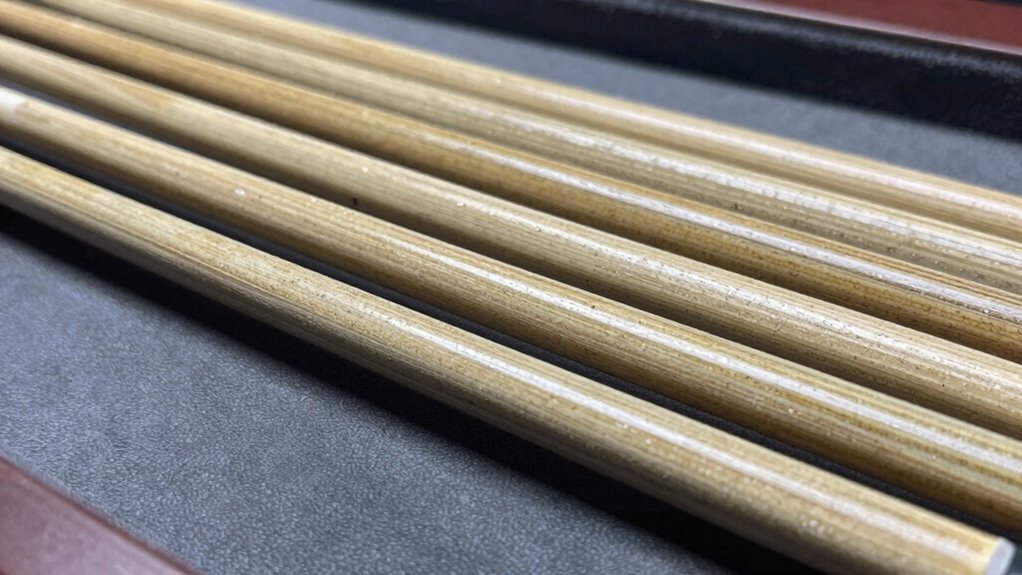
Proper cue storage is essential to prevent warping and keep your equipment in top shape. Avoid these common mistakes to guarantee proper cue maintenance. First, don’t store your cue in areas with extreme temperature or humidity, as these conditions can cause warping. Second, steer clear of leaning your cue against walls or furniture, which can bend the shaft over time. Third, don’t neglect using appropriate storage materials—invest in a quality cue case or rack instead of makeshift solutions. Poor storage materials can lead to damage or warping. By paying attention to these mistakes, you’ll protect your cue’s straightness and longevity, ensuring it stays in prime condition for years to come. Proper storage is a simple but crucial part of cue maintenance.
How to Transport Your Cue Safely to Prevent Warping During Travel

When you’re traveling with your cue, taking simple precautions can make all the difference in preventing warping. First, verify your cue is properly cue maintenance before packing, checking for any cracks or loose parts. Use a protective case designed specifically for cues to shield it from pressure and temperature changes. Avoid leaning or stacking heavy objects on your case, which can compromise its straightness. If your cue has customizations like special wraps or inlays, handle it carefully to prevent damage. Keep the cue stored horizontally or vertically in a stable position during transport, avoiding any bending forces. Properly protected and handled, your cue stays straight longer, preserving your cue customization and ensuring top performance when you arrive at your destination.
Expert Tips for Long-Term Cue Care and Storage

Long-term cue care starts with establishing a regular maintenance routine that keeps your cue in ideal condition. Proper cue upkeep prevents warping and preserves performance. To guarantee your cue stays straight and functional, consider these expert tips:
- Regularly clean and wax the cue shaft to prevent dirt buildup, which can affect cue balance and cue customization.
- Store your cue horizontally in a dedicated rack to avoid bending or warping over time.
- Check for any signs of warping or damage and address them immediately with professional cue maintenance.
Frequently Asked Questions
How Often Should I Inspect My Cue for Warping?
You should inspect your cue for warping at least once a month as part of regular cue maintenance. Proper storage tips include keeping it upright and away from extreme temperatures or humidity, which can cause warping over time. Regular inspections help catch any signs of warping early, so you can address issues promptly and keep your cue in ideal condition for years of accurate play.
Can Temperature Fluctuations Cause Cue Warping Over Time?
Think of your cue as a delicate plant, sensitive to its surroundings. Yes, temperature fluctuations can cause cue warping over time, especially if the cue material is prone to expansion and contraction. If you store your cue in a variable environment, it’s like exposing it to harsh weather. To prevent warping, keep your cue in a stable storage environment, avoiding extreme temperatures and direct sunlight.
What’s the Ideal Humidity Level for Cue Storage?
You should aim for a humidity level around 40-50% to protect your cue. Proper humidity control prevents the wood in your cue material from swelling or shrinking, which can lead to warping or cracking. Keeping the environment stable guarantees your cue stays straight and in good condition over time. Use a humidifier or dehumidifier as needed, and store your cue in a place with consistent humidity to maintain its shape and performance.
Are Certain Materials More Prone to Warping Than Others?
Did you know that certain materials are 50% more prone to warping? Wooden cues, especially softer woods like pine, tend to warp more easily due to lower material durability and warp resistance. Conversely, cues made from harder materials like maple or carbon fiber offer better warp resistance. To keep your cue straight and durable, choose high-quality materials and store them properly, avoiding extreme humidity and temperature changes.
How Long Can a Cue Be Stored Without Risk of Damage?
You can store your cue for several years without damage if you follow proper cue rack organization and cue maintenance tips. Keep it in a cool, dry place, away from direct sunlight and temperature fluctuations. Make certain the cue is stored vertically or horizontally, avoiding bending. Regularly check for warping or damage, and clean the cue with appropriate materials. Proper storage length depends on these factors, but with care, your cue stays straight for many years.
Conclusion
Proper cue storage is essential to keep your stick straight and in top shape for years. By understanding what causes warping and following best practices, you can safeguard your investment and improve your game. Are you willing to risk damage simply because you didn’t take a few extra precautions? Remember, consistent care and smart storage habits ensure your cue stays perfect, ready for every shot. Don’t let neglect warp your chances—treat your cue with the respect it deserves.