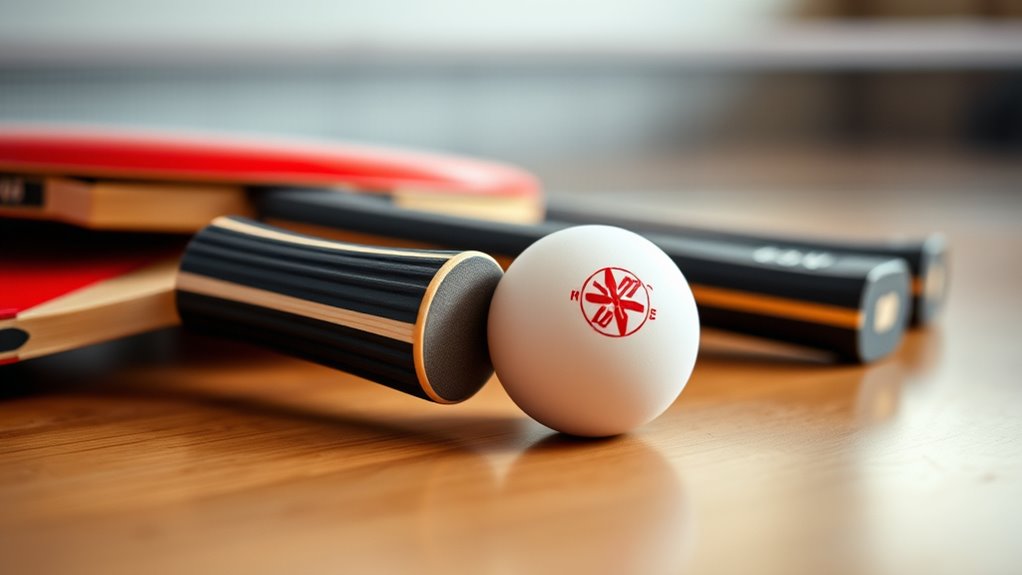

To understand ping pong equipment, focus on your paddle, rubber, and ball, as each affects your game uniquely. Your paddle’s material and the rubber type influence control, spin, and speed, helping you match your style—whether defensive or aggressive. The ball’s quality also matters for consistency and playability. Experimenting with different setups can improve your skills and comfort on the table. Keep exploring to discover more about optimizing your equipment for better performance.
Key Takeaways
- Ping pong bats consist of a blade and rubber, affecting control, speed, and spin.
- Different rubber types, like inverted or pimpled, influence grip, spin, and attacking ability.
- Blade materials (wood, carbon fiber, composites) determine paddle stiffness, speed, and control.
- Ping pong balls are standard in size and weight, impacting game consistency and rally length.
- Choosing the right equipment based on playing style enhances performance and skill development.

If you’re new to ping pong, understanding the equipment is vital for improving your game. The right paddle, or bat, can make a significant difference in your control, speed, and overall performance. One of the first things to contemplate is the blade material. The blade is the core of your paddle, and its composition greatly influences how it feels and reacts during play. Most blades are made from layers of wood, like balsa, carbon fiber, or composites. Wooden blades are popular because they offer good control and a softer feel, making them ideal for beginners or players who prioritize precision. Carbon fiber blades, on the other hand, are stiffer and provide more power, which benefits aggressive players who like fast shots. Some advanced blades combine both materials, giving you a balanced mix of speed and control. Knowing these options helps you choose a blade that matches your playing style.
Another vital aspect of your paddle is the rubber type. Rubber covers the blade and directly impacts your grip on the ball, spin, and speed. There are two main categories: inverted rubber and pimpled rubber. Inverted rubber, which is the most common, has a smooth surface with a sticky or tacky feel that allows you to generate significant spin and control. It’s ideal for players who focus on precise shots and spin variations. Pimpled rubber, with its raised pimples, tends to produce less spin but offers more speed and a different style of play—great for attacking shots and blocking. Aside from the pimple configuration, rubbers also vary in tackiness and thickness. More tacky rubbers grip the ball better, enabling you to spin the ball more effectively, whereas thinner rubbers often provide quicker, more aggressive shots. The choice of rubber type should align with your skill level and playing style, whether you’re aiming for spin mastery or fast attacking play. Proper equipment selection can also help prevent injuries caused by improper grip or technique.
Choosing the right blade material and rubber type is a foundational step toward improving your ping pong game. Your options influence how your paddle feels, how much spin you can generate, and how fast your shots are. As you experiment with different combinations, you’ll discover which materials and rubbers suit your style best. Don’t be afraid to try out various setups—what works for one player might not work for another. Over time, selecting the right equipment becomes second nature, helping you develop your skills with confidence. Remember, the right paddle setup enhances your natural strengths and allows you to play more comfortably and effectively, taking your ping pong skills to the next level.
Frequently Asked Questions
What Are the Best Materials for Professional Ping Pong Bats?
For professional ping pong bats, you want a blade with a high-quality wood or carbon fiber composition, offering a good balance of speed and control. Choose rubbers with excellent durability to withstand intense rallies, like those made from long-lasting synthetic materials. These materials guarantee your bat performs consistently, providing the right grip and responsiveness, so you can execute precise shots and maintain competitive edge during matches.
How Does Rubber Thickness Affect Ball Speed and Spin?
Imagine your paddle’s rubber grip as a secret weapon—thicker rubber increases ball speed and spin by boosting paddle friction. When you choose a thicker rubber, it’s like adding more grip to your game, making every shot more powerful and deceptive. Conversely, thinner rubber offers less speed and spin, giving you more control. So, the rubber thickness directly influences how fast and spinny your shots become, shaping your playing style.
What Is the Standard Size and Weight of Ping Pong Balls?
You should know that ping pong balls have a standard diameter of 40 millimeters, meeting official ball diameter standards. The weight regulations specify that balls must weigh exactly 2.7 grams. These standards ensure fair play and consistency across matches. When selecting balls, check for these specifications to make certain you’re complying with official rules and playing with equipment that performs reliably during your games.
How Often Should Ping Pong Equipment Be Replaced or Maintained?
Imagine a well-worn rubber grip, slightly peeling, or a ball that’s lost its bounce. You should substitute ping pong equipment when its performance declines—typically every few months for bats, depending on usage, and every 1,000 hours of play for balls. Regular maintenance involves cleaning rubbers and checking for wear. Keeping track of equipment longevity and maintenance frequency ensures top performance and prolongs your gear’s lifespan.
Are There Specific Paddles Recommended for Beginners Versus Advanced Players?
For beginners, choose paddles with comfortable grip techniques like shakehand or penhold, and opt for lighter, less aggressive blades. Advanced players often prefer paddles with customized options, such as rubber types and handle styles, to suit their playing style. Consider experimenting with different paddle grip techniques and customization options to find what enhances your control and power. Your choice should match your skill level and playing preferences for ideal performance.
Conclusion
Now that you understand the essentials of ping pong equipment, you’re like a captain ready to steer your ship through any game. Choosing the right bat, rubber, and ball is your compass, guiding you to victory. Think of your equipment as your trusted crew—each piece plays a crucial role in your success. Keep experimenting and refining your gear, and you’ll navigate the table tennis seas with confidence and skill.