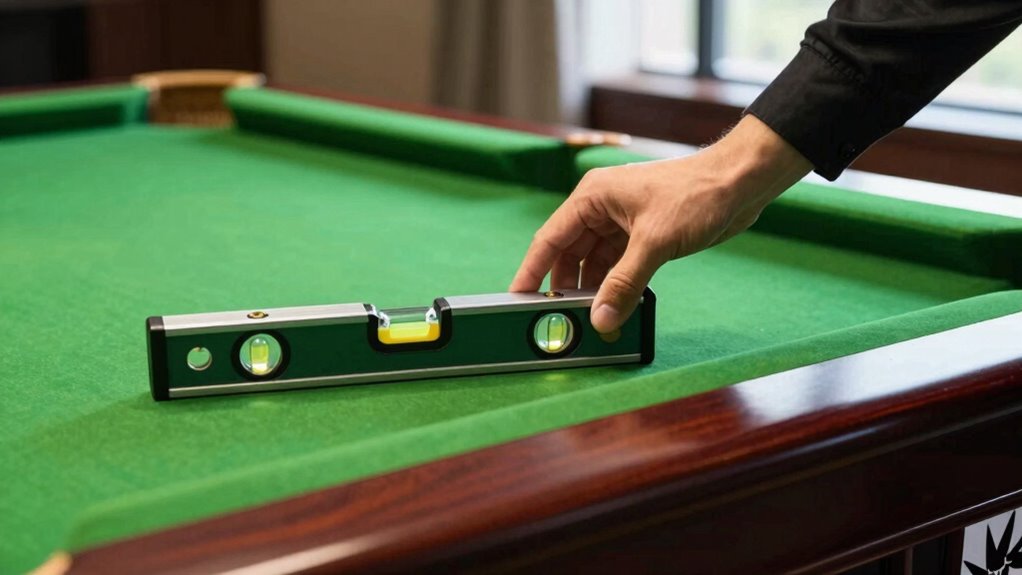
To fix bad rolls on your pool table, the key step is ensuring it’s properly level. Start by placing a bubble level on different parts of the surface and check for uneven spots. Adjust the legs or shims until the bubble stays centered, indicating a flat surface. Maintaining a level table improves ball roll, shot accuracy, and overall gameplay. For detailed instructions and tips, keep exploring to master this vital step.
Key Takeaways
- Use a reliable bubble level on multiple table areas to identify uneven spots.
- Adjust the table’s legs or corner blocks to correct surface levelness.
- Repeatedly check the level after each adjustment to ensure accuracy.
- Proper leveling minimizes unpredictable ball rolls and improves shot consistency.
- Regularly verify the table’s level to maintain optimal gameplay conditions.

Youven 30 Pcs Billiard Pool Table Leg Shims, 3" Diameter Rubber Pool Table Leveling Kit Shims Foot Pad, Billiards Accessories Rubber Shims/Furniture Shims
【Package Content】You will receive 30 black billiard pool table leg shims. The rubber shims can help place the…
As an affiliate, we earn on qualifying purchases.
As an affiliate, we earn on qualifying purchases.
Is Your Pool Table Level? How to Check
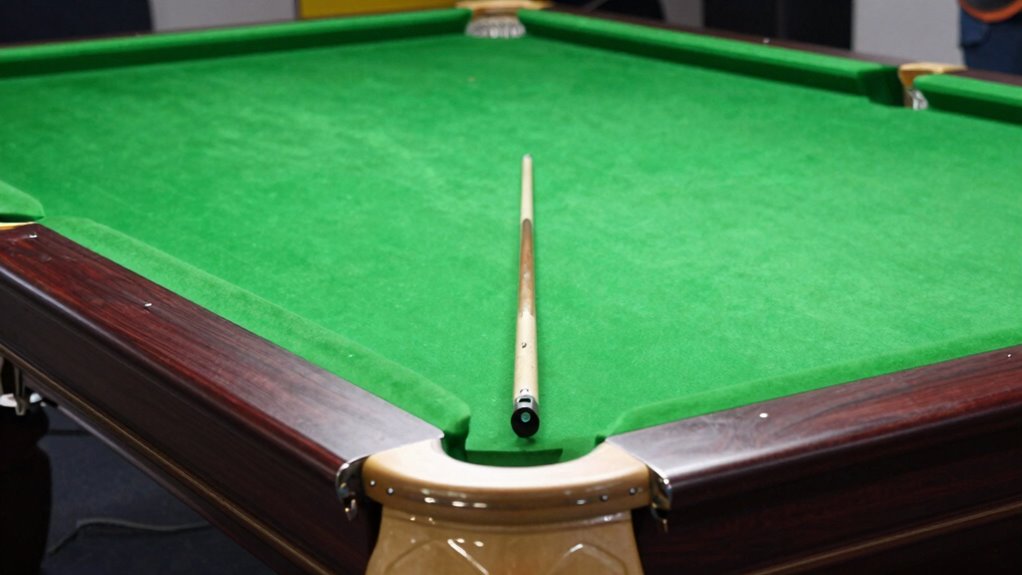
Before you attempt to level your pool table, it’s important to check if it’s already even. The cue ball’s behavior can give you clues—if it rolls unpredictably or drifts to one side, your table might be uneven. Start by placing a level on different parts of the table surface, especially near the rails and in the center. Be aware that table surface materials, like slate or MDF, can influence how the ball behaves; some materials may settle unevenly over time or with temperature changes. Confirm the level you use is accurate and steady. If the bubble isn’t centered, your table isn’t perfectly level. Correctly identifying an uneven table now saves you from unnecessary adjustments and improves your game’s consistency. Additionally, understanding surface materials can help you choose the right adjustments for long-term stability. Knowing the table’s construction can also impact how you approach the leveling process and maintain the table in the future. Regularly inspecting the support structure can prevent uneven settling and help keep your table level over time. Incorporating proper tools into your routine can further ensure precision during adjustments.

Aluminium High Precision Horizontal Leveler Bubble Level Tool Circle Round 2.4 Inch 60mm (Black,Green)
Quality Throughout : Aluminium Case is premium superior durability and scratch resistance.
As an affiliate, we earn on qualifying purchases.
As an affiliate, we earn on qualifying purchases.
Why an Unlevel Pool Table Causes Bad Rolls and Unpredictable Shots
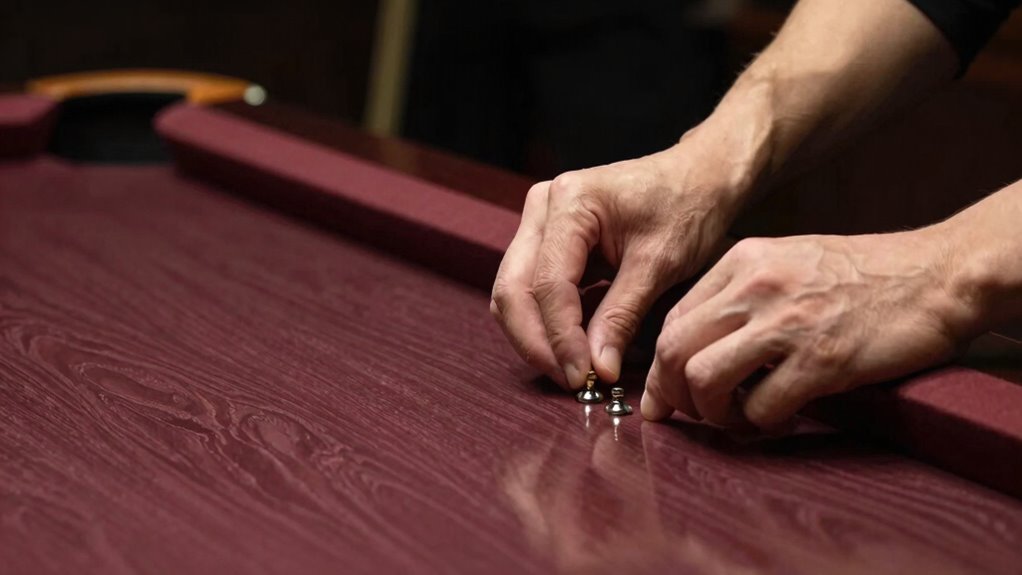
An unlevel pool table directly impacts the accuracy of your shots because the ball’s path is affected by uneven surfaces. When the table isn’t stable, your shots become unpredictable, making it harder to aim and control the ball. Here’s why:
- Reduced pool table stability causes the ball to roll off course unexpectedly.
- Uneven surfaces lead to inconsistent ball behavior, skewing shot precision.
- Misleading rolls often result, forcing you to adjust shots constantly instead of trusting your aim.
- Proper leveling techniques help maintain optimal table condition and improve game consistency. Additionally, understanding how to identify uneven spots can help you pinpoint issues more efficiently.
- Using proper tools ensures your leveling process is accurate and effective, preventing future issues.
- Regular table maintenance can help catch and correct leveling issues before they affect gameplay.
Without proper leveling, your focus shifts from strategy to compensating for the table’s flaws. This makes shot accuracy difficult to maintain and diminishes your overall game. Ensuring the table is level restores stability and helps you make more reliable, predictable shots.
Youven 30 Pcs Billiard Pool Table Leg Shims, 3" Diameter Rubber Pool Table Leveling Kit Shims Foot Pad, Billiards Accessories Rubber Shims/Furniture Shims
【Package Content】You will receive 30 black billiard pool table leg shims. The rubber shims can help place the…
As an affiliate, we earn on qualifying purchases.
As an affiliate, we earn on qualifying purchases.
How to Level Your Pool Table Step-By-Step With a Level
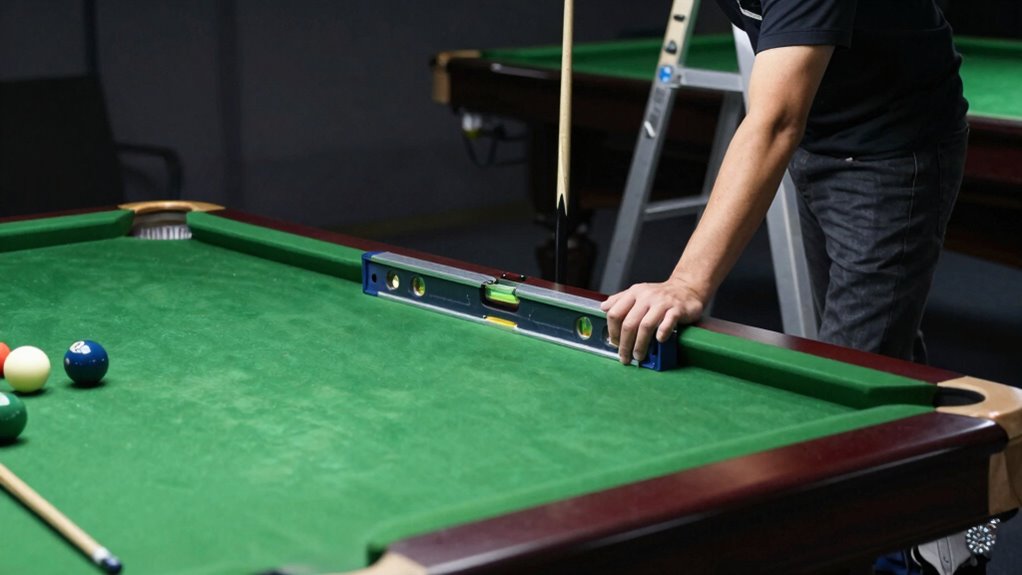
To guarantee your pool table plays accurately, start by gathering the necessary tools: a reliable bubble level, a wrench, and possibly shims. Begin by placing the level on the playing surface, checking both the length and width to identify uneven spots. Adjust the height of each corner using the wrench, ensuring the table is perfectly level. As you do this, pay attention to pocket sizing, making sure pockets are evenly aligned, which affects ball roll consistency. Also, check the cloth tension; a tight, smooth cloth helps maintain a level surface. If necessary, insert shims under the legs to fine-tune the leveling. Keep checking with the bubble level after each adjustment until the surface is perfectly flat, providing consistent, predictable rolls. Proper table maintenance ensures long-lasting playability and optimal performance. Additionally, inspecting the body jewelry and ensuring it is secure and appropriate can prevent movement that might affect the table’s stability over time. Regularly inspecting the electric components of your table can help identify any issues that may impact its leveling and overall function. Incorporating routine inspections and preventative maintenance into your maintenance routine can further help preserve the table’s accuracy and longevity.

Valley Billiard Pool Table Leg Adjustment Plate
OEM Valley Pool table leg T-nut
As an affiliate, we earn on qualifying purchases.
As an affiliate, we earn on qualifying purchases.
Avoid These Common Mistakes When Leveling Your Pool Table
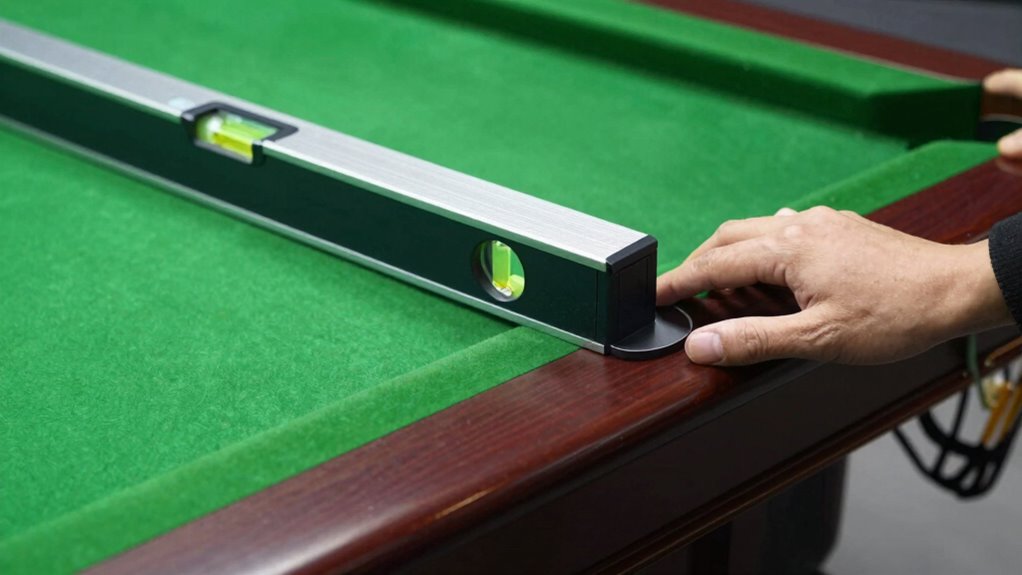
When leveling your pool table, it’s easy to make mistakes that can compromise gameplay. Poor leveling can affect cue ball consistency and pocket alignment, leading to frustrating shots. To avoid common errors:
Properly leveling your pool table ensures smooth gameplay and accurate shots, preventing frustrating misalignments.
- Not double-checking your level after initial adjustments, which can cause uneven surfaces.
- Ignoring the importance of measuring at multiple points, risking a skewed slate.
- Over-tightening leveling feet, which may shift the table or cause unevenness.
These mistakes can lead to inconsistent rolls and misaligned pockets, ruining your game. Always verify your table’s level from several angles and ensure all adjustments are secure. Proper leveling guarantees smooth cue ball movement and accurate pocket shots, giving you a true and enjoyable playing experience.
Maintenance Tips to Keep Your Pool Table Level and Play Consistently
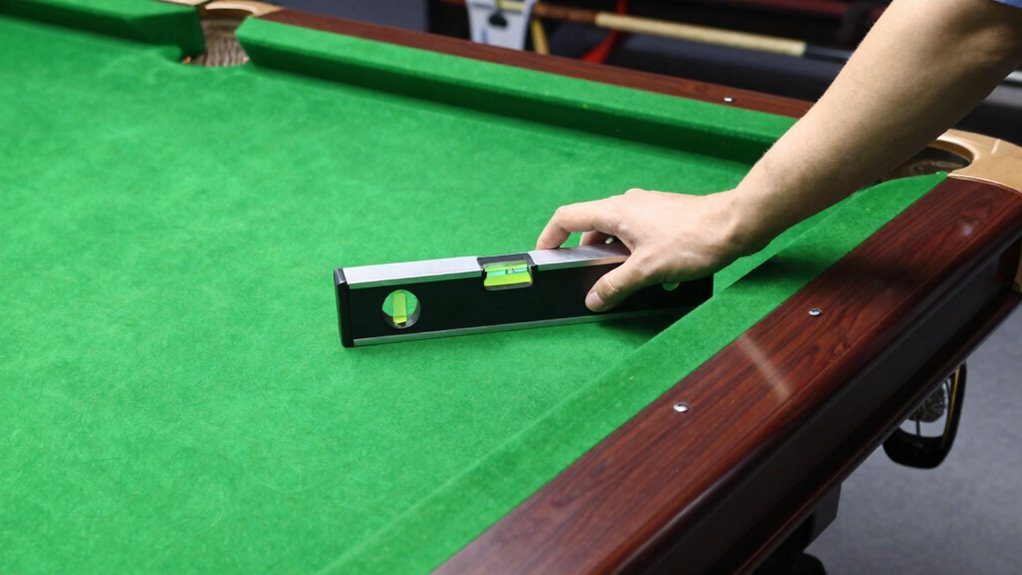
Regular maintenance is key to keeping your pool table level and ensuring consistent play. Regularly check the level and adjust as needed to prevent uneven spots that disrupt cue ball consistency. Keep the felt in top shape by replacing it when worn or stained, which maintains a smooth surface for better control. Use the table below to help schedule maintenance tasks effectively:
| Task | Frequency |
|---|---|
| Level checking | Monthly |
| Felt replacement | When worn or stained |
| Cue ball cleaning | Weekly |
Additionally, understanding sound healing science can help you appreciate how subtle vibrations influence overall well-being, which can be applied to your maintenance routines to promote a balanced environment. Incorporating yarn for scarves into repair or customization projects can also add a personal touch to your game room.
Frequently Asked Questions
How Often Should I Check My Pool Table’s Level?
You should check your pool table’s level at least once every few months to maintain cue ball consistency and prevent slate warping. Regular checks ensure the surface stays even, which is vital for accurate shots and consistent rolls. If your table sees heavy use or environmental changes, consider checking more frequently. Keeping it level helps avoid uneven wear and keeps your game sharp.
Can Uneven Floors Affect My Pool Table’s Leveling?
Ironically, uneven floors might seem like a minor annoyance, but they can wreak havoc on your pool table’s levelness. Floor stability and flooring materials play a big role in maintaining a flat surface. If your floor isn’t solid, your table’s level could shift over time, affecting your game. To keep things true, guarantee your flooring is stable and consider additional shimming if needed to counteract any unevenness.
What Tools Are Best for Leveling a Pool Table?
You’ll want a reliable leveling kit, like a carpenter’s level, to make certain your pool table’s perfectly even. Use pool table accessories such as adjustable legs or shims for precise adjustments. When choosing leveling kit options, look for ones that fit your table’s specific design and height. These tools help you identify uneven spots and make quick, effective corrections, giving you a smoother game and better rolls every time.
Is Professional Help Necessary for Leveling a Large Table?
Did you know that improperly leveled tables can cause up to a 15% decrease in shot accuracy? You can usually fix your large pool table with simple DIY techniques, but for precise results, professional repair is recommended. If you’re uncomfortable or the table’s considerably out of level, hiring experts guarantees perfect leveling without risking damage. For small adjustments, DIY works; for big fixes, trust the pros.
How Can I Tell if My Pool Table Is Properly Leveled?
You can tell if your pool table is properly leveled by using a leveling jig and checking the surface in multiple spots. Place the jig on different areas, and if it rocks or tilts, adjustments are required. Use pool table accessories like shims if necessary. Regularly testing with a leveling jig guarantees consistent leveling, helping you avoid bad rolls and enjoy better gameplay.
Conclusion
Did you know that even a 1/8-inch tilt can affect your shots? Regularly checking and leveling your pool table guarantees consistent rolls and better game results. By avoiding common mistakes and maintaining your table, you’ll enjoy smoother, more predictable gameplay. Keep in mind, a level table isn’t just about precision—it’s about enhancing your overall experience and winning more often. Stay proactive, and your table will reward you with superior performance every time.