At the card table, you should show respect by maintaining a friendly attitude, keeping chips organized, and acting promptly. Understand poker hand rankings and be confident with your bets, raising when appropriate and folding weak hands early. Observe opponents’ betting patterns to gauge their possible hands and adjust your strategy accordingly. Staying courteous and focused creates an enjoyable atmosphere. If you keep exploring, you’ll discover more tips to enhance your game and etiquette skills.
Key Takeaways
- Maintain a friendly attitude, respect other players, and avoid distractions to foster a positive environment.
- Understand hand rankings and fold weak hands early to conserve chips and improve chances.
- Bet confidently with strong hands, using raises to build the pot, and observe opponents’ betting patterns.
- Keep chips organized, act promptly, and avoid splashing or throwing chips into the pot.
- Refrain from discussing hands, revealing information, or complaining, to uphold proper etiquette and focus on the game.
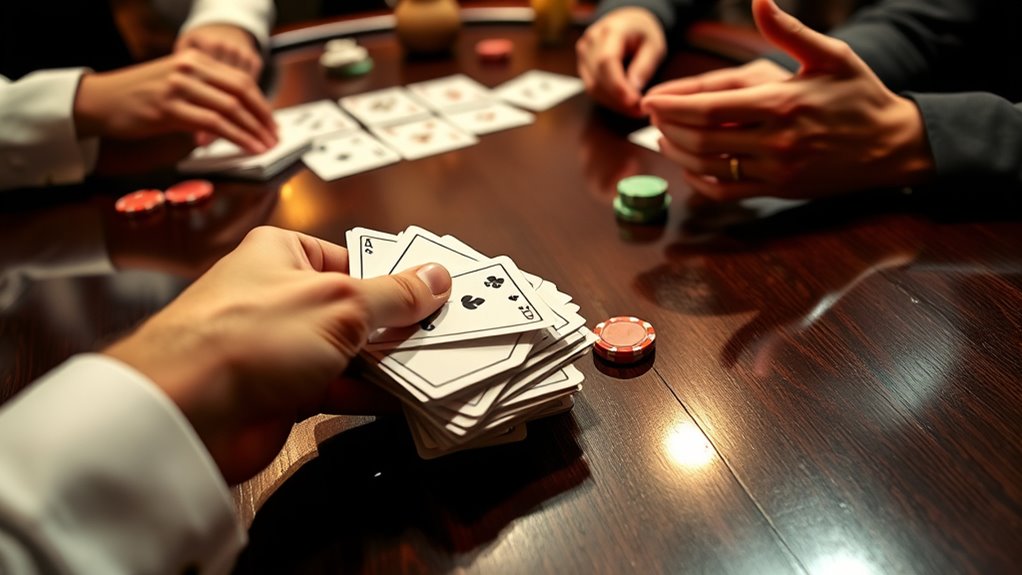
When you sit down at a card table to play poker, understanding proper etiquette and basic rules is essential for ensuring an enjoyable game for everyone. One of the first things to grasp is how betting strategies impact the flow of the game. Your betting decisions should reflect both your confidence in your hand and an awareness of your opponents’ behaviors. For example, aggressive betting can intimidate weaker players, while cautious, strategic bets can help you conserve chips until the right moment. It’s important to be consistent in your betting patterns; sudden, unpredictable moves can give away your hand or confuse others. Remember that betting is also about reading the table—watch how others bet and adjust your strategy accordingly. This dynamic interaction makes poker engaging and competitive. Understanding hand rankings is fundamental to making smart bets and folding when necessary. Knowing which hands beat others helps you evaluate your position at any point during a game. When you have a strong hand, you can bet confidently and perhaps raise to build the pot, but if your hand is weak, folding early can save chips for a better opportunity. Recognizing hand strength also helps you interpret other players’ actions—if someone suddenly raises after a series of checks, they might have a strong hand based on your knowledge of hand rankings. This awareness guides your betting strategies, allowing you to decide when to bluff, call, or fold. Additionally, being aware of the divorce process in various states can be useful for understanding different legal contexts and proceedings outside the game. Practicing good table etiquette involves more than just knowing the rules—it’s about respecting other players. Keep your chips organized, act promptly, and don’t splash the pot by throwing chips in carelessly. When it’s your turn, make your move swiftly to keep the game flowing smoothly. Avoid discussing your hand or revealing information about others’ hands, and stay focused on the game rather than distractions. Maintaining a friendly attitude helps foster a positive atmosphere, regardless of whether you’re winning or losing. Additionally, don’t criticize other players or complain about bad beats; instead, stay gracious and enjoy the game. Good etiquette not only shows respect but also enhances your reputation at the table, making the experience more enjoyable for everyone involved.
Frequently Asked Questions
Can I Talk About My Hand During a Hand?
Yes, you can talk about your hand during a hand, but be mindful of table talk and hand disclosure rules. Avoid revealing too much or discussing your hand with other players, as this can give away information and affect the game. In most poker settings, it’s best to keep your comments vague and avoid explicit hand disclosure. Focus on strategic conversation without revealing your holdings prematurely.
What Should I Do if I Forget the Rules?
If you forget the rules, don’t panic—pause, review, and ask for a rule review from the dealer or more experienced players. Remember, showing humility and asking for clarification is part of good etiquette tips. Stay calm, focus on your next move, and use this moment to learn. By embracing honesty and seeking guidance, you’ll improve your game and maintain a respectful, enjoyable atmosphere at the table.
Are There Specific Dress Codes for Poker Rooms?
Most poker rooms have dress codes or attire standards to make certain a comfortable environment. You should dress neatly and avoid overly casual items like tank tops, flip-flops, or athletic wear. Check the specific room’s policies beforehand, but generally, collared shirts and clean jeans or slacks are acceptable. Dressing appropriately shows respect for the game and other players, helping you blend in and enjoy your experience more fully.
How Do I Handle Disputes at the Table?
Think of yourself as a modern knight facing a dispute—stay calm and respectful. When disagreements happen, use good table manners to calmly explain your position and listen actively. If needed, politely call the dealer or host to mediate, focusing on dispute resolution rather than escalating. Remember, keeping your composure and respecting others’ opinions helps maintain a fun, fair game for everyone involved.
Is It Okay to Use Electronic Devices While Playing?
Using electronic devices at the table isn’t usually okay, as it can break casino etiquette and distract other players. You should focus on responsible gaming by staying present and engaged. Many casinos have strict rules against devices during hands to keep the game fair. If you’re allowed to use your phone, keep it discreet and silent, and avoid disrupting the game or bothering others.
Conclusion
By mastering card table etiquette and understanding basic poker rules, you step into the game like a seasoned player entering a grand tournament. Remember, just as a captain navigates through stormy seas with grace, your respect for the game and fellow players guides you smoothly through every hand. Play with integrity and confidence, and you’ll find yourself not just participating but truly belonging at the table—where the real thrill begins.