
Bumper pool, a tabletop game from the early 20th century, gained popularity in casual game rooms for its simple yet challenging gameplay. Over time, equipment has improved, with better bumpers and table designs that enhance strategy and ball control. The game involves players aiming to pocket balls while avoiding bumpers and obstacles, requiring skill and quick thinking. If you want to learn more about how the game developed and its gameplay tricks, there’s plenty more to discover.
Key Takeaways
- Bumper pool originated in early 20th-century game rooms as a simple, challenging tabletop game.
- Equipment evolved from basic bumpers and tables to precisely designed components, enhancing gameplay.
- The game’s rules remained steady, but improved equipment allowed for advanced strategies like bank shots.
- Modern tables feature polished surfaces and adjustable bumpers, making gameplay more skill-based and strategic.
- The game balances equipment development and skill, evolving from casual fun into a challenging, strategic pastime.
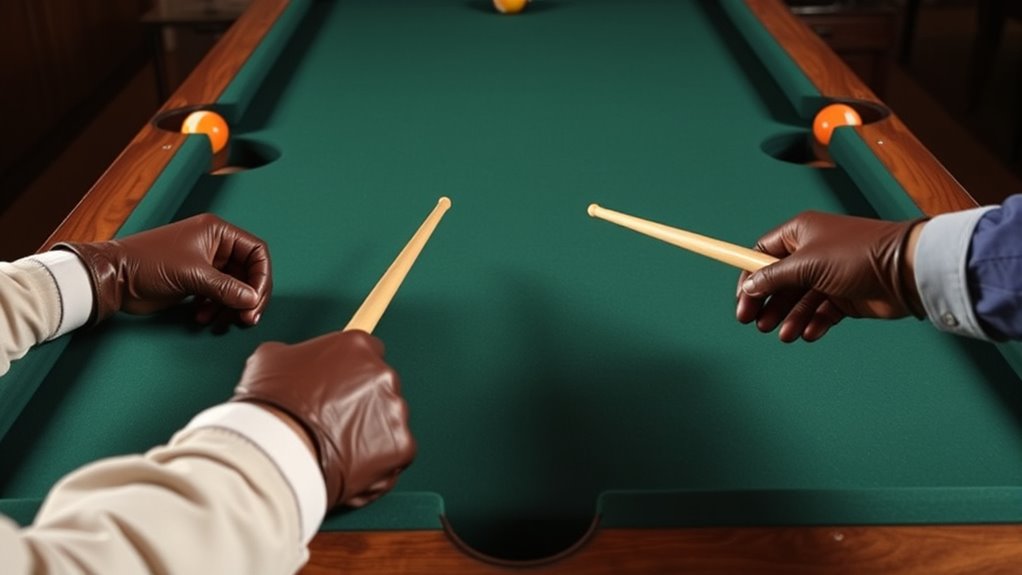
Have you ever wondered where bumper pool, the popular tabletop game, originated? This game has a surprisingly rich history that traces back to early 20th-century game rooms, where it quickly gained popularity due to its simple yet challenging gameplay. As you explore its history, you’ll notice how game strategies have evolved alongside the equipment used, making bumper pool both a test of skill and adaptability. Originally, players relied on basic equipment—wooden tables with simple bumpers and pockets—designed mainly for casual play. Over time, manufacturers refined the equipment, leading to an evolution in design that enhanced gameplay. The bumpers, once rudimentary, became more uniformly shaped and positioned, allowing for more predictable ball reactions, which in turn affected how players devised strategies.
Bumper pool evolved from simple tables to sophisticated equipment, shaping strategies and enhancing gameplay over time.
This equipment evolution wasn’t just cosmetic; it impacted game strategies considerably. Early players had to rely heavily on intuition and trial-and-error to master shot control and ball positioning. As tables improved, players began developing more sophisticated techniques, learning to bank shots and position balls precisely for future turns. The improved equipment made gameplay more consistent, encouraging players to think ahead and plan their shots more carefully. The progression of game equipment played a crucial role in elevating bumper pool from a simple pastime to a game requiring skill, planning, and quick thinking.
Throughout its history, the game’s rules stayed relatively steady, but the equipment’s refinement pushed players to innovate new strategies. Today, you’ll find tables with smooth, polished surfaces and precisely placed bumpers that make shot angles more predictable. These advances allow for more complex game strategies, where players can manipulate ball paths with accuracy and finesse. The game’s simplicity remains, but the equipment evolution has made it more engaging and challenging, pushing enthusiasts to develop better techniques. Modern tables often feature adjustable bumpers and custom scoring rules, giving players even more ways to refine their strategies.
In essence, bumper pool’s history reflects a constant balance between equipment and skill. The game’s origins are rooted in casual fun, but as equipment improved, so did the strategic depth. Whether you’re a beginner or seasoned player, understanding this evolution helps you appreciate how the game has grown over time. You’ll find that every bump and pocket on the table is a result of this ongoing development, making bumper pool a timeless game that continues to challenge and entertain.
Frequently Asked Questions
What Are the Official Rules for Competitive Bumper Pool?
In competitive bumper pool, you follow official rules that emphasize precise gameplay and bumper pool strategies. You use approved bumper pool equipment, including standard-sized tables, cues, and balls. Focus on aiming accurately and controlling your shots to outmaneuver your opponent. Remember to stay within the designated foul lines, avoid illegal shots, and pocket the correct balls as per the rules. Mastering bumper pool strategies and using quality equipment will give you a competitive edge.
How Has Bumper Pool Evolved Over the Decades?
Over the decades, bumper pool has evolved through historical innovations like new table designs and scoring systems, making gameplay faster and more strategic. Cultural influences from different regions have introduced variations, such as rule modifications and unique playing styles, enriching the game’s diversity. You’ll notice these changes as the game becomes more dynamic and accessible, reflecting its adaptation to modern preferences while preserving its classic appeal.
Are There Regional Variations in Bumper Pool Rules?
You’ll be amazed at how regional differences totally transform bumper pool! In some places, house rules turn the game into a lightning-fast showdown, while others keep it more relaxed and strategic. These variations, from table size to scoring, make every game a unique adventure. So, if you’re playing across different regions, expect surprises—some rules might be completely different, and that’s what keeps bumper pool exciting everywhere you go!
What Materials Are Traditionally Used for Bumper Pool Tables?
You’ll find that traditional bumper pool tables are mainly made from wood, like oak or maple, for the frame and playing surface. The history of bumper pool shows that these materials were chosen for their durability and ease of craftsmanship. The playing surface is usually covered with felt or a similar cloth to guarantee smooth gameplay. Modern tables might incorporate other materials, but wood remains the classic choice for authenticity and quality.
Who Are the Most Famous Bumper Pool Players in History?
You’ll find that some of the most famous players in bumper pool include legendary competitors like Johnny Esposito and Bill Schmitt. These players gained recognition for their skill and strategic play, inspiring enthusiasts and elevating the game’s popularity. Their reputation as top-tier competitors has made them iconic figures in bumper pool history, and their influence continues to motivate new players to master the game and aim for greatness.
Conclusion
Now that you know the history and how bumper pool is played, you’ll appreciate its unique charm. Did you know it’s been around since the 1930s and remains popular in many households? With over 1 million copies sold worldwide, it’s clear this game has stood the test of time. So next time you set up the table, remember you’re part of a tradition that’s lasted nearly a century, making every game you play even more special.