Air hockey tables need more space than you might think to guarantee safe and smooth gameplay. Adequate clearance allows easy maintenance, prevents damage, and keeps the surface in top condition. It also gives players enough room to move freely and avoid collisions with walls or furniture. Proper spacing enhances safety, comfort, and enjoyment for everyone. To learn how to set up your space effectively and guarantee the best experience, keep exploring these important details.

Play games on Amazon Luna for your game nights, included with Prime
- A rotating selection of games, no download needed
- Play on TV, laptop or phone
- Fast, free delivery for your gear, too
Key Takeaways
- Sufficient space ensures easy maintenance and prevents damage during cleaning or repairs.
- Adequate clearance reduces collision risks and enhances player safety during quick movements.
- At least 3 feet of space on each side allows comfortable gameplay and seating arrangements.
- Larger areas facilitate installation of accessories and improve airflow, maintaining optimal conditions.
- Proper spacing promotes longevity of the table and provides a safe, enjoyable gaming environment.
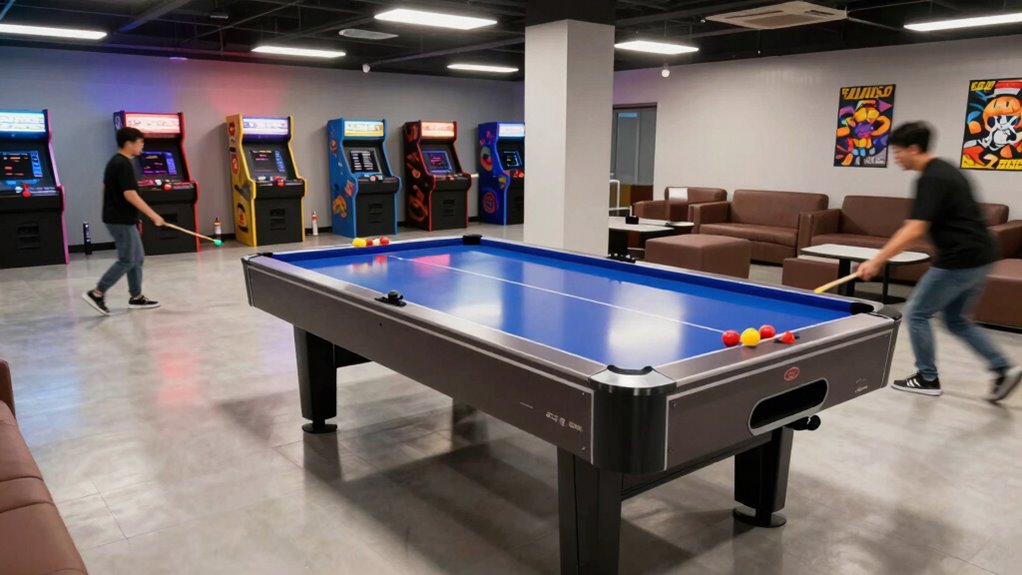
Have you ever wondered how much space you need to set up an air hockey table comfortably? It’s a common question, but the answer often surprises people. Many assume their existing room or basement is enough, but in reality, proper space is essential for both enjoyment and safety. When you’re planning where to place your air hockey table, you need to think beyond just fitting the table itself. The surrounding area is just as important, especially for maintaining the table and guaranteeing a safe play environment.
First, consider table maintenance. Air hockey tables need regular upkeep to stay in top condition. Adequate space around the table makes cleaning and inspecting it easier. You’ll want room to access all sides for tasks like wiping down the surface, checking the puck return system, and replacing or repairing components. If your space is cramped, you risk damaging the table or missing essential maintenance, which can lead to uneven gameplay or faster wear and tear. Having enough room ensures you can keep the table in good shape without hassle, prolonging its life and maintaining its smooth, fast surface. Proper space planning can also facilitate easier installation of additional accessories or upgrades as needed.
Adequate space around the table simplifies maintenance, prolongs its lifespan, and keeps gameplay smooth and enjoyable.
Play area safety is equally important. An air hockey game involves a lot of quick movements, and players often lean or lunge toward the puck. Without enough clearance, you increase the risk of accidents, like collisions with furniture or walls. You also want to prevent players from running into obstacles or knocking things over in their excitement. A generous play area allows for safe, unrestricted movement, reducing the likelihood of injuries or damage to the table and surrounding items. It also creates a more enjoyable experience, where players can focus on the game rather than worrying about space constraints.
When you’re planning your setup, remember that the recommended clearance is typically at least 3 feet on each side of the table. This gives players enough room to stretch out and move freely. It also allows space for comfortable seating or standing positions, which enhances the overall game experience. Keep in mind that larger play areas make it easier to set up spectators or additional game accessories without cluttering the space. Additionally, considering UAV innovations or aerial filming techniques can help you visualize the best layout for your space before setting up. Proper planning of the space requirements can save you from costly rearrangements later. Ensuring there is adequate air circulation around the table can also contribute to maintaining optimal playing conditions and prolonging the lifespan of electronic components. Moreover, adequate ventilation can help prevent issues related to humidity or temperature that might affect electronic parts or playing surface quality. Good airflow is also beneficial for maintaining a comfortable environment during extended gaming sessions.
In the end, the space you allocate isn’t just about fitting the table—it’s about creating a safe, accessible environment that encourages regular maintenance and safe play. Taking the time to plan properly ensures your air hockey experience stays fun, safe, and in top condition for years to come.
air hockey table with ample clearance
As an affiliate, we earn on qualifying purchases.
As an affiliate, we earn on qualifying purchases.
Frequently Asked Questions
How Much Clearance Is Needed Around an Air Hockey Table?
You need at least 3 feet of clearance around an air hockey table to guarantee proper table dimensions and playing comfort. This space allows players to move freely without feeling cramped, making gameplay more enjoyable. Adequate clearance prevents collisions with walls or furniture, so you can focus on the game. Providing enough room also helps maintain the table’s condition, ensuring long-term fun and safety for everyone involved.
Can Small Rooms Accommodate a Standard Air Hockey Table?
Small rooms generally can’t comfortably fit a standard air hockey table, especially if you want proper clearance for table maintenance and play. You might have to opt for a smaller or compact model, but remember, this can impact gameplay and durability, potentially increasing your cost considerations in the long run. To guarantee safety and enjoyment, prioritize space around the table, even if it means upgrading your room layout.
What Are the Safety Concerns With Limited Space?
Think of limited space as a tightrope walk—balance is key. With too little room, you risk bumping into safety barriers or blocking emergency exits, creating hazards. These obstructions can cause injuries or slow evacuations during emergencies. Always guarantee there’s enough clearance around your air hockey table, keeping safety barriers clear and emergency exits accessible, so you can enjoy your game without risking safety or violating safety codes.
How Does Ceiling Height Affect Air Hockey Gameplay?
Ceiling height greatly influences air hockey gameplay by affecting airflow and puck movement. If the ceiling is too low, airflow restrictions can cause uneven puck gliding, disrupting the game. Adequate ceiling height guarantees unobstructed airflow, allowing the puck to glide smoothly and players to enjoy ideal play. You should aim for a ceiling height of at least 8 feet to prevent airflow restrictions and guarantee a fast, fair game.
Are There Compact Air Hockey Tables for Tight Spaces?
Imagine a tiny spaceship steering through tight corridors—that’s how compact air hockey tables with portable designs feel in your space. Yes, there are models with space-saving features perfect for small rooms or apartments. These tables are lightweight, easy to set up, and designed to fit into tight spots without sacrificing gameplay. You get the thrill of air hockey without needing a mansion-sized room, making them ideal for cozy spaces.
Conclusion
Think of your game room as a dance floor—if it’s too cramped, even the best moves get awkward. Air hockey tables need more space than you might expect to let you glide and slide freely, making every game feel like a champion’s performance. Don’t let tight quarters turn your fun into frustration. Clear enough room, and you’ll create a winning arena where every shot hits the mark and every game is a victory dance.
Evergreen bestsellers Picks
bestsellers
As an affiliate, we earn on qualifying purchases.