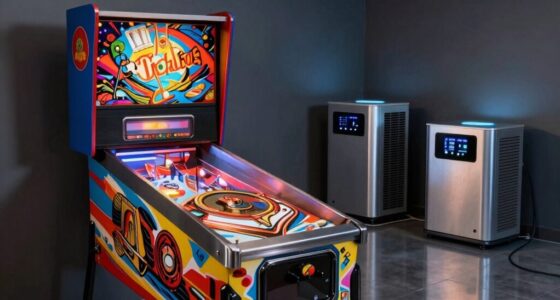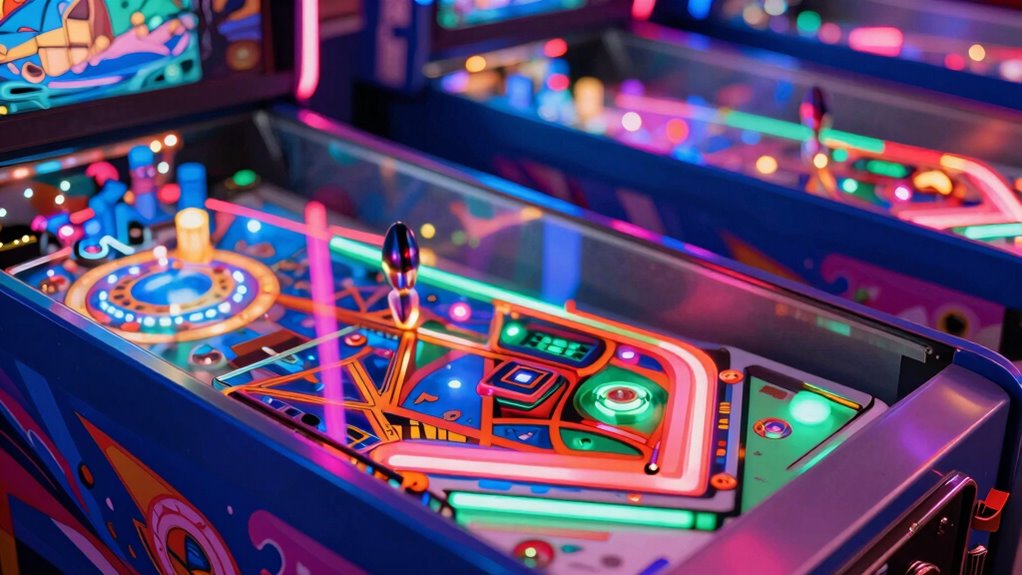

The psychology of replay value in pinball is driven by nostalgic triggers, like familiar artwork and sounds that remind you of better times, creating a comforting connection. Reward systems, such as bonuses and high scores, activate dopamine, making each success satisfying. Unpredictable gameplay and challenges keep you alert, while visual effects and sensory stimulation enhance immersion. Want to discover more about how these elements keep you hooked? Keep exploring to uncover deeper insights.

Play games on Amazon Luna for your game nights, included with Prime
- A rotating selection of games, no download needed
- Play on TV, laptop or phone
- Fast, free delivery for your gear, too
Key Takeaways
- Nostalgic triggers evoke positive memories, encouraging players to replay for emotional comfort.
- Reward systems activate dopamine release, reinforcing pleasurable sensations and motivating continued play.
- Unpredictability and challenge maintain excitement by offering varied outcomes and testing skills.
- Personal mastery and competition drive players to improve scores and beat their records.
- Visual and sensory appeal enhance immersion, making gameplay more engaging and encouraging repeated sessions.
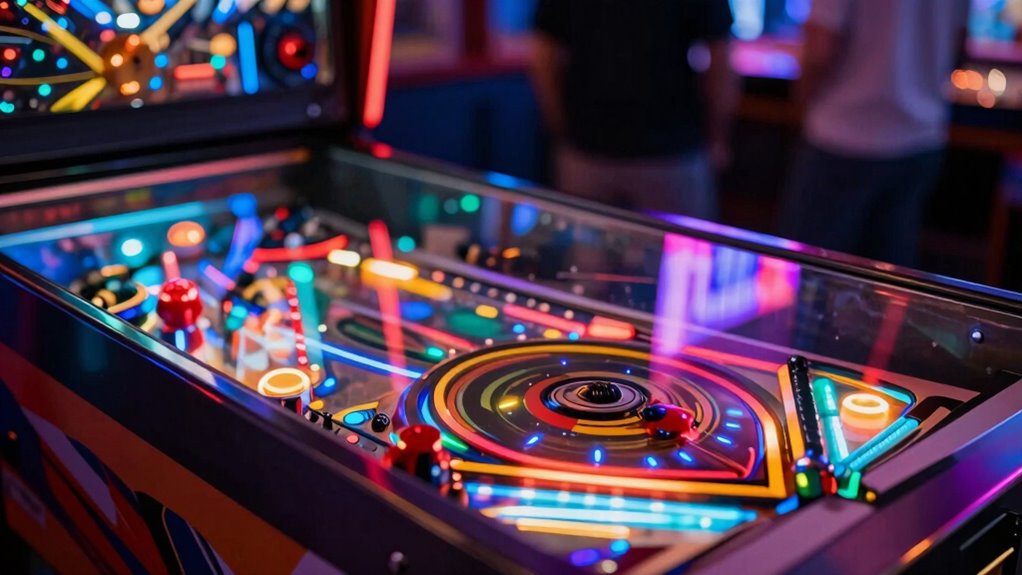
Pinball machines have long captivated players with their addictive gameplay and unpredictable outcomes, but what truly drives players to keep coming back? The answer lies in the way pinball taps into your psychology, especially through nostalgic triggers and reward systems. When you step up to a pinball machine, you’re not just aiming to hit targets or rack up points—you’re also engaging in a sensory and emotional experience that resonates on a deeper level. Nostalgic triggers, like familiar artwork or classic sounds, evoke memories from your past, making the game feel comforting and familiar. These triggers act as emotional shortcuts, drawing you into a state where you associate the game with pleasant feelings from earlier days. This emotional connection encourages repeat play, as you chase that feeling of nostalgia, often without even realizing it.
Beyond nostalgia, reward systems play an essential role in maintaining your interest. Every successful hit, multiplier, or bonus activates a sense of achievement, releasing dopamine—the brain’s “feel-good” chemical. This reward feedback loop makes each successful shot satisfying, encouraging you to keep playing in pursuit of that pleasurable rush. Over time, your brain learns to associate specific actions with positive outcomes, reinforcing the desire to continue. The thrill of beating a high score, unlocking a new mode, or simply maintaining a streak triggers this reward system repeatedly, making the game addictive in a healthy, engaging way. Additionally, incorporating variable reward schedules into gameplay can further heighten the excitement, as players are unsure when the next big reward might occur, boosting engagement.
Your desire to improve and beat your own records also fuels replay value. Each game becomes a personal challenge, pushing you to refine your skills and hit higher scores. The unpredictable nature of the game adds an element of surprise, ensuring that no two rounds are identical. This unpredictability of outcomes enhances the game’s replayability by challenging your ability to adapt and think on your feet. Incorporating strategic decision-making keeps players engaged, as they weigh risks and rewards during gameplay. The combination of unpredictability, reward, and personal mastery creates a compelling cycle: each new game offers fresh challenges, and every achievement reinforces your motivation to keep trying. Furthermore, the visual appeal of the machine’s design and lighting effects also enhances the immersive experience, making each session more captivating.
In essence, pinball’s replay value stems from a complex interplay between nostalgic triggers and reward systems. These psychological hooks make every game feel meaningful and rewarding, whether through emotional comfort or the thrill of mastery. This interplay is supported by psychological principles that explain why certain game features are so compelling. That’s why, even after many plays, you find yourself drawn back—because the game isn’t just about scoring points; it’s about reliving memories, experiencing joy, and challenging yourself anew.
Popular right now

De'Longhi La Specialista Arte Evo Espresso Machine with Grinder

De’Longhi Classic Matte Black Espresso Machine with Milk Frother

Ninja NC501 CREAMi XL Deluxe 11-in-1 Ice Cream and Frozen Treat Maker
As an affiliate, we earn on qualifying purchases.
Frequently Asked Questions
How Do Different Player Personalities Influence Replay Value?
Your personality traits shape how much you enjoy replaying pinball games, influencing your level of player engagement. For instance, competitive players might replay to beat scores, while explorers seek new challenges. Your traits determine whether you find the game’s variety compelling or if you tire quickly. Understanding these differences helps you recognize what motivates your replay value, encouraging you to tailor your gaming experience for maximum enjoyment and continued interest.
What Role Do Sound Effects Play in Replay Motivation?
Imagine stepping into a neon-lit arcade, where sound effects are your sonic sidekicks. Auditory cues and sound symbolism in pinball boost your replay motivation by creating excitement and urgency. Catchy chimes or satisfying clangs reinforce success, encouraging you to play again. These sounds tap into your subconscious, making each game feel more rewarding and immersive, fueling your desire to chase that high score all over again.
Does Nostalgia Affect Replay Decisions in Pinball?
Nostalgia profoundly influences your replay decisions in pinball because memory triggers emotional attachment to familiar sounds, visuals, and gameplay. When you see a classic machine or hear a nostalgic sound effect, it sparks positive feelings, making you more likely to play again. This emotional connection creates a sense of comfort and joy, encouraging you to keep chasing that memorable experience, reinforcing the game’s replay value.
How Does Game Difficulty Impact Long-Term Replay Interest?
You’ll find that game difficulty greatly influences your long-term replay interest, especially if you enjoy mastering skills. Studies show players are more likely to keep coming back when they see steady progress in their game mastery. Challenging but achievable levels encourage skill progression, fueling motivation and curiosity. Too easy, and boredom sets in; too hard, and frustration wins. The right balance keeps you engaged, enthusiastic to improve and replay again and again.
Are There Cultural Differences in Pinball Replay Preferences?
You might notice that cultural stereotypes and regional preferences influence pinball replay interest. In some areas, players prefer fast-paced, high-energy tables, reflecting local gaming styles, while others favor complex, strategic layouts. These regional differences shape what keeps you coming back, as certain themes and gameplay mechanics resonate more deeply with local audiences. Recognizing these cultural nuances can help game designers tailor pinball machines to appeal to diverse player interests worldwide.
Conclusion
Understanding the psychology behind pinball’s replay value shows how game design taps into your desire for mastery and reward. Did you know that players tend to spend an average of 45 minutes per session, driven by the thrill of beating high scores? This statistic highlights how pinball keeps you hooked through its challenging yet rewarding gameplay. So next time you’re flipping the ball, remember—your brain’s craving that satisfying sense of achievement, making every game irresistible.