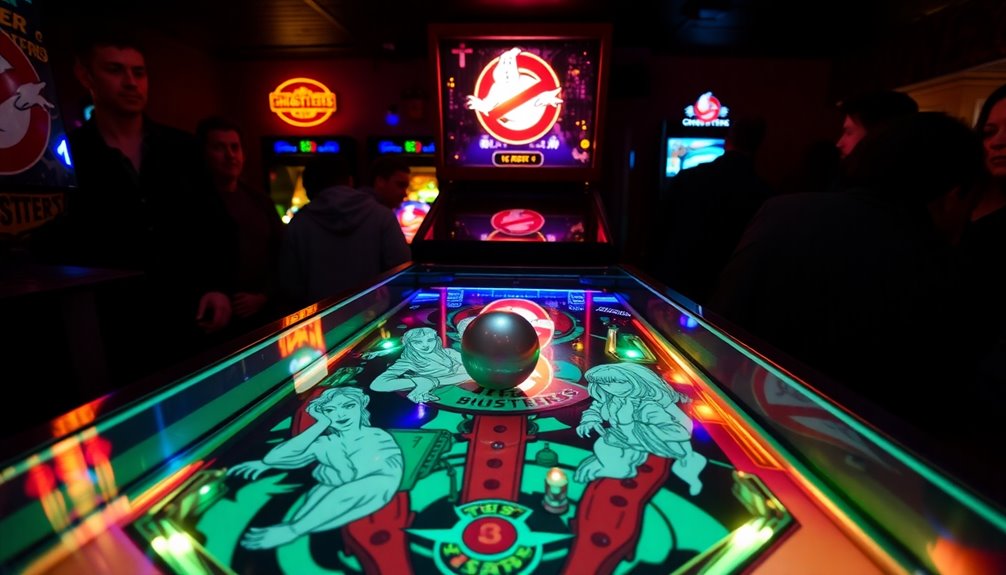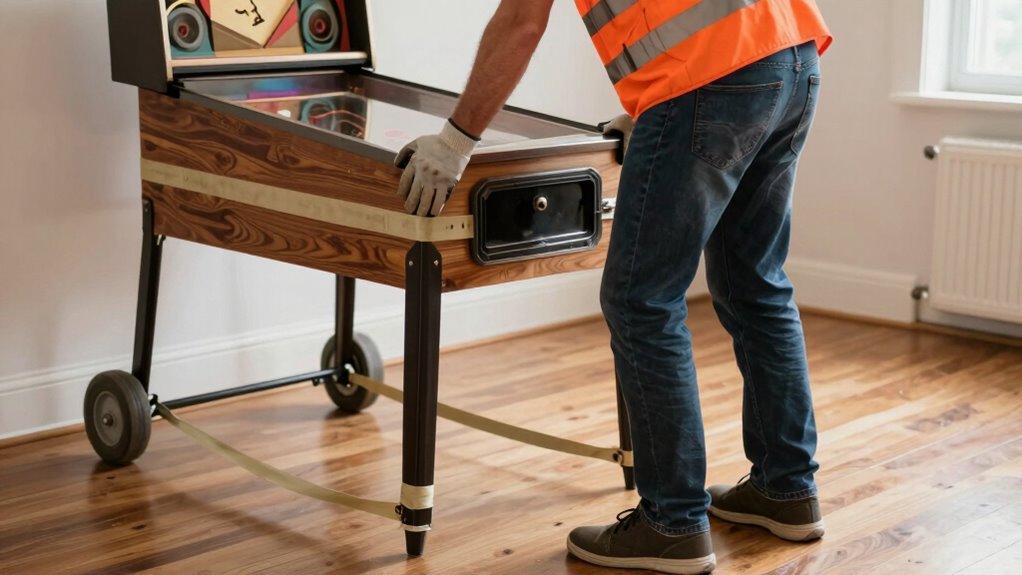
To move a pinball machine safely, start by evaluating its size and weight, then clear a spacious, obstacle-free pathway. Gather essential tools like dollies, protective padding, and straps. Wrap the machine with blankets and bubble wrap, securing all fragile parts and glass. Use proper lifting techniques, team up for heavy lifting, and move slowly to avoid injury. Carefully secure the machine during transit and carefully position it in your new space. For detailed steps, there’s more to follow.
Key Takeaways
- Disassemble removable parts and securely wrap the machine with padding to prevent damage during transport.
- Use proper lifting techniques with team members, lifting with your legs and keeping the machine close to your body.
- Employ dollies, straps, and protective blankets to stabilize and protect the machine while moving.
- Clear the path, remove obstacles, and plan your route to avoid sudden movements or accidents.
- Transport the pinball machine carefully in a secured vehicle, avoiding sudden stops or rough terrain to prevent damage or injury.
Assess the Size and Weight of Your Pinball Machine

Before attempting to move your pinball machine, you should first assess its size and weight. Knowing the machine weight helps determine if you can lift it alone or need help. Use size estimation to understand how much space it occupies and identify potential obstacles during the move. Measure the height, width, and depth to plan your route and ensure doorways or hallways are clear. Pinball machines can vary widely in weight, from a few hundred pounds to over a thousand, so don’t underestimate their heaviness. This initial assessment prevents injury and damage. If the machine is heavy or bulky, consider using proper equipment or enlisting assistance. Being aware of your machine’s size and weight upfront sets a safe, effective foundation for the entire moving process. Additionally, understanding the ergonomic lifting techniques can help prevent back injuries during the move. Recognizing the weight capacity of your moving tools is also crucial to avoid accidents. Proper lifting posture combined with an awareness of your machine’s dimensions will significantly reduce the risk of injury. To further ensure safety, familiarize yourself with safe lifting procedures that can make the process smoother. Incorporating proper planning can also help you identify the best approach and minimize risks during the move.
Prepare Your Space for Moving the Pinball Machine
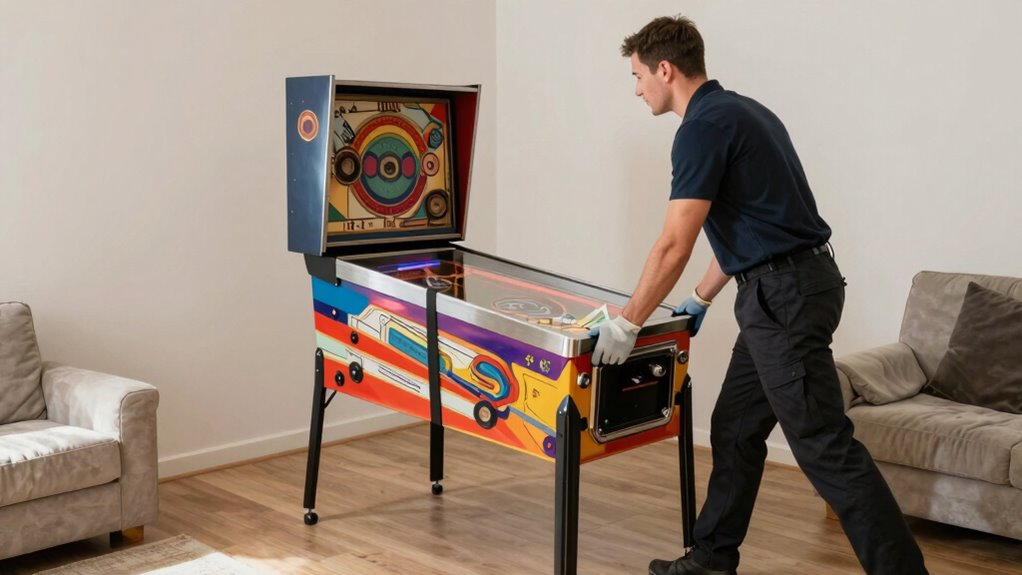
To guarantee a smooth move, you need to clear and prepare your space thoroughly. Start by removing any furniture, decorations, or obstacles that could hinder the moving process. Consider decorating ideas that involve taping off or padding nearby walls to protect them during the move. Ascertain the area is clean to prevent dirt or debris from damaging the pinball machine. Check maintenance tips, like disconnecting power sources and securing loose parts. Clear a wide, stable pathway to avoid accidents. Cover the floor with moving blankets or padding to prevent scratches. Making your space ready not only safeguards your pinball machine but also makes the entire process safer and more efficient. Proper preparation reduces stress and helps ensure your move goes smoothly. Additionally, understanding digital concepts can aid in organizing your move more effectively. For example, creating a digital inventory of your equipment can help track all parts and prevent loss during transport. Being aware of projector technology and how it impacts setup can also be beneficial if your space involves audiovisual equipment. Incorporating space planning techniques can further optimize the layout and safety during the move.
Gather the Necessary Tools for Moving Your Pinball Machine
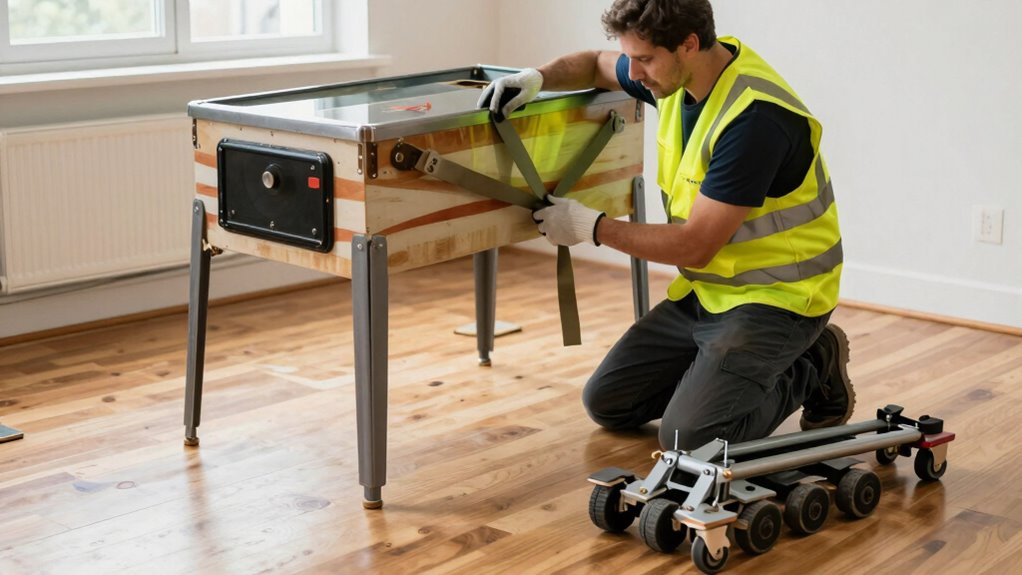
Before you start moving your pinball machine, you’ll need to gather the right tools. Make sure you have essential moving equipment, protective packing supplies, and help from others if needed. Having everything ready will make the move smoother and safer for your machine. For an added layer of protection, consider using luxurious packing materials to ensure your valuable machine remains pristine during transport. Additionally, securing essential DIY tools and safety tips related to your project can help prevent accidents and damage throughout the process. To ensure you’re well-prepared, researching best gear and knife roundups for smart shopping can help you find quality supplies at affordable prices, making your move both efficient and budget-friendly. Don’t forget to consider specialized moving equipment designed specifically for heavy or fragile items, which can significantly reduce the risk of damage during transport. Securing affordable jewelry gifts related to your project can provide sentimental value and motivation throughout the process.
Essential Moving Tools
Gathering the right tools is essential to guarantee your move goes smoothly and safely. Before lifting your pinball machine, ensure you have sturdy dollies, lifting straps, and furniture blankets to protect the surface. A weight-appropriate hand truck can help move the machine with less strain, while straps secure it during transport. Don’t forget to contemplate moving insurance to cover any potential damages. If you’re planning to store the machine temporarily, having proper storage solutions like climate-controlled containers will safeguard it from environmental damage. Additionally, padding and corner protectors can prevent scratches and dents during handling. Incorporating measurement tools such as scales and measuring tapes can help ensure proper handling and placement during the move. Proper vehicle protection options, like specialized moving blankets or covers, can further prevent damage during transit. Using vetted equipment minimizes the risk of accidents and ensures your move is both safe and efficient. Proper planning and equipment selection are critical for a successful relocation. Ensuring you have proper safety gear, like gloves and steel-toed shoes, will help protect you throughout the process. With these essential tools, you’ll minimize risks, protect your investment, and make the entire process more manageable. Proper preparation sets the foundation for a safe, damage-free move.
Protective Packing Supplies
Protective packing supplies are essential to guarantee your pinball machine stays safe during the move. Proper protection minimizes the risk of damage. First, gather moving blanket options—thick blankets or specialized furniture pads—to cushion the machine. Second, use heavy-duty tape to secure blankets and prevent shifting. Third, wrap fragile parts with bubble wrap or foam padding for extra protection. Fourth, consider corner protectors to guard sharp edges. These protective packing supplies help absorb shocks and prevent scratches or dents. Always ensure blankets are tightly wrapped around the machine and secured with tape. Using the right moving blanket options and padding makes a significant difference in keeping your pinball machine intact during transport. Be meticulous and double-check your protection before lifting or moving. Additionally, selecting appropriate packing materials designed for delicate electronics and machinery can further reduce the risk of damage during transit. For added security, consider disassembling removable parts to prevent breakage during handling. When possible, label all packed items clearly to facilitate careful unloading and reassembly.
Assistance and Transportation
To move your pinball machine safely, you need the right assistance and tools. Enlist experienced helpers familiar with pinball maintenance or vintage restoration to avoid mishaps. Gather equipment like dollies, furniture straps, and moving blankets to support the heavy lifting and protect your machine’s surface. Consider using a hand truck or a pallet jack if available, especially for larger, vintage machines. Make sure to have gloves on to improve grip and prevent damage. Clear a path beforehand, removing obstacles and securing doorways. Proper assistance minimizes the risk of injury and prevents damage during transportation. Remember, the key is teamwork, proper tools, and careful planning to ensure your pinball machine arrives intact and ready for its next game. Additionally, safety checklists such as CO alarms, secure cords, and proper placement can help prevent accidents during the move. Incorporating safety measures like padding and secure fastenings can further protect your equipment and everyone involved.
Wrap and Protect the Pinball Machine With Padding

To keep your pinball machine safe during transport, you’ll need to use appropriate padding materials to prevent damage. Make sure you wrap the machine securely with proper techniques so it stays protected from bumps and vibrations. Don’t forget to label and handle it carefully to guarantee safe moving and reassembly.
Appropriate Padding Materials
Choosing the right padding materials is essential for keeping your pinball machine safe during transportation. Foam padding and bubble wrap are your best options for protection. Use foam padding to cushion delicate parts and absorb shocks, especially around corners and edges. Bubble wrap provides a lightweight layer of protection for flat surfaces and glass components. To guarantee effective padding, consider these tips:
- Wrap the glass with multiple layers of bubble wrap to prevent cracks.
- Use foam padding around the machine’s body for shock absorption.
- Secure everything with packing tape to prevent shifting.
- Cover the entire machine with bubble wrap for an extra protective barrier.
These materials help prevent scratches, dents, and breakage during transit, keeping your pinball machine intact.
Secure Wrapping Techniques
Before you start wrapping your pinball machine, make sure you have all your padding materials ready. Begin by covering the entire surface with protective bubble wrap, ensuring each section is fully sealed to prevent movement. Wrap foam padding around delicate edges, corners, and glass surfaces to cushion against shocks. Use strong packing tape to secure the bubble wrap and foam padding in place, making sure they stay tight during the move. Pay extra attention to protruding parts like legs and buttons, wrapping them thoroughly. The goal is to create a snug, padded shell that absorbs impacts and prevents scratches. Keep wrapping until every vulnerable area is covered, then double-check that all padding is firmly secured before you lift. This technique minimizes damage risks during transport.
Label and Handle Carefully
Label your wrapped pinball machine clearly with “Fragile” and “This Side Up” stickers to guarantee handlers recognize its delicate nature. Proper labeling techniques alert everyone to handle the machine with care. Use large, bold labels and place them on multiple sides for visibility. When handling, grip the machine using handle grips designed for safe lifting. Always lift from sturdy points to avoid damaging internal components. To prevent slips, ensure labels are visible and secure. Remember, clear labels reduce mishandling risks. Use handle grips to maintain control, especially when moving through tight spaces. Be consistent in your labeling and handle with deliberate care. This approach minimizes damage during transportation and ensures the machine arrives intact and operational.
Lift and Handle the Machine Safely to Prevent Injury
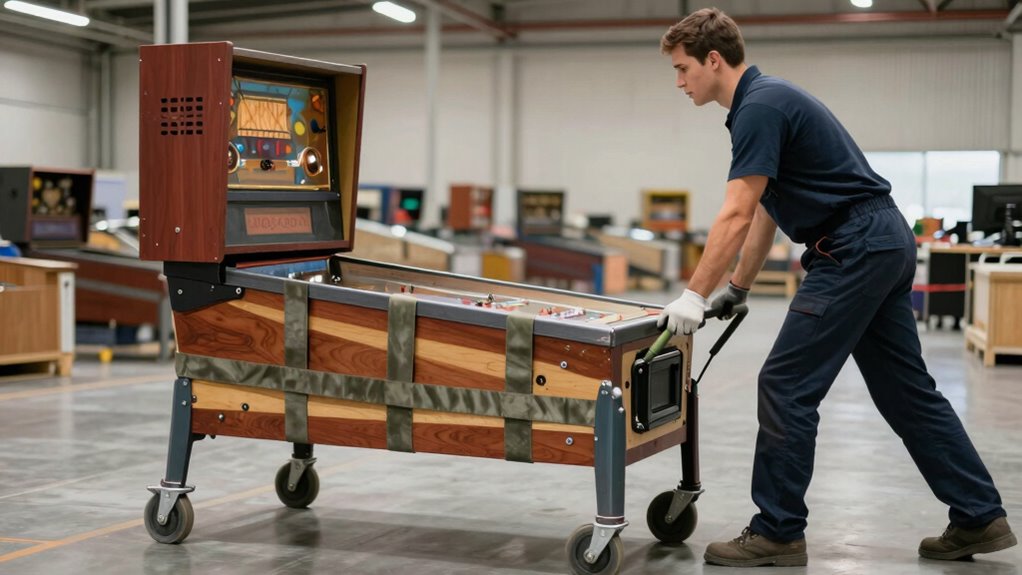
Lifting and handling a pinball machine requires careful attention to safety to prevent injuries. Use proper lifting techniques by bending at your knees, not your back, and keeping the load close to your body. Maintain a firm grip and avoid twisting your torso while lifting. Always lift with your legs, not your back, to reduce strain. Before moving, clear a safe path to avoid tripping hazards. Communicate clearly with anyone helping and coordinate your movements. Take your time and avoid rushing—hasty lifts increase the risk of injury. Remember, proper lifting techniques are essential for injury prevention and ensuring the machine stays intact. Prioritize safety at all times to protect yourself and the equipment during the move.
Enlist Help and Coordinate the Move Effectively

Enlisting help and coordinating the move guarantees everyone is on the same page and the process goes smoothly. Clear communication strategies are essential to avoid confusion and injuries. To guarantee effective team coordination, consider these steps:
Enlisting help and clear communication ensure a smooth, safe moving process for everyone involved.
- Assign specific roles, like guiding, lifting, or steering tight spots.
- Use walkie-talkies or cell phones for real-time communication during the move.
- Establish a plan with clear signals or commands for lifting and turning.
- Confirm everyone understands the route and safety precautions before starting.
Secure the Pinball Machine During Transport
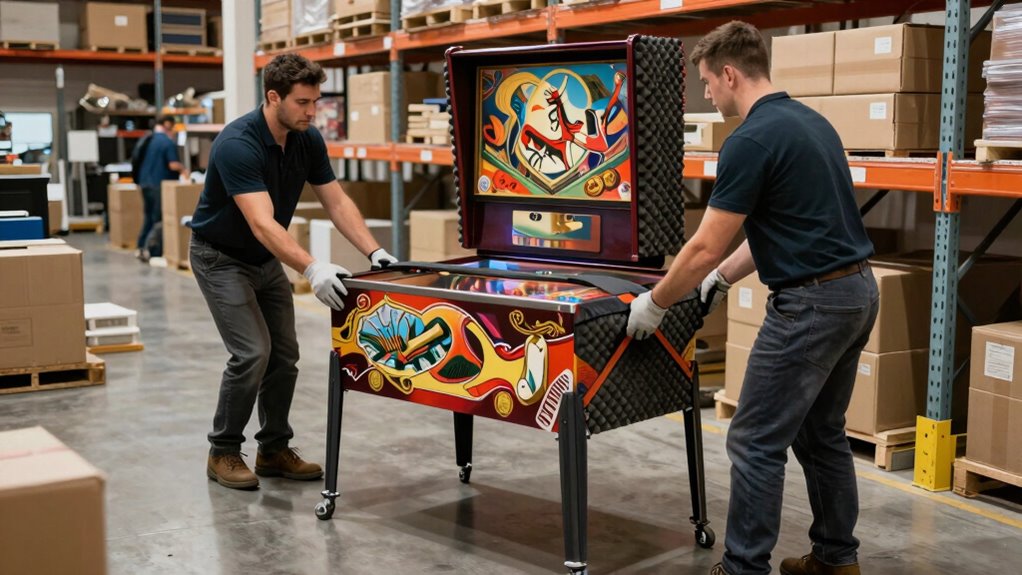
To guarantee your pinball machine arrives safely at its new location, securing it properly during transport is essential. Start by balancing the weight distribution inside the cabinet to prevent shifting, which can cause damage. Use moving blankets or padding around the machine to absorb shocks and protect the exterior. Secure the machine to the vehicle’s floor or walls with straps, ensuring it won’t slide or tip over during transit. Keep in mind storage considerations, like avoiding tight spaces that could stress the machine’s parts. Check that all loose components, such as the glass and legs, are removed or stabilized. Properly securing the pinball machine minimizes movement, reduces risk of damage, and ensures a smooth, safe journey to your new location.
Unload and Position the Machine at the New Location
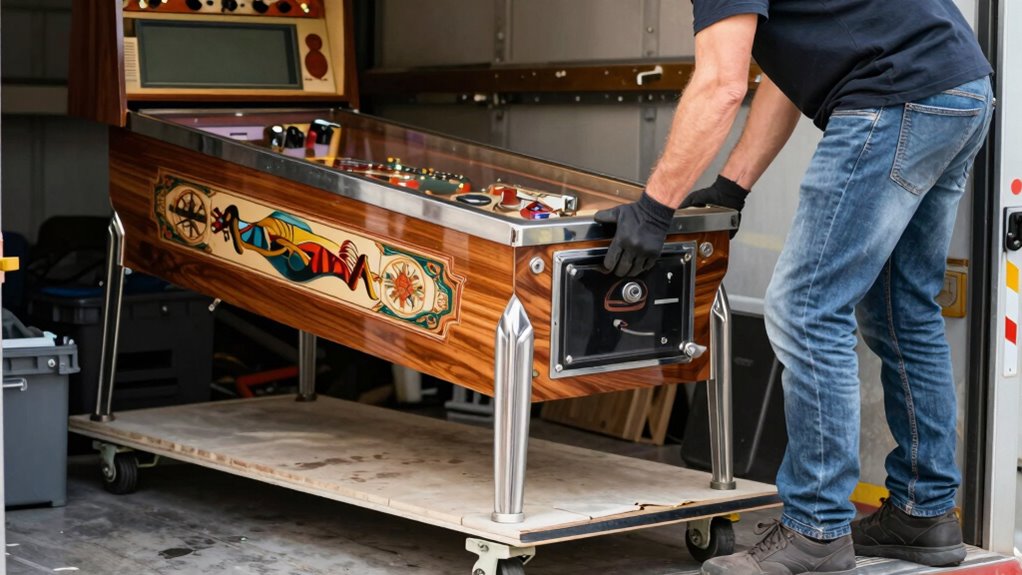
When you arrive at the new location, carefully position the pinball machine in its designated spot before removing any securing straps or padding. Once in place, follow these steps:
- Gently disconnect electrical connections, ensuring power is off to prevent shocks.
- Carefully remove straps and padding, supporting the machine’s weight evenly.
- Tilt the machine slightly if needed to slide it into position without scratching the floor.
- Make aesthetic adjustments by leveling the machine and ensuring it’s stable.
This process minimizes damage during setup. After positioning, double-check electrical connections are secure, and the machine is level to ensure ideal gameplay. Proper placement also helps maintain the machine’s appearance and functionality.
Check for Damage and Recalibrate Your Pinball Machine After Moving

After moving your pinball machine, ensuring a thorough inspection for any damage that may have occurred during transit is vital. Carefully check for cracks in the cabinet, glass, and internal components, as even minor splits can worsen over time. Also, verify that all connections are secure and that no parts are loose. Once you’ve confirmed structural integrity, recalibrate the score reels to guarantee accurate scoring. Misaligned or stuck reels can affect gameplay, so take the time to adjust them if necessary. Inspect the switches, sensors, and wiring, making sure everything is in proper working order. Address any issues before powering up the machine fully, as this can prevent future malfunctions and preserve your game’s longevity. Proper inspection and recalibration help keep your pinball machine in top condition.
Frequently Asked Questions
How Do I Determine if My Floor Can Support the Weight of a Pinball Machine?
You can determine if your floor can support a pinball machine by checking its load capacity and structural integrity. Look for your building’s load specifications, often found in the building plans or on a label near the main electrical panel. If unsure, consult a structural engineer to assess your floor’s load capacity. Ensuring your floor can handle the weight prevents damage and keeps your pinball machine safe.
What Are the Best Techniques to Move a Pinball Machine Through Narrow Doorways?
When moving a pinball machine through narrow doorways, you should use proper lifting techniques like bending your knees and keeping your back straight. Disassembly tips help—remove legs, glass, and any removable parts to make it more manageable. Tilt the machine carefully, guiding it sideways through the doorway. Communicate clearly with your helpers, and take your time to avoid damage or injury.
How Can I Prevent Scratches or Dings During the Move?
To prevent scratches or dings during your move, always use protective padding around the pinball machine’s edges and corners. Cover surfaces with blankets or bubble wrap before lifting or sliding, which cushions against impacts. Secure these surface coverings with tape to keep them in place. These precautions help protect the finish and prevent damage, ensuring your pinball machine arrives safely at its new location.
What Should I Do if My Pinball Machine Doesn’t Fit Through Doorways?
Imagine your pinball machine as a giant puzzle piece. When it won’t fit through doorways, you should try lifting strategies like tilting or disassembling parts to create a smaller shape. Carefully remove legs, glass, or panels with disassembly tips, making the machine more manageable. Then, gently maneuver it through the opening, reassembling once inside. This approach keeps your game safe and avoids damage during the move.
Are There Specific Insurance Considerations When Transporting a Pinball Machine?
When transporting your pinball machine, make sure you review your insurance coverage to guarantee it’s protected against damage or theft. Check liability considerations, especially if you’re hiring movers or using a third-party service. You might need to add a rider or special coverage for valuable items like your machine. Always document its condition beforehand, and confirm that your insurance policy covers transportation risks to avoid surprises.
Conclusion
By carefully planning and enlisting help, you can move your pinball machine safely without damage or injury. For example, John successfully moved his vintage machine by following these steps, avoiding costly repairs and back pain. Remember to assess its size, protect it well, and lift properly. With patience and the right approach, your pinball machine will arrive at its new home in perfect condition, ready for many more games to come.