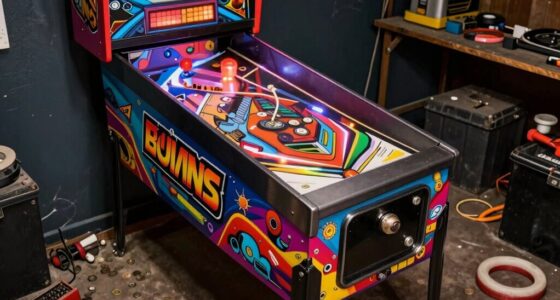
Flipper rebuild kits are worth it if your vintage pinball machine has weak, unresponsive, or worn-out flippers that you want to restore to their original feel and performance. They’re a good choice when mechanical upgrades can improve gameplay and maintain authenticity. However, if your flippers are only slightly sluggish or severely damaged, or if other issues like coils or wiring are causing problems, a rebuild might not be the best solution. Keep exploring to learn more about making the right decision.

Play games on Amazon Luna for your game nights, included with Prime
- A rotating selection of games, no download needed
- Play on TV, laptop or phone
- Fast, free delivery for your gear, too
Key Takeaways
- Rebuild kits are worth it for restoring vintage flippers with worn parts and improving responsiveness.
- They may not be suitable if flippers are only mildly weak or caused by electrical issues.
- Use rebuild kits when you want to preserve original design and add mechanical upgrades for better performance.
- For severely damaged or rusted flippers, full assembly replacements or professional repairs might be better.
- Consider your skill level; rebuild kits are ideal for those comfortable with mechanical work versus seeking a simple fix.

Are your pinball machine’s flippers not performing like they used to? If so, it might be time to contemplate a flipper rebuild kit. These kits are popular among enthusiasts because they provide everything you need to restore your flippers to their original strength and responsiveness. But before you jump in, it’s important to understand when they’re worth it and when they aren’t.
Consider a flipper rebuild kit to restore strength and responsiveness; evaluate if your machine needs more extensive repairs.
If your machine is a vintage model, a flipper rebuild kit can be a smart investment. Vintage restoration often involves replacing worn-out parts with new ones to bring the machine back to life. Rebuilding your flippers with a kit ensures you’re maintaining the authentic feel and mechanical integrity of the original design. It’s a cost-effective way to breathe new life into an old machine, especially if the flippers are sluggish or unresponsive. Mechanical upgrades included in some kits can improve the overall performance, making your gameplay smoother and more reliable. Plus, using a kit ensures compatibility and reduces the guesswork involved in sourcing individual parts. Additionally, understanding the mechanics of pinball machines can help you decide when a rebuild is necessary versus other repair options.
However, not every situation calls for a rebuild kit. If your flippers are only mildly weak or if the problem stems from other parts of the machine—like the coil, switch, or wiring—then replacing the entire flipper assembly might be overkill. Sometimes, a simple cleaning and adjustment can restore proper function without needing a full rebuild. If the flippers are severely damaged, bent, or have rust that can’t be cleaned, a rebuild kit might not be enough. In those cases, replacing the entire assembly or opting for a custom upgrade could be more effective in the long run. Recognizing signs of wear can help you determine when a rebuild is truly necessary. Understanding the different repair options can help you choose the most appropriate solution for your specific situation.
Another factor to weigh is your skill level. If you’re comfortable with mechanical work, a rebuild kit can be a straightforward project that yields satisfying results. But if you’re new to pinball repair, you might want to evaluate the cost of a kit against professional restoration or replacement parts. Sometimes, the time and effort involved in a full rebuild aren’t worth it unless you’re committed to maintaining the authentic vintage feel.
In the end, a flipper rebuild kit is worth it when your goal is to restore vintage machines with mechanical upgrades that enhance gameplay. It’s a reliable way to replace worn parts, improve responsiveness, and keep your pinball machine running smoothly. But if the problem runs deeper, or if the machine is beyond repair, exploring other options might save you time and money.
As an affiliate, we earn on qualifying purchases.
Frequently Asked Questions
How Long Does a Flipper Rebuild Kit Typically Last?
A flipper rebuild kit typically lasts around 1 to 3 years, depending on usage and maintenance. To extend its lifespan, you should follow regular maintenance tips like cleaning and lubricating parts. If you’re looking for durability, consider upgrade options like higher-quality components. Proper care guarantees your flipper functions smoothly longer, saving you money and time on frequent replacements. Always monitor its performance and replace the kit when you notice decreased responsiveness.
Are Rebuild Kits Compatible With All Pinball Machine Models?
Think of rebuild kits as puzzle pieces in a grand pinball mosaic. Not all fit perfectly; kit compatibility can vary across machine models, affecting pinball aesthetics and performance. You need to check specific compatibility details before purchasing. Some kits are designed for universal use, while others cater to particular brands or eras. To keep your game shining, confirm your rebuild kit aligns precisely with your pinball machine’s make and model.
Can I Install a Rebuild Kit Myself Without Technical Experience?
You can try DIY installation of a flipper rebuild kit, but it depends on your technical skills. If you’re comfortable with basic tools and following detailed instructions, you might manage it successfully. However, if you lack experience with pinball machines or delicate electronics, it’s better to seek professional help. Proper installation guarantees your machine runs smoothly, so don’t hesitate to get expert assistance if needed.
What Are the Signs a Flipper Needs a Rebuild?
You’ll notice a decline in your flipper’s performance—perhaps sluggish movement or inconsistent action. Cracks or worn-out components are clear signs a rebuild is needed. When you inspect the flipper, look for deteriorated rebuild kit materials like rubber seals or plastic parts. If these signs pop up, it’s time to contemplate a rebuild kit. Acting now can restore your flipper’s efficiency and prevent further damage.
How Much Does a Complete Flipper Rebuild Kit Usually Cost?
A complete flipper rebuild kit typically costs between $30 and $80, depending on quality and included components. If you’re upgrading with flipper coil upgrades or premium rebuild components, expect to pay towards the higher end of that range. Investing in a quality kit guarantees durability and smooth operation, especially if you’re restoring a classic pinball machine. Always compare kits to find one that offers the best value for your specific needs.
Conclusion
A flipper rebuild kit can breathe new life into your pinball machine, restoring smooth gameplay and saving money. Yet, if your flippers are severely worn or damaged beyond repair, these kits might fall short, leading to frustration rather than satisfaction. Think of it like fixing a delicate watch—sometimes, a simple repair is enough; other times, you need a complete overhaul. Weigh your needs carefully to decide if a rebuild kit is the right move for you.
Evergreen bestsellers Picks
bestsellers
As an affiliate, we earn on qualifying purchases.