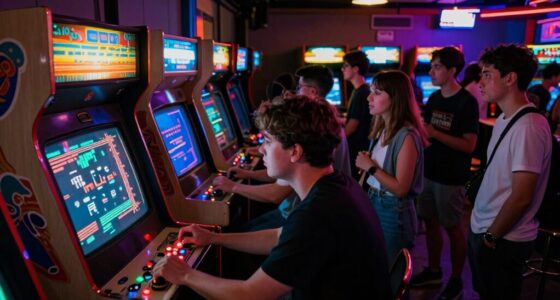
Street Fighter II transformed arcades by raising standards in game design, visuals, and sound, making fights more strategic and engaging. You see this influence in the vibrant graphics, distinctive characters, and skill-based gameplay that fostered fierce rivalries and tournament scenes. It also pushed arcades to dedicate more space to fighting games and inspired modern eSports’ focus on balanced characters and mastery. If you want to discover how its legacy continues shaping gaming today, keep exploring this impact further.
Play games included with Prime
Start a Prime free trial and play with Amazon Luna on your devices.
As an affiliate, we earn on qualifying purchases.
Key Takeaways
- Elevated arcade aesthetics with vibrant graphics and detailed character animations, setting new visual standards for arcade design.
- Fostered competitive arcade culture through skill-based gameplay, leading to the rise of tournament scenes and rivalry.
- Revolutionized fighting game mechanics with character differentiation, strategic depth, and mastery of special moves.
- Increased arcade space dedicated to fighting games, influencing arcade layout and industry investment.
- Left a lasting legacy by shaping modern game design, eSports, and the social landscape of arcade gaming.
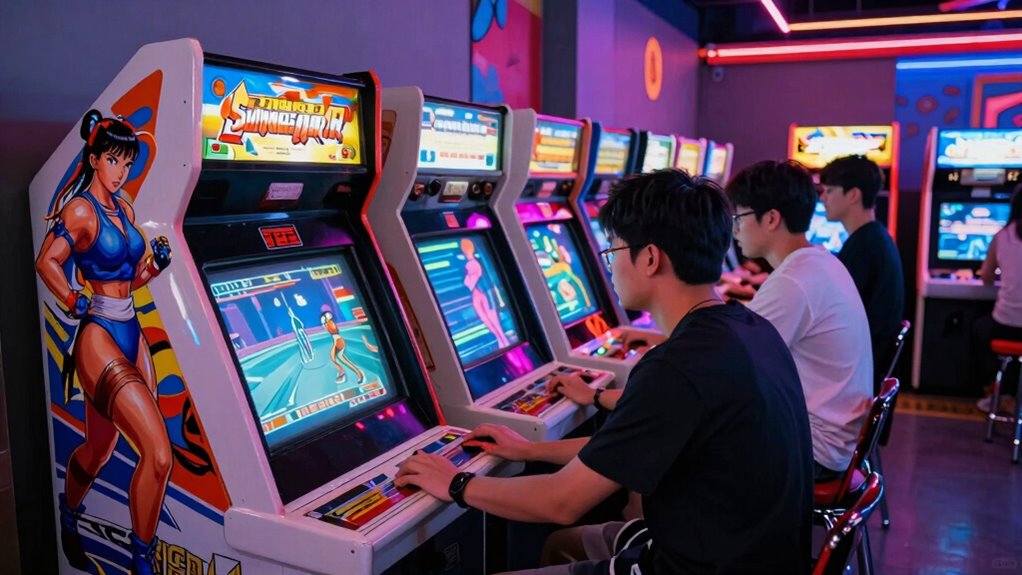
When Street Fighter II hit arcades in the early 1990s, it revolutionized the gaming scene and transformed the way people experienced arcade entertainment. You couldn’t ignore the buzz around its innovative approach to fighting games, especially how it emphasized character design and competitive gameplay. The characters in Street Fighter II weren’t just sprites; they were memorable personalities with distinct moves, styles, and backstories that drew players in. You found yourself drawn to Ryu’s disciplined karate, Chun-Li’s swift kicks, or Guile’s patriotic swagger. This focus on character design made each fighter unique, encouraging players to choose their favorites and master their special moves. It wasn’t just about button-mashing anymore; it was about understanding each character’s strengths and strategies, which deepened the game’s appeal.
The game’s competitive gameplay set a new standard that many arcade owners and developers tried to copy. You quickly realized that winning wasn’t just about luck; it was about skill, timing, and reading your opponent. Street Fighter II made head-to-head battles intense and rewarding, creating a social environment where players tested their abilities against friends or strangers. This focus on competition fueled an arcade culture centered around rivalry, bragging rights, and mastery. It also sparked the rise of tournament scenes, where players analyzed matchups and perfected their techniques. The game’s balanced yet diverse roster meant every match was unpredictable, keeping players engaged and eager to improve. Additionally, the emphasis on character design influenced the development of future fighting games, encouraging a focus on unique fighters with distinct personalities. Furthermore, its success demonstrated how visual standards and iconic sound effects could elevate the gaming experience, inspiring improvements across the industry. The game’s innovative approach to game mechanics also pushed developers to refine their own titles, ensuring longevity and continued interest in the genre. The influence of these design principles can still be seen in modern competitive gaming, where character differentiation and skill-based play are essential.
Beyond the gameplay itself, Street Fighter II influenced arcade design and the industry as a whole. The game’s vibrant, detailed graphics and distinctive character animations set new visual standards. The sound design, with iconic voice clips and punchy sound effects, enhanced the experience and made each battle feel impactful. Arcades began dedicating more space to fighting games, and players flocked to these machines, eager to test their skills. The game’s success led to countless imitators, but none matched the lasting impact of its character design and competitive gameplay. You could see its influence in later fighters and even in modern eSports, where the principles of balanced characters and skill-based competition remain central. Street Fighter II didn’t just entertain; it reshaped the entire arcade landscape, leaving a legacy that endures to this day.
As an affiliate, we earn on qualifying purchases.
Frequently Asked Questions
How Did Street Fighter II Impact Arcade Hardware Development?
Street Fighter II drove arcade hardware development by pushing for arcade cabinet innovation, making machines more immersive and appealing. You’ll notice how its advanced graphics and controls demanded hardware scalability, encouraging manufacturers to develop more powerful and adaptable systems. This game’s success motivated the industry to improve hardware capabilities, leading to better graphics, sound, and gameplay experiences, which set new standards for arcade hardware and influenced future game design.
Were There Any Legal Battles Over Street Fighter Ii’s Gameplay?
You might be surprised to learn that Street Fighter II did face legal disputes, sparking copyright controversies over its gameplay mechanics and character designs. These legal battles created tension within the industry, as companies debated intellectual property rights. Despite these disputes, the game’s revolutionary fighting style persisted, influencing countless titles. The controversy only heightened its significance, cementing Street Fighter II’s legacy as both a groundbreaking and contentious milestone in arcade history.
How Did Street Fighter II Influence Other Fighting Game Genres?
You see, Street Fighter II revolutionized the fighting game genre through its character diversity and innovative gameplay mechanics, inspiring countless other titles. It introduced unique characters with distinct moves, making each fight feel fresh. Its gameplay mechanics, like special moves and combos, set a new standard. As a result, many subsequent fighting games adopted these features, shaping the genre’s evolution and influencing game design for years to come.
What Was the Global Reception of Street Fighter II Upon Release?
Street Fighter II hit the world like a lightning bolt, dazzling players everywhere. You’d find its character design groundbreaking, bringing fighters to life with unique moves and personalities, while the soundtrack innovation kept players hooked with catchy tunes. The global reception was overwhelmingly positive, turning arcades into bustling battlegrounds. It became a cultural phenomenon, setting a new standard for fighting games and proving that video games could be both art and entertainment.
Did Street Fighter II Contribute to Arcade Culture Beyond Gaming?
Street Fighter II profoundly contributed to arcade culture beyond gaming by fostering arcade socialization and shaping the competitive scene. You probably noticed how players gathered around machines, sparring and sharing strategies, which created a vibrant community atmosphere. The game’s intense competition spurred tournaments and rivalry, transforming arcades into social hubs where skill and strategy thrived. This enduring legacy continues to influence gaming communities and competitive gaming today.
Conclusion
Just like the legend of Hercules shaping myths, Street Fighter II carved its mark on arcades, inspiring countless gamers and developers alike. Its legacy endures, reminding you that innovation and passion can turn a simple game into a cultural phenomenon. As you step back into those neon-lit halls, remember you’re part of a story that’s still being written—one punch, one move at a time, echoing through the halls of arcade history.
Fall Picks
fall essentials
As an affiliate, we earn on qualifying purchases.