TL;DR

Play games on Amazon Luna for your game nights, included with Prime
- A rotating selection of games, no download needed
- Play on TV, laptop or phone
- Fast, free delivery for your gear, too
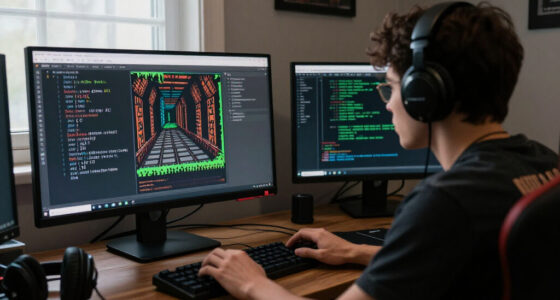
Developer Daniel RH says he has made cooperative play work in the DOS version of Wing Commander after an 11-year reverse-engineering project. His report describes finding the game’s player and wingman state in memory and using that research to control a second craft; implementation details and broader compatibility are not fully documented in the supplied report.
Developer Daniel RH says he has made cooperative play work in the DOS version of Wing Commander, allowing two players to fly as wingmates rather than share control of one ship. His project account traces the reverse-engineering effort to October 2015 and describes identifying the game’s position and movement data in memory, though the supplied report does not give a full technical account of the final networking implementation.
Daniel’s account begins with a childhood memory: he and his brother Patrick would divide controls, with one steering while the other handled lasers and afterburner. They wanted to fly separate ships together. The new project aims to make that kind of cooperative play possible in the original game, rather than requiring both players to operate a single fighter.
The initial breakthrough came from examining DOSBox memory dumps. Daniel reasoned that Wing Commander’s game state should be discoverable in its relatively constrained DOS memory. He compared snapshots taken while the player was stationary with snapshots taken after flying straight, looking for bytes that stayed stable at rest but changed during movement. His report says this reduced a large set of possible memory changes to a smaller group of candidates.
To isolate the player’s movement, he first sought an empty area of space and avoided having a wingman nearby whose movement might complicate the comparison. Daniel says he identified a position value at 13D3:A9C2 and found velocity data at CAE2. He later mapped repeated 12-byte entity slots, including the player and camera, which helped account for duplicate-looking values. The source describes this reverse-engineering process; it does not provide enough detail to independently verify the finished co-op system’s performance or compatibility.
A New Way to Fly as Wingmates
The reported result addresses a longstanding limitation for players who wanted to experience the game together: Wing Commander’s original play was built around a single player, and sharing a cockpit was not the same as flying separate ships. If the project works as described, it offers a way to revisit the DOS game cooperatively without changing the underlying single-player campaign into a conventional multiplayer release.
The work also illustrates how reverse-engineering can expose game systems that were never presented as modding interfaces. Daniel’s method relied on comparing memory snapshots, tracing movement and camera values, and identifying repeated entity records. That could be useful to other preservationists and modders studying older DOS games, although the supplied material does not establish that the technique will transfer directly to other titles.
Popular right now

iRobot Roomba 105 Combo Robot Vacuum and Mop

De’Longhi Classic Matte Black Espresso Machine with Milk Frother

Bose QuietComfort Headphones (2nd Gen), Wireless Over-Ear Noise-Cancelling Headphones, Black
As an affiliate, we earn on qualifying purchases.
From Memory Dumps to Game State
Daniel dates the start of the project to October 4, 2015, when he was playing Wing Commander in DOSBox and considered whether its game state could be located in memory. At first, he compared dumps manually. He later wrote a tool to automate comparisons, after setting the work aside for periods while trying to understand how the game represented direction and rotation.
His report says that the game stored entities in 64 slots, each holding three 32-bit position values. The player, camera and a temporary camera record occupied identifiable locations, and the camera’s copy of values initially complicated the search. The account then describes examining direction vectors, which used compact values that could change by only a byte during small rotations.
The project page also links to a video and a browser-based way to play, according to its introductory text. Those references provide ways to see or try the work, but the source material here does not specify setup requirements, supported DOSBox versions, or whether the browser version includes the same cooperative functionality.
““An 11 year journey to play DOS Wing Commander together.””
— Daniel RH, project author
Compatibility and Network Details
The supplied project account does not spell out how the final co-op connection works, what networking method it uses, or whether both players need identical game files and configurations. It also does not establish which versions of DOSBox or operating systems are supported, how stable multiplayer sessions are, or whether all missions and game modes work.
The report presents the project as working, but no independent test results or detailed reproduction instructions are included in the source material provided. It remains unclear whether the browser play option is a demonstration, a complete way to use the co-op feature, or a separate version of the game.
Testing the Co-op Release
Readers seeking to try the work can follow the project page’s video and browser-play links, though the available source text does not state whether those options expose the cooperative mode or how to configure it. Further technical documentation would clarify installation, network setup, supported versions and known limitations.
Until those details are available, the clearest next step is for the developer or other players to publish reproducible setup instructions and report how the system performs across different configurations. The project’s central result is the reported ability to play as separate wingmates; its reach and reliability remain to be established.
Key Questions
What is the reported development?
Developer Daniel RH says cooperative play is working in the DOS version of Wing Commander, with players flying as wingmates rather than sharing one ship.
How did the developer find the game’s movement data?
He compared DOSBox memory snapshots taken while stationary and after movement, then used the changing values to identify position and velocity records.
When did the project begin?
Daniel dates the start of the investigation to October 4, 2015. The project page describes it as an 11-year effort.
Can players try the co-op mode now?
The project page references a video and browser-play option, but the supplied report does not clarify whether either includes cooperative play or provide complete setup instructions.
What is not yet known about the release?
The available material does not specify network requirements, supported DOSBox versions, compatibility, or stability. Those details would help confirm how widely players can use the feature.
Source: fireflyk64.github.io