
Gauntlet helped popularize cooperative cabinet play by allowing up to four players to team up on a single arcade machine, transforming the gameplay experience from solo to social. You were encouraged to support and strategize with others, making the game more dynamic and engaging. Its design fostered teamwork, camaraderie, and collaborative tactics, turning arcades into social hubs. If you keep exploring, you’ll discover how this innovation shaped future multiplayer games and left a lasting legacy.
Key Takeaways
- Gauntlet introduced four-player cooperative gameplay, encouraging social interaction and teamwork in arcade settings.
- It shifted arcade culture from solitary to shared experiences, promoting group strategy and camaraderie.
- The game demonstrated that multiplayer cooperation could enhance engagement and replayability.
- Gauntlet popularized the concept of arcade cabinets as social hubs for collaborative play.
- Its success influenced future multiplayer arcade games and established cooperative play as a standard.
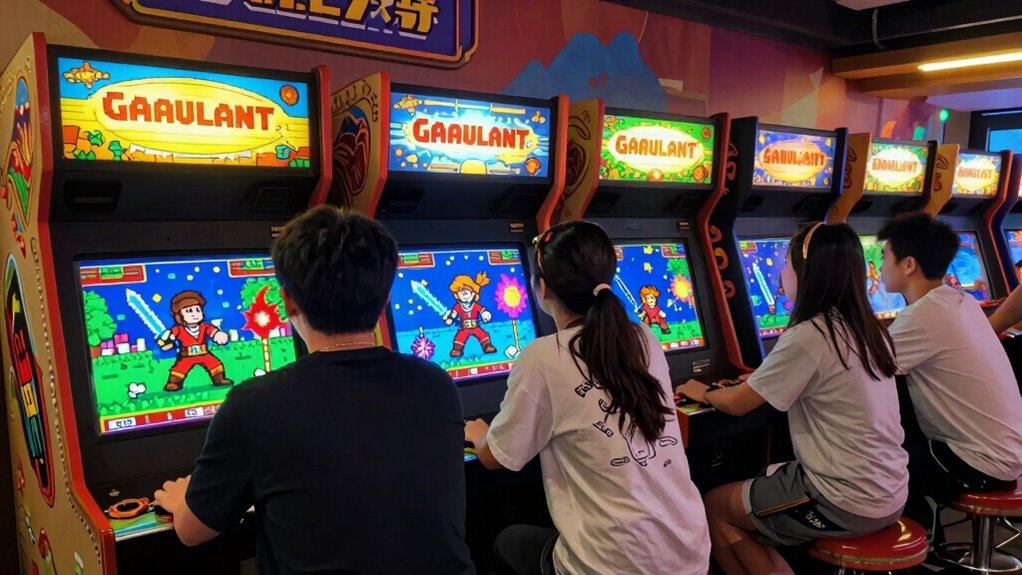
Have you ever wondered how players team up to conquer arcade challenges? It’s a question that hits at the heart of arcade gameplay and the social experience it fosters. One game that played a pivotal role in shaping this multiplayer culture is Gauntlet. When Gauntlet hit arcades in the early 1980s, it introduced a new way to play—cooperative cabinet play—where four players could simultaneously team up and battle through dungeons filled with monsters, treasures, and dangers. This wasn’t just about individual skills; it was about working together, combining different abilities, and strategizing as a team. The game’s design encouraged players to support one another, making multiplayer strategies essential for progressing. The sense of camaraderie and competition was immediate, transforming the arcade scene from solitary to social.
Gauntlet’s arcade gameplay was revolutionary because it challenged the traditional single-player model. Instead of competing alone, players could coordinate their moves, share resources, and adapt their tactics on the fly. This cooperative approach meant that success depended on teamwork—each player’s role was vital, whether it was warrior, Valkyrie, wizard, or elf. The game’s design fostered communication and shared objectives, which made it incredibly engaging. It wasn’t just about beating levels; it was about surviving together, and that created a compelling reason for friends to gather around the cabinet. The multiplayer strategies employed—like blocking monsters or pooling power-ups—became essential skills. This cooperative dynamic set a new standard in arcade gameplay, showing that shared experiences could be just as exciting as high scores. Additionally, Gauntlet’s success demonstrated the potential for multiplayer arcade games to become central social activities.
Gauntlet revolutionized arcade gaming with teamwork, shared goals, and cooperative strategies, transforming solo play into social adventure.
Gauntlet’s influence extended beyond its immediate gameplay. It popularized the idea that arcade cabinets could be social hubs, where players could team up in real-time. The multiplayer setup encouraged players to develop strategies that relied on cooperation, making each game session unique and unpredictable. It also inspired future multiplayer arcade games, many of which relied on similar cooperative principles. The success of Gauntlet demonstrated that multiplayer gameplay was not just a novelty but a core part of arcade entertainment, paving the way for innovations in cooperative multiplayer design. The legacy of Gauntlet helped foster a culture where players sought out friends or strangers to team up, making each arcade visit more than just a solo challenge—an opportunity for shared victory and fun.
In the end, Gauntlet’s legacy lies in how it popularized cooperative cabinet play, transforming arcades into dynamic social arenas. It showed that teamwork, combined with strategic multiplayer gameplay, could elevate arcade experiences and leave a lasting mark on gaming history.

Arcade1Up NBA JAM Deluxe 2-Player Home Arcade Machine, Over 5-Foot Cabinet with Online Multiplayer, Light-Up Marquee, and 3 Classic Basketball Games
- Wi-Fi Online Multiplayer: Global leaderboards and online play
- Sleek Cabinet Design: 2-player control panel for multiplayer
- Light-Up Marquee: Eye-catching illuminated display
As an affiliate, we earn on qualifying purchases.
As an affiliate, we earn on qualifying purchases.
Frequently Asked Questions
How Did Gauntlet Influence Modern Cooperative Gaming Mechanics?
Gauntlet revolutionized modern cooperative gaming mechanics by emphasizing arcade multiplayer dynamics, where players team up to tackle challenges together. It popularized the idea of cooperative gameplay evolution, showing that players could work side by side, sharing resources and strategizing collectively. This approach influenced countless multiplayer games today, fostering a social, team-based experience. You now see these mechanics in many multiplayer titles, making gaming more interactive, collaborative, and fun.
What Unique Features Did Gauntlet Introduce to Cabinet-Based Games?
Gauntlet revolutionized cabinet-based games, introducing a four-player setup that felt like a symphony of chaos and teamwork. Its arcade aesthetics, with vibrant graphics and distinctive cabinet design, drew players in like moths to a flame. The game’s unique features, such as simultaneous multiplayer action and a shared health system, set it apart. These innovations transformed arcade cabinets into social hubs, paving the way for cooperative gameplay’s enduring popularity.
Were There Any Challenges in Implementing Cooperative Play in Cabinets?
Implementing cooperative play in arcade hardware like Gauntlet posed challenges, especially in ensuring smooth player coordination. You had to design hardware that supported multiple controllers and synchronized inputs without lag. Balancing gameplay so players work together seamlessly required innovative engineering. These hurdles made it difficult initially, but overcoming them allowed players to enjoy a more interactive, cooperative experience, setting a new standard for arcade cabinet gaming.
How Did Players Initially Respond to Cooperative Gameplay in Gauntlet?
You probably noticed that the initial reception to cooperative gameplay in Gauntlet was very positive. Players quickly embraced the emphasis on player teamwork, finding it exciting and engaging. The game’s multiplayer aspect encouraged social interaction and collaboration, making it stand out from other arcade titles. This enthusiastic response helped solidify cooperative cabinet play as a popular gaming trend, inspiring other games to adopt similar multiplayer features.
What Legacy Did Gauntlet Leave for Future Arcade Games?
Gauntlet’s legacy in arcade culture is its pioneering focus on cooperative gameplay, transforming the way players engage with arcade games. You see, it emphasized teamwork over competition, shaping future arcade titles to prioritize cooperative dynamics. This shift encouraged players to work together, fostering social interaction and community spirit. Its influence persists, inspiring designers to craft games that balance competitive and cooperative elements, enriching the overall arcade experience.
Conclusion
Gauntlet revolutionized cooperative cabinet play by making it more accessible and engaging for players. Its innovative design encouraged teamwork, boosting popularity across arcades worldwide. Did you know that in 1985, over 10,000 units of Gauntlet were sold, making it one of the best-selling arcade games of its time? This statistic highlights how the game’s cooperative approach resonated with players. So, next time you team up in a game, remember how Gauntlet paved the way for multiplayer fun.