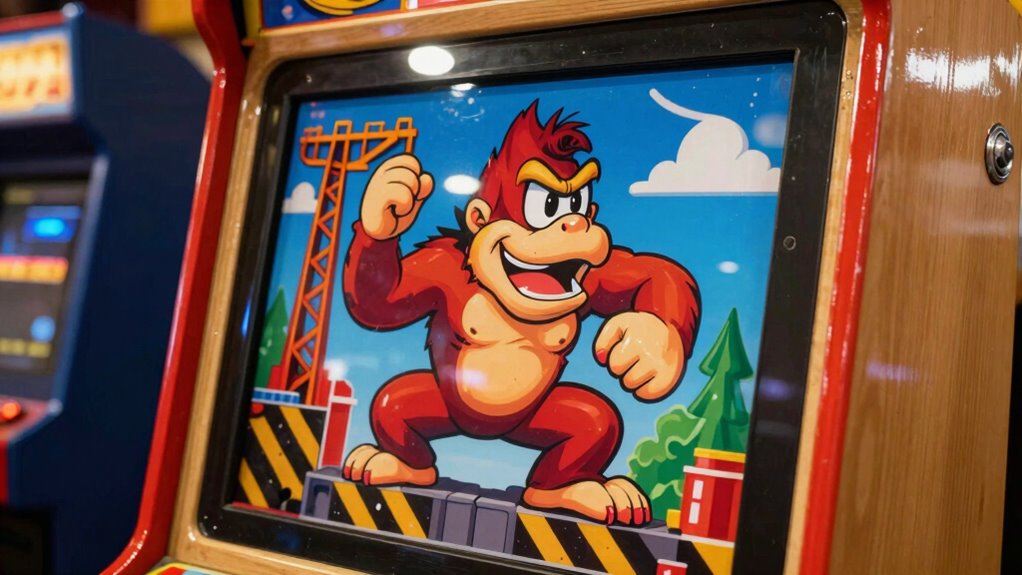

Donkey Kong still teaches great game design because it shows how simplicity, challenge, and clear mechanics create an engaging experience. You see how familiar sounds and straightforward gameplay evoke nostalgia while pushing players to improve. It balances difficulty and reward, encouraging persistence without frustration. With visual clarity and intuitive controls, it remains accessible and timeless. If you look closer, you’ll discover why its lessons on progression and character connection still influence game design today.
Key Takeaways
- Demonstrates how simple mechanics and escalating difficulty create engaging, memorable gameplay experiences.
- Highlights the importance of clear visual cues and intuitive controls for accessibility.
- Introduces relatable characters with goals, fostering emotional connection and motivation.
- Balances challenge and reward to encourage learning and sustained engagement.
- Shows that innovative yet straightforward mechanics remain relevant and influential in game design.

Few games have influenced the foundations of game design as profoundly as Donkey Kong. When you think about its impact, you can’t ignore how it rekindles arcade nostalgia—bringing back the excitement of sitting in front of a machine, hearing the familiar sounds, and feeling the thrill of beating a high score. This sense of nostalgia isn’t just about reminiscing; it’s about understanding how simplicity and challenge can create memorable experiences. Donkey Kong’s straightforward gameplay makes it accessible yet deeply engaging, setting a standard for future arcade and console titles. Its design emphasizes that clarity in mechanics, combined with escalating difficulty, keeps players hooked. You can see this in how each level pushes your skills without overwhelming you, making every victory feel earned.
But what truly makes Donkey Kong a masterclass in game design is its emphasis on character development. The game introduces you to Jumpman, later known as Mario, whose personality starts to shine through even in this early era of gaming. You’re not just steering platforms; you’re guiding a character with a purpose, goals, and a personality. This focus on character development, even in a simple arcade setting, helps create a connection that motivates players to keep going. You begin to care about Jumpman’s progress, and that emotional investment turns a basic arcade game into a story of perseverance. It shows that memorable characters don’t need complex backstories; they need relatable goals and personality traits that resonate with players.
Furthermore, Donkey Kong’s success demonstrates that effective game design balances challenge with reward. You’re encouraged to learn from each attempt, improving your skills incrementally. The game’s difficulty curve is carefully calibrated, ensuring that you’re neither bored nor frustrated. This teaches you the importance of pacing in game development—how to keep players on the edge of their seats without pushing them away. Its design principles still influence how modern games craft their progression systems, emphasizing that player engagement hinges on well-structured challenges and meaningful character interactions. Additionally, the game’s visual clarity underscores how important clear design cues are in guiding players and maintaining their focus. The use of game mechanics demonstrated that simplicity and intuitive controls are crucial for accessibility and long-term engagement. A deeper understanding of game design principles reveals how thoughtful structuring can lead to timeless appeal.
A further lesson from Donkey Kong is how its innovative mechanics set a precedent for designing engaging gameplay that remains intuitive. Ultimately, Donkey Kong remains relevant because it teaches essential lessons in game design. Its blend of arcade nostalgia, clever mechanics, and character development proves that simplicity, when executed thoughtfully, can create timeless experiences. You learn that players crave a sense of progress, relatable characters, and a challenge they can conquer with skill and persistence. These lessons continue to shape the way you design and appreciate games today, making Donkey Kong a cornerstone of game design history.

8Bitdo Arcade Stick for Switch & Windows, Arcade Fight Stick Support Wireless Bluetooth, 2.4G Receiver and Wired Connection
- Platform Compatibility: Switch and Windows support
- Customizable Controls: Button mapping and macros
- Dynamic Layout: Mode-based button configuration
As an affiliate, we earn on qualifying purchases.
As an affiliate, we earn on qualifying purchases.
Frequently Asked Questions
How Did Donkey Kong Influence Modern Platformer Mechanics?
Donkey Kong influenced modern platformers through innovative level design that challenges players creatively and intuitively. You see this in how levels escalate in complexity, forcing players to adapt. The game also set the stage for iconic character development, making Donkey Kong and Mario memorable heroes. These elements continue to inspire game designers to craft engaging, dynamic experiences that captivate players and define the genre’s standards today.
What Specific Design Choices Make Donkey Kong Timeless?
You’ll love that Donkey Kong’s timeless mechanics, like precise jump timing and challenging obstacle navigation, still captivate players today—over 40 years later. These choices create a nostalgic appeal, reminding you of classic arcade simplicity while offering strategic depth. The game’s straightforward yet tough design invites players to master each level, proving that well-crafted mechanics can endure generations, making it a timeless masterpiece that continues inspiring game design.
How Has Donkey Kong Inspired Indie Game Developers?
You see, Donkey Kong’s character design and sound design inspire indie developers by showing how memorable visuals and audio create emotional connections. Its simple yet distinctive characters prove that minimalism can be powerful, while the catchy sound effects set a standard for immersive gameplay. These elements motivate indie creators to focus on unique, cohesive design choices that enhance storytelling and player engagement, fueling innovation in their own projects.
What Are the Key Lessons From Donkey Kong’s Difficulty Curve?
You learn from Donkey Kong’s difficulty curve that managing player progression and challenge escalation is essential. The game gradually increases difficulty, rewarding skill development while keeping players engaged. You see how introducing new obstacles and increasing pace at strategic points sustains interest and pushes players to improve. This balance keeps players motivated without feeling overwhelmed, demonstrating that thoughtful challenge escalation enhances game design and player satisfaction.
How Does Donkey Kong’s Narrative Impact Its Gameplay Success?
Imagine a bustling construction site, ropes swinging and barrels rolling—your actions are shaped by the story of Mario rescuing Pauline from Donkey Kong. This narrative enhances gameplay through story integration, making each jump and dodge feel purposeful. Character development adds layers of motivation, encouraging you to persevere. The story isn’t just background; it drives your engagement, turning simple mechanics into a compelling adventure that keeps players hooked.
Conclusion
As you step back and analyze Donkey Kong’s timeless design, you realize there’s more beneath its simple surface. Its clever mechanics and layered challenge hint at secrets still waiting to be uncovered. You can almost hear the echoes of future games it inspired, whispering promises of innovation. Will you take a closer look and discover what makes this classic a masterclass in game design? The answer’s just beyond your reach—until you decide to dive deeper.