Classic arcades balance spectacle and simplicity by using bold visuals, bright lights, and catchy sounds that grab your attention instantly. They keep gameplay straightforward with easy controls and quick rewards, so you can jump right in without confusion. At the same time, they layer difficulty to challenge you over time, creating a fun mix of immediate excitement and long-term engagement. Want to discover how these elements come together? Keep exploring to find out more.
Key Takeaways
- Bright, bold visuals and energetic sounds create eye-catching spectacle without overwhelming players.
- Simple, easy-to-understand gameplay mechanics ensure immediate engagement and broad accessibility.
- Cohesive aesthetic design enhances recognition while maintaining clarity amidst visual complexity.
- Layered difficulty provides quick fun for newcomers and challenging depth for experienced players.
- Visual and auditory cues evoke nostalgia, enhancing immersion without sacrificing straightforward gameplay.
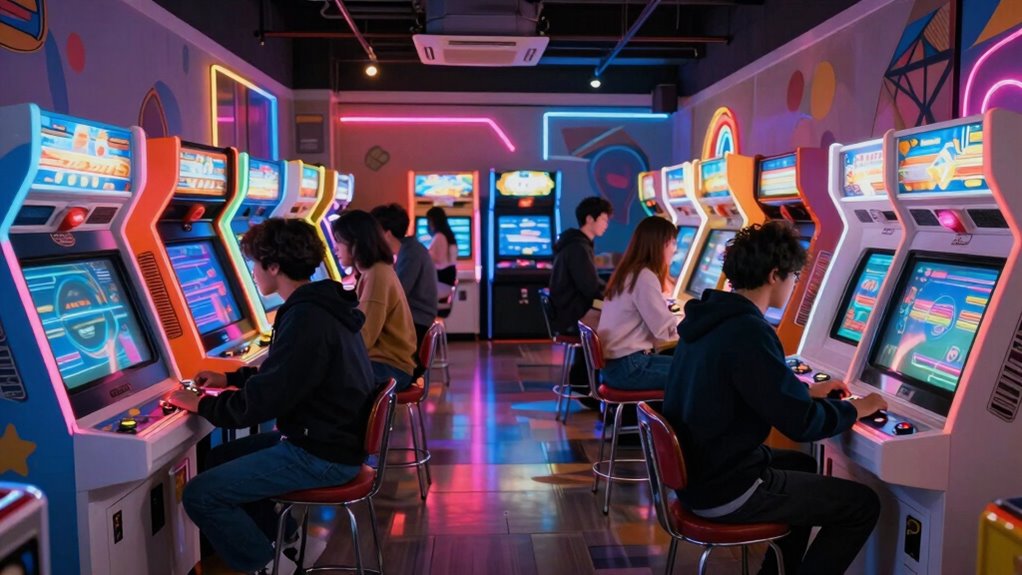
Arcades have long enthralled players by blending vibrant visuals, immersive sounds, and fast-paced gameplay into an engaging spectacle. When you step into an arcade, you’re immediately drawn in by the bright lights and energetic atmosphere. This visual and auditory stimulation creates a nostalgic factor that transports you back to a time when gaming was about more than just the game itself—it was about the experience. Classic arcade games expertly balance this spectacle with gameplay complexity, making sure they’re engaging yet accessible. The goal wasn’t to overwhelm but to enchant, drawing players back for more.
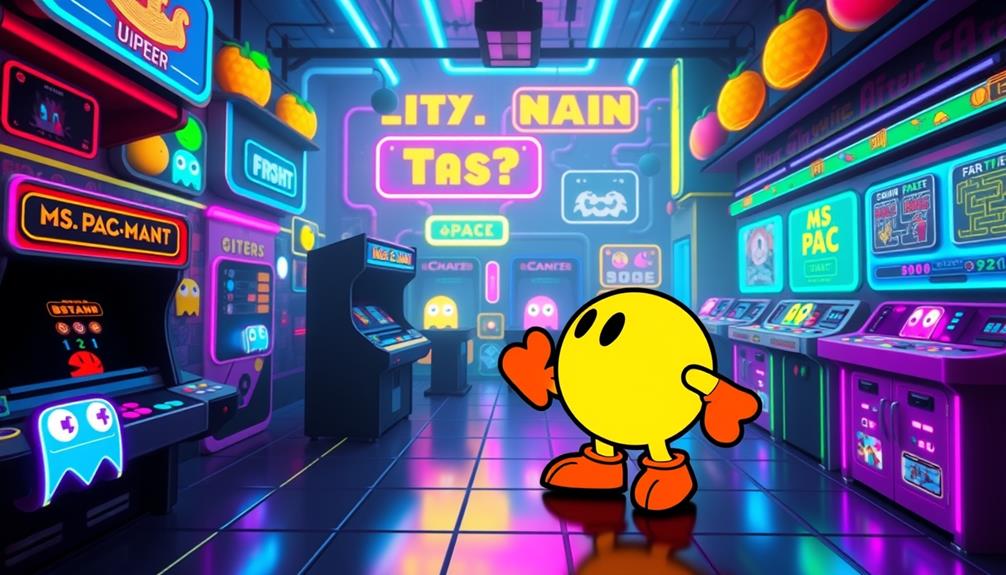
One of the key ways these arcades balanced spectacle with simplicity was by designing games that offered immediate gratification. You didn’t need hours of practice to understand the basic mechanics; instead, the gameplay was straightforward enough for a newcomer to pick up quickly. At the same time, behind that simplicity, many games contained layers of depth that rewarded skill and strategy. For example, a game like Pac-Man is simple—navigate the maze and avoid ghosts—but mastering it requires quick reflexes and strategic planning. This blend kept players hooked, encouraging both casual players and seasoned gamers to keep trying. The emphasis on instant gratification was essential in ensuring a broad appeal.
The visual design of these games also played an essential role. Bright, bold colors and clear, easy-to-understand graphics made gameplay instantly recognizable. You could tell at a glance what to do, which meant less time figuring out controls and more time immersed in the game. The sounds complemented this with catchy tunes and sound effects that heightened excitement without overwhelming your senses. This careful combination of visuals and sounds created a spectacle that was lively but not chaotic, ensuring you could enjoy the game without feeling overstimulated. Additionally, visual design played a crucial role in making these games instantly approachable and memorable. Creating a cohesive and attractive aesthetic was vital in establishing the arcade’s immersive environment and encouraging repeated play. Moreover, the use of color contrast and distinctive design elements helped games stand out amidst many competing machines. Effective use of these visual elements also contributed to the brand identity of classic arcade titles, making them instantly recognizable and iconic.
Furthermore, the gameplay complexity was intentionally layered to appeal to a wide audience. The initial learning curve was gentle, so new players could jump in and enjoy the action immediately. As you became more skilled, the challenge increased, pushing you to develop better timing, coordination, and strategic thinking. This balance made arcade games addictive; they offered enough challenge to keep you engaged but not so much that new players felt discouraged. The focus was on instant fun, with enough depth to sustain long-term interest. Many classic games also incorporated progressive difficulty, which helped maintain players’ interest as they improved. The layered complexity meant that players could continually find new challenges as they grew more proficient, making the experience more rewarding over time. This thoughtful design approach contributed significantly to the enduring popularity of arcade gaming.
In essence, classic arcades managed to craft an environment that was both a visual and auditory spectacle and a platform for engaging, layered gameplay. They understood that balancing spectacle and simplicity was key to creating memorable gaming experiences that drew players in time and again, blending nostalgia with timeless design principles.
As an affiliate, we earn on qualifying purchases.
Frequently Asked Questions
How Did Arcade Game Technology Evolve Over the Decades?
You see, arcade game technology evolved considerably over the decades by improving arcade sound and cabinet ergonomics. As technology advanced, game graphics became more detailed, but designers kept simplicity in mind for quick play. Sound systems grew richer, immersing players in a more engaging experience. Cabinets were redesigned for comfort and accessibility, encouraging longer play. This evolution balanced spectacle with user-friendly design, making arcade games more enthralling and inviting for players of all ages.
What Role Did Arcade Aesthetics Play in Attracting Players?
Arcade aesthetics play a vital role in attracting players by offering nostalgic visuals and vibrant color schemes that catch your eye. These eye-catching designs create an inviting atmosphere, drawing you in with their lively, energetic look. The combination of simple, bold graphics and colorful displays sparks excitement and curiosity, making the game irresistible. By appealing to your senses, arcade aesthetics effectively encourage you to immerse yourself in the gaming experience.
How Did Arcade Designs Influence Modern Gaming Environments?
Arcade designs act like a blueprint, shaping modern gaming environments with their focus on social interaction and nostalgic appeal. You can see this influence in open layouts, vibrant lighting, and communal spaces that invite players to connect. These elements foster a shared experience, echoing classic arcades’ lively spirit. As a result, contemporary gaming venues aim to recreate that sense of excitement and camaraderie, keeping the essence of arcade culture alive.
Were There Regional Differences in Arcade Design Principles?
Yes, there were regional differences in arcade design principles. You’ll notice regional motifs and cultural influences shaping arcade layouts, graphics, and game themes. For instance, Japanese arcades often feature vibrant, crowded designs reflecting local pop culture, while Western arcades emphasize sleek, straightforward setups. These regional touches help create immersive environments that resonate with local audiences, blending spectacle with cultural identity to enhance the overall gaming experience.
How Did Arcade Game Developers Balance Innovation With Gameplay Simplicity?
Think of arcade game development as walking a tightrope between a spark of innovation and the safety of simplicity. You introduce new game mechanics that captivate players, yet keep core gameplay straightforward to prevent overwhelming them. By balancing these elements, you guarantee player engagement remains high, inviting both newcomers and seasoned gamers to enjoy the experience without confusion. This harmony creates timeless classics that continue to charm players across generations.
Conclusion
You see, classic arcades were carefully crafted symphonies of spectacle and simplicity, like a perfectly tuned instrument. They drew you in with dazzling visuals and roaring sounds, yet remained accessible and straightforward. This balance is what made them timeless, like a familiar song that never fades. As you walk away, remember that true magic lies in blending awe with ease, turning every game into a beacon of joy—an eternal dance between spectacle and simplicity that still echoes today.