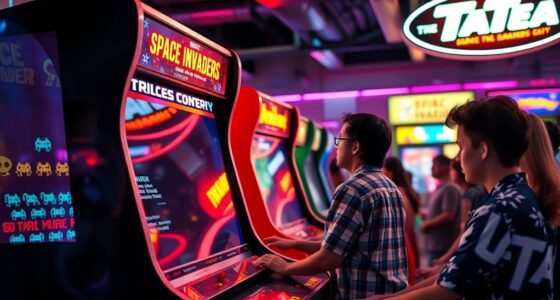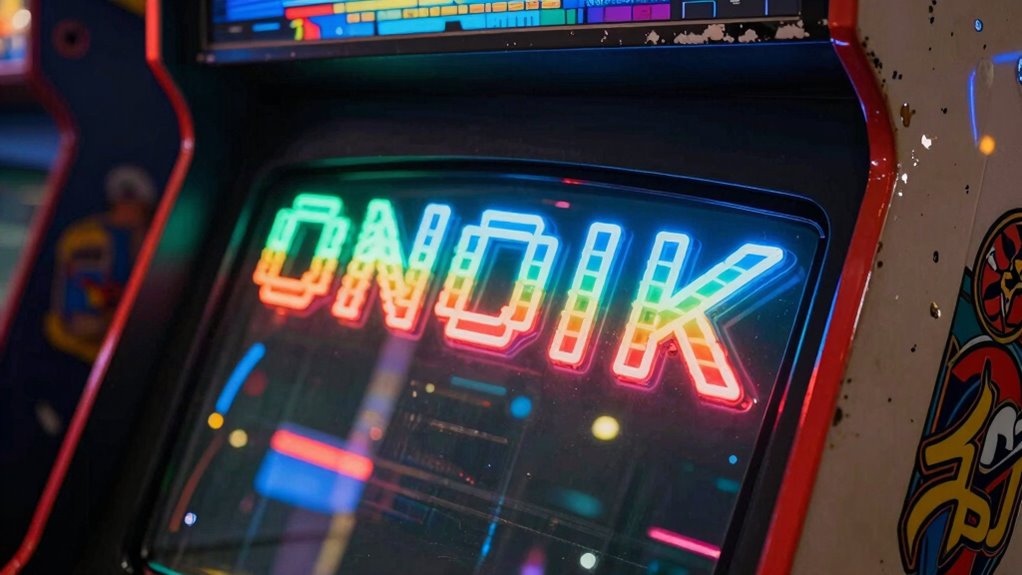

You see, classic arcade fonts became a crucial part of gaming history because they evoke nostalgia and excitement, instantly setting the mood. Their bold, pixelated style reflects the technology of the era and helped define game identities like Pac-Man and space shooters. These fonts communicated action and fun while inspiring future design trends. As you explore further, you’ll discover how technological limits fueled creativity and left a lasting legacy in game visual culture.

Play games on Amazon Luna for your game nights, included with Prime
- A rotating selection of games, no download needed
- Play on TV, laptop or phone
- Fast, free delivery for your gear, too
Key Takeaways
- Arcade fonts evoke nostalgia and excitement, symbolizing the energetic spirit of classic gaming.
- They evolved from pixel art, reflecting technological limits and creative innovation in early hardware.
- Bold, blocky styles instantly set game mood, making titles memorable and recognizable.
- Technological advances allowed for more detailed fonts while maintaining pixel roots, shaping design evolution.
- Their iconic look continues to influence modern digital art, preserving arcade history in contemporary gaming aesthetics.
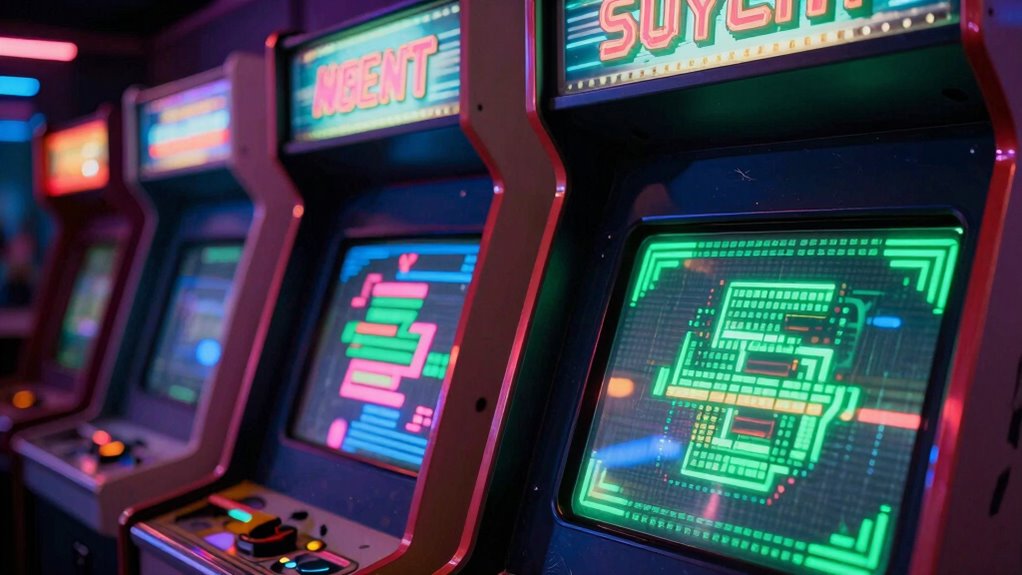
Arcade fonts have played a crucial role in shaping the visual identity of gaming history, instantly evoking nostalgia and excitement. When you think of classic arcade games, you probably picture those bold, blocky letters that scream retro energy. These fonts aren’t just decorative; they’re a core part of the experience, setting the mood and guiding your expectations from the moment you see them. This style of typography became a symbol of the arcade era, marking an era when pixel artistry was at its peak. Pixel artistry, with its simple yet expressive visuals, extended beyond graphics into the very letters that greeted players. The typography evolution during this period was driven by the limitations of hardware, forcing designers to craft characters that were both readable and impactful within tight pixel constraints. You can see how these fonts evolved from simple, pixelated forms to more elaborate designs, yet they all retained that unmistakable arcade charm. This evolution wasn’t just about aesthetics; it was about creating a visual language that communicated excitement, urgency, and fun in a split second. As games grew more sophisticated, so did their fonts, but they always maintained that core pixelated style that made them instantly recognizable.
You might notice how the fonts used in arcade titles are often characterized by sharp edges, bright colors, and a sense of motion, all of which contribute to their energetic appeal. These fonts helped define the identity of the games, making them memorable and iconic. Whether it was the bold titles of Pac-Man or the futuristic lettering of space shooters, each font told a story about the game’s theme, setting the tone before you even pressed start. The typography evolution also mirrored technological advances; as screens improved, so did the detail and complexity of arcade fonts, but they never strayed far from their pixel roots. This consistency helped reinforce a sense of nostalgia, reminding players of the straightforward yet engaging design principles of the era. Additionally, the limitations of hardware played a significant role in shaping the distinctive style of arcade fonts, encouraging creative solutions within constrained design parameters. This challenge fostered innovation, leading to the development of pixel-based typography that remains influential today.
Understanding how these fonts were developed within technological constraints highlights the importance of design innovation, which continues to inspire modern digital art and typography. In essence, these classic arcade fonts became more than just text—they became a visual shorthand for the arcade experience itself. They’re a tribute to how limited technology can inspire creative design, shaping the way we perceive and remember gaming history. Today, their influence persists, inspiring modern designers to blend pixel artistry with contemporary typography, ensuring that the spirit of arcade fonts continues to thrive.
As an affiliate, we earn on qualifying purchases.
Frequently Asked Questions
What Are Some Iconic Arcade Fonts Still Used Today?
You’ll notice iconic arcade fonts like the pixelated “Press Start” style and bold, blocky typefaces that still dominate gaming today. These fonts highlight the arcade font evolution, blending retro charm with modern design. Many designers embrace the vintage typeface revival, using these classic styles to evoke nostalgia. Their timeless appeal keeps them relevant, ensuring that arcade fonts remain an essential part of gaming culture and visual identity.
How Did Arcade Fonts Influence Modern Gaming UI Design?
Arcade fonts revolutionized modern gaming UI design with their bold, pixel-perfect aesthetics that seem to leap off the screen. You see, their legacy fuels how you experience font customization today, making interfaces more vibrant and immersive. These fonts’s exaggerated, eye-catching style set a standard that pushes designers to craft UI elements that grab your attention instantly, blending nostalgia with cutting-edge visual clarity.
Were Arcade Fonts Designed With Specific Technical Constraints?
Yes, arcade fonts were designed with specific technical constraints in mind. You’ll notice they were created using low pixel resolutions, which limited detail but emphasized clarity. The color palette was also restricted, often using bright, contrasting colors to stand out on CRT screens. These constraints forced designers to craft bold, simple fonts that remained legible and eye-catching, shaping the distinctive style we associate with classic arcade games today.
How Do Arcade Fonts Impact Player Nostalgia and Engagement?
Arcade fonts boost your nostalgia and engagement by evoking a retro aesthetic that reminds you of classic gaming moments. Their bold, pixelated design creates an emotional connection, transporting you back to the arcade era. When you see these fonts, you feel a sense of familiarity and excitement, making the gaming experience more immersive. This nostalgic appeal keeps players interested, encouraging them to relive and share those cherished memories.
Are There Digital Tools for Creating Authentic Arcade-Style Fonts?
Yes, you can find digital tools for creating authentic arcade-style fonts. Many platforms offer pixel art-based typeface customization options, allowing you to craft fonts that capture that classic, retro vibe. Tools like Adobe Illustrator, Aseprite, or FontStruct enable you to design pixel-perfect arcade fonts easily. These tools help you customize typefaces, giving your project an authentic arcade feel that resonates with nostalgic gamers and enhances your design’s overall vibe.
Conclusion
You might think arcade fonts are just nostalgic throwbacks, but they actually shape how we experience gaming history. These bold, pixelated characters instantly evoke the excitement of arcade halls, making every game memorable. Imagine the flashing neon signs and pixel art that these fonts bring to mind—visual cues that transport you back in time. So, next time you see a retro font, remember, it’s more than style; it’s an essential part of gaming’s legacy.
Fall Picks
fall essentials
As an affiliate, we earn on qualifying purchases.