TL;DR
Arcade pinball machines are coin-operated games where a plunger launches a metal ball and flippers keep it moving toward targets while the machine tracks scores and objectives. Their mix of physical play, electronic rules, and unpredictable rebounds rewards practice while keeping every game a little different. If you want to own one, consider condition, space, delivery, and upkeep alongside the purchase price.
A pinball machine can turn one small metal ball into a room-shaking event: lights flare, coils snap, and a missed shot can end a great run in an instant. That physical drama is why arcade pinball machines still draw players even when a phone can put thousands of digital games in your pocket.

Play games on Amazon Luna for your game nights, included with Prime
- A rotating selection of games, no download needed
- Play on TV, laptop or phone
- Fast, free delivery for your gear, too
This guide explains how a game works, where skill meets luck, and what separates older mechanical machines from modern electronic ones. You’ll also get practical advice for trying pinball or buying your first cabinet, including the space and upkeep that a sales listing may leave out.
Think of a pinball table as a tiny, noisy sports arena. You make the shots, the machine answers with rebounds and flashing targets, and every ball gives you another chance to read the playfield.
A plunger launches the ball; flippers redirect it toward targets, ramps, and scoring features.
Pinball rewards timing and shot selection, but rebounds add uncertainty to every game.
Electromechanical games rely more on relays and motors, while solid-state machines use circuit boards to manage scores and rules.
Before buying, assess the machine’s condition, service history, delivery route, floor space, and likely upkeep.
Digital pinball offers easy access to many tables, while a physical cabinet adds real movement, sound, and tactile feedback.
How One Ball Turns a Cabinet Into a Game
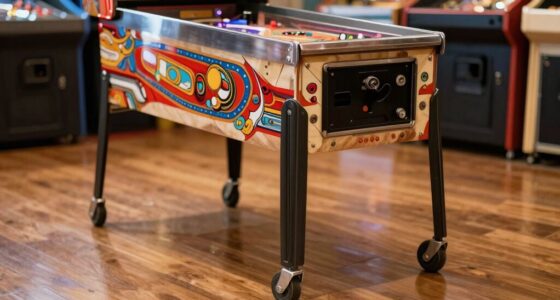
An arcade pinball machine is a coin-operated game in which you launch a metal ball and use flippers to keep it in play, hit targets, and score points. The player controls the flippers; the machine’s switches and sensors register what the ball hits and update the score. That simple loop gives each table room for its own rules and personality.
You pull back a plunger, release it, and send the ball up the sloped playfield. As it rolls back down, you press the flipper buttons to redirect it toward ramps, targets, and lanes. The cabinet responds with sharp clicks and thumps, while lights and sounds announce what you’ve hit.
Say you’re playing a table with a lit ramp and a row of drop targets. A shot up the ramp might start a timed mode; knocking down the targets could raise a bonus. Those goals turn a basic score chase into a small puzzle, where the best shot depends on what the game asks you to do next.
Many games add multiball, jackpots, and timed challenges. The extra balls can make the playfield feel like a busy intersection: exciting, but harder to control. You still have one core job—keep the ball alive long enough to make the next shot.
Popular right now

Vitamix VX1 Professional-Grade Blender, 64 oz, Black

Roborock Q10 S5+ Robot Vacuum and Mop with Self-Emptying Station

Hisense E7 Cinema Series 55-Inch Hi-QLED Mini-LED 4K UHD Smart Fire TV
As an affiliate, we earn on qualifying purchases.
What Older Relays and Modern Circuit Boards Change
Older electromechanical pinball machines rely heavily on switches, coils, motors, and relays; solid-state games use circuit boards to control scoring and rules. Modern cabinets add software, sensors, displays, and physical mechanisms, so the screen can tell part of the story while the ball remains under your hands. The generation changes how the machine handles rules and service, but not the satisfying clack of a successful shot.
In an electromechanical game, a bank of relays can click into action when you hit a target, much like a row of tiny workers passing a message along. A solid-state machine may use a circuit board to track a complicated sequence—hit these targets, then shoot the ramp, then collect a bonus. Later designs can layer animations and music over the same physical playfield.
The shift also affects what you notice during play. On an older machine, score reels and mechanical sounds make the machine’s inner workings part of the show. A newer game might display a character or mission prompt, then punctuate a shot with a burst of sound and light.
For example, a collector choosing between a simple older table and a newer feature-heavy one should try both. The first may feel direct and easy to read; the second may offer layered objectives but take longer to learn. Technology shapes the experience, but the table’s layout and rules matter just as much.
Why Your Decisions Matter Even When the Ball Bounces
Pinball combines skill and chance: your timing, aim, and ball control influence the result, while unpredictable rebounds keep you from scripting every shot. That balance makes a good game feel like a conversation with a mischievous partner. You can make smart choices, but the ball may find an edge or return at an awkward angle.
Practice helps you read the playfield. You learn when to tap a flipper, when to hold it, and which shots are worth taking. A beginner might mash both buttons whenever the ball approaches; after a few games, that player may notice that waiting a fraction of a second gives a cleaner shot toward a target.
There is history behind the familiar flipper action. The 1947 game Humpty Dumpty is often credited as an early milestone in flipper-based pinball. Its flippers helped establish the active style players recognize today: you don’t just watch a ball fall through a maze; you intervene and shape its path.
Imagine two friends playing the same machine. One chases every flashing target, while the other focuses on a safe ramp shot that builds a bonus. Their scores may swing with rebounds, but the second player is making a plan. In casual play, that mix keeps a loss from feeling entirely random and a high score from feeling automatic.
How to Get More From Your First Visit
You can enjoy pinball as a beginner by learning the flipper timing, reading the machine’s basic goals, and treating each ball as a chance to notice something new. You don’t need to memorize every rule before you start. A few deliberate shots teach more than a frantic button mash.
- Watch one ball. Notice where it enters the lower playfield and how quickly it reaches the flippers.
- Choose one target. Look for a lit feature, a ramp, or a group of targets and aim for it.
- Use controlled presses. Press when the ball reaches a flipper; avoid holding both buttons down without a reason.
- Read the result. Check the display and lights to see whether your shot started a mode or built a bonus.
- Ask about the rules. Venue staff or another player may explain a confusing feature in a few seconds.
For instance, if a machine lights a row of arrows after a target hit, take a moment to see where those arrows point. They may show the next shot in a sequence. You can also watch another player for a minute; the way they pause before a ramp shot can reveal more than a long rules card.
Some arcades and clubs host tournaments with standardized scoring or game rules, though event formats differ. You can start casually and join a competition when the game feels familiar. Curiosity beats confidence on a first visit: every table has its own vocabulary, and part of the fun is learning it.
What to Check Before You Buy a Pinball Machine
The right first pinball machine depends on your budget, available space, preferred style, and willingness to handle repairs. Purchase price alone doesn’t tell you what ownership will cost: delivery, parts, restoration work, and regular maintenance can add up. A clean, dependable machine can be a better first choice than a rare cabinet with hidden faults.
Start by playing the exact model if you can. A theme you love may draw you in, but the shot layout and rules determine whether you’ll enjoy repeated games. Picture an evening with friends: a fast, readable table may suit casual rounds, while a feature-heavy one might reward a player who likes learning layered objectives.
Check the cabinet’s physical condition, switches, lights, displays, and flippers. Ask what has been repaired and whether the seller can demonstrate a full game. Age alone doesn’t guarantee quality; a well-maintained older machine may play more reliably than a neglected newer one. Prices also change with rarity, demand, condition, and restoration, so compare recent sales instead of treating one listing as a universal price.
Measure the route into your home as well as the final spot. A full-size cabinet needs a stable floor, room to stand and play, and access for service. If a machine is wedged into a tight corner, even a simple repair can become a furniture-moving project. Try before you buy, and ask an experienced technician or owner to inspect a machine if you’re unsure.
How Regular Care Keeps the Playfield Alive
Regular cleaning and small adjustments help a pinball machine play smoothly and catch faults before they spoil a game. Common tasks include cleaning the playfield, replacing worn rubbers or lamps, checking switches, and repairing faulty parts. The exact work depends on the machine’s age, use, and condition.
Think of the playfield like a well-used kitchen counter: dust and residue build up where hands and objects pass every day. A neglected surface can look dull, while worn rubber can change how the ball rebounds. If a target stops registering, the game may still run, but a scoring sequence can become confusing or impossible.
For example, a venue that sees steady weekend traffic may need to inspect its flippers and switches more often than a collector who plays at home once a week. A quick check after play can reveal a lamp that has gone dark or a target that no longer responds. Larger repairs may call for someone with pinball service experience, especially when electrical or mechanical components fail.
Maintenance is part of the hobby’s appeal for some owners. You learn how the machine works, then hear the difference when a clean, adjusted table sends the ball up a ramp with a crisp, confident rattle. For others, repairs are a chore; that’s a good reason to ask about service history before buying. Condition shapes play as much as a title’s age or reputation.
Why Physical Pinball Still Has a Place Beside Digital Games
Digital pinball makes it easy to try many tables, while a physical machine adds cabinet feedback, moving parts, and the unpredictable motion of a real ball. The two formats can share rules and layouts, but they don’t feel identical. One offers convenience and variety; the other gives each shot a physical presence.
On a screen, you can sample several tables without arranging delivery or finding floor space. That’s useful if you want to learn a style or decide what kind of rules you enjoy. But a digital flipper doesn’t send a vibration through a cabinet, and a simulated rebound lacks the clack of a ball striking a metal guide a few feet away.
Imagine a player learning a ramp sequence at home, then visiting an arcade to try a physical version. The familiar rules help, but the real table asks them to judge timing and ball movement directly. The experience can feel like reading a map, then walking the streets: useful knowledge carries over, yet the details change under your feet.
New machines continue to mix physical playfields with electronics, displays, animation, and sound. The industry is smaller than the mass-market arcade business of past decades, and releases and prices shift over time. If you’re researching a current model, check recent manufacturer and venue information. Physical pinball remains distinct because the machine and player share the same moving space.
Frequently Asked Questions
How does an arcade pinball machine work?
A plunger launches the ball onto a sloped playfield, and you use flippers to direct it toward targets and ramps. Switches and sensors register hits while the machine updates its score and game state. For example, a target may start a timed mode or light a jackpot shot.
Is pinball mostly skill or luck?
Both matter. Better timing, aim, and ball control can improve your chances, but rebounds create outcomes you can’t fully predict. A practiced player can make a plan; the ball still gets a vote.
Are pinball machines still being made?
Yes, manufacturers continue to release new machines, though the industry is much smaller than the mass-market arcade business of past decades. New tables pair physical playfields with electronics, sound, and displays. Check current manufacturer information for release details because schedules change.
What’s the difference between electromechanical and solid-state pinball?
Electromechanical games use more relays, motors, and switches to handle play and scoring. Solid-state machines use circuit boards for control and can support more layered rules. Individual tables may combine features from both approaches.
How much does a pinball machine cost?
There isn’t one fixed price: model, condition, rarity, demand, and restoration quality all affect the cost. Delivery, parts, and ongoing maintenance can add to the purchase price. Compare recent sales and inspect the specific machine before committing.
How much room does a home pinball machine need?
You need a stable floor area for the full-size cabinet, space to stand and play, and room to open or service it. Check the delivery route as well as the final location. A machine that fits the room may still be difficult to move through a narrow doorway.
What does tilting mean in pinball?
Tilting is a feature that penalizes or ends a ball if you move the cabinet too aggressively. It discourages excessive shaking, which could interfere with play or damage the machine. Gentle nudges may be allowed on some tables, but the tilt behavior varies.
Are digital and physical pinball the same?
Digital games can reproduce layouts and rules, making them a convenient way to try many tables. A physical cabinet adds real ball movement, mechanical feedback, and the sound and vibration of the machine. Digital play can teach you a table, but it can’t fully copy its physical feel.
Conclusion
Start with one practical rule: play before you buy, and pay attention to how a machine feels, not just how it looks. A memorable table is a meeting of timing, design, and chance, with enough personality to make you try one more ball.
Next time a ramp lights up and the cabinet rattles under your hands, follow the shot. The ball may have other plans.